Checking a Pomeranian’s Gums at Home
One of the most concerning things about owning a tiny Pomeranian is knowing how delicate they can be, and dental health often feels like a silent battle. Many of us worry about our little fluffballs facing discomfort or serious health issues that go unnoticed because they can't tell us what's wrong. This comprehensive guide is here to walk you through exactly how to regularly check your Pomeranian's gums at home, empowering you to spot potential problems early and keep their precious smile healthy.
Why Home Gum Checks Are a Lifeline for Your Pomeranian's Health
It's a common misconception that because our Pomeranians are small, their health problems are also small. When it comes to dental issues, nothing could be further from the truth. Their tiny mouths are particularly prone to overcrowding and plaque buildup, making them susceptible to dental disease at a much younger age than larger breeds. Ignoring their oral health isn't just about bad breath; it's about safeguarding their entire well-being. Regular home checks are your first line of defense, a proactive step that can save your pup from significant pain and costly veterinary interventions down the line.
The Silent Threat of Periodontal Disease
Periodontal disease in dogs, much like in humans, often begins silently. Our sweet Poms are masters at hiding pain, a survival instinct that means they'll suffer in quiet until a condition is quite advanced. This makes it incredibly hard for us, their loving owners, to know something is amiss until the situation is dire. You might only notice a significant change in eating habits or extreme bad breath, which are usually signs that the disease has progressed considerably. By then, the damage could be extensive, affecting not just their gums and teeth, but potentially their internal organs.
This insidious progression starts with plaque, a sticky film of bacteria, food particles, and saliva that forms on the teeth. If not removed, plaque hardens into tartar, which adheres stubbornly to the tooth surface, often spreading under the gum line. It’s this subgingival tartar that causes the most damage, as it irritates the gums and creates pockets where more bacteria can flourish. Left unchecked, this bacterial soup leads to inflammation, infection, and eventually, the destruction of the bone and ligaments supporting the teeth.
Beyond just the mouth, the bacteria from severe dental disease can enter your Pomeranian's bloodstream, traveling to vital organs like the heart, kidneys, and liver. This can lead to serious secondary health conditions, putting an immense strain on their tiny body. Imagine a constant stream of infection being pumped through your dog's system; it's a terrifying thought, but it's the reality for many dogs with untreated periodontal disease. That's why being vigilant with Daily Tooth Care in a Pomeranian's Crowded Mouth and regular checks is so incredibly important – it’s not just about fresh breath, it’s about their overall longevity.
Early Warning Signs You Might Miss Without Regular Checks
Without getting up close and personal with your Pomeranian's mouth, it's easy to overlook the subtle clues that something isn't right. Bad breath, while often the first thing people notice, is actually a sign that dental disease is already at play, not just starting. Before that tell-tale odor hits, there are other, more nuanced indicators. Perhaps your Pomeranian is suddenly less enthusiastic about their favorite crunchy treat, or maybe they take longer to finish their meal. They might chew predominantly on one side of their mouth, or start dropping food more frequently. These are all subtle hints that eating is becoming uncomfortable.
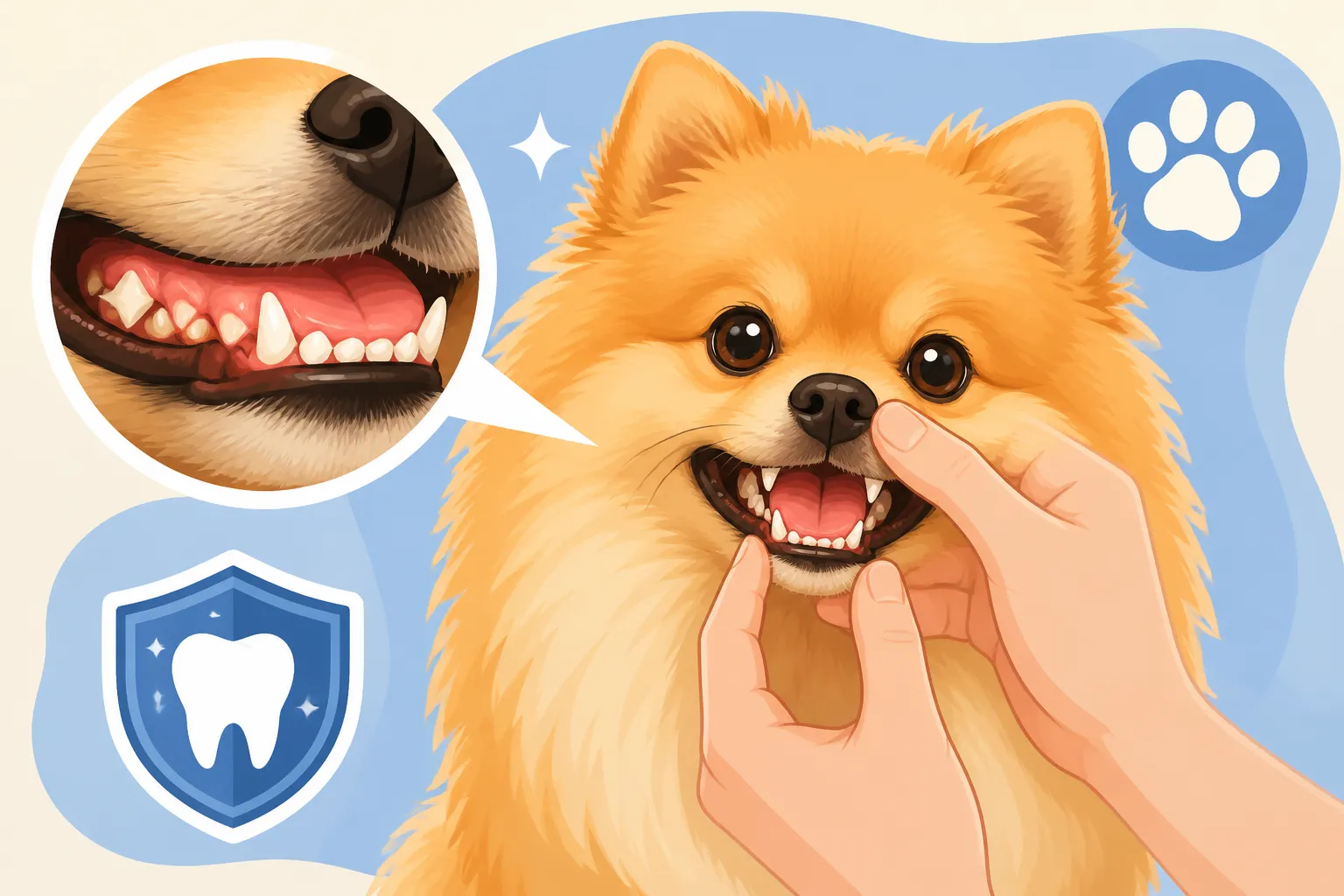
Regularly lifting their lip and examining their gums allows you to catch these changes at their earliest, most treatable stages. You might notice a faint reddish line along the gum margin, where the gum meets the tooth, which is often the first visual cue of gingivitis, the initial stage of periodontal disease. Or perhaps a tooth looks slightly yellower or has a tiny bit of brown buildup near the gum line, indicating nascent plaque and tartar. Catching these minimal signs means you can act quickly, potentially reversing the problem with increased home care and perhaps a veterinary dental cleaning, before it escalates into something far more serious like tooth loss or systemic infection. Ignoring these early signs could lead to needing significant Extractions in a Pomeranian's Small Jaw later.
Your Step-by-Step Guide to Gently Checking Your Pomeranian's Gums
Checking your Pomeranian's gums doesn't have to be a wrestling match. With a gentle approach, patience, and positive reinforcement, it can become a routine part of their care. Remember, their mouth is a sensitive area, and building trust around this interaction is key. Don't try to accomplish everything in one go, especially when you're first starting. Aim for short, positive sessions, gradually increasing the duration as your pup becomes more comfortable. It's about creating a positive association, not a stressful one.
Creating a Calm Environment for Your Pup
The secret to a successful gum check often lies in setting the right mood. Choose a time when your Pomeranian is already relaxed and calm, perhaps after a nice walk or a cuddle session on the sofa. Avoid times when they're super excited or playful, as they'll be less likely to cooperate. Find a quiet spot in your home where you both feel comfortable – maybe their favorite spot on the couch, or even sitting on the floor with them. Having good lighting is also essential so you can clearly see what you're looking for.
Start by simply petting them around their head and muzzle, talking to them in a soft, reassuring voice. Offer a high-value treat, something they absolutely adore, like a tiny piece of cooked chicken or a special soft chew. Gently lift their lip for just a second, give the treat, and praise them profusely. Repeat this several times over a few days, gradually extending the time you hold their lip up. The goal is to make them associate the act of having their mouth handled with positive experiences and yummy rewards. You can even use dental-friendly treats purchased from places like Chewy or Amazon to reinforce this positive connection. Building this foundation of trust will make all future dental care, including Whether a Pomeranian Needs Its Teeth Brushed Daily, much easier.
What Healthy Gums Look Like and What to Watch For
Once your Pomeranian is comfortable with you examining their mouth, you'll need to know what a healthy mouth looks like so you can spot any deviations. Healthy Pomeranian gums should be a lovely bubblegum pink color, smooth, and moist to the touch. They should fit snugly around each tooth, with no signs of swelling, redness, or recession. When you gently press on a healthy gum with your finger, the color should briefly lighten to white or pale pink, then return to its normal pink within one to two seconds. This is called capillary refill time, and it's a good indicator of healthy circulation. The teeth themselves should be clean, white, and free from any significant brown or yellow buildup.
| Characteristic | Healthy Pomeranian Gums | Signs to Watch For |
|---|---|---|
| Color | Pale to bubblegum pink | Bright red, deep purple, bluish, very pale, yellow-tinged |
| Texture | Smooth, firm, moist | Swollen, puffy, bleeding, dry, ulcerated, lumpy |
| Capillary Refill Time (CRT) | 1-2 seconds (returns to pink quickly after gentle pressure) | Slow (longer than 2 seconds), no color change |
| Odor | Neutral, faint "doggy" smell | Strong, foul, metallic, sickly sweet |
| Gum Line | Snug around teeth, no recession | Red line at tooth base, receding gums, pockets |
| Teeth | Clean, white, free of buildup | Yellow, brown tartar, broken, loose, extra teeth |
Conversely, unhealthy gums will often present with noticeable changes. Redness or inflammation, especially along the gum line, is a primary indicator of gingivitis. Swollen or puffy gums, bleeding when touched, or a yellowish tint could all signal problems. Very pale or white gums might indicate anemia or shock, while bluish or purplish gums could point to a lack of oxygen – both of which are emergencies. Don't forget to check the roof of their mouth and under their tongue for any growths, sores, or foreign objects. A consistently foul odor, often described as metallic or rotten, is almost always a sign of underlying infection or disease. Keeping an eye on these indicators is crucial, especially because The Age a Pomeranian Should Lose Its Baby Teeth and The Baby Canines a Pomeranian Fails to Lose can sometimes lead to overcrowding and rapid plaque accumulation.
What to Do When You Spot Something Concerning
It's natural to feel a pang of worry when you discover something unusual in your Pomeranian's mouth during a home check. Your immediate reaction might be panic, but it's important to remain calm and systematic. Your observations are incredibly valuable information for your veterinarian. Remember, your job at home is to observe and report, not to diagnose or treat. Even small changes can sometimes be indicative of larger issues, especially in a breed as prone to dental problems as Pomeranians are.
When to Call the Vet Immediately
Certain findings warrant an immediate call to your veterinarian. If you notice severe bleeding, pus oozing from the gums, a broken or loose tooth, or any growths or lumps, do not hesitate. These are signs of acute problems that require professional attention without delay. Similarly, if your Pomeranian is showing obvious signs of pain – yelping when you touch their mouth, refusing to eat, pawing at their face, or excessive drooling – it's time to get them to the vet. These symptoms suggest significant discomfort and potentially a serious infection that needs prompt treatment.
It’s also critical to contact your vet if you observe very pale, white, blue, or purple gums, as these can be indicators of systemic health emergencies like anemia, shock, or breathing difficulties. While rare, these color changes are critical and can indicate a life-threatening situation. Be prepared to describe exactly what you've observed, how long it's been present, and any other changes in your Pomeranian's behavior or appetite. Your detailed description will help your vet understand the urgency and prepare for their examination. Knowing when to escalate your concerns is paramount in protecting your tiny companion's health. You should also consider Anesthesia Risk in a Four Pound Pomeranian when discussing potential treatment with your vet.
Supporting Your Pomeranian's Dental Health Between Checks
Regular home checks are fantastic, but they're just one piece of the puzzle. Proactive daily dental care is truly the cornerstone of maintaining your Pomeranian's oral health between professional cleanings. Brushing your Pomeranian's teeth every day is the single most effective thing you can do to prevent plaque and tartar buildup. Invest in a soft, small toothbrush designed for dogs, or even a finger brush, and use a veterinary-approved enzymatic toothpaste. Many great options are available on Chewy, offering different flavors your Pom might find appealing. Even a few minutes a day can make a world of difference. You might also want to read The Toothpaste to Use on a Pomeranian for more in-depth advice on this.
Beyond brushing, dental chews and water additives can offer supplementary benefits, but they should never replace brushing. Look for dental chews that are appropriately sized for your Pomeranian's small jaw and have been clinically proven to reduce plaque and tartar, rather than just being a hard treat. You can find a good selection of these on Amazon. Certain diets, particularly those formulated for dental health, can also help reduce plaque. Some owners even explore fresh food options, like those offered by Ollie, consulting with their vet to ensure it's balanced and beneficial for dental hygiene, as the texture can sometimes help clean teeth naturally as they chew. The key is consistency and combining multiple strategies to create a comprehensive dental care routine.
Common Pomeranian Gum Issues and How to Identify Them
Given their adorable, compact size, Pomeranians are disproportionately prone to dental problems. Their tiny jaws often mean crowded teeth, creating perfect little nooks and crannies for food particles and bacteria to hide, leading to rapid plaque and tartar accumulation. Understanding the most common issues specific to this breed can help you be even more effective in your home checks. It's not about being an expert, but about knowing what specific signs warrant a closer look or a conversation with your vet.
Gingivitis: The First Stage of Trouble
Gingivitis is the initial, and thankfully reversible, stage of periodontal disease. It's essentially an inflammation of the gums caused by the accumulation of plaque and tartar on the teeth. What you'll typically see during a home check is a distinct red line along the gum margin, right where the gum meets the tooth. The gums might also appear slightly swollen or puffy, rather than flat and firm, and they might bleed easily when touched or when your dog chews on something hard. This redness and swelling can sometimes extend slightly into the attached gum tissue.
The good news about gingivitis is that if caught early, it's completely reversible with consistent and proper home dental care, like daily brushing, and often a professional dental cleaning under anesthesia. If you notice these signs, it's a clear signal to intensify your brushing efforts and schedule a vet visit to discuss a professional cleaning. Ignoring gingivitis, however, allows it to progress into periodontitis, which involves irreversible damage to the supporting structures of the teeth and can lead to tooth loss. It's a critical crossroads, and your early detection can make all the difference in halting the disease's progression. This is often the precursor to full-blown Gum Disease in a Pomeranian.
Foreign Objects and Injuries: Unexpected Dangers
Due to their inquisitive nature and often tiny mouths, Pomeranians can sometimes get foreign objects lodged in their gums or between their teeth. This could be anything from a splinter from a chew toy, a piece of a stick they picked up outside, or even a stray piece of kibble that got stuck in an awkward spot. I once knew a Pom who had a tiny bit of rawhide wedged so tightly between two back molars it caused significant irritation and swelling. These foreign objects can lead to localized inflammation, pain, and even infection if not removed.
During your gum checks, always run your finger gently along the gum line and between the teeth, if your dog tolerates it, feeling for any bumps or anomalies. Look for any redness, swelling, or discharge that seems localized to a specific tooth or area. Sometimes, a linear red mark on the gum could indicate something sharp has scratched it, even if the object itself is no longer there. Additionally, their small mouths are surprisingly vulnerable to injuries, especially if they chew aggressively on inappropriate items, play too roughly with other dogs, or fall and hit their face. A chipped or fractured tooth might not always be obvious but can lead to pain and infection if the pulp cavity is exposed. Always examine each tooth for any cracks, chips, or unusual wear. This vigilant checking can prevent a minor irritation from escalating into a serious infection or abscess, which could be incredibly painful for your little one.
Disclaimer
This article is for general informational purposes only and does not constitute professional advice. Laws, prices and regulations vary by location and change over time. Consult a qualified professional for guidance on your specific situation.