The Baby Canines a Pomeranian Fails to Lose
It’s a moment every new Pomeranian parent looks forward to: watching those tiny, needle-sharp puppy teeth fall out, making way for the stronger, more permanent adult set. But for many of us, that transition isn't as smooth as we'd hope, especially when it comes to those prominent canine teeth. We see adult teeth emerging, yet the stubborn baby canines refuse to budge, creating a frustrating and often painful double-row situation for our tiny companions. This guide is here to walk you through exactly what's happening, why it's so common in Pomeranians, and what you can do to ensure your furry friend has a healthy, comfortable mouth.
Understanding Retained Deciduous Teeth in Pomeranians
You’ve probably heard the term "baby teeth" for puppies, just like human babies. But for our Pomeranians, these aren't just cute little nubs; they're critical for their early development, but their failure to fall out can lead to a cascade of problems. It’s a common worry, and one that often catches new Pom parents by surprise.
What Are Deciduous Teeth and Why Do They Matter
Deciduous teeth, simply put, are a puppy's baby teeth. Just like us, puppies are born without teeth, then quickly grow a full set of 28 temporary teeth. These are incredibly important for them to learn to chew, play, and navigate the world during those crucial first few months. Normally, as a puppy matures, around 3-4 months of age, the roots of these deciduous teeth begin to resorb, meaning they dissolve away. This process weakens the tooth's anchor in the jaw, allowing the adult tooth that's pushing up underneath to naturally push the baby tooth out. By the time a Pomeranian is typically 6-7 months old, they should have a full set of 42 permanent adult teeth.
However, for many toy breeds like our beloved Pomeranians, this natural process doesn't always go according to plan. Their tiny mouths and compact jaw structures often create anatomical challenges. The adult teeth might not erupt in the exact position needed to properly resorb the roots of their baby counterparts. This leaves those baby teeth stubbornly in place, causing a host of issues that can impact their dental health for the rest of their lives. It's not just a cosmetic problem; it's a structural one that can set the stage for much more serious conditions down the line. Many owners don't realize the critical window for checking these teeth, often missing the ideal time for intervention.
The Specific Problem with Canine Teeth
While any baby tooth can be retained, it's the canine teeth—those four prominent, pointy teeth, two on the top jaw and two on the bottom jaw, often referred to as fangs—that tend to give Pomeranian owners the most trouble. Why these in particular? Their roots are exceptionally long and deeply embedded in the jawbone. For the adult canine tooth to successfully push out the baby one, it needs to erupt directly under it, perfectly aligning to dissolve that long root. In a Pomeranian's small jaw, there's often simply not enough space or the correct alignment for this to happen.
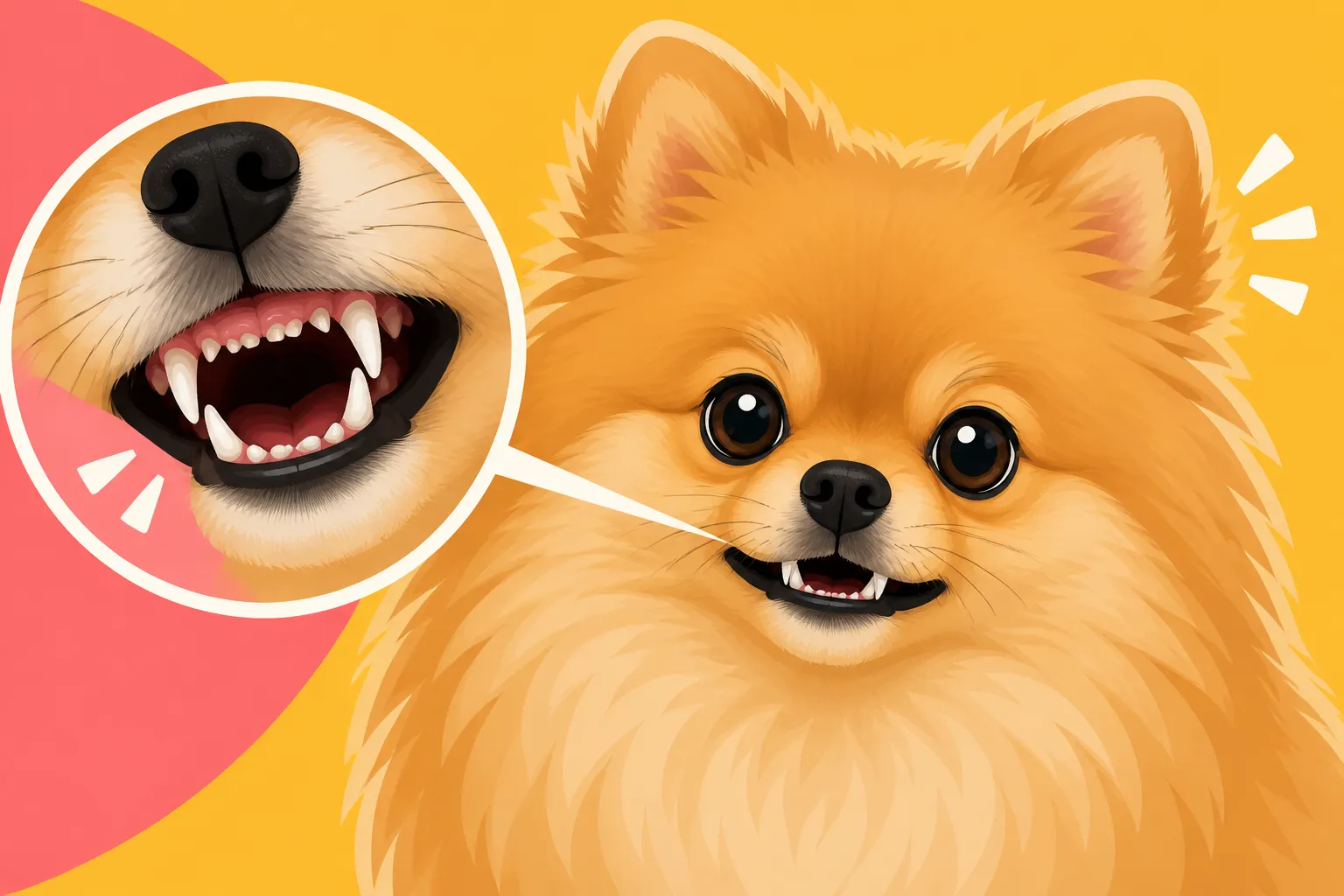
What you end up seeing is often described as a "double row" of teeth. You'll observe the permanent canine tooth erupting either in front of, behind, or next to the retained baby canine. This double-tooth appearance is a clear signal that something isn't right. Imagine having two teeth trying to occupy the same parking spot in your mouth – it’s crowded, uncomfortable, and prone to problems. These retained baby canines can cause significant issues beyond just crowding. They can redirect the adult teeth into incorrect positions, leading to a permanent malocclusion (bad bite), or they can trap food and debris between the two teeth, accelerating the onset of dental disease. It’s a very specific and challenging problem for our Poms, and one that requires careful attention.
Recognizing the Signs and Symptoms
Catching retained deciduous teeth early is key to preventing bigger problems. As a Pomeranian parent, you're the first line of defense, and knowing what to look for can make all the difference. Sometimes, the signs are obvious, but other times, they can be subtle and easily missed if you're not intentionally checking.
Visual Cues of Retained Canines
The most straightforward way to spot retained canine teeth is by visually inspecting your Pomeranian's mouth. This is something you should get into the habit of doing regularly from the moment your puppy starts teething. Begin checking when your Pom is around 4 months old, and continue doing so weekly until they are at least 8-9 months. Gently lift their lips and look carefully at the gum line. What you're specifically looking for is the presence of two teeth where there should only be one.
For the canine teeth, this means seeing a baby canine still firmly in place while the new, larger adult canine is pushing through right next to it. The baby canine might be slightly smaller or thinner, but it will be unmistakable. The adult canine often erupts on the inside (tongue side) or outside (lip side) of the baby tooth, creating that "shark mouth" or "double-tooth" effect. Pay close attention to the upper jaw, as these canines often become retained, but don't forget the lower jaw either. If you see this double-tooth scenario any time after your Pomeranian reaches about 6 months of age, it’s a clear indication that the baby tooth isn't going to fall out on its own. It's often at this point that you'll begin to consider a dental check-up, especially if you want to avoid serious issues like those covered in "Dental Disease in a Mouth the Size of a Pomeranian's".
Behavioral Indicators of Discomfort
Sometimes, your Pomeranian might be experiencing discomfort even before you've noticed the visual cues. Changes in their behavior can be early warning signs that something is amiss in their mouth. Since their mouths are so small and sensitive, even a slightly misaligned or retained tooth can cause significant irritation.
One common behavioral sign is a change in eating habits. Your Pom might suddenly become pickier about their food, or show a reluctance to chew hard kibble or favorite treats. They might try to chew on one side of their mouth, or drop food frequently. You might notice them pawing at their mouth or rubbing their face against furniture or your leg, trying to alleviate an itch or dull ache. Reluctance to play with their usual chew toys, or a decrease in overall energy levels, can also be subtle indicators of pain or discomfort. Another tell-tale sign that often surprises owners is bad breath. While a little "puppy breath" is normal, persistent bad breath, especially if it's noticeably foul, can signal trapped food, inflammation, or infection around a retained tooth. This points to an underlying problem that needs veterinary attention, and recognizing it early can prevent further complications, as we discuss in "What a Pomeranian's Breath Says About Its Gums". Don't just dismiss these changes as typical puppy quirks; investigate them, especially if you suspect dental issues.
The Health Risks of Unaddressed Retained Canines
Ignoring retained baby canines is not an option for Pomeranian owners. While it might seem like a small issue, the long-term consequences can be severe, impacting not just their oral health, but their overall well-being and quality of life. The tiny, crowded nature of a Pomeranian's mouth makes them especially vulnerable to these complications.
Crowding, Misalignment, and Periodontal Disease
When a baby canine fails to fall out, the adult canine has to erupt somewhere, and that's usually right next to the retained tooth. This creates an incredibly crowded environment in an already small jaw. This crowding prevents the adult teeth from settling into their proper positions, leading to malocclusion, or a "bad bite." Imagine trying to fit too many books on a small shelf – they'll be crammed, at odd angles, and won't sit properly.
This improper alignment isn't just cosmetic; it's a breeding ground for severe dental problems. The tight spaces between the retained baby tooth and the newly erupted adult tooth act like tiny traps for food particles, plaque, and tartar. Brushing becomes incredibly difficult, if not impossible, in these cramped areas, allowing bacteria to flourish unchallenged. This accelerates the development of gingivitis, which is inflammation of the gums, and can quickly progress to full-blown periodontal disease. This insidious condition destroys the supporting structures of the teeth, including the gums, ligaments, and eventually the jawbone itself. Left untreated, it can lead to painful infections, tooth decay, and ultimately, premature tooth loss. This exact scenario highlights why understanding "Why a Pomeranian's Teeth Crowd and Rot" is so important for long-term health.
Pain, Infection, and Jaw Problems
Beyond the gradual progression of periodontal disease, retained canines pose immediate and significant risks for pain and infection. The constant presence of two teeth trying to occupy the same space means perpetual irritation to the gums and surrounding tissues. This can cause chronic inflammation, making chewing painful and leading to a significant decrease in your Pom's quality of life. They might avoid certain foods, become irritable, or even show aggression if their mouth is touched due to the persistent discomfort.
What’s even more concerning is the high risk of infection. The trapped food and bacteria, combined with irritated gum tissue, create a perfect environment for bacterial growth. This can lead to painful abscesses forming at the root of the retained tooth or the adjacent adult tooth. These abscesses are not just localized problems; the infection can spread into the jawbone or even enter the bloodstream, potentially leading to more serious systemic health issues affecting organs like the heart, kidneys, or liver. In extreme cases, the chronic inflammation and pressure from the retained tooth can even lead to deformation of the jawbone or weakened areas, making the jaw more susceptible to fractures, especially in small breeds with delicate bones. This is why addressing "Pulling a Pomeranian's Retained Canines" promptly is crucial.
Diagnosis and Treatment Options
If you suspect your Pomeranian has retained deciduous teeth, or if you've noticed any of the visual or behavioral signs, the next step is a trip to your veterinarian. Early and accurate diagnosis is essential for effective treatment and preventing future complications.
Veterinary Examination and X-rays
A thorough veterinary examination is the first and most critical step. Your vet will carefully inspect your Pomeranian’s mouth, checking for any double teeth, signs of inflammation, plaque buildup, or malocclusion. They'll also assess the general health of your Pom's gums and other teeth. Don't be surprised if this examination includes some gentle palpation of the jaw and cheeks to check for any swelling or discomfort.
While a visual exam can certainly identify outwardly visible retained teeth, it’s often not enough to get the full picture. This is where dental X-rays become invaluable. X-rays allow your vet to see what's happening below the gum line, revealing the roots of both the retained baby tooth and the developing adult tooth. They can confirm whether the root of the baby tooth is truly failing to resorb, identify any hidden infections, assess the position of the adult tooth, and check for other anomalies that might not be visible to the naked eye. In some cases, a vet might even recommend consulting with a veterinary dental specialist, especially if the situation is complex or if there are concerns about significant malocclusion. It’s a proactive step that can save your Pomeranian a lot of pain and prevent more extensive procedures down the road, as often discussed when considering "Extractions in a Pomeranian's Small Jaw".
The Extraction Procedure
In almost all cases of retained deciduous canine teeth in Pomeranians, the recommended treatment is extraction. The baby tooth needs to be removed to allow the permanent adult tooth to fully erupt and settle into its correct position, or at least prevent further crowding and damage. This isn't a procedure you want to delay once identified, as the longer the baby tooth remains, the more likely it is to cause permanent damage to the adult tooth or surrounding structures.
The extraction is performed under general anesthesia. This is crucial for several reasons: it ensures your Pomeranian remains still and free from pain, allowing the vet to perform a precise and safe extraction, and it enables comprehensive dental cleaning and full mouth X-rays while they are asleep. The vet will carefully extract the baby tooth, ensuring that the entire root is removed to prevent complications. Special care is taken to avoid damaging the adjacent adult tooth, which is still developing. After the extraction, the site might be sutured to aid healing.
Post-operative care is also very important. Your vet will likely prescribe pain medication and possibly antibiotics. You'll need to feed soft food for a few days and monitor the extraction site for any signs of swelling or infection. The good news is that most Pomeranians recover quickly from this procedure, and removing the source of irritation significantly improves their comfort and long-term oral health. When considering the costs and risks, it’s often helpful to look into "Anesthesia Risk in a Four Pound Pomeranian" and understand that reputable vets take many precautions.
Prevention and Long-Term Dental Care
While some cases of retained deciduous teeth are simply genetic, there are definitely steps you can take as a Pomeranian owner to monitor, prevent, and manage your dog's oral health proactively. Early intervention is always the best approach, coupled with consistent daily care.
Early Intervention and Monitoring
The single most impactful thing you can do for your Pomeranian regarding retained deciduous teeth is to establish a routine of early and consistent monitoring. Start checking your puppy's mouth regularly from about 8-10 weeks of age, getting them comfortable with having their lips lifted and their teeth inspected. When they start teething around 3-4 months, increase these checks to weekly. You're looking for any adult teeth starting to erupt while the baby tooth is still firmly in place.
It's crucial not to adopt a "wait and see" approach, especially once your Pom is past 6 months of age and you notice a double tooth. Many owners mistakenly believe the baby tooth will eventually fall out, but with canines, this is rarely the case once the adult tooth has begun to erupt alongside it. A prompt visit to your vet for a dental assessment is warranted at the first sign of a retained deciduous tooth. The earlier the retained tooth is identified and removed, the less likely it is to cause crowding, misalignment, or damage to the permanent adult tooth. Early intervention means a simpler procedure and a quicker recovery for your small companion, often saving you from more complex and expensive dental issues down the line. This proactive stance is essential for avoiding the deeper dental problems that plague toy breeds.
Maintaining Overall Oral Hygiene
Beyond addressing specific issues like retained teeth, maintaining excellent overall oral hygiene for your Pomeranian is paramount for their long-term health. Due to their small mouths and propensity for dental issues, Poms need diligent daily care.
Daily tooth brushing is the gold standard for preventing plaque and tartar buildup. Use a small, soft-bristled toothbrush and a pet-specific toothpaste (never human toothpaste, as it can be toxic). Aim for gentle brushing strokes, focusing on the gum line where plaque accumulates most. It might take some time to get your Pom used to this routine, but consistency is key. Beyond brushing, there are other tools that can help. Look for appropriate dental chews and toys that are specifically designed for small breeds and have been vetted by veterinary dental associations for effectiveness and safety. Be cautious with extremely hard chews (like antlers or real bones) as these can fracture delicate Pomeranian teeth. Some vets also recommend water additives or dental rinses, but these are usually supplementary to brushing, not a replacement. A diet of high-quality kibble can also contribute to dental health, though it won't prevent plaque buildup on its own. Remember, regular professional dental cleanings under anesthesia, as recommended by your vet, are also a vital component of a comprehensive oral hygiene plan to address potential issues like "Gum Disease in a Pomeranian".
Here's a quick comparison of dental care methods:
| Method | Effectiveness for Plaque/Tartar | Ease of Use | Cost (Annual Estimate) | Notes |
|---|---|---|---|---|
| Daily Brushing | High | Moderate | $20-50 (toothpaste, brush) | Gold standard. Requires consistency and training. |
| Dental Chews/Treats | Moderate | High | $100-300 | Good supplement. Ensure vet-approved & size-appropriate. |
| Water Additives/Rinses | Low-Moderate | High | $50-150 | Best as an adjunct to brushing. |
| Professional Dental Cleaning | Very High (preventative/treatment) | Low (vet does it) | $400-1000+ | Essential for deep cleaning and addressing issues below gum line. |
Financial Considerations and Pet Insurance
It's a tough reality, but providing the best care for our Pomeranians, especially when dental issues arise, often comes with a significant financial cost. Understanding these potential expenses and planning for them can help ease the burden when your Pom needs attention for something like retained canines.
Cost of Dental Procedures
When a Pomeranian needs to have retained baby canine teeth extracted, it's not a simple, in-and-out visit. Because the procedure requires general anesthesia, thorough oral examination, and often dental X-rays, the costs can add up quickly. A typical procedure for extracting retained canines usually includes:
- Pre-anesthetic bloodwork: Essential for ensuring your small Pom is healthy enough for anesthesia, especially given "Anesthesia Charges on a Five Pound Pomeranian". This might range from $80 to $200.
- Anesthesia monitoring and administration: This is a significant portion of the cost, often $300 to $700, depending on the length of the procedure and monitoring involved.
- Dental X-rays: Crucial for seeing the tooth roots and checking for other issues, these can cost $150 to $300 for a full mouth series.
- The extraction itself: The cost per tooth can vary, but for canines, which have long roots and require careful technique, it might be $100 to $300 per tooth. If there are multiple retained teeth or other issues found during the dental, the cost will increase.
- Medications: Post-operative pain relief and antibiotics can add another $30 to $100.
- Follow-up visits: Sometimes a follow-up is needed to check healing, adding another $50-$100.
In total, you could be looking at a bill ranging anywhere from $600 to $1,500 or more for retained canine extractions, even if it's just one or two teeth. These numbers can fluctuate based on your geographic location, the specific veterinary practice, and the complexity of the extraction. This is why many owners are often shocked by the expense, and it highlights why it's wise to plan ahead for these types of health issues. Considering this, understanding "What Extracting a Pomeranian's Retained Canines Costs" is crucial for budgeting.
How Pet Insurance Can Help
Given the potentially high costs of veterinary dental procedures, pet insurance can be a real lifesaver for Pomeranian owners. While not all policies are created equal, a good accident and illness plan can significantly reduce your out-of-pocket expenses for issues like retained deciduous teeth.
Most comprehensive pet insurance policies will cover the costs associated with necessary dental extractions, as long as the condition isn't pre-existing. This means it's incredibly important to enroll your Pomeranian in a pet insurance plan before any dental issues, like retained baby teeth, are diagnosed. If a vet notes "retained deciduous teeth" in your puppy's medical record before you have insurance, it might be considered pre-existing and therefore excluded from coverage.
When choosing a policy, look for one that covers illness and accidents, and inquire specifically about dental coverage. Some plans even offer wellness add-ons that can help with routine cleanings. Companies like Healthy Paws are well-known for their comprehensive accident and illness plans, which often cover dental issues that arise from illness or injury, including medically necessary extractions. Always read the policy details carefully to understand deductibles, reimbursement percentages, and annual limits. Having a reliable pet insurance policy in place, such as one from Healthy Paws, can provide immense peace of mind, knowing that you can afford the best possible care for your Pomeranian without breaking the bank when unexpected (or even anticipated) dental problems crop up. It allows you to make decisions based on what's best for your Pom's health, rather than what you can financially manage at that moment.
Disclaimer
The information provided in this guide is intended for general informational purposes only and does not constitute veterinary medical advice. Always consult with a qualified veterinarian for any health concerns or before making any decisions about your Pomeranian's care and treatment.