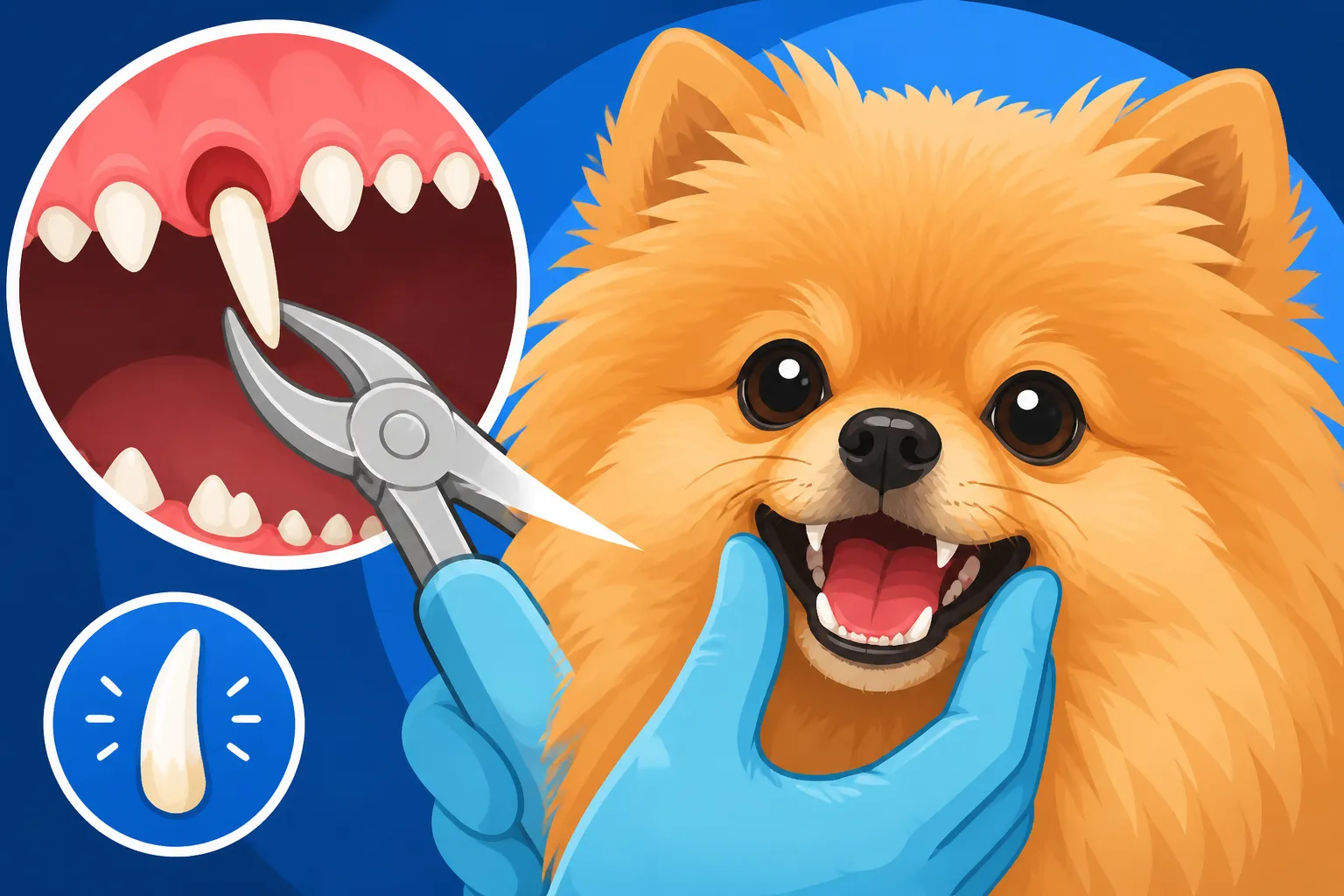
Pulling a Pomeranian’s Retained Canines
It’s incredibly common for Pomeranian owners to discover, with a pang of worry, that their tiny fluffball has two teeth stubbornly trying to occupy the same spot in their mouth. Those persistent little puppy canines just refuse to budge, even when the adult teeth are pushing through right alongside them. This situation, known as retained deciduous canines, isn't just a quirky trait; it's a serious dental issue that needs attention. This guide will walk you through everything you need to know about why this happens, the risks involved, and what the procedure for pulling these retained canines entails to keep your beloved Pom healthy and happy.
What Exactly Are Retained Canine Teeth in Pomeranians?
When you’re doting on your Pomeranian puppy, you’re probably watching for all sorts of milestones – their first bark, their first zoomies, maybe even the first time they decide your shoes are their new favorite chew toy. What you might not be actively looking for, but absolutely should be, is the smooth transition of their baby teeth making way for their adult set. Unfortunately, for many Poms, this process isn't always smooth sailing, especially when it comes to their canine teeth.
Understanding the Puppy Tooth Lifecycle
Just like human babies, Pomeranian puppies are born without teeth, and then develop a set of "milk teeth" or deciduous teeth. These 28 sharp little puppy teeth typically start erupting around 3-4 weeks of age. They’re absolutely vital for learning to chew, explore the world (with their mouths, naturally!), and prepare their tiny jaws for the permanent set.
Around 3 to 4 months of age, these puppy teeth should naturally start to fall out, making room for the 42 larger, stronger adult teeth. This shedding process usually continues until about 6 to 7 months of age. The roots of the puppy teeth are supposed to resorb, or dissolve, allowing the teeth to loosen and eventually fall out as the permanent teeth push through. It’s a beautifully orchestrated natural event. However, for many small breeds, especially Pomeranians, this process often goes awry, leaving owners scratching their heads and wondering why their pup has a mouthful of shark teeth.
The specific problem with retained canines happens when the root of the puppy canine tooth doesn't resorb properly. Instead of dissolving, it remains firmly anchored in the jaw, preventing the baby tooth from falling out. Meanwhile, the adult canine tooth, being a persistent little guy, simply erupts next to it or in a slightly altered position, trying to find its place in an already crowded mouth. This can be due to genetic predispositions in toy breeds, where the small jaw size simply doesn’t have enough space for the teeth to erupt in a perfect sequence, or the permanent tooth might not be in the right position to nudge the baby tooth out.
Identifying a Retained Canine
Catching a retained canine early is absolutely key to preventing more serious issues down the line. It's not always obvious, especially with all that gorgeous Pomeranian fluff around their sweet little faces, but with a bit of careful observation, you can often spot the problem yourself.
The most tell-tale sign is seeing two teeth occupying what should be a single space – often referred to by vets as "double dentition." Specifically, you're looking for an adult canine tooth appearing next to a puppy canine tooth that has failed to fall out. This is most common with the upper and lower canine teeth, which are those long, pointy teeth situated at the front corners of their mouth, behind the incisors and before the premolars.
You should start regularly checking your Pomeranian’s mouth from around 4 months of age and continue until they’re about 8 months old. Gently lift their lips and carefully examine both the upper and lower jaws. Are there two teeth where there should only be one? Does one tooth look smaller and sharper (the puppy tooth) right alongside a larger, more permanent-looking one? If you see these double teeth, particularly the canines, don't just hope they'll eventually fall out. They often won't, and waiting only increases the risk of complications. Your vet needs to know right away. Early intervention can make a huge difference in avoiding future pain and expensive procedures. You can find more information about The Age a Pomeranian Should Lose Its Baby Teeth in our other resources.
The Serious Risks of Ignoring Retained Canines
It's tempting to think, "Oh, it's just a baby tooth, it'll come out eventually." But with retained canines in a Pomeranian, that's rarely the case, and ignoring them can lead to a cascade of painful and costly dental problems. Pomeranians, with their tiny mouths, are particularly susceptible to these complications because every millimetre of space counts.
Dental Crowding and Misalignment
Imagine trying to fit two large suitcases into a space meant for one – it’s a mess, right? The same principle applies to your Pomeranian's mouth. When a retained puppy canine sits alongside its adult counterpart, it creates severe dental crowding. This forces the permanent teeth to erupt in abnormal positions, twisting and turning to find any available space.
This misalignment, known as malocclusion, can throw off your Pom's entire bite. Instead of their teeth fitting together perfectly, they might chew awkwardly, leading to discomfort or even pain. Worse still, the abnormal positioning can cause adult teeth to rub against each other, leading to accelerated wear and tear. Even more concerning, a misplaced adult canine might chew directly into the soft tissues of the opposing jaw, causing painful sores or even perforating the palate. The crowding itself also creates tight, inaccessible crevices where food particles, bacteria, and plaque can easily accumulate, becoming a perfect breeding ground for tartar and gum disease. Our article on Why a Pomeranian's Teeth Crowd and Rot delves deeper into these specific issues.
Gum Disease and Oral Pain
The tight spaces created by retained canines are a nightmare for oral hygiene. No matter how diligently you try to brush, those areas are almost impossible to clean effectively. Food gets trapped, turning into plaque, which then hardens into stubborn tartar. This tartar buildup is a direct pathway to gingivitis, the initial stage of gum disease characterized by red, swollen, and sometimes bleeding gums.
If gingivitis isn't addressed, it progresses to periodontitis, a much more severe and painful condition. Periodontitis involves the destruction of the tissues supporting the teeth, including the bone. It can lead to severe pain, loose teeth, and even tooth loss. Imagine having a constant toothache – that's what many Poms with advanced gum disease endure silently. The inflammation can also lead to deep pockets forming around the teeth, creating abscesses that are incredibly painful and can even spread infection to other parts of the body. Nobody wants their furry friend living in discomfort, especially when it’s preventable.
Damage to Adult Teeth
Perhaps one of the most insidious risks of retained canines is the potential for irreversible damage to the permanent adult teeth. When a puppy tooth remains, it can act like a wedge, directing the erupting adult tooth into an unnatural angle. This can cause the adult tooth to emerge improperly, sometimes even rubbing against the retained baby tooth or other healthy adult teeth.
This constant friction can wear away the protective enamel layer of the permanent tooth, leaving it vulnerable to decay and sensitivity. In some cases, the retained tooth can actually cause root damage to the adult tooth, weakening its foundation and shortening its lifespan. It’s like having a splinter in your finger that, over time, infects the entire area. The adult canines are meant to be strong and durable, providing lifelong function for your Pomeranian. Compromising their integrity early on can lead to needing Extractions in a Pomeranian's Small Jaw much sooner than expected, potentially even requiring expensive root canals or early tooth loss. It truly highlights the importance of addressing retained teeth promptly to safeguard your Pom’s long-term oral health.
The Procedure: Pulling Retained Canines
Discovering your Pomeranian has retained canines can feel a bit daunting, especially when you start thinking about veterinary procedures. But trust me, this is a very common issue, and the procedure to fix it is straightforward and highly beneficial for your dog's long-term health. It’s a necessary step to prevent pain and more severe dental problems down the road.
Why Your Vet Recommends Extraction
When your veterinarian recommends extracting a retained canine, they aren't just being cautious; they're acting to prevent a lifetime of potential oral health issues for your Pomeranian. The primary reason is that retained puppy teeth almost never fall out on their own once the adult tooth has fully erupted beside them. Waiting simply allows more time for damage to occur to the permanent tooth, the gums, and the overall alignment of the bite.
The extraction procedure requires general anesthesia, which understandably makes many Pom parents nervous. Pomeranians, being small dogs, do have specific considerations when it comes to anesthesia. Your vet will perform comprehensive pre-anesthetic bloodwork to ensure your dog’s organs are functioning properly and to identify any underlying health conditions that might increase risk. They'll also perform a thorough physical exam and discuss anesthesia protocols tailored for small breeds. Modern veterinary anesthesia is incredibly safe, especially with careful monitoring and proper preparation. You can learn more about specific concerns in our guide on Anesthesia Risk in a Four Pound Pomeranian.
Before the extraction, dental X-rays are crucial. These aren't just for adult teeth; they're essential for assessing retained canines too. X-rays allow your vet to visualize the roots of both the puppy and adult teeth, ensuring that the retained tooth is indeed the deciduous one and that its removal won't accidentally damage the permanent tooth's developing root. They can also reveal if there are any other dental anomalies hiding beneath the gum line, such as unerupted adult teeth or existing damage.
The Extraction Process
Once your Pomeranian is safely under anesthesia, the real work begins. The extraction of a retained canine is a delicate procedure, especially in a small mouth, to ensure that the entire puppy tooth, including its root, is removed without harming the neighboring permanent tooth.
The vet will first use specialized dental instruments to carefully loosen the retained puppy tooth from its socket. Sometimes, a simple extraction can be performed if the tooth is already quite loose. However, more often than not, a surgical extraction is required. This involves creating a small flap in the gum tissue to expose the root, allowing for a cleaner and more complete removal. The vet will then gently remove the tooth and, if necessary, smooth any sharp bone edges and close the gum flap with absorbable sutures. This meticulous approach is vital to prevent any residual root fragments from causing problems later on and to promote proper healing.
Throughout the procedure, your Pomeranian's vital signs will be continuously monitored by a dedicated veterinary technician. This includes heart rate, respiration, blood pressure, and oxygen saturation. Fluid therapy (IV fluids) will also be administered to maintain hydration and support blood pressure, which is especially important for smaller dogs like Poms. The goal is to make the procedure as safe and efficient as possible, ensuring a positive outcome for your little one's oral health.
Post-Procedure Care and Recovery
After the extraction, your Pomeranian will need some tender loving care to ensure a smooth recovery. Your vet will typically send them home with pain medication, which is essential for keeping them comfortable in the days following the procedure. They might also prescribe antibiotics to prevent infection, especially if there was any existing gum inflammation or if the extraction was surgical.
You'll need to feed your Pom a soft food diet for about a week to ten days to avoid irritating the extraction site and allow the gums to heal. This means no crunchy kibble or hard treats. You can soak their regular kibble in warm water to soften it, or temporarily switch to a canned or prescription soft food. It's also important to monitor them for any signs of discomfort, swelling, excessive drooling, or reluctance to eat.
Most Pomeranians recover remarkably quickly from this procedure. Within a few days, they’ll usually be back to their normal playful selves, often with noticeably better breath and a much healthier-looking mouth. This seemingly small procedure is a significant step in preventing more serious dental disease, and it truly contributes to their overall quality of life. The initial cost might feel like a pinch, but proactive care like this can save you significant money and heartache compared to dealing with advanced dental disease later, especially when you consider The Eighteen Thousand Dollar Lifetime of a Pomeranian.
Prevention and Long-Term Oral Health for Your Pomeranian
Dealing with retained canines is a reactive measure, but the good news is that many other dental issues can be prevented with consistent, proactive care. For a Pomeranian, whose mouth is predisposed to crowding and plaque buildup, a solid long-term oral health strategy is absolutely non-negotiable.
Early Detection and Regular Vet Checks
The best defense against dental problems is early detection. From the moment you bring your Pomeranian puppy home, make it a habit to regularly examine their mouth. Gently lift their lips and check their teeth and gums. Become familiar with what a healthy mouth looks like so you can spot any changes. Remember to keep an eye out for those double teeth as their adult canines erupt, typically between 4 and 7 months of age. If you see two teeth in one spot, especially the canines, don't hesitate to call your vet.
Routine veterinary check-ups are paramount. During these visits, your vet will perform a thorough oral examination. They can spot subtle signs of developing issues that you might miss, such as early gingivitis, plaque buildup in hard-to-see areas, or other dental abnormalities. Your vet can also guide you on the typical timeline for tooth eruption and shedding, advising you on when to expect certain baby teeth to fall out and when concern is warranted. This proactive approach ensures that any problems, like retained canines or early stages of gum disease, are addressed promptly, preventing them from escalating into more serious conditions. It's a small investment in time that pays huge dividends in your Pomeranian's comfort and health.
Maintaining Overall Dental Hygiene
Beyond addressing immediate issues like retained canines, consistent daily dental hygiene is the single most important thing you can do to maintain your Pomeranian’s long-term oral health. It might seem like a chore, but it’s a loving act that can significantly extend their healthy lifespan and prevent painful dental disease.
Here’s a practical guide:
- Daily Brushing: This is the gold standard. Aim to brush your Pomeranian's teeth every single day, just like you brush your own. Use a dog-specific toothbrush and toothpaste (never human toothpaste, as it contains ingredients toxic to dogs). Start slowly, making it a positive experience with praise and treats. Focus on the outside surfaces of their teeth, where plaque tends to accumulate most. Our guide on Whether a Pomeranian Needs Its Teeth Brushed Daily offers detailed steps to get started.
- Appropriate Dental Chews and Toys: While brushing is primary, certain dental chews can help reduce plaque and tartar buildup through mechanical abrasion. Be very selective! Choose chews that are sized appropriately for your Pomeranian's small mouth and are flexible enough not to damage their teeth or jaws. Hard chews or bones can easily fracture their tiny teeth. Always supervise your Pom with dental chews to prevent choking. Check out our recommendations for Chews Sized for a Pomeranian's Jaw for safe options.
- Water Additives and Oral Rinses: These can be a helpful supplement to brushing, but they should never replace it. Look for veterinary-approved products that target plaque and bacteria.
- Regular Professional Dental Cleanings: Even with the best home care, plaque and tartar will eventually build up, especially in a Pomeranian's crowded mouth. Your vet will recommend professional dental cleanings under anesthesia, typically once a year, though some Poms might need them more frequently. These cleanings allow the vet to thoroughly scale and polish all tooth surfaces, both above and below the gum line, and perform full mouth dental X-rays to check for issues beneath the gums. This is where most serious dental disease lies hidden. You might be interested in knowing How Many Dentals a Pomeranian Needs in a Lifetime to budget accordingly.
Investing in your Pomeranian’s dental health is investing in their overall well-being. Proactive care significantly reduces the chances of them developing painful conditions like Dental Disease in a Mouth the Size of a Pomeranian's. Remember, reputable pet insurance providers like Healthy Paws often offer coverage for dental illnesses, which can be a huge relief if unexpected procedures arise. It's always a good idea to research What Pet Insurance Runs on a Pomeranian and what policies cover routine and unexpected dental work, as prevention is always better, but knowing you're covered for emergencies provides peace of mind.
Disclaimer
This article is intended for informational purposes only and does not constitute veterinary advice. Always consult with a qualified veterinarian for any health concerns or before making any decisions about your Pomeranian's care.