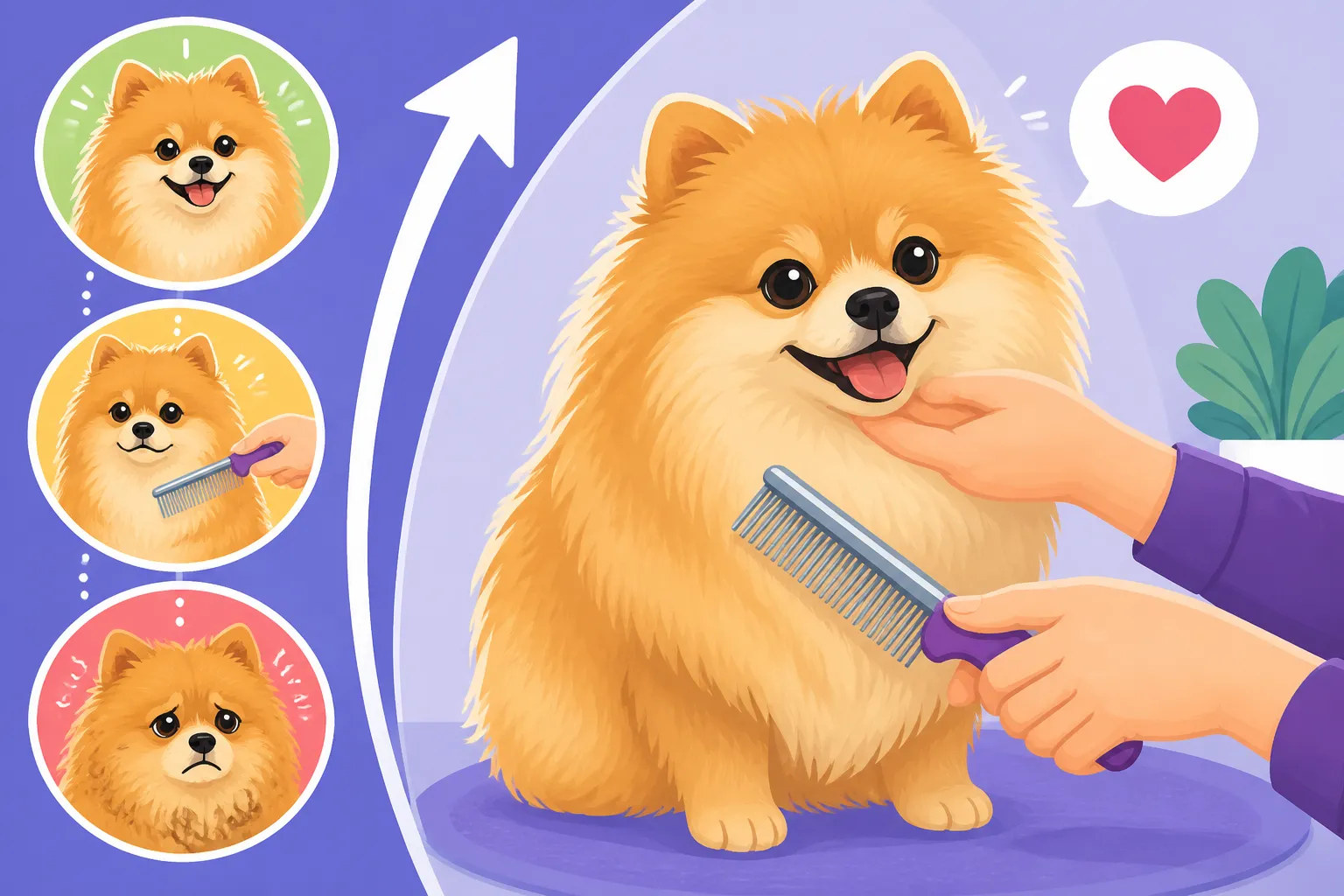
Building a Pomeranian’s Tolerance for Combing Mats
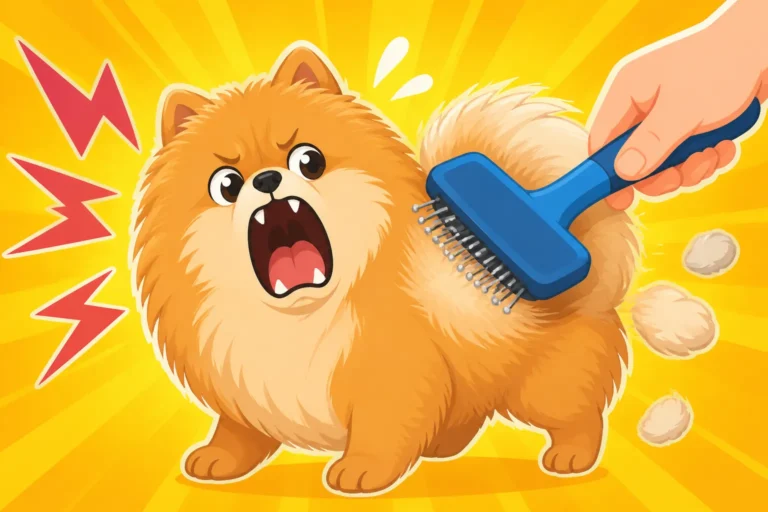
It’s a scenario many Pomeranian owners know all too well: you settle down with your beloved floof, ready for a nice grooming session, only to discover a hidden mat or two. The moment your comb even grazes it, your sweet companion transforms into a wriggling, snapping, or screaming ball of fur, making the task feel impossible and heartbreaking. This guide is here to help you navigate the tricky waters of building your Pomeranian’s tolerance for combing mats, transforming a stressful chore into a manageable, even pleasant, routine for both of you.
Understanding Mats: Why They Form and Why They Hurt
Mats aren't just messy tangles; they're dense clumps of fur, often made up of both guard hairs and undercoat, that can pull at your Pomeranian's delicate skin. Imagine having your hair constantly tugged – that's what a mat can feel like for your little one, even before you try to comb it out. The double coat of a Pomeranian, while beautiful, is highly prone to matting, especially in areas of friction or during seasonal coat blows.
The Double Coat Dilemma
Pomeranians possess a magnificent double coat, a defining feature that gives them their fluffy, round appearance. This coat consists of two layers: a soft, dense undercoat that provides insulation, and longer, coarser guard hairs that protect against the elements. While this combination is perfect for keeping them warm and looking regal, it's also a perfect recipe for tangles and mats if not properly maintained. The undercoat sheds regularly, and if those loose hairs get caught in the guard hairs and aren't brushed out, they compact into felt-like knots. This is particularly noticeable during seasonal changes or in areas where a harness or collar causes constant rubbing.
When a mat forms, it essentially creates a tight, unyielding knot that pulls on the skin. As the mat grows larger and tighter, it restricts blood flow, can cause bruising, and prevents air from circulating to the skin. This moist, trapped environment under the mat becomes a breeding ground for bacteria and yeast, leading to painful skin infections, hot spots, or even parasites hiding undetected. It's not just discomfort; it's a serious health concern that can quickly escalate if left unaddressed.
Areas Prone to Matting and the Pain Factor
Certain areas on a Pomeranian are notorious for matting due to constant movement and friction. These include behind the ears, under the armpits, in the "britches" area around the hindquarters, and often under their collar or harness. Even their tail plume can develop mats where it rests against their back. When you try to comb through these areas, especially if the mats are tight against the skin, you're not just combing hair; you're pulling on delicate skin that's already irritated or inflamed. This sensation can range from mild discomfort to extreme pain, understandably causing your Pomeranian to react defensively.
Their small size and delicate bone structure also mean they're more susceptible to pain and injury from forceful grooming. A tiny tug on a mat can feel amplified for a five-pound dog. This pain creates a strong negative association with grooming tools and the entire process. It's a classic case of classical conditioning: comb comes out, pain happens, so comb equals bad. Our goal is to reverse this association, slowly and patiently, by pairing the grooming tools and actions with positive experiences.
Creating a Positive Grooming Environment
Before you even pick up a comb, the foundation for mat tolerance is built on a positive grooming experience. This isn't just about treats; it's about setting the right mood, using gentle hands, and understanding your Pomeranian's signals. Start small, be consistent, and always prioritize comfort over perfection, especially in the beginning.
The Power of Early Introduction
If you have a Pomeranian puppy, start introducing them to grooming tools and handling from day one. Even before their adult coat comes in, gently touch their paws, ears, tail, and body every day. Let them sniff the brush and comb. Give them a tiny, high-value treat just for sitting calmly while you briefly run a soft brush over their back. The idea is to normalize these tools and touches as part of their daily life, not as a special, scary event. The Week a Pomeranian Puppy Can Start Learning about these routines is crucial.
For adult Pomeranians who already have a negative association, it's never too late to start anew. The process will require more patience, but the principles remain the same. Begin by simply having the grooming tools present in their space while you offer treats and praise, without actually touching them with the tools. Slowly, gradually, introduce light, brief touches with the back of the brush or comb, always followed by a reward. The aim is to create a new, positive emotional response to these items.
Setting the Scene for Success
Choose a quiet time and a calm, comfortable space where your Pomeranian feels secure and there are minimal distractions. This might be on a non-slip mat on the kitchen counter if they're used to being elevated, or on your lap if that's where they feel safest. Avoid rushing or trying to groom when you're stressed, as dogs are incredibly attuned to our emotions. Soft, calming music can sometimes help, but the most important element is your calm demeanor.
Have all your tools ready and within reach so you don't have to break your focus once you start. High-value treats should be on hand – small, soft, and irresistible morsels they don't usually get. Think of cheese, cooked chicken, or peanut butter (xylitol-free!). The goal is to make every interaction with the grooming tools predict something wonderful.
Short, Sweet, and Frequent Sessions
Forget marathon grooming sessions, especially when starting out or dealing with existing fear. Keep sessions incredibly short, sometimes just a minute or two, multiple times a day. The moment you accomplish even a tiny step, like touching an ear with a comb, or gently brushing a few strokes on a non-matted area, stop and reward lavishly. You want to end on a positive note, leaving your Pomeranian feeling successful and eager for the next session. This consistent, positive reinforcement over many small sessions builds trust and tolerance far more effectively than infrequent, lengthy, and stressful battles. How Many Times a Week a Pomeranian Is Brushed often influences whether mats even have a chance to form.
Step-by-Step Approach to Desensitization and Counter-Conditioning
This is where we systematically change your Pomeranian's emotional response to grooming, particularly around those dreaded mats. It’s a process of baby steps, pairing something they dislike (the comb) with something they love (treats and praise).
Phase 1: Touch and Treat
Start by simply touching your Pomeranian with your bare hands in the areas where mats usually form, like behind the ears or under the armpits. If they tolerate this, immediately give a treat and praise. Repeat this many times over several days, making sure it's always a positive experience. Once they're comfortable with your hands, introduce the grooming tool itself – a wide-toothed comb is a good starting point for mats, but you can also use a slicker brush or pin brush for general coat care.
Don't comb yet. Just let the comb touch their fur, then treat. Drag the comb gently over a non-matted area, without pulling, then treat. The goal is to create a new association: "comb touch = yummy treat!" If your Pomeranian is particularly sensitive, you might even start with them just seeing the comb, then getting a treat, slowly building up to physical contact.
Phase 2: Gentle Brushing and Combing (Away from Mats)
Once your Pomeranian is comfortable with the comb touching them, you can start with very light brushing or combing on a non-matted area, like their back or the top of their head. Use a The Slicker and Pin Brush a Pomeranian Needs for general brushing. Do a single, gentle stroke, then immediately reward. Gradually increase to two strokes, then three, always watching their body language for any signs of stress. A yawn, lip lick, head turn, or tensing up are all signals that you might be pushing too fast. If you see these, go back to an easier step.
When introducing the comb for actual detangling, start with areas that are less prone to matting and have looser fur. This helps build their confidence. Remember, the sensation of a comb working through even a small knot can be uncomfortable, so keep it extremely brief and high-reward. Think of it as "one comb stroke, one treat, repeat."
Phase 3: Tackling the Mats with Patience
Now for the mats themselves. This is the most delicate part. You’ll need to work in small sections. Remember Working Through a Mat Behind a Pomeranian's Ear or any other sensitive area. Use your fingers to gently separate the mat from the healthy fur around it, isolating it as much as possible. Then, using a wide-toothed metal comb, start at the very edge of the mat, working only a few strands at a time, and always holding the base of the mat with your fingers to prevent skin pulling. This is called "line brushing" or "combing out from the skin."
Each tiny bit of mat that you loosen is a victory. After each small, successful pull, immediately give a treat and praise. If your Pomeranian tolerates a detangling spray (many are available on Amazon), you can mist it lightly onto the mat to help loosen the hair and reduce static. Work slowly, methodically, and always with a "stop if stressed" mentality. If your Pomeranian becomes too agitated, take a break. It's better to do several short, calm sessions than one long, traumatic one. Consider seeking guidance from reputable online training platforms like BAXTER & Bella for specific desensitization techniques.
Essential Tools and Techniques for Mat Removal
Having the right tools is half the battle when it comes to gently detangling your Pomeranian’s coat. The wrong tools or incorrect technique can turn a minor tangle into a painful ordeal or even damage their beautiful double coat.
The Right Arsenal of Brushes and Combs
For a Pomeranian, you'll need more than just one brush. A good slicker brush is essential for removing loose undercoat and surface tangles, but it won't get to the deeper mats. A pin brush with rounded pins can help fluff out the coat and is often gentler for daily brushing. However, the real hero for mats is a sturdy, fine-toothed metal comb, often called a greyhound comb. Look for one with both wide and narrow-set teeth. The wider teeth can start to break up looser mats, and the finer teeth are for working through the last bits.
Some groomers also use dematting tools or mat splitters. These are blades designed to cut through mats rather than pull them out. However, these must be used with extreme caution and precision, as improper use can easily cut your Pomeranian's skin. For serious, tight mats, it's often safer to visit a professional groomer or your vet, who may even need to shave the mat out or, in extreme cases, lightly sedate your dog for their comfort and safety. Whether a Groomer Sedates a Difficult Pomeranian is a valid concern for many owners.
| Tool Type | Primary Use | Notes for Pomeranians |
|---|---|---|
| Slicker Brush | Removing loose undercoat, surface tangles, general fluffing | Essential for regular maintenance, won't penetrate deep mats |
| Pin Brush | Gentle brushing, fluffing the outer coat, finishing | Good for daily use and sensitive areas, less effective on tight mats |
| Metal Comb | Line brushing, finding hidden tangles, breaking up mats | Crucial for mat removal. Use wide teeth first, then narrow. |
| Detangling Spray | Lubricating hair, easing mat separation | Apply before combing mats; many brands available on Amazon |
| Mat Splitter / Dematting Tool | Cutting through severely tangled mats | Use with extreme caution; best left to professionals to avoid skin injury |
| Blunt-nosed Scissors | Carefully cutting around severe mats (last resort) | Only for severe mats, always pointing away from skin, and very carefully |
The Sectioning and Holding Technique
One of the most crucial techniques for addressing mats is working in small sections and always holding the skin at the base of the mat. Imagine you have a tiny one-inch square of fur. You want to comb that square, not pull on the skin of the entire dog. By holding the skin firmly between the mat and your Pomeranian's body, you absorb most of the pulling tension, preventing it from yanking on their sensitive skin. This significantly reduces discomfort.
Start at the very tips of the mat, gently teasing out the outermost strands. Don't try to pull the comb all the way through the mat from top to bottom. Instead, work incrementally, picking apart tiny bits of the mat from the outside edge inwards, moving closer to the skin only as the mat loosens. This slow, patient process is key to minimizing pain and maintaining your Pomeranian's trust. Detangler Sprays for a Pomeranian can be incredibly helpful here, reducing friction and making the mat easier to work through.
When to Seek Professional Help (and Not Shave!)
There are times when mats are simply too dense, too close to the skin, or too numerous for you to tackle safely at home. In these cases, it's always best to seek professional help from a reputable groomer or your veterinarian. They have specialized tools, techniques, and the experience to remove mats with the least amount of stress and pain for your Pomeranian. Sometimes, mats are so severe that the only humane option is to shave them out. Whether a Matted Pomeranian Has to Be Shaved is a common concern, and it's a decision often made in the best interest of the dog's comfort and health.
It’s important to understand that shaving a Pomeranian's double coat should generally be avoided unless absolutely necessary for severe matting or medical reasons. Shaving can damage the coat follicles, potentially leading to "Post-Clipping Alopecia" where the coat may grow back patchy, discolored, or not at all. This is different from a lion cut, which is a specific style that maintains some length. If your Pomeranian must be shaved due to matting, discuss aftercare and regrowth expectations with your groomer.
Maintaining a Mat-Free Coat and Preventing Future Issues
The best way to deal with mats is to prevent them from forming in the first place. Consistent daily care and a proactive approach will keep your Pomeranian's coat healthy, fluffy, and free from painful tangles, making grooming a much more pleasant experience for everyone.
The Daily Brush-Out Routine
A diligent daily brushing routine is the single most effective way to prevent mats. It doesn't have to be a long, arduous task. Even 5-10 minutes each day, focusing on those mat-prone areas, can make a huge difference. Use a good slicker brush to get through the outer coat, then follow with a metal comb to ensure you're getting down to the skin. Remember the line brushing technique: parting the fur and brushing layer by layer from the skin out. The Minutes a Full Pomeranian Brush Out Takes depends on the density of their coat, but regular maintenance makes it quicker.
Make this daily routine a bonding time. Use gentle strokes, talk softly, and offer small treats throughout. If you've worked through the desensitization process, your Pomeranian will likely associate this time with positive attention and rewards, rather than fear. Consistency is key; skipping a few days can quickly lead to new tangles, especially during shedding season.
Proper Bathing and Drying Techniques
Bathing a Pomeranian can actually make existing mats worse if not done correctly. Water can cause mats to tighten and felt more severely. It's crucial to thoroughly brush and comb out any existing tangles before bathing. Use a good quality shampoo and conditioner designed for dogs, rinsing thoroughly to prevent residue that can attract dirt and contribute to matting. Shampoo That Will Not Flatten a Pomeranian's Coat is important to consider to maintain their fluffy appearance.
After the bath, drying is paramount. Never let a Pomeranian air dry completely, as this can also lead to matting as the wet undercoat clumps. Use a cool or low-heat setting on a dog-specific forced-air dryer, or a human hairdryer held far away from the skin. Always brush and comb the coat while drying, ensuring every layer is fully dry and fluffy. Drying a Pomeranian Without Damaging the Coat is crucial for coat health. This step is critical to prevent new mats from forming as the coat dries.
Preventing Mats from Friction and Lifestyle Factors
Mats often form in areas of high friction. Think about where your Pomeranian’s harness or collar sits. A properly fitted harness that doesn't rub excessively can help. Harnesses Fitted for a Pomeranian's Windpipe also play a role in overall comfort. Regular adjustment and checking of these areas are important. If your Pomeranian loves to roll around on carpets or certain furniture, these actions can also contribute to matting. Even allowing them to play roughly with other dogs can cause tangles.
Consider their overall health and nutrition. A healthy coat is less prone to matting. Ensure they're on a high-quality diet and discuss any coat supplements, like fish oil, with your vet. Regular check-ups with your veterinarian ensure underlying skin conditions aren't contributing to coat issues. Finally, regular visits to a professional groomer, perhaps every 4-8 weeks, can significantly reduce the burden of at-home mat management and ensure their coat stays in top condition.
Disclaimer
This article is for general informational purposes only and does not constitute professional advice. Laws, prices and regulations vary by location and change over time. Consult a qualified professional for guidance on your specific situation.