How Few Puppies a Pomeranian Carries
It's a common dream for aspiring Pomeranian breeders, or even just curious pet owners, to imagine a large litter of fluffy, adorable pups. However, if you're picturing a bustling whelping box overflowing with tiny fluffballs, you might be in for a bit of a surprise. Pomeranians, by their very nature as a toy breed, typically carry a significantly smaller number of puppies compared to larger dog breeds, and understanding this reality is crucial for anyone considering breeding or simply learning more about these pint-sized companions.
The Typical Pomeranian Litter Size
When we talk about Pomeranian litter sizes, it's really important to reset expectations. Unlike a Labrador or a German Shepherd that might easily have 8-12 puppies, a Pomeranian's small stature means their reproductive capacity is quite different. You're not going to see double-digit litters from a Pom, and frankly, that's a good thing for the health of both the mother and the puppies.
What's Considered an Average Litter?
On average, a Pomeranian typically gives birth to one to three puppies. Yes, you read that right – often just a single pup, or perhaps two, and three is considered a nice, healthy-sized litter for the breed. It's truly a testament to their toy breed status. This isn't a hard and fast rule, of course; occasionally, a healthy dam might surprise everyone with four or even five puppies, but these are definitely on the higher end and not the norm. Anything more than five is exceptionally rare and usually comes with increased risks.
Think about it from a biological perspective: a Pomeranian is a tiny dog, generally weighing between 3 and 7 pounds. Their uterus and abdominal cavity simply don't have the physical space to comfortably house a large number of fetuses. It’s a physiological constraint that has been naturally selected for, ensuring the survival of smaller litters where each puppy has adequate space and nutrients to develop. This physical limitation is a key reason why their numbers are consistently on the lower side.
Why Small Litters Are Normal for Toy Breeds
The truth is, small litter sizes aren't unique to Pomeranians; they're a common characteristic across most toy breeds. Breeds like Chihuahuas, Yorkshire Terriers, and Maltese also typically have very modest litter sizes, often in the 1-4 puppy range. This trend is directly linked to their diminutive size and the intense selective breeding that brought them down from their larger ancestors. As discussed in How the Pomeranian Halved in Size in One Lifetime, Pomeranians once weighed significantly more, and with that reduction in size came a corresponding reduction in litter capacity.
This anatomical fact impacts everything from pregnancy management to the costs associated with breeding. For instance, the demand for puppies often outstrips supply, contributing to the higher price points you see for well-bred Pomeranian puppies. Furthermore, the specialized care required for tiny puppies, especially those with potential health issues like Blood Sugar Crashes in a Pomeranian Puppy, makes each individual puppy a precious and significant investment of time and resources.
Factors Influencing Pomeranian Litter Size
While the average range of 1-3 puppies holds true for most Pomeranians, several factors can play a role in whether a particular dam lands on the lower or higher end of that spectrum, or even has a "miss" where no pregnancy occurs. Understanding these influences is vital for responsible breeding practices.
Age and Health of the Dam
Just like in humans, a Pomeranian's age and overall health are significant determinants of her reproductive success. Younger, healthy dams, typically between two and four years old, tend to have the most robust reproductive cycles and may produce slightly larger litters within the breed's normal range. A maiden bitch (one who has never been bred before) might have a smaller first litter, and subsequent litters could be slightly larger.
As a Pomeranian ages, her fertility naturally declines. Dams over the age of five or six might have fewer successful pregnancies and smaller litters. Furthermore, any underlying health conditions can drastically impact litter size and viability. For example, a Pomeranian with poor dental health, a common issue for the breed, might experience chronic inflammation or infection that stresses her system and reduces her ability to carry a healthy litter. Similarly, hormonal imbalances or systemic illnesses can lead to smaller litters or even reabsorption of fetuses early in pregnancy. Good nutrition, regular veterinary check-ups, and a calm environment are paramount for a healthy pregnancy. Companies like Healthy Paws offer insurance plans that can help manage the costs of keeping a breeding dam in peak condition, covering potential health issues that might otherwise impact her ability to carry a litter.
Genetics and Lineage
Genetics plays an undeniable role in litter size. Some Pomeranian lines are known for consistently producing slightly larger litters (still within the 1-5 range, mind you), while others may frequently have single-puppy litters. This genetic predisposition is something reputable breeders consider when planning breedings. A breeder will often look at the dam's mother's history, and even the sire's lineage, to get an idea of potential litter sizes. It’s a complex interplay of inherited traits that influence ovulation rates, uterine health, and embryonic survival.
When selecting a breeding pair, a responsible breeder will meticulously research pedigrees, focusing on genetic diversity and health clearances. They aim to pair dogs that complement each other not just in conformation and temperament, but also in reproductive health. While you can't force a larger litter through genetics, understanding the inherent tendencies of certain lines can help breeders make informed decisions. It's a fine balance between preserving desired traits and ensuring the health and reproductive vitality of the breed, always keeping in mind The Three to Seven Pounds a Pomeranian Is Allowed by standard.
Timing and Breeding Practices
The success of a breeding, and thus the potential litter size, also heavily depends on precise timing and sound breeding practices. Pinpointing the exact window of ovulation in a female Pomeranian requires careful monitoring, often involving progesterone testing at a veterinary clinic. Missing this optimal window can result in a failed breeding or a very small litter, as fewer viable eggs are fertilized. Artificial insemination, if chosen, also requires impeccable timing and technique.
Beyond timing, the health and fertility of the sire are equally important. A stud dog with low sperm count or poor sperm motility will naturally contribute to smaller litters. Experienced breeders often work with veterinary reproduction specialists to ensure both the dam and sire are in prime condition for breeding. This includes pre-breeding health screenings for genetic conditions like The Heart Defect Found in Pomeranian Puppies that could be passed on or impact the dam’s ability to sustain a pregnancy. Even after a successful breeding, proper prenatal care, including nutrition and minimizing stress, contributes to the overall health of the developing puppies and helps maximize the chances of a healthy litter, no matter how small.
The Challenges of Small Pomeranian Litters
While small litter sizes might seem less demanding on the surface, they come with their own unique set of challenges and concerns for both the dam and the precious puppies. These challenges underscore why Pomeranian breeding is often a specialized and labor-intensive endeavor.
Increased Risk of Complications for the Dam
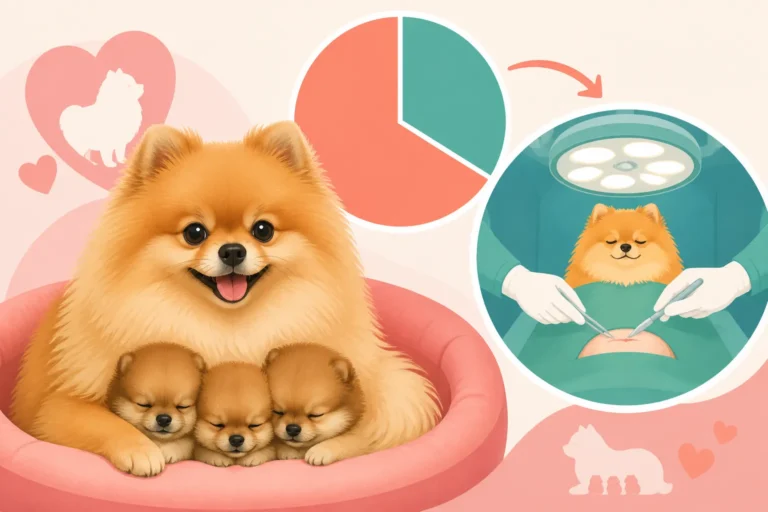
Despite carrying fewer puppies, Pomeranian dams often face a higher risk of whelping complications, particularly dystocia (difficult birth). One of the primary reasons for this is the relatively large head size of Pomeranian puppies compared to the dam's small pelvic canal. This anatomical mismatch frequently leads to puppies getting stuck in the birth canal, making natural delivery challenging or even impossible. This is why Cesarean Rates in Pomeranians are notably higher than in many other breeds.
In such cases, an emergency C-section becomes necessary to save both the mother and the puppies. This procedure, while routine, carries its own set of risks, including Anesthesia Risk in a Four Pound Pomeranian, bleeding, and infection. The stress and recovery period for the dam can be significant. This is where having pet insurance, such as through Healthy Paws, can be incredibly beneficial, as it can help offset the substantial financial burden of emergency surgeries, allowing owners to prioritize the best care without undue financial strain. The veterinarian might even suggest a planned C-section if previous litters or ultrasounds indicate potential difficulties, aiming to avoid an emergency scenario altogether.
Vulnerabilities of Single Puppies
A single-puppy litter, sometimes called a "singleton," presents its own unique set of vulnerabilities. While it might seem like less work, singletons often struggle more than puppies from larger litters. Without littermates to compete with for nursing and warmth, singletons can quickly become overweight if left unsupervised, leading to issues like difficulty suckling or even respiratory distress. On the other hand, if the dam isn't producing enough milk, a singleton can just as easily suffer from Blood Sugar Crashes in a Pomeranian Puppy because there's no competition to stimulate milk production.
Furthermore, single puppies miss out on crucial early socialization opportunities that littermates provide. They don't learn bite inhibition, proper play behavior, or how to navigate social dynamics as effectively, which can sometimes lead to behavioral issues down the line. Breeders of singletons often have to be extra diligent in providing human interaction and stimulation to compensate for the lack of sibling interaction, ensuring the puppy develops into a well-adjusted adult. This means more intentional play, handling, and exposure to various sights and sounds from a very young age.
Financial Implications and Breeder Responsibilities
The small litter sizes directly impact the financial aspects of Pomeranian breeding. Each puppy represents a significant investment of time, resources, and veterinary care. From pre-breeding health clearances to progesterone testing, ultrasound confirmations, potential C-sections (which can lead to The Cesarean Bill on a Pomeranian Litter), and round-the-clock care for newborn pups, the costs accumulate quickly. When you're only getting one or two puppies, the per-puppy cost of production becomes quite high.
This financial reality underscores the importance of responsible breeding. Reputable breeders are not in it for profit; they are dedicated to preserving and improving the breed, ensuring the health and temperament of each puppy. They invest heavily in their breeding stock, nutrition, and veterinary care, knowing that healthy puppies are the ultimate goal. For instance, ensuring that a Pomeranian is properly fed throughout gestation and lactation is critical, as discussed in Feeding a Pomeranian Puppy Often Enough to Stay Safe, to support both the mother's health and the development of the small litter. The limited number of puppies also means breeders have stringent selection processes for potential buyers, ensuring each precious pup goes to a loving, responsible home.
Supporting a Pomeranian Through Pregnancy and Whelping
Bringing a litter of Pomeranian puppies into the world, no matter how small, is a momentous occasion that requires meticulous planning, dedicated care, and a deep understanding of the breed's specific needs. For Pomeranian owners and breeders, preparation is everything.
Preparing for Pregnancy and Delivery
Preparation starts long before breeding. It involves ensuring the prospective dam is in peak physical condition. This means a comprehensive veterinary check-up, including blood work, vaccinations, and deworming. Breeders often perform genetic health screenings to rule out hereditary conditions that could affect the puppies, such as certain eye problems or Slipping Kneecaps in a Five Pound Pomeranian. Maintaining a healthy weight and a balanced diet is also crucial, providing her body with the reserves needed for gestation.
Once pregnant, a specialized diet is often recommended, usually transitioning to a high-quality puppy food during the last few weeks of gestation and throughout lactation to meet the increased caloric and nutrient demands. Regular, gentle exercise is important, but strenuous activity should be avoided. As the due date approaches, setting up a quiet, warm whelping area away from household bustle becomes a priority. This space should be comfortable and safe, equipped with supplies like clean towels, a heat lamp or pad for the puppies, and an emergency vet contact list. Knowing the signs of labor and understanding when to seek veterinary intervention is absolutely critical, especially given the breed's propensity for difficult births.
Whelping and Post-Natal Care
When labor begins, monitoring the dam closely is paramount. While some Pomeranians may manage to deliver naturally, as explored in Whether a Pomeranian Can Deliver a Litter Naturally, many will require assistance or even a C-section. Knowing the normal progression of labor—how long between puppies, signs of distress—is vital. If a dam strains for an extended period without producing a puppy, or if she shows signs of severe pain or lethargy, immediate veterinary attention is needed. This is where a planned C-section might be discussed with your vet, especially if you have an idea of the number of puppies via ultrasound.
After delivery, the immediate focus shifts to the newborns. Each tiny puppy needs to be warm, dry, and nursing efficiently. Monitoring their weight gain daily is crucial, as their small size makes them particularly susceptible to issues like dehydration and hypoglycemia. Ensuring they are warm enough (around 90-95°F for the first week) is critical, as they cannot regulate their own body temperature. The dam's post-natal health is equally important; watch for signs of infection, abnormal discharge, or lack of appetite. Regular vet checks for both mom and pups in the initial days and weeks are non-negotiable, ensuring a healthy start for these precious, small additions to the Pomeranian family.
The Role of Veterinary Support
Throughout the entire breeding process, from initial planning to puppy rearing, the veterinarian is your most important partner. Their expertise is invaluable in maximizing the chances of a successful and healthy outcome. They can perform pre-breeding health evaluations, accurately time breedings, confirm pregnancy via ultrasound or X-ray (which can also help count puppies and assess their size relative to the birth canal), and guide you through nutritional needs.
During whelping, your vet is often on standby, ready for potential emergencies like a difficult labor or a necessary C-section. Post-natally, they will advise on puppy care, including recognizing signs of distress, proper feeding, and vaccination schedules. For issues like a puppy with The Heart Murmur Heard on a Pomeranian Puppy, early veterinary intervention can make a significant difference. Reliable veterinary care is truly the backbone of responsible Pomeranian breeding, ensuring the safety and well-being of these incredibly small and often fragile animals.
| Litter Size Range | Commonality | Considerations |
|---|---|---|
| 1 Puppy (Singleton) | Fairly Common | Risk of loneliness, potential for obesity or hypoglycemia if not managed, requires extra human interaction. |
| 2-3 Puppies | Most Common | Ideal size, good for natural delivery if puppies are average size, adequate space and nutrients for each pup. |
| 4-5 Puppies | Less Common | Considered a large litter for a Pom, increased chance of C-section, more demands on the dam. |
| 6+ Puppies | Extremely Rare | High risk of C-section, potential for underdeveloped or stillborn puppies, very taxing on the dam. |
Disclaimer
Please remember that this information is for educational purposes only and should not replace professional veterinary advice. Always consult with a qualified veterinarian regarding your Pomeranian's health, breeding decisions, and any specific medical concerns.