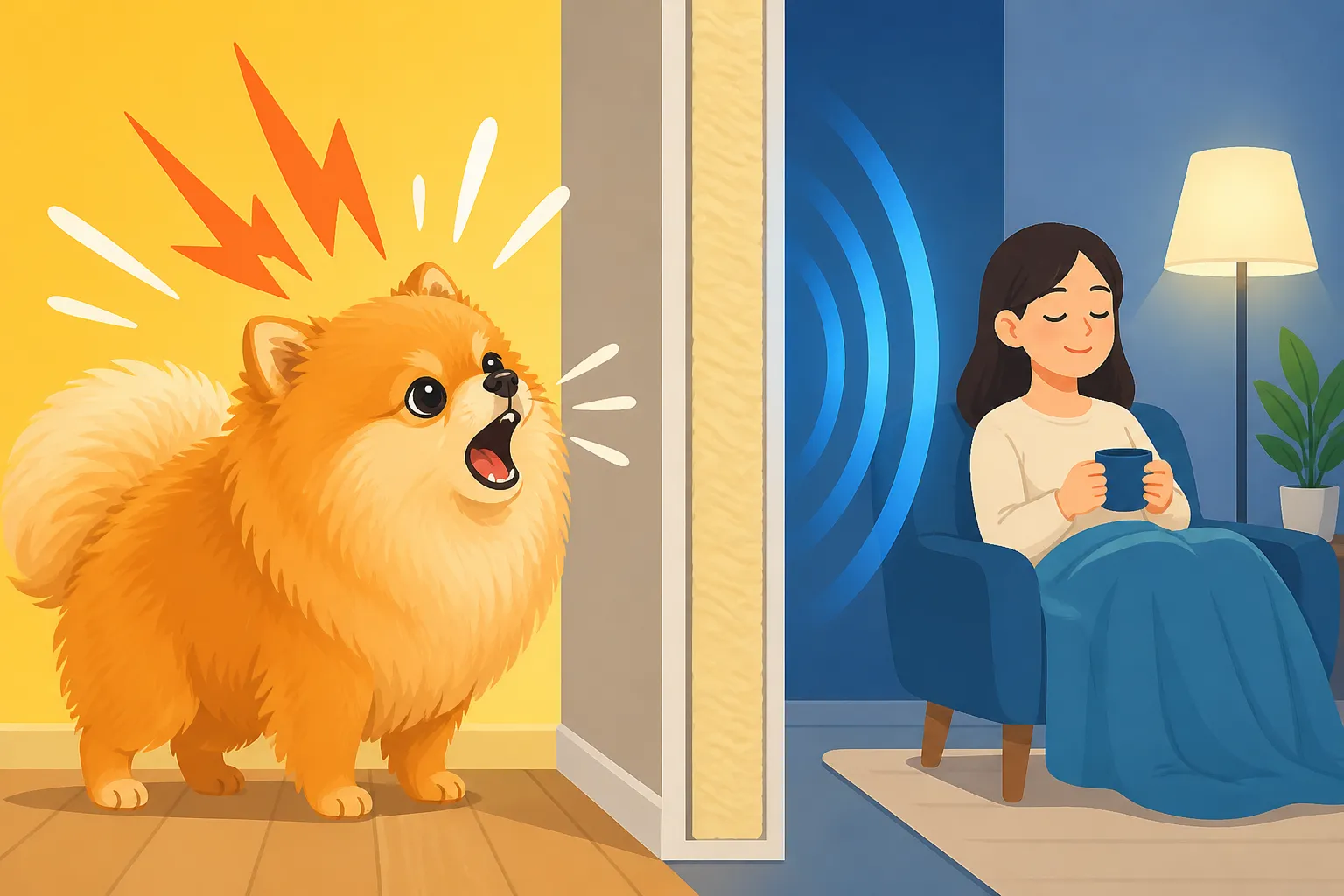
Whether Apartment Walls Muffle a Pomeranian
Living in an apartment with a lively Pomeranian can bring immense joy, but many owners quickly discover a common challenge: their little fluffball’s big voice. The persistent concern about bothering neighbors with an insistent bark is a very real frustration. This guide will dive deep into the reality of apartment acoustics, explain why your Pomeranian might be so vocal, and offer practical, empathetic strategies to manage barking noise, helping you and your beloved Pom coexist peacefully with your community.
The Reality of Apartment Acoustics and Your Pomeranian's Voice
Let's be honest, those thin apartment walls or even thicker ones can sometimes feel more like suggestions than actual barriers when your Pomeranian decides to alert the entire floor to a passing leaf. It's a common misconception that a small dog equals a small noise problem. Pomeranians, despite their diminutive size, come equipped with an impressive set of lungs and a natural instinct to alert their humans to anything and everything they perceive as noteworthy.
How Sound Travels Through Walls
The way sound moves through a building is a fascinating, and often frustrating, science. Sound waves are vibrations, and they travel through solids, liquids, and gases. In an apartment building, this means they don't just go through the air; they travel through walls, floors, ceilings, and even plumbing. A hollow-core door, a thin drywall partition, or an uninsulated floor can act like a giant drum, amplifying and transmitting every little sound your furry friend makes. It’s not just the direct sound you hear; it’s the vibrations resonating through the entire structure. Many people are shocked to find their neighbors can hear things they assume are contained, like a dog barking, children playing, or even just a loud conversation. Whether Apartment Walls Muffle a Pomeranian specifically often comes down to the quality of construction and insulation.
Consider a typical scenario: you're watching TV, and your Pomeranian hears someone walk past your door in the hallway. That sharp, immediate bark isn't just traveling through the air in your apartment; it's hitting the door, the adjacent wall, and the floor. These surfaces then vibrate, sending those sound waves directly into your neighbor's unit. Older buildings, often charming but less soundproofed, can be particularly challenging. Newer constructions might boast better insulation, but even then, a determined Pomeranian's bark can cut through quite a bit.
Why Pomeranian Barks Carry So Much Power
Pomeranians belong to the Spitz family, and many breeds in this group are known for their vocal tendencies. They were originally bred as alert dogs, tasked with notifying their families of intruders or unusual activity. That instinct is hardwired into their DNA. Their barks are often high-pitched and sharp, which, from an acoustical standpoint, can travel further and penetrate surfaces more easily than a lower-frequency sound.
Think of it this way: a deep bass note might rumble through walls, but a high-pitched squeal or a sharp bark can feel like it's piercing directly into your eardrums, even from a distance. Their compact size also means their vocal cords are tuned differently, producing that distinctive "yap" or "yipping" sound that some find endearing and others find… less so. They don't typically have the deep, resonant bark of a larger breed; instead, it's a quick, piercing sound that catches attention – which is exactly what it was designed to do generations ago. The volume and frequency can be surprising for such a tiny dog, making "whether apartment walls muffle a Pomeranian" a very valid question for worried owners.
Understanding Your Pomeranian's Barking Habits
Before you can effectively manage the noise, you need to understand why your Pomeranian is barking. It's rarely out of spite; there's always a reason, even if it's not immediately obvious to us humans. Identifying the trigger is the first step toward finding a solution that actually sticks. The Age a Pomeranian Starts Alert Barking can give you an idea of when to expect these behaviors to ramp up.
Common Triggers for Pomeranian Barking
Pomeranians bark for a variety of reasons, and often it's a combination of factors. They're expressive little dogs, and barking is one of their primary ways of communicating with the world.
- Alert Barking: This is perhaps the most classic Pomeranian bark. They will alert you to everything: the mail carrier, a squirrel on the window sill, a neighbor walking down the hall, someone ringing their doorbell (or even yours!). This often sounds like sharp, rapid barks followed by a pause, then more sharp barks as they try to ascertain if the "threat" is gone. The Doorbell and the Pomeranian Response is a perfect example of this.
- Attention-Seeking Barking: Poms are smart and learn quickly what gets a reaction from their humans. If barking gets them food, cuddles, playtime, or even just a glance, they will absolutely use it. This might be a more insistent, repetitive bark, sometimes paired with pawing or jumping. It's their way of saying, "Hey! Look at me! I want something!"
- Boredom or Lack of Stimulation: A bored Pomeranian is a creative Pomeranian, and their creativity often manifests as barking. If they're not getting enough mental and physical exercise, they might bark to entertain themselves or to tell you they're under-stimulated. This can be more prolonged and monotonous, sometimes accompanied by pacing or destructive chewing. Whether a Pomeranian Is Stubborn or Just Bored often points to underlying needs.
- Anxiety or Fear: Some Pomeranians bark when they're anxious or scared. This could be due to separation anxiety when you leave them alone, fear of loud noises (like thunderstorms or fireworks), or general nervousness in new situations. This barking might be accompanied by whining, pacing, destructive behavior, or inappropriate urination. Signs a Pomeranian Has Separation Anxiety are critical to recognize.
- Territorial Barking: While Poms are small, they often have a fierce territorial streak. They see your home as their home, and anyone approaching it is seen as an invader. This overlaps with alert barking but has a strong component of protecting their space and you.
- Excitement Barking: Just like children, Pomeranians can bark purely out of excitement. This might happen when you come home, when they see their leash, or when a favorite toy comes out. It’s usually a happy, high-pitched series of barks, though it can still be loud.
The Problem of Barking When You're Not Home
This is often the biggest concern for apartment dwellers. You can manage barking when you're present, but what happens when you leave for work or a quick errand? This is where issues like separation anxiety or general boredom become apparent. If your Pomeranian is barking excessively when left alone, it's not just a nuisance; it's a sign of distress or unmet needs. Your neighbors will be the first to let you know if your walls aren't muffling much when you're gone! Whether a Pomeranian Barks When Left Alone is a crucial question for apartment living. Addressing this requires a different approach than simply quieting alert barks.
Strategies for Minimizing Barking Noise in Apartments
Once you understand why your Pomeranian is barking, you can start to implement targeted strategies. A multi-pronged approach that combines training, environmental adjustments, and soundproofing efforts is usually the most effective in an apartment setting.
Training and Behavior Modification
Training is, hands down, your most powerful tool. It addresses the root cause of the barking, rather than just masking the sound. Consistency is key, and it might take time, but the payoff for both you and your neighbors is immense.
Teaching a "Quiet" Command
This is foundational. You want to teach your Pomeranian to stop barking on command.
- Trigger the Bark: Have a friend knock on the door or simulate a doorbell sound. Let your Pom bark a few times.
- Introduce the Command: Hold a high-value treat near their nose. The moment they stop barking, even for a split second to sniff the treat, say "Quiet!" (or "Enough!") and reward them immediately with the treat.
- Practice and Repeat: Repeat this many times. Slowly increase the duration they must be quiet before receiving the treat. The goal is for them to associate the command with ceasing to bark and getting a reward.
- Fade the Lure: As they get better, you can start to fade out the treat as a lure and just use the verbal command and reward.
Remember, consistency is vital. Everyone in the household needs to use the same command and follow the same steps. For a structured approach, online training programs, like those offered by BAXTER & Bella, can provide step-by-step guidance and support for this kind of behavior modification. Getting a Barking Pomeranian to Stop on Command is a skill that takes patience.
Managing Alert Barking at Windows and Doors
- Block the View: If your Pomeranian barks at things outside the window or passing by the door, physically block their view. Use privacy film on windows, close blinds or curtains, or place a baby gate to keep them away from the immediate door area.
- Desensitize: Gradually expose them to the triggers. Start with low-level triggers, reward quiet behavior, and slowly increase the intensity. For example, have someone walk past the door at a distance, rewarding your Pom for staying quiet.
- Redirection: When they start to bark, redirect their attention to a more appropriate activity. Call their name, ask for a "sit" or "stay," and reward them. A quiet chew toy or a puzzle toy can be a great distraction.
Addressing Separation Anxiety and Boredom Barking
If your Pomeranian barks when left alone, it's often a sign of separation anxiety or simply boredom. These require deeper solutions.
- Increase Exercise and Mental Stimulation: A tired Pom is a quiet Pom. Ensure they get adequate daily walks and playtime. Puzzle toys filled with treats (you can find a wide variety on Amazon) can keep them mentally engaged when you're not home. Games That Tire a Pomeranian Indoors can be a lifesaver.
- Gradual Departures: Practice leaving for very short periods (seconds at first), returning before they start to bark or show distress. Gradually increase the time you're gone.
- Create a Safe Haven: A comfortable crate or a designated "den" area can provide security. Fill it with their favorite bed, a chew toy, and perhaps a t-shirt with your scent. This can help them feel secure when you're away. The Hours a Pomeranian Tolerates an Empty House depends heavily on individual training and temperament.
- White Noise/Music: Leave on a radio, TV, or white noise machine. This can muffle outside sounds that might trigger barking and also provide a sense of company.
- Professional Help: For severe separation anxiety, consult a certified professional dog trainer or veterinary behaviorist. They can help create a tailored plan.
Sound Dampening and Acoustic Solutions
While training is paramount, you can also make physical changes to your apartment to help muffle the sound of your Pomeranian's barks. You want to absorb sound, not just reflect it.
| Method | Description | Effectiveness | Cost (Estimate) |
|---|---|---|---|
| Heavy Curtains/Drapes | Thick, floor-length curtains (velvet, thermal-lined) absorb sound. | Moderate | Varies widely (affordable to premium) |
| Area Rugs/Carpets | Covers hard floors, reducing sound reflection and absorbing impact noise. | Moderate | Varies widely (small rug to full room carpet) |
| Bookshelves/Furniture | Tall, filled bookshelves and upholstered furniture absorb sound waves. | Moderate | Already owned or cost of new furniture |
| Weatherstripping/Door Sweeps | Seals gaps around doors and windows, preventing sound leaks. | High (for leaks) | Low |
| Acoustic Panels | Specialized foam or fabric panels designed to absorb sound. Can be decorative. | High | Moderate to High (depending on quantity/quality) |
| White Noise Machine | Creates ambient noise to mask other sounds, both from your Pom and from neighbors. | Moderate | Low to Moderate |
Soft Furnishings and Textiles
Fill your apartment with soft, absorbent materials.
- Thick Curtains and Drapes: Replace thin blinds with heavy, floor-to-ceiling drapes. Fabrics like velvet or thermal-lined curtains are excellent at absorbing sound.
- Area Rugs and Carpets: Hardwood or tile floors allow sound to bounce around freely. Adding area rugs, especially those with thick padding, can significantly reduce echo and absorb sound.
- Upholstered Furniture: Sofas, armchairs, and even large plush dog beds (like those you can find on Amazon) help soak up sound waves.
Sealing Gaps and Cracks
Sound, like water, will find the path of least resistance.
- Door and Window Seals: Check for gaps around your entry door and windows. Apply weatherstripping around door frames and use a door sweep at the bottom of the door. This isn't just for insulation; it's a fantastic sound barrier.
- Wall Decor: While not strictly soundproofing, hanging tapestries, thick framed art, or acoustic panels (which can be found on Amazon) can help break up sound waves and absorb some noise.
Using Sound Masking Devices
- White Noise Machines or Fans: These can help mask both your Pomeranian's barks and any external noises that might trigger them. Placing a white noise machine near the door or window can create a barrier of sound.
- Calming Music: Some dogs respond well to classical music or specially designed "dog calming" playlists. This can create a soothing environment and also help mask other sounds.
Creating a Peaceful Environment for Your Pomeranian and Your Neighbors
Beyond direct barking management, fostering a generally calm environment for your Pomeranian and maintaining good relationships with your neighbors are vital components of apartment living.
Routine and Enrichment
A predictable routine helps reduce anxiety in dogs, and an enriched environment keeps them from getting bored and destructive.
- Consistent Schedule: Feedings, walks, and playtime at regular times can help your Pomeranian feel secure and understand expectations.
- Mental Stimulation: Poms are smart! Engage their minds with training sessions, puzzle toys (again, Amazon has a great selection), and new experiences. A 15-minute training session can be as tiring as a long walk.
- Physical Exercise: Even though they're small, Pomeranians need daily exercise. Regular walks help burn off energy and provide mental stimulation through sniffing new scents. However, be mindful of their delicate windpipes; a harness is always preferable to a collar for walking. Harnesses Fitted for a Pomeranian's Windpipe are a wise investment.
Open Communication with Neighbors
This is often overlooked but incredibly important. Your neighbors are more likely to be understanding if you're proactive and show that you're working on the issue.
- Introduce Your Pomeranian: Let your neighbors meet your adorable Pom. It's harder to be angry at a cute face you've met.
- Share Your Efforts: Let them know you're aware of the barking and are actively working on training and solutions. "We just started working with BAXTER & Bella on a new training program to help with her alert barking, so things should improve soon!" can go a long way.
- Exchange Contact Info: If comfortable, offer your phone number so they can text you if the barking becomes an issue when you're out. This allows you to check in on your dog (perhaps via a pet camera) and address the problem quickly.
- Offer Solutions: If the barking is particularly bad, consider offering earplugs, or even a small gift as a gesture of goodwill. While not a permanent solution, it can de-escalate tension.
Knowing When to Seek Professional Help
Sometimes, despite your best efforts, the barking persists or worsens. This is not a failure on your part, but a sign that professional intervention might be needed.
- Certified Professional Dog Trainers: A good trainer can observe your Pomeranian's behavior and help you develop a tailored training plan. They can provide guidance on specific techniques for managing alert barking, separation anxiety, or other behavioral issues.
- Veterinary Behaviorists: For severe cases, especially those involving anxiety, fear, or aggression, a veterinary behaviorist (a veterinarian with specialized training in animal behavior) can be invaluable. They can assess your Pomeranian for underlying medical conditions that might contribute to barking and may prescribe medication if appropriate, in conjunction with behavior modification.
- Pet Cameras with Two-Way Audio: Devices like a Furbo or similar pet cameras (many available on Amazon) allow you to monitor your Pomeranian when you're away. Some even have two-way audio, letting you speak to your dog or dispense treats remotely, which can be helpful in managing barking episodes.
Managing a vocal Pomeranian in an apartment setting is certainly a challenge many owners face, but it's far from insurmountable. By understanding the acoustics, identifying the triggers, implementing consistent training, making smart environmental adjustments, and maintaining open lines of communication with your neighbors, you can create a harmonious home for everyone. Your little Pom might always have a lot to say, but with patience and the right strategies, you can teach them to use their voice appropriately, ensuring peace for both you and your community.
Disclaimer
This article is for general informational purposes only and does not constitute professional advice. Laws, prices and regulations vary by location and change over time. Consult a qualified professional for guidance on your specific situation.