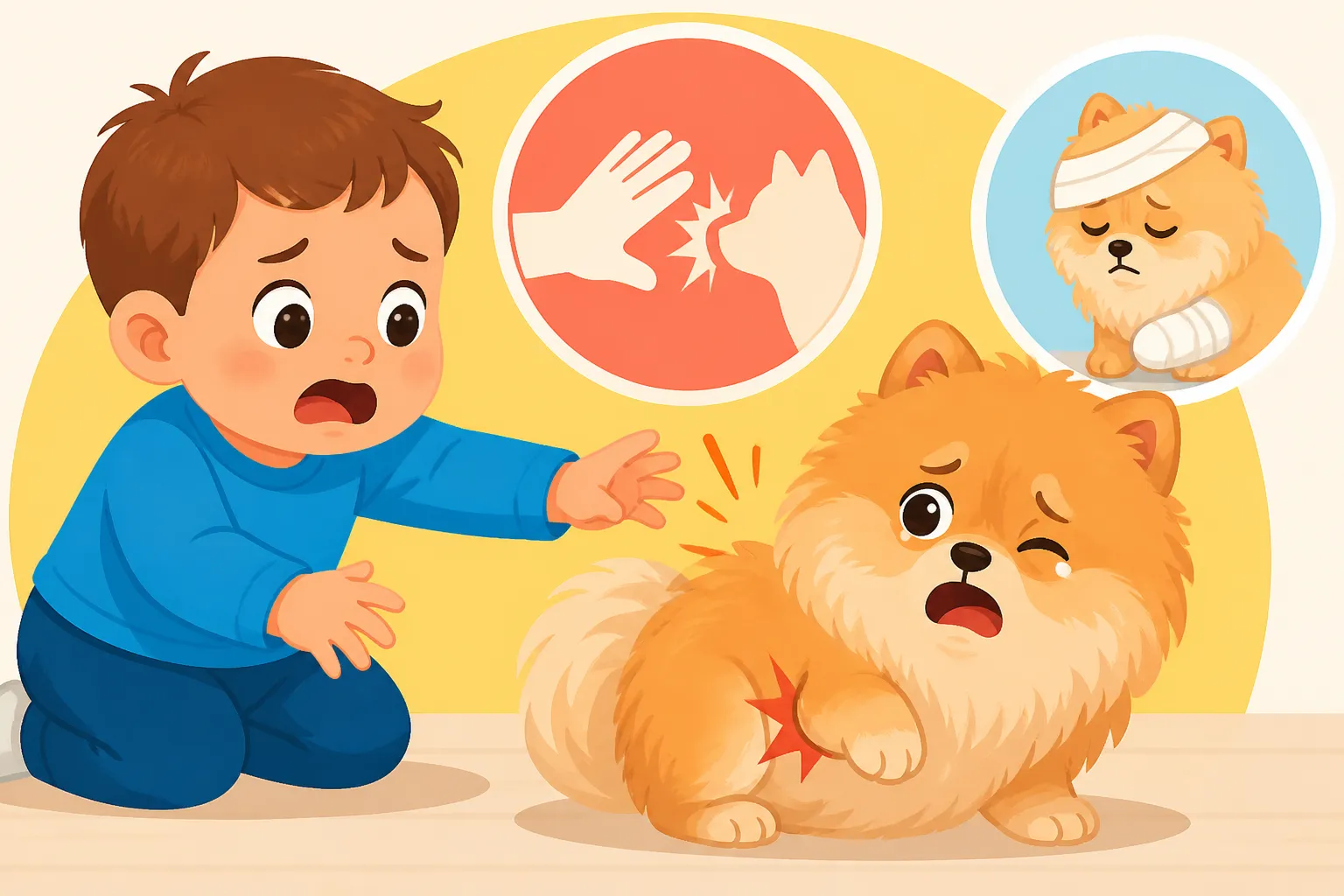
Why a Toddler Can Injure a Pomeranian by Accident
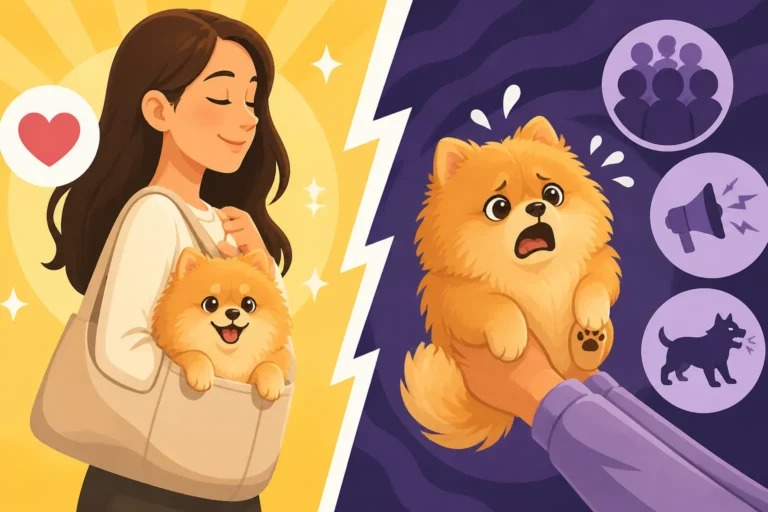
It's a heartbreaking scenario many new Pomeranian owners with young children eventually face: the realization that a beloved toddler, with all the innocence and affection in the world, can accidentally cause serious injury to their tiny, fluffy companion. You want your child and your dog to be best friends, to grow up together, but the physical reality of a small, delicate Pomeranian and an uncoordinated, curious toddler often clashes, leading to bumps, scrapes, or worse, even severe internal damage. This guide is here to help you understand why these accidental injuries happen, what they might look like, and most importantly, how to proactively create a safe, harmonious home for both your precious child and your fragile Pomeranian.
Understanding the Pomeranian's Delicate Nature
Pomeranians are undeniably adorable, miniature packages of fluff and personality. But beneath that luxurious double coat and bold demeanor lies a surprisingly fragile creature. It's not just about their small size; it's about their inherent physical vulnerabilities that make them susceptible to accidental harm, especially from unpredictable little humans.
Their Small Stature and Fragile Bones
Let's be brutally honest: a Pomeranian is essentially a very small dog. Most fall within the 3 to 7-pound range, and even a robust Pom is still incredibly lightweight compared to a human toddler. Their bones are delicate, almost bird-like in their fineness. Imagine the impact of a toddler's full body weight, even just leaning, on a tiny rib cage or a slender leg bone. A casual step, a stumble, or an accidental kick that an adult human wouldn't even register could easily fracture a Pom's tibia or femur. It's not malice; it's physics.
Furthermore, these tiny frames mean their joints are also miniature and can be prone to issues. Many Pomeranians are predisposed to conditions like luxating patellas, where the kneecap slips out of place. Slipping Kneecaps in a Five Pound Pomeranian Even a minor jolt or awkward landing, let alone an accidental push from a child, can exacerbate such a condition or even cause a healthy knee to pop. Their skeletal structure just isn't built to withstand the same forces as a larger dog, let alone the unpredictable energy of a small child.
The Instinct to Play and Their "Big Dog" Mentality
Here's the cruel irony: despite their physical delicacy, Pomeranians often possess the heart and confidence of a much larger dog. They don't typically cower; they're bold, curious, and often eager to engage. A Pomeranian might happily run up to a toddler, tail wagging, thinking they're about to have a grand time playing. They don't have a built-in understanding that a toddler's enthusiastic, yet clumsy, pat could send them sprawling or that a grab for their fluffy tail isn't an invitation to play, but a painful yank.
This "big dog" mentality can be a huge contributing factor to accidental injuries. They don't always protect themselves by retreating; instead, they might push into a child's space, jump up for attention, or dart underfoot during a game of chase, completely oblivious to the dangers their size difference poses. It's a testament to their spirited nature, but also a significant safety concern when you have a tiny dog interacting with a human who still hasn't mastered their own motor skills.
Hidden Dangers: The Thin Skull and Soft Spots
Beyond visible limbs, Pomeranians have other, less obvious vulnerabilities. Their skulls, particularly in puppies, can be surprisingly thin and sometimes even retain a fontanelle – a soft spot similar to a baby's. While most close up, some smaller or "teacup" Pomeranians might have them remain open longer, or have skulls that are generally more fragile. Whether a Pomeranian's Fontanelle Closes A direct blow to the head, even a relatively light one from a tumbling toddler, can have catastrophic consequences, ranging from concussions to more severe brain trauma.
Then there's the neck and throat area. Pomeranians are infamous for having delicate tracheas, making them highly susceptible to tracheal collapse. The Honking Cough of a Pomeranian's Collapsing Windpipe A child pulling on a collar (which is why a harness is always recommended), or even just accidentally stepping on the neck, can cause significant damage, leading to severe breathing difficulties that require immediate veterinary attention. These aren't injuries that leave obvious external marks but can be life-threatening. The Sound a Pomeranian Makes When Its Trachea Collapses
Toddler Development and Unintentional Risks
It's not about blaming the child; it's about understanding that toddlers are simply not equipped, developmentally, to safely interact with a delicate toy breed like a Pomeranian. Their world is one of exploration, sensory input, and learning through trial and error, all of which can inadvertently put a small dog at risk.
The Unpredictable Nature of Toddler Movement
Anyone who has spent five minutes with a toddler knows they are a whirlwind of unpredictable motion. They stumble, they run, they stop short, they fall – often without warning or grace. Their balance is still developing, their gait is wobbly, and their spatial awareness is limited. A toddler simply doesn't perceive a tiny dog darting underfoot in the same way an adult would. A sudden pivot or a clumsy step can lead to a dog being tripped over, stepped on, or knocked aside.
Consider a common scenario: your toddler is excitedly chasing a ball or running from one end of the living room to the other. Your Pomeranian, equally excited, might try to join the fun, weaving through their legs. In a flash, the child trips, landing on the dog, or the dog gets kicked unintentionally. These aren't malicious acts; they are simply the inevitable consequences of two beings with vastly different physical capabilities and developmental stages sharing the same space without proper boundaries.
Their Curiosity and Lack of Understanding
Toddlers are driven by immense curiosity. Everything is new, interesting, and needs to be explored – often with their hands and mouths. A fluffy, squeaky Pomeranian is naturally a magnet for this curiosity. To a toddler, a Pomeranian might be perceived as another toy, something to squeeze, pull, or poke to see what happens. They lack the cognitive ability to understand "gentle" in the context of a living, feeling creature that can be hurt.
When you tell a toddler to be "gentle," they might pat too hard, pull hair, or even try to ride the dog. They don't interpret a dog's whine or yelp as a sign of pain in the way an older child or adult would. For them, it might just be another sound the "toy" makes. This developmental stage means that even the most well-meaning toddler can inflict pain or injury simply because they don't grasp the concept of vulnerability or the consequences of their actions on such a small being.
Grabbing, Poking, and Falling on a Small Dog
The ways a toddler can accidentally injure a Pomeranian are unfortunately numerous and varied. Grabbing is a prime example: a child might grab a handful of the Pom's luxurious fur, pulling it painfully, or try to pick up the dog awkwardly by a limb or the head. These actions can lead to dislocations, fractures, or severe stress on the dog's neck and spine.
Poking eyes, ears, or even the soft parts of the dog's face is another common risk. A child's small finger can cause significant damage to a delicate eye. Then there's the risk of falling. A child tripping and falling on top of a Pomeranian can crush bones, cause internal bleeding, or lead to concussions if the dog's head is hit. Remember, even a small toddler can weigh 20-30 pounds – an immense force on a 5-pound dog. This is similar to Why Jumping Off Furniture Wrecks a Pomeranian's Knees but with the added unpredictability of a child. It highlights just how vulnerable their small frames are to blunt force trauma.
Proactive Strategies for a Safe Environment
Given the inherent risks, the best approach is always proactive and preventative. You can't change a toddler's developmental stage, nor can you make your Pomeranian less fragile. What you can do is manage their environment and interactions with careful planning and consistency.
Constant Supervision and Physical Separation
This is perhaps the single most crucial strategy. Any interaction between a toddler and a Pomeranian must be 100% supervised, 100% of the time. "Supervised" doesn't mean you're in the same room but engrossed in your phone or talking to a friend. It means your full attention is on the pair, ready to intervene at a moment's notice. You need to be close enough to physically stop any unwanted interaction before it starts.
However, constant, vigilant supervision is exhausting and frankly, not always realistic for every waking moment. This is where physical separation becomes your best friend. Toddlers and Pomeranians should not have free, unsupervised access to each other. This isn't about punishment; it's about safety. When you can't actively supervise, they need to be in separate, secure spaces. This might mean your dog is in its crate or playpen, or your toddler is in a gated area of the house. Never assume "they'll be fine for a minute" because that's often when accidents happen.
Teaching Gentle Interaction (to the extent possible)
While toddlers can't fully grasp the concept of "gentle," you can still start teaching appropriate behavior as early as possible. This involves:
- Modeling: Always demonstrate gentle petting yourself, using soft, slow strokes on the dog's back or chest, avoiding the head and face initially. Talk calmly and softly.
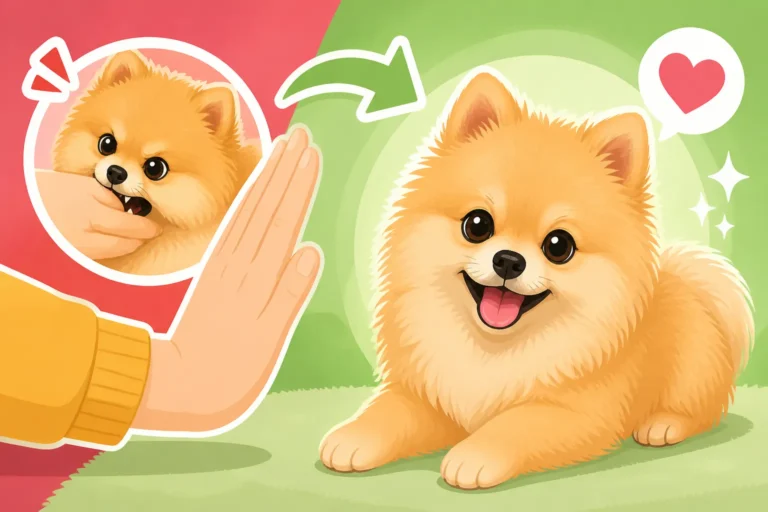
- Guided Hand-Over-Hand: For older toddlers, gently guide their hand to pet the dog appropriately, saying "gentle hands" or "soft touch." Immediately remove their hand if they become too rough.
- Short, Positive Interactions: Keep interactions very brief and always end on a positive note. One or two gentle pats, then redirect the child to another activity or separate them.
- Verbal Cues: Use consistent verbal cues like "gentle" or "no paws" for your child and "off" or "settle" for your dog.
- Respecting Boundaries: Teach your child that when the dog walks away, they must not follow. This teaches respect for the dog's space.
It's a marathon, not a sprint, and consistency is key. Always remember, the goal isn't to make your toddler understand dog behavior fully, but to instill habits of respect and caution that will grow with them.
Creating Safe Zones and Retreats for the Pomeranian
Your Pomeranian absolutely needs a designated "safe space" where they can retreat and be completely undisturbed by the toddler. This space should be accessible only to the dog and perhaps adults, allowing them to decompress and feel secure. This could be their crate, a cozy dog bed in a gated-off room, or even a higher platform they can jump onto, out of a toddler's reach.
This safe zone is crucial for the dog's mental well-being as well as its physical safety. It reduces stress and gives them an escape route when they feel overwhelmed or just need a nap. Teach your toddler that this is the dog's special place and they are never to bother the dog when it's there. This reinforces boundaries and empowers your Pomeranian to manage its own comfort. Teaching a Pomeranian to Settle in a Pen You can find excellent playpens and pet gates on Amazon that allow you to create these crucial safe zones effectively.
Enrolling in Family-Focused Dog Training
Don't underestimate the power of professional help. A good dog trainer, especially one experienced with small breeds and families, can be invaluable. They can help you implement strategies tailored to your specific household, addressing both your Pomeranian's behavior and your toddler's interactions. Look for trainers who use positive reinforcement methods and focus on creating a harmonious multi-species home.
Some online training programs, like those offered by BAXTER & Bella, specifically focus on integrating a new puppy or dog into a family environment, offering guidance on child-dog interactions. These programs often provide structured lessons and support that can be a lifesaver for busy parents trying to navigate this tricky dynamic. They can help teach your Pomeranian appropriate responses to children and help you understand canine body language better, so you can intervene before an incident occurs.
Managing Interactions: Tools and Techniques
Beyond general strategies, specific tools and techniques can significantly enhance safety and make managing interactions less stressful for everyone involved.
Gates, Playpens, and Crates
These are your unsung heroes in a multi-species household with a toddler and a small dog.
- Baby Gates: Install baby gates to create physical barriers between rooms or to restrict a toddler's access to areas where the Pomeranian might be resting. This allows your dog to roam safely in one part of the house while your toddler plays elsewhere, or vice-versa, without the constant need for direct physical intervention.
- Playpens: A dog playpen is fantastic for giving your Pomeranian a secure, spacious area where they can play, nap, or chew on a toy without being underfoot. It offers more room than a crate and allows them to see what's going on around them, reducing feelings of isolation. This is particularly useful for puppies. Playpens for a Pomeranian Puppy Ensure the playpen is sturdy enough that a curious toddler can't easily knock it over or climb into it.
- Crates: A crate, when introduced positively, becomes a dog's den – a safe, quiet retreat. It's essential for potty training, but also invaluable for times when you simply cannot supervise. If your toddler is having a particularly boisterous play session, or you need to step away for a moment, the crate offers a secure haven for your Pomeranian.
Remember, these are tools for separation and safety, not punishment. Always make these spaces positive for your dog with comfy bedding and chew toys.
Harnesses and Leashes for Control
For a Pomeranian, a harness is non-negotiable, especially around children. Never use a collar for walks or any situation where there might be pulling or accidental yanking, due to their delicate tracheas. Harnesses Fitted for a Pomeranian's Windpipe A well-fitting harness distributes pressure across their chest and shoulders, protecting their fragile neck.
When the toddler and Pomeranian are in the same room, even supervised, keeping your Pomeranian on a lightweight leash can provide an extra layer of control. This isn't for correction, but for gentle guidance. If the dog starts to get too close to the toddler, or the toddler approaches the dog too quickly, you can use the leash to gently redirect your Pom away, preventing potential collisions or unwanted interactions. This is a subtle way to manage space and movement without direct physical intervention on either the child or the dog.
Recognizing Stress Signals in Your Pomeranian
Your Pomeranian is constantly communicating, even if it's not with words. Learning to recognize their subtle (and not-so-subtle) stress signals is absolutely vital for preventing accidents and ensuring your dog's well-being. Early intervention can prevent a stressful situation from escalating into a bite or an injury.
Look for these signs:
- Lip Licking: A quick flick of the tongue over the lips, especially when no food is present.
- Yawning: Not because they're tired, but as a sign of stress or appeasement.
- Turning Head/Body Away: Actively trying to disengage or avoid interaction.
- Ears Pinned Back: Indicating fear or discomfort.
- Tail Tucked: A classic sign of fear or insecurity.
- Whites of Eyes Showing (whale eye): When you can see the white crescent of their eye.
- Freezing: Becoming stiff and still, often before a flight or fight response.
- Low Growl or Snapping: These are final warnings. If your dog gets to this point, you've missed many earlier signals.
If you observe any of these stress signals, immediately separate your Pomeranian from the toddler. Remove the dog to its safe space and allow it to decompress. Teaching your children, especially older ones, to also recognize these signals can empower them to be part of the solution rather than unknowingly contributing to the problem.
Preparing for the Unexpected: Emergency Preparedness
Despite all best efforts, accidents can still happen. Being prepared for the worst-case scenario can make all the difference in the outcome for your beloved Pomeranian.
Knowing Your Emergency Vet and First Aid Basics
Do you know where the nearest 24-hour emergency veterinary clinic is located? Have their number programmed into your phone? This is crucial. In case of an accidental injury, time is often of the essence. Don't waste precious minutes scrambling for information.
Beyond knowing where to go, having a basic understanding of pet first aid can be incredibly beneficial. This isn't about performing surgery, but about stabilizing your dog until you can get to a vet. Knowing how to gently move an injured dog, how to apply pressure to a bleeding wound, or how to check for signs of shock can be life-saving. Consider taking a pet first aid course, or at least familiarizing yourself with a reputable pet first aid guide. Keep a small first aid kit specifically for your Pomeranian, including items like sterile gauze, vet wrap, antiseptic wipes, and dog-safe pain relief (only administer under vet guidance).
Pet Insurance Considerations
The cost of veterinary care, especially emergency care for a small dog with delicate bones, can be astronomical. A broken leg can easily run into thousands of dollars, and internal injuries or complex surgeries for conditions like a collapsed trachea or luxating patellas are even more. Anesthesia Risk in a Four Pound Pomeranian Having pet insurance can alleviate the financial stress during an already traumatic time, allowing you to make medical decisions based on what's best for your Pomeranian, rather than your bank account.
Look for policies that offer comprehensive coverage for accidents and illnesses, and understand their deductibles and reimbursement rates. Some policies might have waiting periods for orthopedic conditions, so it's wise to enroll your Pomeranian when they are young and healthy. While it's an added monthly expense, the peace of mind it provides when an accidental injury occurs is truly invaluable. Insuring a Pomeranian That Needs Dental Work Yearly can provide further insight into pet insurance.
| Risk Category | Pomeranian Vulnerability | Toddler Behavior Risk | Potential Injury | Preventative Measure |
|---|---|---|---|---|
| Physical Stature | Small, lightweight, delicate bones, fragile joints | Unstable gait, clumsy, falls, leaning | Fractures (legs, ribs), luxating patellas, dislocations | Physical separation (gates, playpens), supervision |
| Head & Neck | Thin skull (potential fontanelle), delicate trachea | Grabbing, pulling, accidental kicks, stepping on | Head trauma (concussion), tracheal collapse, spinal injury | Harnesses (no collars), teaching "no touch" rule, supervision |
| Curiosity/Play | Bold personality, "big dog" mentality, no self-preservation | Lack of understanding "gentle," sees dog as a toy, chasing | Over-handling, squeezing, pulling fur, unintentional rough play | Teaching gentle interaction, designated dog toys, safe retreats |
| Environmental | Small size allows them underfoot, easily missed | Unpredictable movement, running, abrupt stops | Being tripped over, stepped on, kicked | Restricted access, leashes for control, safe zones |
Protecting your Pomeranian from accidental injury by a toddler is a marathon of vigilance, patience, and proactive planning. It's about setting up an environment where both your child and your dog can thrive safely, understanding that their natural inclinations, though innocent, can have serious consequences. By implementing clear boundaries, using appropriate tools, and being ever-present, you can foster a loving home where everyone, big and small, feels secure and cherished.
Disclaimer
This article is for general informational purposes only and does not constitute professional advice. Laws, prices and regulations vary by location and change over time. Consult a qualified professional for guidance on your specific situation.