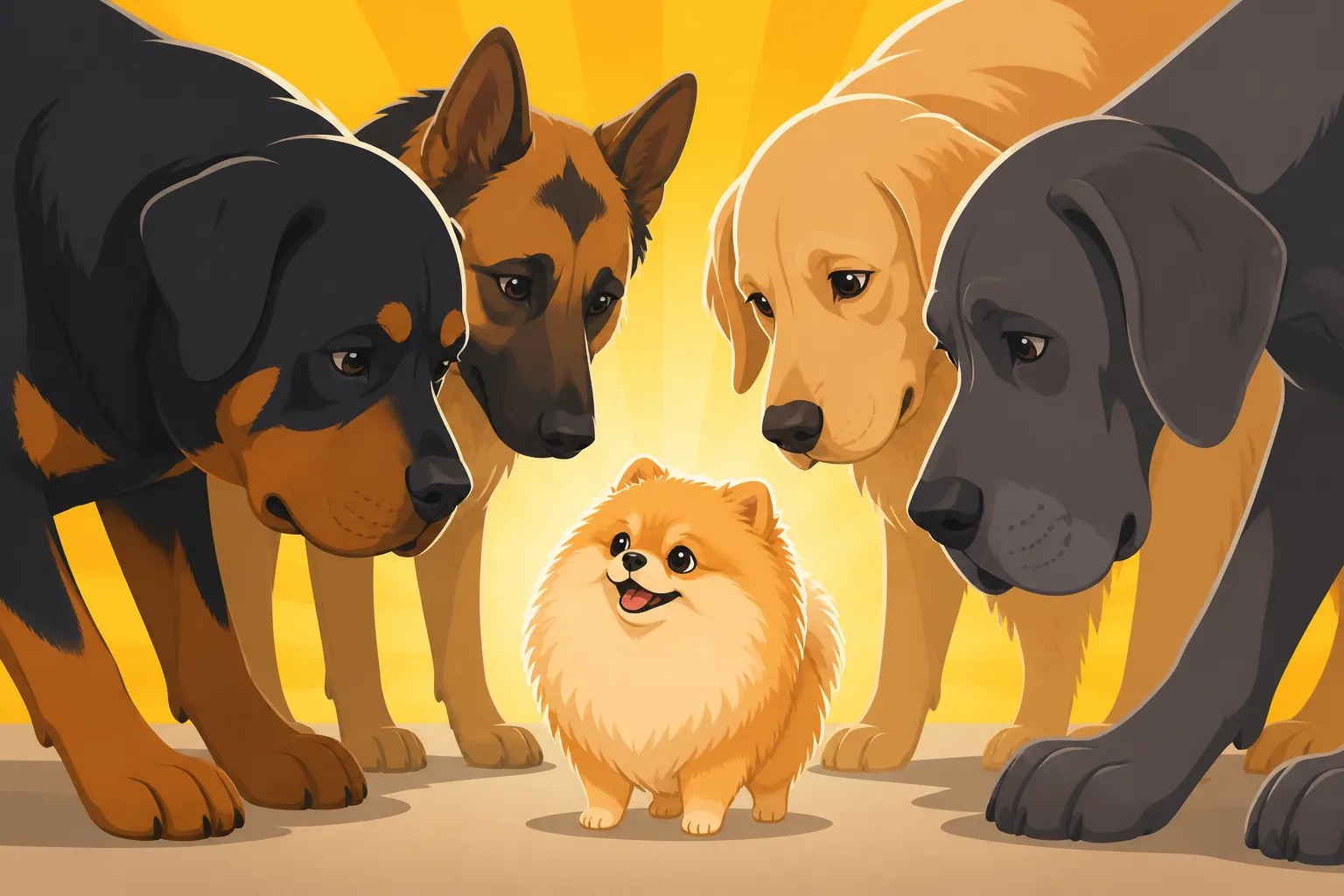
A Five Pound Pomeranian Around Big Dogs
It’s a heart-stopping moment for many Pomeranian owners: seeing your tiny fluffball, often no more than five pounds, standing next to a dog that outweighs them by ten or twenty times. The worry is real, and the potential for accidental injury is a constant concern. This comprehensive guide is here to walk you through the nuances of managing interactions between your small but mighty Pomeranian and their much larger canine counterparts, ensuring their safety and your peace of mind.
The Inherent Dangers of Size Disparity
Let's be honest, the size difference between a five-pound Pomeranian and, say, a seventy-pound Labrador or a hundred-pound Great Dane is staggering. It's not just about aesthetics; it brings very real, tangible risks that we, as responsible owners, need to acknowledge and address. It's a fundamental aspect of owning a toy breed like a Pom.
Accidental Injury from Play
Even the friendliest, gentlest giant of a dog can cause harm completely by accident. Imagine a large dog, full of exuberance, bounding around and tripping over a tiny Pomeranian that's just trying to keep up. A playful paw to the head, an accidental sit-down, or a rough tumble can mean serious injury for a Pom. Their delicate bones, tiny frames, and vulnerable windpipes (which are already prone to issues like The Honking Cough of a Pomeranian's Collapsing Windpipe) simply aren't built to withstand the same kind of physical impact that a larger, sturdier dog can. It's not malice; it's pure physics.
Think about a common play scenario: two large dogs wrestling and body-slamming each other. It’s normal, healthy play for them. Now, insert a Pomeranian into that equation. The sheer momentum and weight of a large dog can easily crush or severely injure a Pom without the larger dog even intending to. This is why vigilance is paramount, especially when introducing a new dog into a multi-dog household or visiting friends with bigger breeds. We often see Poms with issues like Slipping Kneecaps in a Five Pound Pomeranian, and just one wrong step during play with a bigger dog could exacerbate such conditions or cause new ones.
Predatory Instincts and Misunderstandings
This is perhaps one of the most difficult truths to face: some large dogs, depending on their breed and individual temperament, can have a strong prey drive. While we see our Pomeranians as beloved family members, a large dog's primal instincts, particularly if they are not well-socialized or have a strong hunting background, can unfortunately categorize a small, fast-moving Pom as prey. It's a heartbreaking thought, but it's a reality we must consider for our little ones.
A quick dash, a high-pitched yelp during play, or even just the sudden movement of a small dog can trigger an instinctual chase response in some larger breeds. This isn't necessarily aggression in the traditional sense, but a hardwired instinct that can lead to tragic outcomes. We need to be able to accurately assess the larger dog's history and behavior around small, fast-moving objects. It’s critical to understand that even dogs who live peacefully with a Pomeranian at home might react differently to an unfamiliar small dog, especially in an open environment like a dog park, which is why Why a Dog Park Is Dangerous for a Pomeranian is a topic worth exploring further.
Overwhelm and Fear Responses
Imagine being constantly dwarfed by everyone around you, always having to look up, always being aware of massive bodies moving near you. For a Pomeranian, this can be incredibly stressful. Even if a large dog means no harm, the sheer size difference can be overwhelming, leading to fear, anxiety, and even defensive aggression in your Pom. A tiny dog feeling threatened might snap, bark excessively (which we know Poms are prone to; The Doorbell and the Pomeranian Response is just one example of their vocal nature!), or try to hide.
This sustained stress can lead to long-term behavioral problems. A Pomeranian who is constantly on edge around larger dogs may become fear-aggressive, lashing out to protect themselves because they feel they have no other option. They might develop resource guarding issues, trying to protect their toys, food, or even their human from perceived threats. It’s essential to build their confidence through positive experiences, but also to recognize when a situation is simply too much for them and to remove them before they become truly overwhelmed. Their emotional well-being is just as important as their physical safety.
Assessing the Temperament of the Large Dog
Before any interaction takes place, or even if you live in a multi-dog household, the onus is on you to understand the temperament of the larger dog involved. This isn't about judging breeds, but about making informed, safe decisions for your beloved Pomeranian. Trusting blindly can lead to regret, so it's vital to gather as much information as possible and observe carefully.
The Importance of a Known History
When considering an interaction between your Pomeranian and a larger dog, whether it's a new dog joining your family or a friend's dog coming over, the first question should always be: what is this dog's history with small animals? This isn't just about other dogs, but cats, squirrels, even small children. A dog who has grown up around small animals and learned to be gentle is a completely different prospect than one whose history is unknown or, worse, indicates a high prey drive.
Ask detailed questions. Has this dog ever lived with a small breed? How do they react to small dogs at the dog park (if they even go)? Have they had any negative interactions, or shown any signs of aggression or over-excitement around little dogs? If you're considering adopting a large dog into a home with a Pomeranian, a reputable rescue or breeder will be transparent about their dogs' past interactions and temperaments. Never guess; always verify. This due diligence is a cornerstone of responsible pet ownership, especially with a vulnerable breed like a Pom.
Signs of Gentle vs. Overzealous Play
Observation is key when large and small dogs are interacting. You need to become an expert in canine body language. A gentle large dog will often lie down, exposing their belly, or use very soft, slow movements when engaging with a Pomeranian. Their play bows will be relaxed, their tail wags loose, and their mouths open in a soft, non-threatening manner. They might even 'handicap' themselves by playing on their side or using less force, effectively trying to match the Pomeranian's energy and size.
An overzealous or potentially dangerous large dog, on the other hand, might exhibit stiff body language, direct stares, intense focus, or very high-energy, uncontrolled movements that ignore the Pom's size. Their play might involve slamming, hard nudging, or mouth contact that feels more like an attempt to grab than a soft play bite. They might ignore any signals from the Pomeranian (like yelping or trying to retreat) and continue to push the boundaries. It's crucial to distinguish between healthy, respectful play and play that is too rough, potentially aggressive, or driven by a prey instinct. If you see signs of excessive licking, pinning, or stalking, it's time to intervene immediately.
Breed-Specific Tendencies to Consider
While every dog is an individual, certain breeds do carry predispositions that are worth noting. Herding breeds, for instance, might try to "herd" a small, running Pomeranian, which can be stressful or even dangerous. Terriers, bred for vermin control, often have a higher prey drive, and a fast-moving Pom could inadvertently trigger it. Sighthounds, with their incredible speed and visual hunting instincts, can also be a concern.
Conversely, some large breeds are known for their gentle giants persona, such as Great Danes or Newfoundlands, who often seem intuitively aware of their size and can be remarkably gentle with smaller animals. However, this is never a guarantee. It simply means you should be extra cautious and observant if you are dealing with a breed known for high prey drive or a tendency towards rough play. Understanding these general tendencies, combined with individual temperament assessment, gives you a much clearer picture of potential risks.
Preparing Your Pomeranian for Big Dog Encounters
Just as you assess the larger dog, you also need to prepare your own Pomeranian. While their tiny size makes them vulnerable, a well-socialized, confident, and well-trained Pom is better equipped to navigate the world, including interactions with much bigger dogs. This preparation starts early and is an ongoing process throughout their lives.
Early Socialization and Confidence Building
One of the best things you can do for your Pomeranian is to expose them to a variety of safe, positive experiences with other dogs, including larger ones, from a young age. This doesn't mean throwing them into a dog park free-for-all, but rather carefully managed, supervised introductions. Think of it as building their "social intelligence." A Pomeranian puppy that meets gentle, calm large dogs in controlled settings will learn that big dogs aren't inherently scary.
This early exposure helps your Pom develop appropriate canine communication skills. They learn how to signal "I want to play" or "Please back off" in a way that other dogs understand. A confident Pom is less likely to react with fear-based aggression or panic, which can inadvertently trigger a negative response from a larger dog. Consider puppy classes or controlled playdates with known, calm large dogs. Many obedience schools offer specific classes for small breeds, ensuring they learn alongside appropriate playmates. The Week a Pomeranian Puppy Can Start Learning is actually quite early, making these initial experiences incredibly impactful.
Leash and Harness Training for Control
A secure harness and a reliable leash are your lifeline when out and about with your Pomeranian, especially around larger dogs. A collar can put dangerous pressure on their delicate trachea, which, as discussed in Why a Collar Threatens a Pomeranian's Windpipe, is a significant concern for the breed. A well-fitting harness distributes pressure across their chest and shoulders, allowing you to guide and remove them from situations safely and quickly. Brands like Ruffwear or Kurgo offer small harnesses, and you can often find a good selection on Amazon.
Beyond just wearing the equipment, your Pomeranian needs to be accustomed to walking politely on a leash and responding to your cues. You need to be able to halt them, change direction, or pick them up without a struggle. This control is critical for safety, allowing you to create space or intervene if an interaction with a larger dog becomes questionable. Practicing walks in various environments, even just around your block, builds their comfort and your control. For more on equipment, consider checking out Harnesses Fitted for a Pomeranian's Windpipe.
Teaching a Reliable Recall and Other Commands
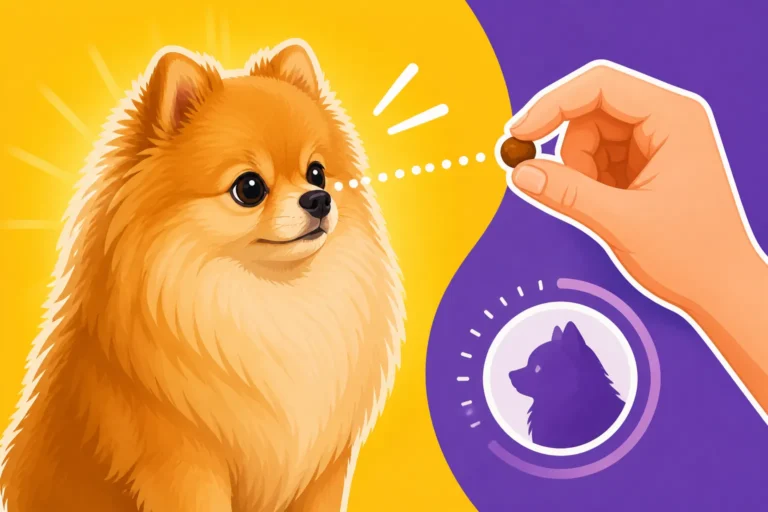
A rock-solid recall, where your Pomeranian comes immediately when called, is perhaps the single most important command for their safety around larger dogs. If your Pom wanders too close to an unknown large dog or gets into a situation that feels uncomfortable, you need to be able to call them back to you without hesitation. This requires consistent training and high-value rewards. The Reward a Pomeranian Actually Cares About can vary, but usually involves tiny, irresistible treats.
Beyond recall, commands like "leave it" (to ignore something on the ground or another dog), "stay," and a solid "come" are invaluable. These commands give you the ability to manage your Pomeranian's behavior and movement, reducing the chances of them instigating an unwanted interaction or getting caught in a dangerous one. Practice these commands in various environments, gradually increasing distractions, so your Pom responds reliably even when there are tempting smells or other dogs nearby. How Long a Pomeranian Will Hold Focus can be short, so keep training sessions brief and fun.
Controlled Introductions: Setting Up for Success
When it's time for a larger dog and your Pomeranian to meet, don't just let them loose and hope for the best. Thoughtful, controlled introductions are crucial for fostering positive relationships and ensuring safety. Rushing this process is a recipe for disaster.
Neutral Territory and Leashed Greetings
The very first meeting between a large dog and your Pomeranian should always happen in neutral territory. This means an area where neither dog feels possessive or territorial. A quiet park, a friend's yard they've never been to, or even a community center's dog-friendly room can work. This removes the pressure of defending "their" space, which can be a common source of conflict between dogs.
Both dogs should remain on a leash, with handlers maintaining a comfortable distance initially. Allow them to observe each other from afar. Look for relaxed body language – loose tails, soft eyes, sniffing the ground. Avoid direct, head-on approaches, which can be perceived as confrontational. Instead, try walking them parallel to each other at a distance, gradually decreasing the space if both dogs remain calm. Keep the leashes loose; never yank or pull, as this can create tension. The goal is a calm, respectful acknowledgment, not an immediate playdate. This measured approach is vital for all interactions, especially when Introducing a Pomeranian to a Larger Dog.
Short, Supervised Interactions
Once initial calm greetings have occurred, subsequent interactions should still be short and heavily supervised. Think of it as a series of positive mini-dates rather than a full-blown relationship right away. Keep these sessions brief – five to ten minutes is often plenty initially. End on a high note, before either dog shows signs of stress or over-excitement. This ensures that each interaction is a positive memory, building good associations.
During these supervised times, be an active participant. Don't just sit on your phone. Observe every nuance of their body language. Are they both enjoying it? Is one dog showing signs of being overwhelmed or overly dominant? Be ready to intervene instantly if necessary, by calmly creating space or redirecting attention with a treat or toy. The goal isn't necessarily for them to become best friends, but for them to coexist peacefully and safely. If the large dog is overly boisterous, consider giving them a puzzle toy like those often found on Amazon before the interaction to burn off some mental energy.
Creating Safe Zones for Your Pomeranian
Even in a well-managed multi-dog household, your Pomeranian needs places where they can retreat and feel completely safe from the larger dogs. This is especially true if the large dog is still a boisterous puppy or prone to bursts of high energy. These safe zones can be physical barriers or elevated spaces.
Consider baby gates or pet gates that block off certain rooms or areas that only your Pom can access (perhaps with a doggy door sized just for them). Elevated dog beds or cat trees can offer a perch where your Pomeranian can observe the larger dogs without being in their immediate reach. Crates are also excellent safe spaces; if your Pom is crate trained, their crate becomes their personal sanctuary, a place where they can relax undisturbed. You can find Crates Sized for a Pomeranian at most pet stores or online retailers. Ensuring your Pom has these safe retreats significantly reduces stress and potential conflict, giving them autonomy and security within the home environment.
Managing Everyday Interactions at Home
Once you've safely introduced your Pomeranian to a larger dog, the work isn't over. Daily life brings its own set of challenges, and constant management and supervision are critical, especially in a mixed-size household. It's about setting up a routine that prioritizes everyone's safety and happiness.
Supervising Playtime Closely
Even after positive introductions, play between a tiny Pomeranian and a large dog must always be supervised. Always. What might start as innocent fun can quickly escalate into something dangerous for your Pom. Keep an eye out for signs of over-excitement in the larger dog or signs of stress in your Pomeranian. If the large dog starts to get too rough, or if your Pom begins to look overwhelmed – perhaps ducking away repeatedly, yelping, or trying to hide – it's time for a break.
Intervene by calmly redirecting the larger dog with a toy or a short training session, or by gently picking up your Pomeranian and giving them a quiet space. Never let play get out of control, even for a second. It's often helpful to provide separate playtimes or to rotate which dog gets one-on-one attention if their play styles are very different. Remember, a playful nip from a large dog can be a significant injury for a small Pom, and a swift knock from a tail can send a Pomeranian flying.
Separate Feeding and Resting Areas
Resource guarding can develop in any dog, regardless of size, but the consequences are much graver when a large dog guards from a small one. To prevent this, always feed your Pomeranian and your larger dog in separate areas. This means separate rooms, or at least far enough apart that neither dog feels threatened or compelled to protect their food. Use baby gates or close doors if needed. The same principle applies to high-value treats and chew toys.
Similarly, each dog should have their own designated resting space. Your Pomeranian should have a bed or crate where they can sleep undisturbed, away from the possibility of being stepped on or startled by a larger dog. This prevents unnecessary stress and potential conflicts over preferred resting spots. Establishing clear boundaries around resources is a fundamental step in ensuring a harmonious, safe, multi-dog home.
Teaching Both Dogs Boundaries and Respect
Training isn't just for puppies, and it's certainly not just for one dog in a multi-dog household. Both your Pomeranian and your larger dog need to understand appropriate behavior around each other. For the large dog, this means teaching them to be gentle, to respect personal space, and not to jump on or accidentally knock over the Pomeranian. Positive reinforcement training works wonders here – reward calm behavior and gentle interactions.
For your Pomeranian, it means teaching them not to be overly reactive or to instigate conflicts they can't win. While their feisty nature is part of their charm, a Pomeranian who constantly nips at a larger dog's heels or barks incessantly might provoke a reaction. Commands like "leave it" and a strong "come" (as we mentioned earlier for Building a Recall on a Pomeranian That Ignores You) are vital. Consistency from you, the owner, is the key to both dogs understanding the rules of engagement and maintaining a respectful relationship.
When to Avoid Interactions Altogether
Sometimes, despite your best efforts, certain pairings just aren't safe or healthy. It’s a difficult decision to make, but prioritizing your Pomeranian's safety and well-being might mean limiting or completely avoiding interactions with specific larger dogs.
Recognizing Signs of Stress or Fear in Your Pomeranian
Your Pomeranian might not be able to tell you in words that they're scared, but their body language will speak volumes. Look for signs like tail tucked low or between legs, ears flattened back, lip licking, yawning (when not tired), repetitive panting, trembling, hiding, refusing to eat treats, or attempting to escape. If your Pom constantly tries to put distance between themselves and a larger dog, if they freeze or become stiff, or if they start snapping or growling defensively, these are clear indicators that they are not comfortable.
Ignoring these signals can lead to chronic stress, anxiety-related health issues, or even a bite incident. It’s your job to advocate for your tiny companion. If you observe these signs consistently, it means the interaction is causing them distress, and it's time to re-evaluate whether these interactions should continue. Remember, a happy, secure Pomeranian is a healthy Pomeranian.
When the Large Dog is Too Rough or Unpredictable
No matter how much you love a particular large dog, if they consistently play too roughly with your Pomeranian, or if their behavior is unpredictable around small dogs, you must make the tough call to separate them. A large dog that frequently knocks over your Pom, ignores their yelps, or shows signs of high arousal or fixation during interactions is a risk. Even if the large dog has "never hurt a fly," one accident can be catastrophic for a tiny Pom.
It's also important to consider the owner of the large dog. Are they responsible? Do they respect your concerns? Do they control their dog adequately? If you cannot trust the other owner to manage their dog, it puts your Pomeranian in an unnecessarily vulnerable position. Don't feel guilty for protecting your dog. Their safety is paramount, and it’s okay to politely decline playdates or separate dogs at home if one poses a risk to the other.
Prioritizing Your Pomeranian's Safety and Well-being
Ultimately, you are your Pomeranian's guardian. Their well-being, both physical and emotional, rests in your hands. This means making tough decisions that might sometimes involve limiting social interactions or even adjusting your lifestyle to ensure they are safe. It might mean avoiding certain dog parks (which is often wise for Pomeranians anyway, given Why a Dog Park Is Dangerous for a Pomeranian), or only having playdates with trusted, known dogs.
It's natural to want your dogs to be best friends, or for your Pom to be a social butterfly, but not at the expense of their safety or happiness. If a situation consistently causes stress or poses a risk, it is your responsibility to remove your Pomeranian from it. This unwavering commitment to their protection is one of the most loving things you can do for your small but mighty companion. Their tiny stature means they rely on us completely.
Essential Gear and Tools for Safety
Having the right equipment is not just convenient; it's a critical part of ensuring your Pomeranian's safety, particularly when larger dogs are around. These tools act as extensions of your watchful eyes and hands, providing control, separation, and peace of mind.
Secure Harnesses and Leashes
As mentioned before, a collar on a Pomeranian can be a serious health risk due to their delicate tracheas. A well-fitting, secure harness is non-negotiable. Look for a harness that fits snugly but doesn't chafe, distributes pressure evenly across the chest, and prevents your Pom from backing out of it. There are many excellent options available, with brands like Ruffwear and Kurgo offering small sizes that are often praised in reviews found on Amazon. Make sure the harness isn't too bulky or restrictive for their small frame.
A lightweight but sturdy leash is equally important. Avoid heavy, clunky leashes that can weigh down your small dog or be awkward to handle quickly. A four-to-six-foot leash gives you enough control without being too long. Always have your Pomeranian on a leash when around unfamiliar larger dogs, even if the larger dog is leashed. This gives you immediate control to pull your Pom close, pick them up, or change direction if needed. A little extra control can prevent a lot of heartache.
Playpens, Gates, and Crate Training
Physical barriers are your best friends in a multi-dog household or when hosting guests with larger dogs. Playpens provide a safe, contained area where your Pomeranian can observe the action without being in the fray. They're perfect for puppies or for giving an older Pom a break from an energetic larger dog. Look for pens with small enough gaps to prevent escape and sturdy construction to prevent tipping.
Baby gates or pet gates are invaluable for separating dogs in different rooms or blocking off areas that are Pom-only zones. Gates with small pet doors can allow your Pomeranian to pass through while keeping larger dogs out. Crate training is also a powerful safety tool. A crate becomes your Pomeranian's den, a secure retreat where they can rest, eat, and feel safe from any potential accidental bumps or overzealous play from larger housemates. Teach your Pom to love their crate by making it comfortable and associating it with positive experiences. For more on this, you might find Crate Work With a Pomeranian Puppy That Cries helpful.
Emergency Preparedness
Despite all precautions, accidents can happen. Being prepared for an emergency is crucial. Know the location and hours of your nearest emergency veterinary clinic, and keep their number readily available. Consider taking a pet first aid course – knowing how to address a minor injury or stabilize your Pomeranian before you can get to the vet can make a huge difference.
Have a small emergency kit on hand with essentials like sterile gauze, veterinary tape, antiseptic wipes, and perhaps some emergency glucose paste (especially important for Pomeranian puppies prone to Blood Sugar Crashes in a Pomeranian Puppy). If you use a reputable online training program like BAXTER & Bella, they often include resources on pet first aid and safety, offering peace of mind through preparedness. Having a plan lessens the panic if the worst should occur.
Seeking Professional Guidance
Sometimes, even with all the knowledge and best intentions, you might encounter challenges that feel beyond your ability to manage. This is where professional help becomes invaluable. Don't hesitate to reach out to experts; they can provide tailored advice and hands-on assistance to navigate complex canine relationships.
When to Consult a Trainer or Behaviorist
If you're struggling with consistent fear or aggression in your Pomeranian around larger dogs, or if your larger dog consistently shows signs of being too rough or predatory, it's time to call in a professional. A certified professional dog trainer or a veterinary behaviorist can assess the specific dynamics between your dogs and develop a customized training plan. They can help you understand subtle body language cues you might be missing and teach you techniques for behavior modification.
They can also help if your Pomeranian develops anxiety or fear issues after a negative interaction, or if they seem overly confident and prone to instigating conflicts they cannot win. Early intervention is always best, so don't wait until the problem becomes severe. Investing in professional guidance is investing in the safety and happiness of all your dogs. For initial training needs, online programs like BAXTER & Bella can offer excellent foundational knowledge before you seek a local professional.
Group Classes vs. Private Sessions
When seeking professional help, you'll generally have two main options: group classes or private one-on-one sessions. Group classes, especially those specifically for small breeds or "gentle giants," can be beneficial for socialization and learning basic obedience in a controlled environment. They provide exposure to other dogs and people under the guidance of a trainer, which can boost your Pomeranian's confidence and refine their social skills.
However, if you're dealing with specific behavioral issues like fear aggression, severe anxiety, or a large dog with a strong prey drive, private sessions are often more effective. A private trainer can focus entirely on your dogs' individual needs, working on specific behaviors in your home environment where these issues often arise. They can help you implement management strategies and training protocols that are tailored to your unique situation, offering a more intensive and personalized approach.
Building a Support Network
You are not alone in the challenges of managing a small dog around larger ones. Connect with other Pomeranian owners or owners of other toy breeds. Online forums, local breed clubs, or even social media groups can be excellent resources for sharing experiences, tips, and advice. Sometimes, simply knowing that others face similar frustrations can be incredibly validating.
These networks can also help you find reputable trainers, vets, or even responsible playmates for your Pomeranian. A strong support system can provide emotional comfort and practical solutions, helping you feel more confident and less isolated in your journey as a Pomeranian parent. Learning from the collective wisdom of a community of dedicated small dog owners can make a world of difference.
| Interaction Type | Signs of Safe Interaction | Signs of Unsafe Interaction |
|---|---|---|
| Body Language | Loose, relaxed posture; soft eyes; wagging tail (low or mid-height) | Stiff body; direct stare; ears flattened or stiffly forward; tucked tail |
| Play Style | Play bows; self-handicapping (lying down); gentle mouthing | Hard nudging; slamming; pinning; intense focus; ignoring signals |
| Vocalizations | Soft barks; playful growls; happy yips | High-pitched, fearful yelps; sustained, defensive growls; panicked cries |
| Movement | Approaching and retreating; parallel walking; sniffing | Chasing with intent; frantic running away; trying to hide; freezing |
| Response to Cues | Both dogs respond to "come" or "leave it" commands | Ignoring handler; fixating on the other dog; unresponsive to cues |
| Overall Mood | Dogs appear relaxed, happy, and willing to continue interactions | One or both dogs appear stressed, anxious, or constantly on edge |
Disclaimer
This article is for general informational purposes only and does not constitute professional advice. Laws, prices and regulations vary by location and change over time. Consult a qualified professional for guidance on your specific situation.