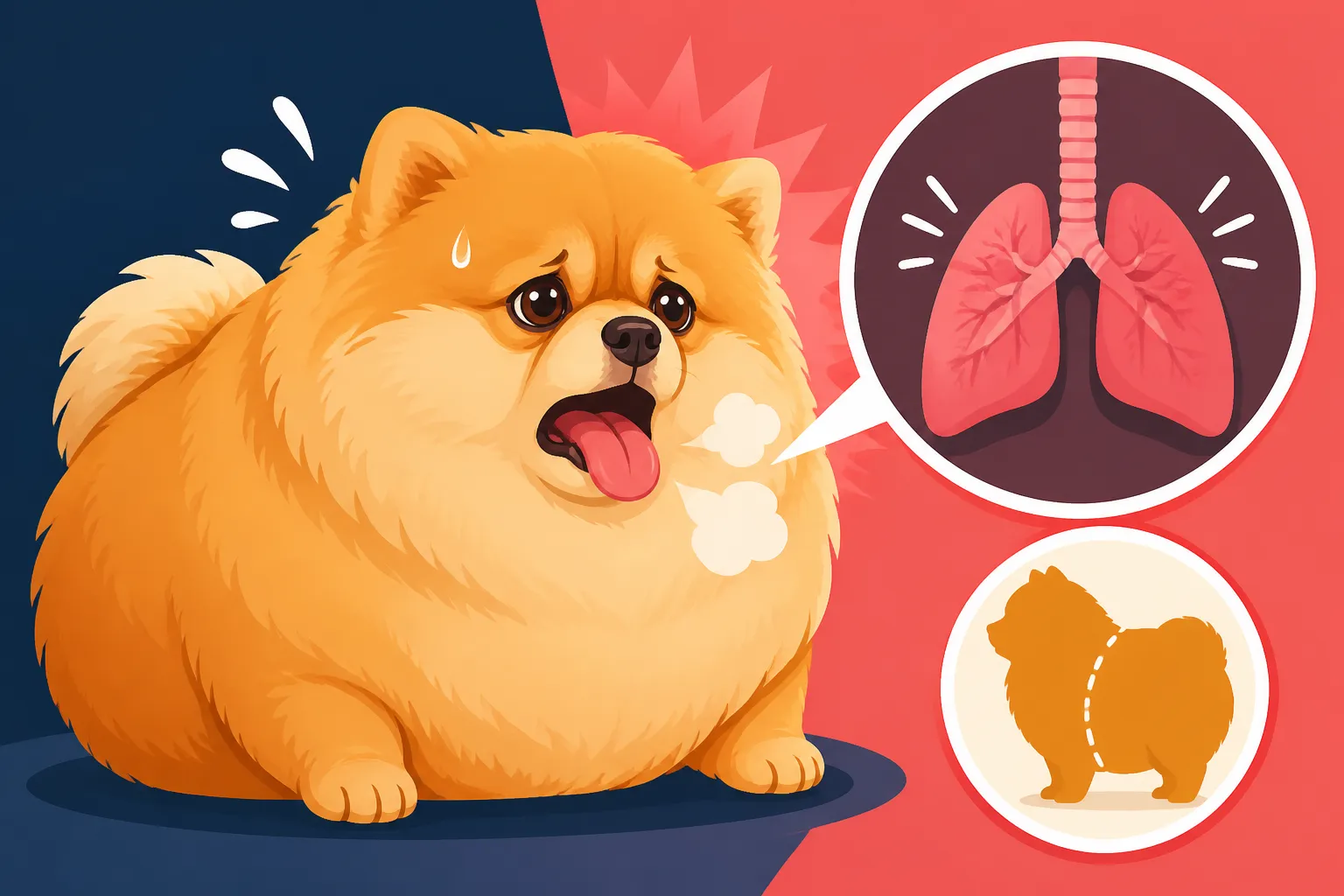
Why an Overweight Pomeranian Struggles to Breathe
It's a heartbreaking sight to see your lively Pomeranian struggling to catch their breath, especially when you know it's often tied to those few extra pounds they've put on. We all want to spoil our furry family members, and sometimes that extra treat or less active day adds up, leading to a serious health challenge. This guide will delve deep into why an overweight Pomeranian faces such difficulties with their breathing, outlining the underlying physiological reasons and offering practical, empathetic solutions to help your beloved companion breathe easier and live a healthier, happier life.
The Delicate Respiratory System of a Pomeranian
Pomeranians, with their compact bodies and bustling personalities, possess a respiratory system that is, unfortunately, quite delicate and susceptible to a few specific issues. When you add excess weight into the mix, these existing vulnerabilities can be significantly exacerbated, turning simple breathing into a constant struggle. Understanding these predispositions is the first step in protecting your Pom.
Tracheal Collapse: A Common Pomeranian Vulnerability
One of the most concerning and unfortunately common conditions in Pomeranians is tracheal collapse. Imagine a vacuum cleaner hose: it has rigid rings to keep it open. Your Pomeranian's trachea, or windpipe, is similar, made up of C-shaped cartilage rings. In many Poms, these rings can weaken and flatten over time, especially as they age, leading to a narrowing of the airway. This can manifest as a distinctive The Honking Cough of a Pomeranian's Collapsing Windpipe, which often sounds like a goose honk.
Now, consider the impact of excess weight. Every extra pound your Pomeranian carries places additional strain on their entire body, and the trachea is no exception. Fat deposits can accumulate around the neck and chest, literally pressing in on the already compromised windpipe from the outside. Internally, the increased effort required for breathing by an overweight dog can create a stronger negative pressure within the trachea, encouraging it to collapse further. It's a double whammy: external compression and internal suction. Picture a slightly overweight Pom, usually full of boundless energy, now struggling to keep up on a short walk around the block. They might start panting heavily much sooner than their leaner counterparts, their sides heaving, and that characteristic honking cough becoming more frequent and severe. The sheer physical bulk around their chest also restricts the natural expansion and contraction of the lungs, making each breath a harder fight.
Brachycephalic Tendencies Even in a Fox Face
While Pomeranians are famously known for their beautiful "fox-like" faces, they are not classified as a true brachycephalic (short-nosed) breed like a Bulldog or Pug. However, there's a spectrum, and some individual Pomeranians can have slightly shorter muzzles than others, or thicker soft palates, a characteristic that can slightly impact their airflow. Over generations, breeders have sometimes leaned towards a more "baby doll" or "teddy bear" face, which can inadvertently shorten the muzzle a tiny bit compared to their historical ancestors, the larger German Spitz breeds.
When a Pomeranian, even one with a generally well-proportioned muzzle, carries excess weight, any subtle tendencies towards a slightly shorter airway or thicker soft palate become far more problematic. The extra fat deposits aren't just external; they can also accumulate in the soft tissues of the throat and around the pharynx, narrowing the internal passageways. This means there's less space for air to move freely, increasing resistance and making breathing a noisier, more arduous task. You might notice a heavier Pom snoring louder than usual during sleep, or their breathing might sound wet or raspy even when they're at rest. This isn't just a quirky habit; it’s a clear sign of increased effort. Their natural anatomy, combined with the added fat, creates a perfect storm where their airway is just not as open as it needs to be for comfortable, efficient respiration, especially when they need more oxygen after activity.
How Excess Weight Directly Impacts Breathing Mechanics
Beyond exacerbating existing conditions like tracheal collapse, excess weight in a Pomeranian directly interferes with the fundamental mechanics of breathing. It's not just about what you see on the outside; the internal pressure and physical space available for the lungs to do their job are significantly compromised.
Constriction of the Airway
Imagine trying to breathe while someone gently squeezes your chest and throat. That's a bit like what happens to an overweight Pomeranian. As we discussed, fat doesn't just sit on the outside; it infiltrates. Adipose tissue, commonly known as body fat, can accumulate in the neck, around the chest cavity, and within the abdominal area. These fat deposits physically constrict the airways, much like putting a kink in a garden hose. The pressure on the trachea and bronchi (the tubes leading into the lungs) means they're not as wide open as they should be, leading to increased resistance every time your Pom tries to inhale or exhale.
This external pressure makes the lungs work harder. The diaphragm, the primary muscle of respiration, has to exert more force to draw air into the lungs, which are already struggling against physical compression. Think of a Pomeranian who is a few pounds over their ideal The Three to Seven Pounds a Pomeranian Should Hold. When they get excited or simply walk up a small incline, you'll see their chest and abdomen moving vigorously. They're panting excessively, not just to cool down, but because their body is literally fighting for enough air. This labored breathing means they're constantly in a state of mild respiratory distress, which is exhausting and can lead to a host of other health problems down the line. It's particularly noticeable in moderate temperatures where a lean dog would be comfortable, but the chunky Pom is already struggling to regulate their body temperature due to the constricted airflow and insulating fat layer.
Reduced Lung Capacity and Efficiency
It's not just the external constriction; the internal mechanics are also severely hampered. When a Pomeranian carries too much weight, particularly around their abdomen, that extra fat pushes upwards on the diaphragm. The diaphragm is meant to move freely, contracting to create a vacuum that pulls air into the lungs, and relaxing to push air out. When its movement is restricted by abdominal fat, the lungs cannot fully expand.
This directly translates to reduced lung capacity and efficiency. Each breath an overweight Pomeranian takes contains less oxygen than it should, meaning they have to breathe more frequently and with greater effort to get the same amount of oxygen into their bloodstream. Their little hearts also have to work overtime. The cardiovascular system is intimately linked to the respiratory system; if the lungs aren't delivering enough oxygen, the heart has to pump harder and faster to circulate the available oxygen and deliver it to tissues throughout the body. Over time, this constant strain can contribute to or worsen existing heart conditions, such as The Heart Defect Found in a Pomeranian Puppy or Congestive Heart Failure in a Pomeranian. You'll often see an overweight Pom get winded quickly during even light play. They might chase a toy for a moment, then flop down, their breathing ragged, sitting there trying desperately to catch their breath. This isn't just laziness; it's a physical limitation caused by their body's inability to efficiently take in and process oxygen, making even simple activities feel like an Olympic effort.
The Vicious Cycle: Overweight, Labored Breathing, and Reduced Activity
The frustrating reality for owners of overweight Pomeranians is that it often becomes a self-perpetuating problem. The physical limitations imposed by excess weight lead to reduced activity, which in turn leads to more weight gain, trapping the dog in a vicious cycle that's hard to break.
Less Energy, Less Movement
When breathing is a constant struggle, even the simplest activities become tiring. A Pomeranian who is panting and coughing after a short walk isn't going to be eager to go out for another one. The labored breathing makes physical exertion uncomfortable, even painful, for them. This discomfort naturally leads to a sedentary lifestyle. They'll choose to nap rather than play, prefer sitting on the couch to exploring the yard, and might even resist going for walks they once loved.
This decreased activity level means fewer calories burned. If their food intake isn't adjusted downwards to match their reduced energy expenditure, they will continue to gain weight. This, in turn, further exacerbates their breathing difficulties, making them even less inclined to move. It's a cruel feedback loop: more weight leads to harder breathing, which leads to less exercise, which leads to more weight. An owner might notice their once spunky Pom, who loved zooming around the house, now just watches from the sofa. It's not a change in personality; it's a physiological consequence of their body struggling to function under the burden of excess fat. Breaking this cycle requires a concerted effort to manage both diet and activity levels simultaneously, always keeping their delicate respiratory system in mind.
Exacerbation of Other Health Issues
Beyond the immediate breathing concerns, carrying extra weight has a profound negative impact on a Pomeranian's overall health, often worsening existing conditions or paving the way for new ones, many of which can indirectly or directly affect their breathing. For instance, obesity significantly increases the risk and severity of heart disease. The heart has to work harder to pump blood through a larger body, and the added fat can even infiltrate the heart muscle itself. A Pomeranian with a pre-existing The Heart Defect Found in a Pomeranian Puppy or an older Pom developing Congestive Heart Failure in a Pomeranian will find their symptoms accelerate and become more severe if they are overweight. A struggling heart cannot efficiently circulate oxygen, compounding the respiratory challenges.
Furthermore, conditions like diabetes are much more prevalent in overweight dogs. While not directly a respiratory issue, it indicates a systemic metabolic imbalance that puts stress on every organ. Overweight Poms are also more prone to joint issues, like Slipping Kneecaps in a Five Pound Pomeranian, because their small frames are not designed to carry extra pounds. Joint pain further reduces mobility, feeding back into the cycle of inactivity and weight gain. All these interconnected health problems put immense strain on a Pomeranian's body, making their struggle to breathe not just an isolated issue but a symptom of a broader, compromised state of health. It’s why addressing weight isn't just about appearance; it’s about giving them the best chance at a long, healthy life.
Strategies for Helping an Overweight Pomeranian Breathe Easier
The good news is that weight loss, even just a small amount like Taking Half a Pound Off a Pomeranian Safely, can make a profound difference in a Pomeranian's breathing and overall quality of life. It requires dedication and consistency, but the improvements you'll see in their energy levels and comfort are incredibly rewarding.
Calorie Control and Appropriate Diet
This is arguably the most critical component of helping an overweight Pomeranian. Because Pomeranians are so tiny, even a small excess in calories can quickly lead to significant weight gain. Every treat, every scrap from the table, and every extra kibble counts. You need to be meticulous about portion control.
Start by consulting your veterinarian to determine your Pomeranian's ideal weight and a safe, realistic daily calorie target for weight loss. Then, measure their food precisely. Don't eyeball it; invest in a small kitchen scale to weigh out their kibble. For a tiny dog, the difference between a quarter cup and a scant quarter cup can be hundreds of calories over a week! Opt for high-quality, small-breed specific formulas that are nutrient-dense without being excessively high in calories. Brands like Ollie offer fresh, portion-controlled meals that can be an excellent option for precise calorie management, while popular online retailers like Chewy provide a vast selection of small-breed kibbles and weight-management diets. If you're struggling to measure accurately, Amazon has many affordable digital pet food scales that can help. Remember, treats should be small, low-calorie, and accounted for in their daily intake. Consider vegetables like baby carrots or green beans as healthy, low-calorie alternatives. Feeding a Dog That Weighs What a Pomeranian Weighs is a delicate balance, and often less is truly more.
Here's a sample weight loss action plan:
| Action Item | Description | Frequency / Notes |
|---|---|---|
| Vet Consultation | Determine ideal weight, target calories, and rule out underlying conditions. | Initial visit, then follow-ups every 4-6 weeks. |
| Precise Food Measurement | Weigh all food portions (kibble, wet, fresh) using a digital scale. | Every meal, every day. |
| Transition to Weight Diet | Gradually switch to vet-recommended low-calorie, high-fiber small-breed formula or fresh food service. | Over 7-10 days to avoid stomach upset. |
| Treat Control | Use low-calorie treats (e.g., small pieces of carrot, green beans) and limit high-calorie options. | Treats should not exceed 10% of daily caloric intake. |
| Regular Exercise | Implement a structured, gentle exercise plan. | Daily, 2-3 short sessions (5-10 minutes each), gradually increasing intensity. |
| Water Availability | Ensure fresh water is always available to aid metabolism and hydration. | Constant. |
| Weight Tracking | Weigh your Pomeranian weekly at home using a pet or baby scale. | Once a week, same time of day. Keep a log. |
Tailored Exercise Regimen
While diet is paramount, exercise plays a vital role in both calorie burning and strengthening your Pomeranian's cardiovascular and respiratory systems. However, an overweight Pomeranian with potential breathing difficulties needs a carefully tailored approach to avoid overexertion. You absolutely cannot push them too hard, especially at the beginning.
Start incredibly slow and gentle. Instead of one long walk, aim for two or three very short walks, perhaps just 5-10 minutes each, spread throughout the day. Monitor their breathing closely. If they start panting heavily, coughing, or lagging behind, it's time to stop and rest. Focus on flat surfaces to minimize strain. Indoor play sessions with toys can also be effective, allowing you to control the intensity and quickly stop if needed. Exercise a Pomeranian Needs to Stay Trim is more about consistency than intensity.
Crucially, always use a harness for your Pomeranian, never a collar. A collar puts direct pressure on their delicate trachea, which is already vulnerable to collapse. A properly fitted harness, distributing pressure across their chest and shoulders, is essential, especially for Poms prone to windpipe issues. Harnesses Fitted for a Pomeranian's Windpipe are designed specifically to avoid throat pressure, unlike traditional collars which can greatly threaten a Pomeranian's windpipe. Consider a soft, lightweight harness that fits snugly without restricting movement. As your Pom loses weight and their breathing improves, you can gradually increase the duration and perhaps a tiny bit of intensity, but always prioritize their comfort and safety. Whether a Pomeranian can walk far will entirely depend on their current fitness level and breathing capacity.
Regular Veterinary Check-ups and Monitoring
Embarking on a weight loss journey with an overweight Pomeranian is not something to do alone. Regular veterinary check-ups are absolutely essential. Your vet can accurately assess your Pom's current health, rule out any underlying medical conditions that might be contributing to weight gain or breathing issues (like hypothyroidism), and help you develop a safe and effective weight loss plan.
During these check-ups, your vet will monitor their weight, listen to their heart and lungs, and assess their overall fitness. They can provide specific guidance on calorie intake, recommend appropriate food, and help you adjust their exercise routine as they make progress. You might need more frequent visits initially, perhaps every 4-6 weeks, to ensure they're losing weight at a healthy pace (typically 1-2% of their body weight per week). Your vet can also advise on any supplements that might support joint health or metabolism, though diet and exercise are the primary tools.
At home, pay close attention to your Pomeranian's breathing patterns. Note any changes in their breathing, such as increased panting, wheezing, or coughing. Keep a log of their weight loss, activity levels, and any observations about their breathing. Being proactive and working closely with your vet through regular The Checkup Schedule a Pomeranian Should Keep will significantly increase the chances of successful weight loss and a noticeable improvement in your Pomeranian's ability to breathe freely and enjoy life to the fullest. Remember, even routine procedures can carry Anesthesia Risk in a Four Pound Pomeranian, so keeping your Pom at a healthy weight also reduces risks associated with future medical needs.
Disclaimer
This article is for general informational purposes only and does not constitute professional advice. Laws, prices and regulations vary by location and change over time. Consult a qualified professional for guidance on your specific situation.