Whether a Deshedding Tool Damages a Pomeranian Coat
Oh, the never-ending battle with Pomeranian fluff! If you're anything like me, you've probably stood there, brush in hand, staring at a small mountain of shed hair, wondering if there's anything out there that could make this easier. You might have even eyed those popular "deshedding" tools, marketed as the ultimate solution for heavy shedders, and thought, "Could this be the answer to my prayers?" It's a natural thought, especially when your house seems to be growing a second, furrier carpet. But before you reach for one of those, let's have a serious talk about whether a deshedding tool is actually a friend or foe to your Pomeranian's magnificent coat. This guide will dive deep into why these tools, while effective for some breeds, can actually do more harm than good to a Pomeranian's unique double coat, and what you should be doing instead to keep that glorious fluff healthy and under control.
Understanding the Pomeranian Double Coat
The Pomeranian's coat is truly a marvel – a cloud of soft undercoat enveloped by longer, coarser guard hairs that stand out from the body. It’s what gives them that iconic, fluffy, almost spherical appearance. But this beautiful coat is also incredibly complex, and understanding its structure is the first step in knowing how to care for it properly.
The Anatomy of a Fluffy Fortress
Imagine your Pomeranian's coat like a finely constructed, two-story house. The foundation, or the "first floor," is the dense, soft, woolly undercoat. This layer is primarily for insulation. In winter, it traps warm air close to the body, keeping your little Pom toasty. In summer, it actually helps to keep them cool by creating an air barrier against the heat, much like how desert animals use their fur. It's incredibly important for regulating their body temperature year-round.
On top of this, forming the "second floor" and the roof, are the longer, straighter, and stiffer guard hairs. These are the hairs that give the Pomeranian its characteristic "stand-off" appearance and protect the delicate undercoat and skin from environmental elements like dirt, moisture, and UV rays. They also contribute to the vibrant color and sheen of the coat. Without these guard hairs, the undercoat can become matted and the skin unprotected. It's truly a protective barrier, a "fluffy fortress" designed by nature. You can read more about The Double Coat That Makes a Pomeranian and Why It Stays On. Knowing How Many Layers a Pomeranian's Coat Has is key to understanding why improper grooming can be so damaging.
Why Poms Shed and Why It's Not Always Just Undercoat
Shedding is a natural and necessary process for all double-coated breeds, Pomeranians included. It’s how they manage their insulation layers throughout the year, adapting to seasonal temperature changes. You'll likely notice periods of heavier shedding, often referred to as "coat blows," usually in spring and fall. During a coat blow, your Pom will shed a significant amount of undercoat to make way for a new, seasonally appropriate layer.
It’s easy to look at the sheer volume of hair during these times and assume it's all undercoat. However, some guard hairs are shed as well, though typically at a much slower rate. The issue arises when we try to aggressively remove hair without understanding which hair we're targeting. A healthy coat sheds naturally, and our job as owners is to assist in that process without compromising the integrity of the remaining fur. When that undercoat starts to really come out, it needs to be gently worked through and removed, not forcefully stripped.
The Pitfalls of Deshedding Tools on a Pomeranian Coat
This is where many well-meaning Pomeranian owners can unknowingly cause damage. Deshedding tools, while marketed as miracle workers, are often completely inappropriate for a Pomeranian's delicate double coat. They promise to remove loose undercoat, and they do, but often at a steep cost to the overall health and appearance of the coat.
How Deshedding Tools Work and Why It's Wrong for Poms
Let's talk about the infamous deshedding tool, often generically referred to by a popular brand name like the "Furminator." These tools typically feature a finely toothed metal blade designed to reach beneath the topcoat and pull out loose undercoat. For breeds with a very specific type of undercoat that sheds cleanly, like some Labradors or Huskies, these tools can be used with extreme caution and skill by a professional. However, a Pomeranian's undercoat is much finer and denser, and their guard hairs are relatively fragile.
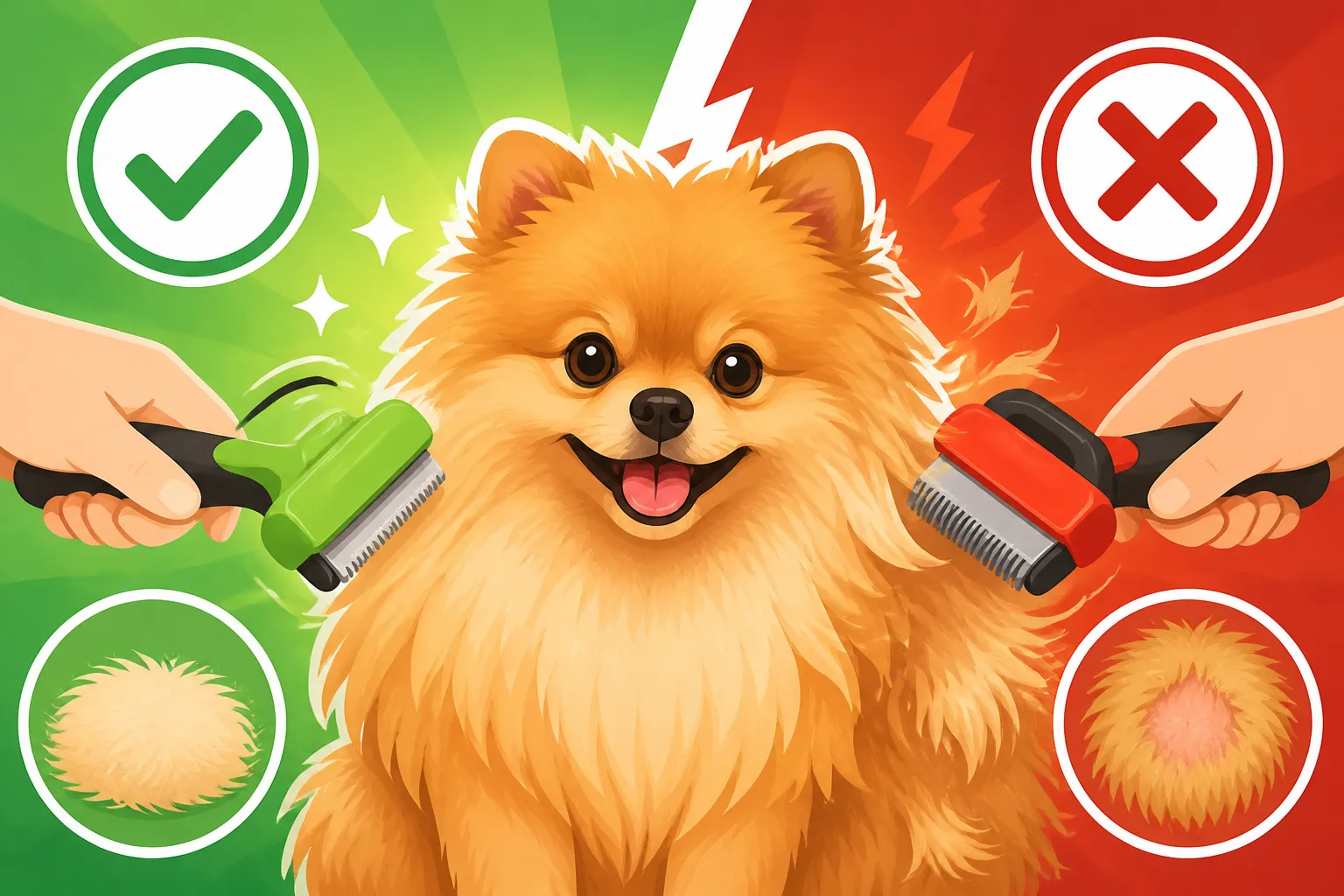
When you drag a deshedding tool through a Pomeranian's coat, that sharp blade doesn't just grab loose undercoat. It often cuts and rips through the delicate guard hairs, effectively shortening them or breaking them off. Imagine trying to rake dry leaves with a garden fork that also has a scissor attachment – it wouldn't just rake the leaves; it would snip at your plants too! This action disrupts the natural growth cycle and structure of the coat, leading to a host of problems.
The Risk of Damaging Guard Hairs
The most significant danger of using deshedding tools on a Pomeranian is the irreversible damage to their guard hairs. These guard hairs are not meant to be cut or stripped regularly. They provide the structure, the vibrant color, and the protection for your Pom's coat. When these are damaged or cut short by an aggressive deshedding tool:
- Loss of Protection: The natural barrier against sun, dirt, and moisture is compromised. Your Pom's skin becomes more exposed, increasing the risk of sunburn, skin irritation, and even developing hot spots.
- Coat Texture Changes: The lovely stand-off quality of the coat can be lost. It might become limp, uneven, or feel coarser in some areas and sparser in others.
- Slow or No Regrowth: Unlike the undercoat, which grows back relatively quickly, guard hairs have a much longer growth cycle. Once they are damaged or cut, it can take months, even a year or more, for them to fully regrow, if they ever do to their original state. In some cases, repeated damage can lead to a condition similar to post-clipping alopecia, where the coat simply refuses to grow back properly. This is related to issues like Black Skin Disease and the Pomeranian Coat That Never Returns.
- Increased Matting: Ironically, by damaging the guard hairs, you can actually make the coat more prone to matting. The integrity of the outer layer is gone, allowing the undercoat to clump and tangle more easily.
Irritation and Skin Issues
Beyond the coat itself, the aggressive action of deshedding tools can cause direct trauma to your Pomeranian's sensitive skin. The pulling and scraping motion can lead to:
- Skin Redness and Inflammation: The repetitive friction can irritate the skin, causing it to become red, sore, and inflamed.
- Follicle Damage: The hair follicles themselves can be damaged, leading to ingrown hairs or even permanent patches where hair struggles to grow back.
- Increased Scratching: An irritated Pom will scratch, lick, and chew at the affected areas, potentially leading to secondary skin infections. This can be a painful and frustrating cycle for both you and your little companion.
It's a common misconception that more aggressive grooming means less shedding. For a Pomeranian, it often leads to a compromised coat and unhappy skin, which can sometimes be mistaken for other skin issues like The Hormone Disease Mistaken for a Pomeranian's Alopecia.
Safe and Effective Alternatives for Managing Pomeranian Shedding
So, if deshedding tools are out, what should you be doing? The good news is that managing a Pomeranian's coat effectively doesn't require harsh tools. It requires consistency, patience, and the right techniques.
Regular Brushing with the Right Tools
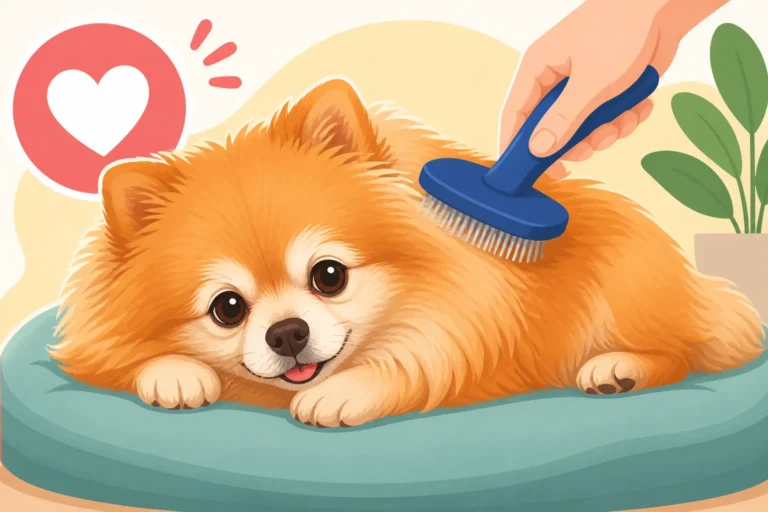
The cornerstone of Pomeranian coat care is regular, thorough brushing. This is how you gently remove loose undercoat and prevent mats without damaging the guard hairs. Aim for at least 2-3 times a week, and daily during heavy shedding periods like a coat blow.
Here's what you'll need and how to do it:
- Slicker Brush: This is your primary tool. It has fine, wire bristles close together and is excellent for getting into the undercoat and working out tangles. You can find excellent quality slicker brushes on platforms like Chewy or Amazon.
- Pin Brush: Used for the longer guard hairs and overall fluff. It has widely spaced metal pins with rounded tips.
- Metal Comb (Greyhound Comb): Essential for checking your work and ensuring you've reached down to the skin. It helps to find any missed mats.
The "Line Brushing" Technique: This is the most effective way to brush a Pomeranian.
- Work in Sections: Start at the bottom of your Pom's leg or flank.
- Part the Hair: Use one hand to part the coat, exposing a horizontal "line" of skin.
- Brush Upwards: With your slicker brush in the other hand, gently brush the hair up and away from the skin, starting from the exposed line. Work in small strokes.
- Cover the Area: Once that section is tangle-free and the loose undercoat is removed, drop a little more hair down from above and repeat the process, working your way across and up the body.
- Check with a Comb: After brushing a section, run your metal comb through it. If the comb glides smoothly to the skin, you've done a good job. If it catches, go back with the slicker brush.
This technique ensures you're reaching all the way to the skin and not just skimming the surface. It takes time, but it's crucial. I've got a whole guide on Working a Pomeranian's Coat in Sections to the Skin that goes into even more detail.
The Importance of Bathing and Drying
Proper bathing plays a crucial role in managing shedding by helping to loosen and release dead undercoat. However, it needs to be done correctly to avoid matting or skin issues.
- Brush Before Bathing: ALWAYS thoroughly brush your Pomeranian before getting them wet. Water will tighten any existing mats, making them nearly impossible to remove without cutting.
- Use Appropriate Shampoo and Conditioner: Choose a high-quality shampoo and conditioner specifically designed for double coats or for moisturizing. Avoid harsh, stripping formulas. You can often find great options on Chewy. Look for products that aim to hydrate rather than strip the coat.
- Lather and Rinse Thoroughly: Gently work the shampoo into the coat, ensuring you reach the skin. Rinse, rinse, rinse! Any residue can cause skin irritation or sticky patches that attract dirt.
- Condition: Follow with a good conditioner to help soften the coat and prevent tangles. Again, rinse thoroughly.
- Towel Dry, Then Blow Dry: Gently towel dry to remove excess water. Then, always blow dry a Pomeranian's coat completely, brushing as you go. Air-drying can lead to matting and mildew. Use a low-heat setting on a pet-specific dryer or a human dryer on a cool/low setting. Brushing the hair upwards against the growth will help it dry fluffy and stand off the body. There's a real art to Blow Drying a Pomeranian's Coat Out Straight to get that perfect look. Remember How Rarely a Pomeranian's Coat Should Be Washed is also important to maintain skin health.
Professional Grooming Insights
Even with diligent home care, a professional groomer who understands double coats can be an invaluable asset. They have specialized tools and techniques to efficiently remove loose undercoat without damaging the guard hairs.
- Find a "Force-Free" Groomer: Look for a groomer who practices "force-free" methods and is experienced with double-coated breeds. They should use high-velocity dryers to "blow out" the undercoat, along with appropriate brushing and bathing.
- Communicate Clearly: Explicitly state that you do not want your Pomeranian shaved or subjected to harsh deshedding tools. Ask for an undercoat removal service, often called a "deshedding bath" or "blow out."
- Regular Appointments: Scheduling regular grooming appointments (every 6-8 weeks, or more often during coat blows) can significantly reduce the amount of shedding you deal with at home and keep your Pom comfortable. These visits contribute to What a Year of Pomeranian Grooming Adds Up To, but they are well worth the investment for coat health.
Long-Term Coat Health and Maintenance
Beyond brushing and bathing, a Pomeranian's coat health is deeply tied to their overall well-being. Good nutrition, a healthy lifestyle, and avoiding common grooming pitfalls are all part of the equation.
Nutrition's Role in Coat Quality
Just like human hair, a dog's coat is a reflection of their internal health. A high-quality diet provides the building blocks for strong, healthy hair follicles and skin.
- Protein is Key: Hair is primarily made of protein, so ensuring your Pomeranian gets adequate, high-quality protein in their diet is crucial. Look for dog foods where a named meat source is the first ingredient. Many owners explore fresh food options, like Ollie, which can offer excellent nutritional profiles.
- Essential Fatty Acids: Omega-3 and Omega-6 fatty acids are vital for skin and coat health. They help maintain skin moisture, reduce inflammation, and promote a shiny, resilient coat. Many premium kibbles include these, but you can also add supplements like fish oil. Brands like Amazon offer a wide array of reputable fish oil supplements specifically formulated for dogs. This directly impacts Whether a Pomeranian Needs Fish Oil for Its Coat.
- Vitamins and Minerals: A balanced diet rich in vitamins (especially A, E, and B vitamins) and minerals (like zinc) supports overall skin and coat integrity.
Consulting with your veterinarian about your Pomeranian's diet and potential supplements is always a good idea, especially if you notice persistent coat issues. Ensuring they get The Protein a Pomeranian's Coat Needs is foundational.
Avoiding Common Coat-Damaging Mistakes
Beyond deshedding tools, there are a few other common mistakes Pomeranian owners often make that can harm the coat:
- Shaving: Never, ever shave a Pomeranian unless it's medically necessary (e.g., for surgery or severe matting). Shaving disrupts the natural growth cycle of the double coat and can lead to "Post-Clipping Alopecia" or "Black Skin Disease" (Alopecia X), where the coat either grows back patchy, discolored, or not at all. This is a very serious concern and you can learn more about Why a Shaved Pomeranian May Not Regrow. The guard hairs are essential, and once removed, their return is not guaranteed.
- Harsh Brushing: While thorough brushing is good, being too aggressive or using brushes with stiff, sharp bristles can pull and break hair, and even scratch the skin. Always be gentle, especially when encountering tangles. Use a detangler spray to help loosen knots.
- Neglecting Seasonal Changes: During the "puppy uglies" phase, or when your Pomeranian experiences their seasonal coat blow, the temptation to aggressively remove hair is strong. But these are natural cycles. Your job is to support the natural shedding process with gentle, consistent grooming, not to force it. The Coat Blow and the Pomeranian Puppy Uglies period requires extra care and understanding.
- Using Human Hair Products: Stick to dog-specific shampoos and conditioners. Human products have a different pH balance and can irritate a dog's skin or strip their natural oils.
By understanding the unique needs of your Pomeranian's double coat and committing to a routine of gentle, effective grooming, you can ensure they remain beautiful, comfortable, and healthy for years to come.
| Grooming Tool Type | Pomeranian Suitability | Why / Why Not | Recommended Use |
|---|---|---|---|
| Slicker Brush | YES | Effectively reaches undercoat without cutting guard hairs. | Daily to several times weekly for mat prevention and undercoat removal. |
| Pin Brush | YES | Good for overall fluff and separating guard hairs. | For finishing, adding volume, and lighter brushing. |
| Metal Comb | YES | Essential for checking for mats down to the skin. | After brushing to ensure no tangles remain. |
| Deshedding Tools (e.g., Furminator) | NO | Sharp blades cut and damage guard hairs, leading to coat loss and skin irritation. | Avoid completely. |
| Dematting Rake/Tool | USE WITH EXTREME CAUTION | Can be used very gently by professionals for small, tight mats, but can easily damage coat. | Best left to professional groomers if absolutely necessary. |
| Rubber Curry Brush | LIMITED USE | Good for massaging skin and distributing oils, but less effective for deep undercoat. | Light massage during bath or for very light shedding. |
Disclaimer
This article is for general informational purposes only and does not constitute professional advice. Laws, prices and regulations vary by location and change over time. Consult a qualified professional for guidance on your specific situation.