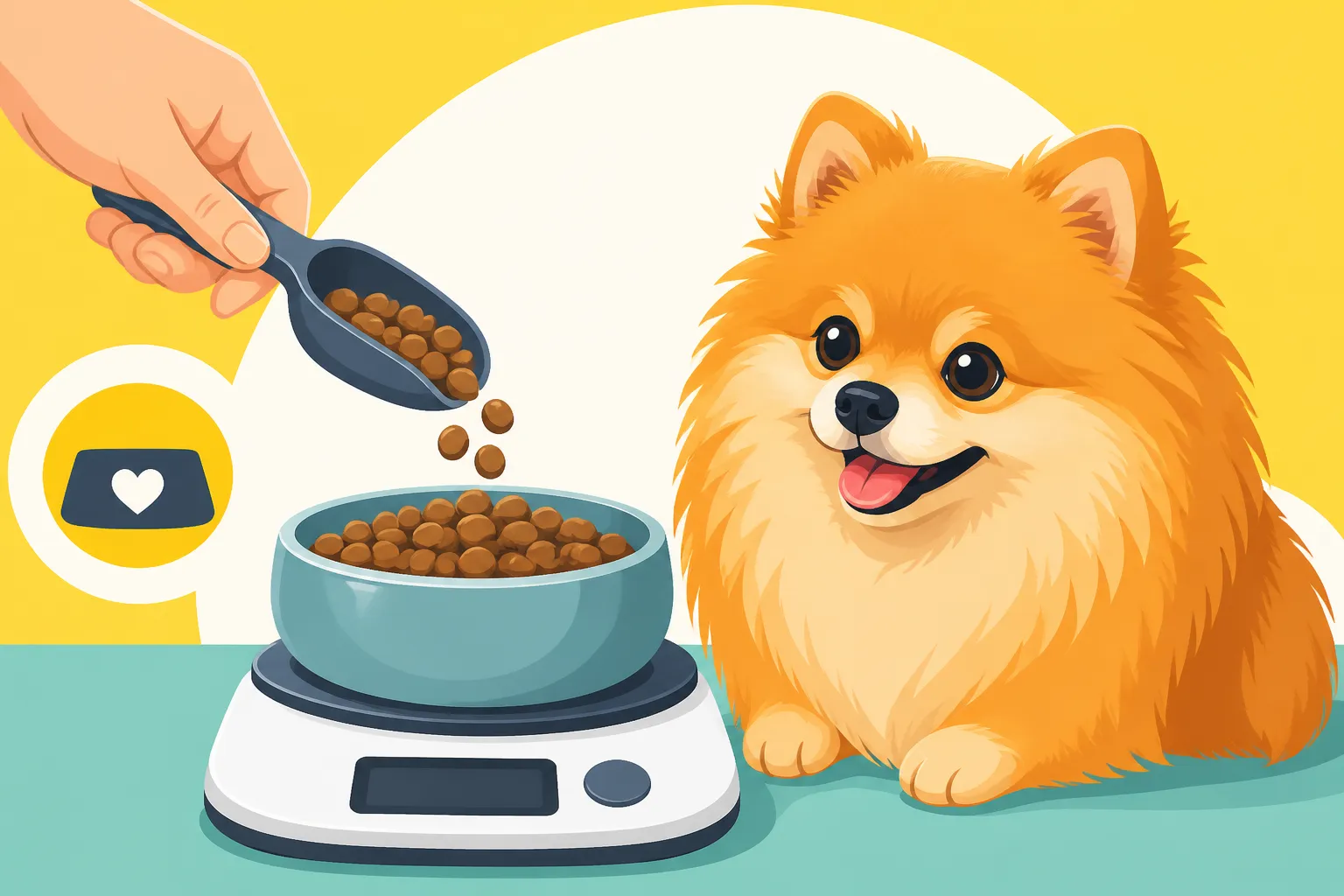
Weighing Fresh Food Out for a Pomeranian
One of the trickiest parts of feeding a tiny Pomeranian, especially if you're venturing into the world of fresh, minimally processed diets, is getting the portion size just right. Unlike kibble, where a scoop is usually consistent, fresh food varies wildly in density, moisture, and calorie count even within the same brand. This variability makes simply eyeballing a portion a real gamble for a dog as small and delicate as a Pom, leading to concerns about underfeeding or, more commonly, accidental overfeeding and the health issues that can follow. This guide will walk you through why precise measurement matters so much for your pint-sized companion and how to accurately weigh out their fresh food meals to keep them healthy and happy.
Why Precision Matters for Your Pomeranian's Diet
When you're dealing with a dog that might only weigh a few pounds, every single calorie counts. What might seem like a tiny extra nibble to us can be a significant portion of their daily intake, and conversely, a slight underestimation can leave them feeling hungry or even lacking essential nutrients.
The Dangers of Estimation for Small Breeds
For small breeds like Pomeranians, estimation in feeding can quickly lead to big problems. Imagine trying to manage your own diet by guessing cupfuls of food, but on a scale where a single extra tablespoon means you've added an entire extra meal to your day. That's the reality for a Pom.
Overfeeding, even slightly, can easily snowball into obesity. An overweight Pomeranian isn't just a cute, cuddly potato; they're at a much higher risk for a whole host of health issues. Their tiny frames are already prone to conditions like Slipping Kneecaps in a Five Pound Pomeranian and The Honking Cough of a Pomeranian's Collapsing Windpipe, and carrying extra weight exacerbates these problems significantly. It puts undue strain on their joints, makes breathing harder, especially if their windpipe is already compromised, and increases their risk of developing conditions like diabetes. You might think, "Oh, it's just half an ounce more," but for a Pom, that half-ounce can be the difference between a healthy weight and struggling to climb the sofa.
On the flip side, underfeeding is equally concerning. While less common with fresh food, it can happen if you consistently underestimate the calorie density. A Pom puppy, in particular, is vulnerable to Blood Sugar Crashes in a Pomeranian Puppy if they don't get enough consistent nutrition throughout the day. Even adult Poms can experience lethargy, dull coats, and a weakened immune system if their nutritional needs aren't met. They need specific amounts of protein, fat, and carbohydrates to fuel their energetic personalities and maintain their glorious coats.
The Unique Nature of Fresh Food Portions
Fresh food isn't a one-size-fits-all measuring game, and that's where many owners get tripped up. Unlike dry kibble, which is manufactured to have a consistent density and shape, fresh food varies dramatically. Think about the difference between a dense, meat-based pâté and a chunky stew with visible vegetables and grains. A "cup" of pâté will weigh far more and contain more calories than a "cup" of chunky stew, simply due to how much air is trapped in the latter and the varying water content.
Even within the same brand or recipe, there can be slight variations from batch to batch depending on the ingredients' moisture levels or how finely they've been ground. This is why a simple scoop, while convenient for kibble, becomes utterly unreliable for fresh food. You might use the same scoop every day and think you're providing a consistent meal, but the actual calorie and nutrient content could be fluctuating by a surprising amount. This inherent inconsistency is precisely why weighing becomes the gold standard for fresh food diets, ensuring that every meal provides exactly what your Pomeranian needs to thrive.
The Tools and Techniques for Accurate Weighing
Getting precise with your Pomeranian's fresh food doesn't require a laboratory, just a few basic tools and a consistent approach. It’s all about removing the guesswork and introducing accuracy.
Essential Equipment for Portion Control
To truly master portion control for your pint-sized Pom, you'll need the right gear. And thankfully, it's nothing too fancy or expensive!
First and foremost, a good digital kitchen scale is your absolute best friend. Forget those old spring-loaded scales; you need something that can measure in grams or ounces with precision, ideally down to the single gram or tenth of an ounce. Many reputable brands offer these, and you can find a wide variety on platforms like Amazon. Look for one that's easy to clean, has a clear digital display, and preferably a "tare" function (more on that in a moment). This scale will quickly become indispensable.
Beyond the scale, small, shallow bowls are practical. They make it easier to add food incrementally and see your measurements without overfilling or spilling. You don't want a huge soup bowl where a small portion looks lost; it makes it harder to gauge what you're doing.
And what about those trusty measuring cups and spoons? Well, for fresh food, they become secondary. While they have their place for certain ingredients or liquids in recipes, for the main meal portion, they're far less reliable than weight. As we discussed, a "cup" of fresh food can vary wildly in actual content depending on its density. So, while you might use them to scoop from a larger container, the final measurement should always be done by weight on your digital scale.
Step-by-Step Guide to Weighing Fresh Food
Once you have your digital scale, the process is quite straightforward. Consistency is key here, so try to make this part of your regular meal prep routine.
- Set Up and Calibrate (if necessary): Place your digital kitchen scale on a flat, stable surface. Most modern digital scales don't require frequent manual calibration, but it's good practice to ensure it reads "0" before you start. If it has a calibration function and you're unsure, refer to its manual.
- Turn On and Select Units: Turn your scale on and make sure it's set to the unit you prefer, typically grams (g) or ounces (oz). Grams tend to offer finer precision, which is excellent for tiny portions.
- Tare the Bowl: Place your empty Pomeranian's food bowl directly on the scale. Once the weight of the bowl stabilizes, press the "Tare" or "Zero" button. This crucial step subtracts the weight of the bowl, so the display now reads "0" again, and you'll only be measuring the weight of the food itself.
- Add Food Gradually: Begin adding your fresh food to the bowl, slowly. It's often easier to add a little less than you think you need and then gradually add small amounts until you reach your target weight. For chunky or dense fresh food, you might need to use a spoon or spatula to transfer it. If you're using a pre-portioned fresh food service like Ollie, their guides will tell you exactly how many ounces or grams your Pom needs based on their specific formula, making this step even easier.
- Read Accurately: Keep your eyes level with the scale's display to avoid parallax errors, especially if your scale isn't perfectly eye-level. Once you hit your target weight, you're done!
- Consistency is King: Make this a habit. Weighing every meal ensures your Pomeranian gets precisely the right amount of food every single time, supporting their health and helping maintain their ideal weight. This is especially important for growing puppies or senior Poms whose nutritional needs might fluctuate. How Little Food an Adult Pomeranian Needs is often surprising, so exact measurement is critical.
Decoding Your Pomeranian's Calorie Needs
Knowing how to weigh the food is only half the battle; the other half is understanding how much your specific Pomeranian actually needs. It's not a one-size-fits-all answer, even within the breed.
Calculating Your Pomeranian's Resting Energy Requirement (RER)
The first step in figuring out your Pomeranian's calorie needs is to understand their Resting Energy Requirement, or RER. This is the baseline number of calories your dog needs just to keep their basic bodily functions running – breathing, digestion, maintaining body temperature – if they were just lying down all day.
To calculate RER, veterinarians often use a formula that takes into account your dog's weight in kilograms. For a small dog like a Pomeranian, the calculation will be quite precise, emphasizing just how impactful even small discrepancies can be. Once you have the RER, you then apply an "activity multiplier" to determine their actual daily caloric intake.
Here are some typical multipliers, though these are general and a vet is always best:
- Weight Loss: 1.0 x RER
- Neutered/Spayed Adult: 1.6 x RER
- Intact Adult: 1.8 x RER
- Sedentary or Senior: 1.2 – 1.4 x RER
- Active: 2.0 – 5.0 x RER (depending on intensity)
- Puppies: 2.0 – 3.0 x RER (they need a lot for growth!)
For example, a spayed, moderately active adult Pomeranian might need calories equivalent to 1.6 times their RER. Remember, a vet or a certified pet nutritionist can provide the most accurate RER and multiplier for your Pomeranian, taking into account their age, activity level, health conditions, and specific metabolic rate. This is especially crucial for Pomeranians who might be Taking Half a Pound Off a Pomeranian Safely or are still growing, as Whether a Pomeranian Puppy Needs Extra Calories is definitely something to consider.
Understanding Fresh Food Labeling and Density
Once you have a target calorie count, you need to translate that into how much fresh food to put on the scale. This is where fresh food labels come in, and they're usually much more helpful than kibble labels for precise weighing.
High-quality fresh food companies understand the importance of accurate feeding. Many will provide the caloric content not just per cup (which, as we know, is variable), but also per ounce or per gram. For instance, a brand might state "1300 kcal/kg" or "40 kcal/oz." This information is vital. If your Pomeranian needs, say, 200 calories a day, and the food is 40 kcal/oz, you know they need 5 ounces of food per day (200 / 40 = 5).
However, you'll notice that the caloric density can differ significantly between different fresh food recipes. A beef recipe might be much denser and higher in calories per ounce than a leaner chicken recipe with more vegetables. This is why it's critical to check the specific nutritional information for each fresh food product you buy. You can't assume that if your Pom needs 3 ounces of the chicken recipe, they'll need 3 ounces of the beef recipe. This again underscores why weighing is paramount – it's the only way to account for these density differences and ensure your Pomeranian gets the correct caloric intake, whether you're trying to help them maintain The Three to Seven Pounds a Pomeranian Should Hold or trying to address Whether an Eight Pound Pomeranian Is Overweight. Many online retailers, like Chewy, provide detailed nutritional breakdowns for the fresh food brands they carry, making it easier to compare and calculate before you even buy.
Common Pitfalls and Troubleshooting
Even with the best intentions and the right tools, there are common mistakes Pomeranian owners can make when feeding fresh food. Recognizing these can save you a lot of headache and keep your little companion on track.
Over-reliance on "Scoops"
We've touched on this already, but it bears repeating because it's such a pervasive habit from kibble feeding: the scoop is not your friend for fresh food. It's a pitfall that can derail even the most dedicated owner's efforts at precise nutrition.
Imagine you have two different fresh food recipes: one is a very fine, dense pâté, almost like a solid block, and the other is a chunky, stew-like meal with peas, carrots, and bits of meat. If you use the exact same measuring cup or scoop for both, you will get vastly different actual amounts of food and, more importantly, vastly different calorie counts. The chunky stew will have a lot of air gaps, meaning a "cup" of it will weigh significantly less and contain fewer calories than a "cup" of the dense pâté.
For a Pomeranian, whose daily caloric needs are already quite low—often just a few hundred calories—even a half-ounce difference in density per "scoop" can mean a swing of 20-50 calories. Over the course of a day, or weeks, this adds up dramatically, leading to either slow, insidious weight gain or insufficient nutrition. This is why for fresh food, you need to think in terms of weight (grams or ounces) rather than volume (cups or scoops). It's the only way to truly know How Many Cups a Five Pound Pomeranian Eats is actually the right amount.
Adjusting for Treats and Supplements
Here's another big one, especially for small dogs: treats! We all love to spoil our Poms with a little something extra, and training treats are a daily necessity for many. However, for a tiny Pomeranian, those small rewards add up incredibly fast and can easily push them over their daily caloric limit.
Think about it: a single, seemingly small training treat might contain 5-10 calories. If your Pomeranian's entire daily caloric intake is around 200-250 calories, giving them ten of these treats throughout the day means you've added 50-100 calories, which could be 20-50% of their total food! This is often why owners find their Pomeranian is gaining weight even when they're diligently weighing their main meals.
The solution is two-fold:
- Factor them in: Get into the habit of calculating the calories in your treats. Many treat packages list this information. If you give a certain number of treats, subtract their total caloric value from your Pomeranian's main meal portion for the day.
- Choose wisely: Opt for very low-calorie treats or even use small pieces of their own fresh food as rewards. Many owners use tiny bits of cooked chicken or vegetables (safe ones, of course) as super healthy, low-calorie treat options.
The same principle applies to supplements. While many supplements are low-calorie, some, especially those with an oil base or in chewable forms, can contribute a small number of calories. If your Pomeranian is on a strict weight management plan or has specific health needs, even these tiny additions might need to be considered. Remember, for a Pomeranian, every calorie is a significant calorie.
When to Consult Your Veterinarian or a Pet Nutritionist
Even with all this information, sometimes you need the experts. Feeding your Pomeranian, especially on a fresh food diet, is a dynamic process that needs monitoring. Your veterinarian is an invaluable resource, and a certified pet nutritionist can provide even more in-depth guidance.
You should definitely reach out if you notice any of the following:
- Unexplained weight changes: If your Pomeranian is gaining weight despite diligent weighing and portion control, or conversely, losing weight, it's a sign something might be off. This could be anything from an incorrect RER calculation to an underlying health issue. Whether a Pomeranian's Coat Hides Weight Gain can make it hard to spot, so regular hands-on checks are vital.
- Changes in energy levels or coat quality: A dull coat, flaky skin, or a sudden decrease in energy could indicate nutritional deficiencies or an imbalance in their diet.
- Persistent digestive issues: Diarrhea, constipation, or excessive gas after transitioning to or while on a fresh food diet might mean the specific recipe isn't right for your Pom, or the portions are off.
- Growth concerns in puppies: Puppyhood is a critical time for proper nutrition. If your Pomeranian puppy isn't growing as expected or is experiencing frequent Blood Sugar Crashes in a Pomeranian Puppy, immediate veterinary consultation is a must.
- Managing specific health conditions: For Pomeranians with conditions like diabetes, kidney disease, or severe allergies, a carefully balanced fresh food diet can be incredibly beneficial, but it absolutely requires professional guidance to ensure it meets their unique therapeutic needs.
A vet or nutritionist can help you fine-tune your Pom's diet, ensuring they're getting all the necessary nutrients in the correct balance, tailored to their individual needs. They can also recommend appropriate fresh food brands, guide you on homemade fresh food recipes, and help troubleshoot any issues you encounter.
Here's a quick comparison of why weight measurement is superior for fresh food:
| Feature | Volume Measurement (Cups/Scoops) | Weight Measurement (Grams/Ounces) |
|---|---|---|
| Consistency | Highly inconsistent for fresh food | Highly consistent, regardless of food density |
| Accuracy | Low, prone to errors due to density/air pockets | High, precise caloric and nutrient delivery |
| Suitability for Poms | Poor, easy to over/underfeed tiny dogs | Excellent, critical for managing small breed diets |
| Tools Needed | Measuring cups/scoops | Digital kitchen scale, food bowls |
| Impact on Health | Risk of obesity, malnutrition | Supports ideal weight, optimal health |
Disclaimer
This article is for general informational purposes only and does not constitute professional advice. Laws, prices and regulations vary by location and change over time. Consult a qualified professional for guidance on your specific situation.