Whether an Eight Pound Pomeranian Is Overweight
It’s a common worry for Pomeranian parents: looking at your beloved fluffball and wondering if their cuddly weight is actually healthy. These tiny dogs, with their glorious double coats, can easily mask a few extra ounces, making it hard to tell what’s truly going on underneath all that fur. This guide will help you understand if your eight-pound Pomeranian is at a healthy weight, how to accurately assess their body condition, and what steps to take if they’re carrying too much.
Understanding the Pomeranian Breed Standard for Weight
When you bring a Pomeranian into your life, you quickly learn that every ounce can feel like a big deal. For such a small breed, a mere half-pound can dramatically shift their overall health and appearance. The official breed standards offer a guideline, but the reality for pet Poms can sometimes be a little different.
What the Official Standards Say
The American Kennel Club (AKC) and other major kennel clubs typically state that a Pomeranian should weigh between 3 and 7 pounds. This range is considered ideal for show Poms and represents the peak of the breed's characteristics and health, according to established guidelines. They are judged on their compact body, dainty bone structure, and the way they carry their weight. If your eight-pound Pomeranian is outside this range, it's natural to pause and wonder.
It's easy to get caught up in these numbers, especially when you see a perfect show dog trotting around. However, it’s important to remember that these are ideals set for conformation showing. Many healthy, happy pet Pomeranians fall just outside this specific 3-7 pound window, often weighing a little more or less. The real concern isn't just about hitting a number, but about what that number means for your individual dog's health and mobility. A Pomeranian at the higher end of the standard might be perfectly lean and athletic, while another at eight pounds could be carrying an unhealthy amount of excess fat. This is where the standard becomes a starting point for discussion, not the absolute final word for every pet. Many people assume if their dog is just over the standard, it's automatically overweight, which isn't always the case. For more on the ideal weight, see The Three to Seven Pounds a Pomeranian Is Allowed.
Why a Few Pounds Make a Big Difference on a Small Frame
For a breed as tiny as the Pomeranian, even a small amount of extra weight can have a disproportionate impact on their body. Think about it this way: if a human adult carries an extra 10 or 15 pounds, it might not drastically affect their daily life immediately. But for a dog that might only weigh 5-7 pounds, an extra pound or two is like a human carrying an additional 20-30% of their body weight. That's a significant burden.
This added stress affects everything from their joints to their cardiovascular system. Their delicate bone structure and small stature mean they aren't built to carry much excess. It can make climbing stairs a chore, jumping on and off furniture risky, and even simple walks exhausting. What seems like a negligible amount to us can feel like a heavy backpack to a tiny Pom, fundamentally changing their quality of life and potentially shortening it. It’s crucial not to dismiss even a slight increase in weight for such a small dog, as the consequences compound rapidly.
Assessing Your Eight-Pound Pomeranian's Body Condition
The scale gives you a number, but your hands tell you the true story. For a fluffy breed like a Pomeranian, simply looking at them or checking their weight on a scale isn't enough. Their magnificent double coat can be incredibly deceptive, hiding both healthy muscle and unhealthy fat. This is why learning to assess their body condition is an invaluable skill for any Pomeranian owner.
Beyond the Scale: The Importance of Body Condition Scoring
Body Condition Scoring (BCS) is a more accurate and holistic way to determine if your Pomeranian is at an ideal weight. Instead of relying solely on a number, BCS involves a physical and visual assessment of your dog's fat reserves and muscle mass. Most veterinary practices use a 1-5 or 1-9 scale, with the middle numbers representing an ideal condition. For a Pomeranian, with their abundant fur, feeling for landmarks like ribs, spine, and waist is far more reliable than just looking.
Why is this so important? Because weight can fluctuate based on hydration, recent meals, or even coat length. A BCS provides a consistent, objective measure of how much fat your dog is carrying. It helps you distinguish between a healthy, heavily coated Pom and an overweight one whose fat is hidden beneath a cloud of fur. Understanding BCS empowers you to have more informed conversations with your vet and make proactive decisions about your dog's diet and exercise, ensuring their long-term health, rather than just chasing an arbitrary number on the scale.
How to Perform a Hands-On Check (Ribs, Waist, Tummy Tuck)
Performing a hands-on check is surprisingly simple and should become a regular part of your Pomeranian's grooming routine. Start by gently running your hands along your Pomeranian's sides. You should be able to feel their ribs with a slight amount of fat covering them, similar to how you'd feel the knuckles on your hand with your palm open. If you can't feel the ribs without pressing firmly, or if they feel spongy, your Pom might be carrying too much weight. Conversely, if the ribs are extremely prominent and easy to see or feel without any fat covering, your dog might be too thin.
Next, stand above your Pomeranian and look down at their back. You should see a subtle waistline, an inward curve, just behind their ribs. For Poms, this might be less pronounced due to their fluffy coats, but you should still be able to detect it. If their back appears straight or even bulges out, they are likely overweight. Finally, observe your Pomeranian from the side. Their abdomen should tuck up slightly from their chest to their hind legs, not hang low or be straight. If it sags or is round, it’s another indicator of excess weight. Getting a small, accurate pet scale can also help you track minor changes between vet visits, and you can often find suitable options on sites like Chewy or Amazon.
Visual Cues of an Overweight Pomeranian
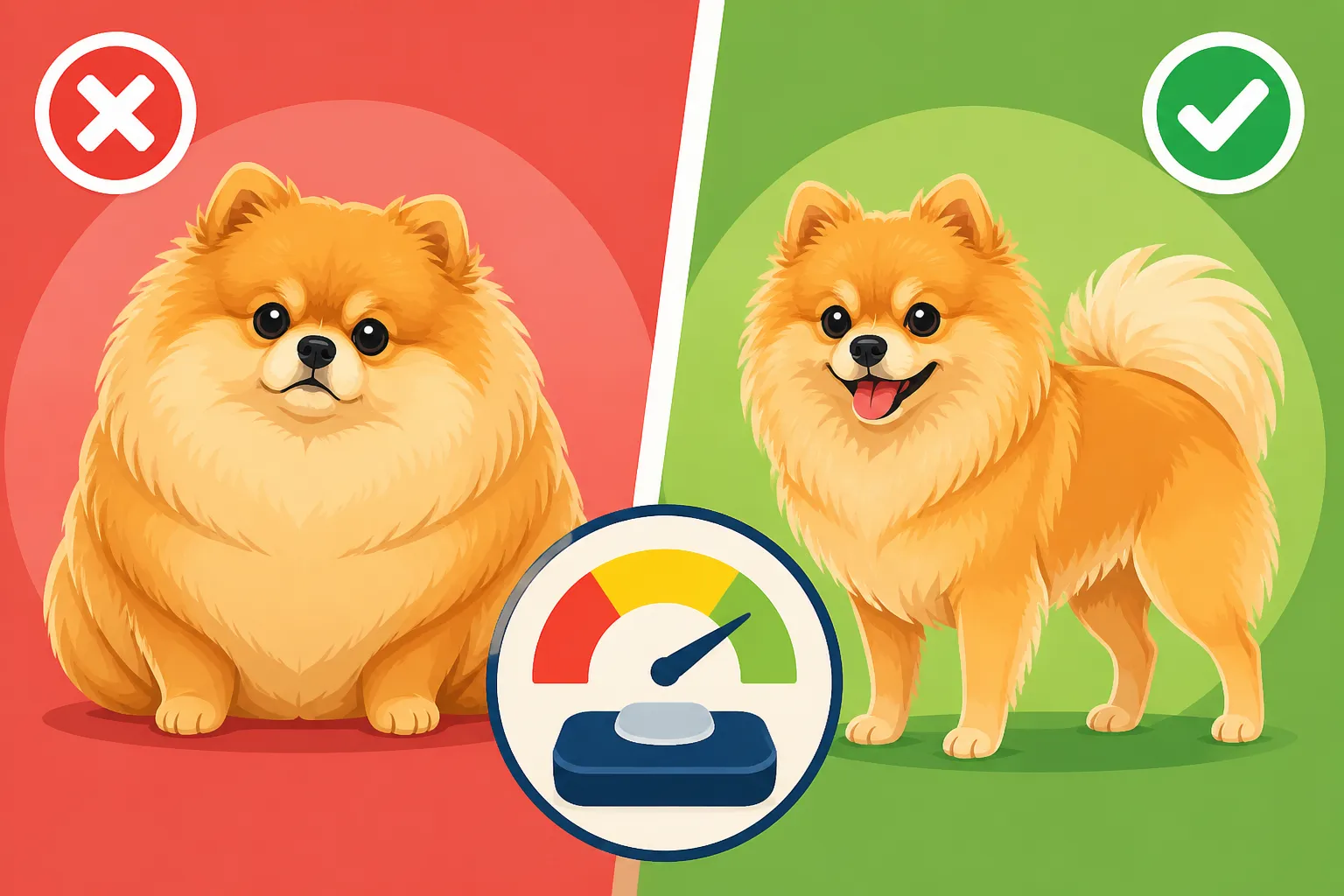
Even with all that fluff, there are often subtle visual cues that your Pomeranian might be carrying extra weight. One of the first things you might notice, if you're looking closely, is a lack of definition. A healthy Pomeranian, even with a dense coat, typically has a discernible shape: a chest that tapers slightly to a waist, and a slight tuck-up in the abdomen. An overweight Pom often appears more rounded or barrel-like, with little to no waistline visible, even when their coat is damp.
You might also observe changes in their movement. An overweight Pomeranian might be less enthusiastic about walks or play, show a reluctance to jump onto furniture (or struggle to do so), and generally seem less energetic. Their gait might appear stiffer, or they might pant more easily after minimal exertion. In severe cases, you might even notice fat deposits around their neck or the base of their tail. While their adorable fluff can hide a lot, these behavioral and subtle physical changes are often the first giveaways that your sweet Pom needs a little help shedding some pounds.
Potential Health Risks of Extra Weight in Pomeranians
It's never just about aesthetics when it comes to pet weight. For Pomeranians, being even a little overweight can exacerbate existing breed predispositions and introduce a host of new health problems. Their small size makes them particularly vulnerable to the compounding effects of excess body fat. Understanding these risks is crucial for motivating consistent weight management.
Impact on Joints and Skeletal Structure
Pomeranians are known for their delicate skeletal structure, and many are prone to orthopedic issues. One of the most common is patellar luxation, or "slipping kneecaps." When a Pomeranian carries extra weight, the stress on these tiny knee joints increases dramatically. The added burden makes the kneecaps more likely to slip out of place, causing pain, lameness, and potentially requiring costly surgery down the line. It's like asking a small bridge to hold a much heavier load than it was designed for.
Beyond the knees, excess weight can also strain their hips and spine, leading to arthritis and other degenerative joint diseases much earlier in life. Simple movements like jumping or running become more painful, reducing their quality of life and their willingness to engage in play. This can then create a vicious cycle where less activity leads to more weight gain, further worsening their joint health. Protecting their mobility often starts with maintaining a lean body condition. For more information on this specific joint issue, check out Slipping Kneecaps in a Five Pound Pomeranian.
Respiratory and Cardiovascular Strain
Pomeranians, like many small breeds, can be predisposed to respiratory problems, most notably tracheal collapse, where the windpipe weakens and flattens. An overweight Pomeranian will often struggle even more with breathing difficulties. The extra fat around their neck and chest can put additional pressure on their already delicate airway, making it harder for them to get enough oxygen. This can lead to more frequent and severe episodes of the characteristic "honking cough."
Beyond respiratory issues, carrying extra weight also forces their small hearts to work harder to pump blood through a larger body mass. This increased workload can contribute to or worsen existing heart conditions, such as congestive heart failure, especially as they age. An overweight Pomeranian may pant more, tire easily, and be at a higher risk for complications during even routine procedures requiring anesthesia. Keeping them lean helps ease the strain on both their lungs and their little hearts. You can learn more about respiratory concerns in The Honking Cough of a Pomeranian's Collapsing Windpipe.
Other Associated Health Concerns
The health risks of being overweight in a Pomeranian extend beyond just joints and breathing. They can also be at a higher risk for developing canine diabetes, much like humans. Excess fat can interfere with insulin sensitivity, leading to issues with blood sugar regulation. Skin issues can also become more prevalent, as fat folds can create moist environments where bacteria and yeast thrive, leading to skin infections and discomfort.
Furthermore, overweight Poms tend to have a harder time regulating their body temperature, making them more susceptible to overheating in warmer weather. Their natural double coat already makes them vulnerable to heat, and extra fat acts like an insulating layer, trapping more heat in. Overall, being overweight can significantly reduce their general vitality, impact their immune system, and ultimately lead to a shorter, less comfortable lifespan.
What to Do if Your Eight-Pound Pomeranian Is Overweight
Discovering your Pomeranian is carrying extra weight can feel overwhelming, but it's a completely manageable situation. The good news is that even small, consistent changes can make a huge difference for these little dogs. The key is to approach it with a clear plan and the support of your veterinarian.
Consulting Your Veterinarian for a Personalized Plan
The very first step you should take if you suspect your eight-pound Pomeranian is overweight is to schedule a visit with your veterinarian. While home assessments are helpful, your vet can provide a professional body condition score, rule out any underlying medical conditions that might contribute to weight gain (like a slow thyroid), and help you formulate a safe and effective weight loss plan. They might recommend specific diagnostic tests, such as bloodwork, to ensure there are no metabolic issues complicating matters.
Your vet can also help calculate a precise caloric intake target for your Pomeranian, taking into account their ideal weight, age, activity level, and any existing health conditions. They can suggest appropriate food choices and provide a realistic timeline for weight loss. Trying to implement drastic changes without professional guidance can be detrimental, especially for a small breed, so consider your vet your primary partner in this journey.
Adjusting Diet and Portion Control
Dietary adjustments are often the cornerstone of any weight loss plan for a Pomeranian. It’s absolutely critical to measure your dog’s food precisely; "a scoop" can be surprisingly inconsistent. Invest in a proper measuring cup or even a small kitchen scale to ensure accuracy with every meal. You might be surprised at how little food your Pomeranian actually needs to maintain a healthy weight, let alone lose weight. For example, a five-pound Pomeranian might only need about half a cup of kibble per day, split into two or three meals. How Many Cups a Five Pound Pomeranian Eats is a good resource for this.
Your vet might recommend switching to a prescription weight-management diet, which is typically lower in calories and higher in fiber to help your Pom feel full. Alternatively, they might suggest specific over-the-counter small-breed formulas designed for weight control. If you're exploring fresh food options, which can be highly beneficial for weight management due to their natural ingredients and controlled portions, a brand like Ollie offers pre-portioned, vet-formulated meals that can make calorie counting much easier. You can find precise measuring cups and other feeding tools easily on platforms like Amazon or Chewy. Remember, even treats count towards daily calories, so opt for low-calorie options or use tiny pieces of fruits or vegetables as rewards.
Here's a simplified comparison of typical feeding vs. weight loss adjustment:
| Category | Standard Feeding (Maintenance) | Weight Loss Feeding (Adjustment) |
|---|---|---|
| Kibble Type | Regular adult small breed formula | Vet-prescribed weight loss formula or low-cal small breed |
| Portion Size (Daily) | Based on current weight for maintenance | Calculated for ideal weight, often 10-20% less than maintenance |
| Measuring Method | Scoops, estimation (common mistake) | Digital kitchen scale or precise measuring cups (essential) |
| Treats | Any treats, possibly high-calorie | Low-calorie options (e.g., green beans, small training treats) |
| Feeding Frequency | Once or twice daily | Often 2-3 small meals to prevent hunger, especially for Poms |
| Human Food | Small scraps, occasional additions | Strictly avoided or limited to vet-approved safe veggies |
| Water Access | Always available | Always available (crucial for feeling full) |
Increasing Safe and Appropriate Exercise
While diet is critical, exercise plays a vital role in burning calories, building muscle, and improving overall health for your Pomeranian. The key is "safe and appropriate." Due to their delicate nature and potential for conditions like tracheal collapse or luxating patellas, high-impact or overly strenuous activities are usually not recommended. Instead, focus on consistent, moderate exercise.
Daily short walks are excellent. Aim for two to three 10-15 minute walks per day on a well-fitting harness (never a collar, due to windpipe concerns). A chest harness available from Chewy or Amazon can provide comfort and prevent neck strain. Indoor play sessions, like gentle fetch with soft toys or hide-and-seek, can also add to their activity level without putting too much stress on their joints. Consider puzzle toys to engage their minds, which also burns energy. Gradual increases in activity are key; don't go from zero to an hour-long hike overnight. Observe your Pom for signs of fatigue or discomfort, and always provide fresh water. For more advice on how much activity is right, read How Far a Pomeranian Can Walk in a Day.
Monitoring Progress and Staying Consistent
Weight loss is a journey, not a sprint, especially for small dogs where even half a pound makes a big difference. Consistency is paramount. Weigh your Pomeranian weekly or bi-weekly on an accurate pet scale (many pet stores or vet offices have them, or you can purchase one for home use). Track their weight, food intake, and exercise in a journal or a pet app. This helps you visualize progress and identify what's working and what might need adjustment.
Don't get discouraged if the numbers don't drop dramatically every week; small, steady loss is the healthiest approach. Recheck their body condition score regularly by feeling their ribs and waist. Celebrate small victories, like increased energy or a more defined waistline. Involving your vet in these check-ins is important, as they can help fine-tune the plan. Remember, the goal is not just weight loss, but a healthier, more active, and longer life for your cherished Pomeranian.
Disclaimer
This article is for general informational purposes only and does not constitute professional advice. Laws, prices and regulations vary by location and change over time. Consult a qualified professional for guidance on your specific situation.