Why Stairs Threaten a Pomeranian Puppy’s Kneecaps
It’s a common sight in many homes: a bouncy, curious Pomeranian puppy, all fluff and enthusiasm, staring up at a daunting flight of stairs. You might think, "Oh, they'll learn to manage," or "It's good exercise!" But for our tiny, delicate Poms, especially when they're still growing, stairs aren't just a challenge—they can be a silent threat to their precious kneecaps. This guide will delve into why stairs pose such a risk to your Pomeranian puppy's developing joints and, more importantly, how you can keep them safe.
The Fragile Foundation: Understanding Pomeranian Kneecaps
When you bring home a Pomeranian puppy, you're not just getting an adorable ball of fluff; you're also taking on the responsibility for a breed known for certain unique physical vulnerabilities. Their small size and specific bone structure mean that what might be a minor bump for a larger dog can be a significant issue for a Pom. Their kneecaps, in particular, require careful consideration from day one.
Patellar Luxation: A Common Vulnerability
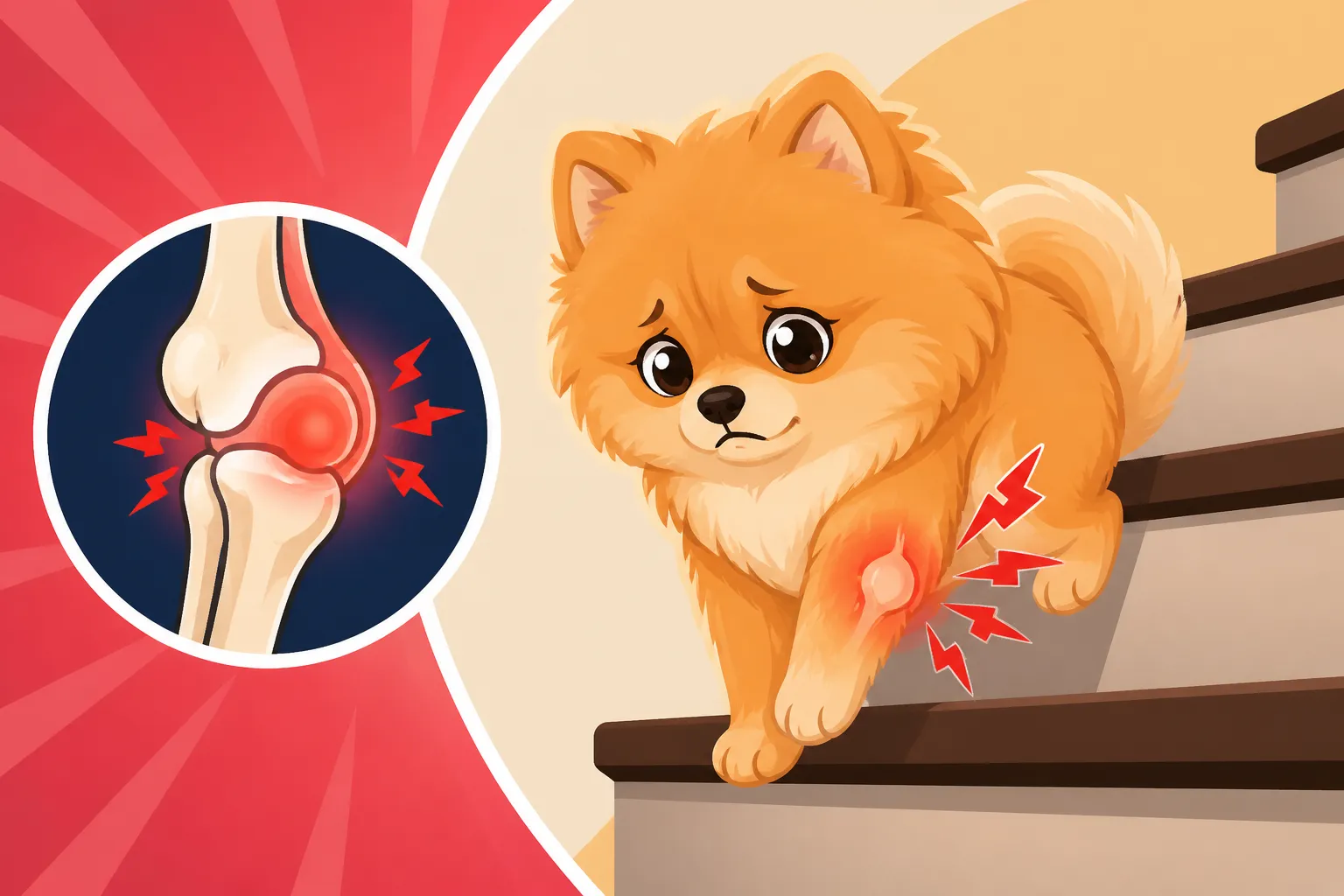
One of the most concerning orthopedic conditions for Pomeranians is patellar luxation, often simply called "slipping kneecaps." This is where the patella, or kneecap, dislocates or moves out of its normal groove in the thigh bone (femur). It's incredibly common in small breeds, and Pomeranians are certainly not exempt. Imagine trying to walk when your knee keeps popping out of place – it’s painful, startling, and can lead to long-term damage. For a puppy whose bones and ligaments are still developing and relatively soft, repeated stress or sudden impacts can exacerbate a predisposition to this condition, or even cause it directly.
Owners often report noticing The Age a Pomeranian's Kneecap First Slips, sometimes as early as puppyhood. You might observe a slight skip in their gait, or they might suddenly hold a back leg up for a few steps before putting it down again as if nothing happened. This often indicates the kneecap has slipped and then relocated itself. While some dogs can live with a mild case, unchecked luxation can lead to chronic pain, arthritis, and even more severe lameness as they age. It's a huge worry for any Pom parent, and seeing your tiny companion struggle is heartbreaking.
Puppy Physiology: Why Small Bones are a Big Deal
Pomeranian puppies, like all young animals, are still growing. Their bones are not yet fully ossified or hardened, and the growth plates – areas of cartilage near the ends of bones – are open and vulnerable. Their ligaments and tendons, which provide crucial support to joints, are also still maturing. This delicate state means their joints are much more susceptible to injury from excessive strain or sudden impact compared to a fully developed adult dog.
Think about it: a human toddler isn't usually sent up and down a full flight of stairs unassisted, right? We instinctively understand that their bodies aren't ready for that kind of stress. The same principle applies to our miniature canine companions. When a tiny Pomeranian puppy attempts to navigate stairs, their little legs are taking on forces disproportionate to their size and developmental stage. They don't have the muscle strength or skeletal maturity to absorb the shock and navigate the complex motion safely, leading to micro-traumas or even significant injury that sets the stage for future problems like Slipping Kneecaps in a Five Pound Pomeranian.
The Mechanics of Danger: How Stairs Impact Pomeranian Puppies
It’s easy to underestimate the physical demands stairs place on a dog, especially a small, young one. We might see them as a fun challenge, or just a part of everyday life in a multi-level home. However, for a Pomeranian puppy, each step up and down can be a high-impact event that slowly, or sometimes quickly, takes a toll on their tiny joints.
Repetitive Stress and Micro-Trauma
Imagine a small, uncoordinated puppy trying to bound up or down a full flight of stairs. Each ascent requires a powerful push-off from the hind legs, and each descent involves a controlled (or often uncontrolled) landing. This repetitive motion, especially the jolting impact of landing or scrambling downwards, creates cumulative stress on the knee joints. It's not just one big injury you need to worry about; it's the constant, microscopic damage that builds up over time.
Each time a tiny patella rubs slightly out of its groove due to awkward motion, or each time a growth plate takes an unnecessary jolt, it contributes to wear and tear. Over weeks or months, this can loosen ligaments, widen the patellar groove, and eventually lead to a noticeable luxation. Many owners don't realize the quiet harm that's being done until the skipping gait becomes more pronounced, or their vet points out a grade of luxation during a routine exam. It's a prime example of Why Jumping Off Furniture Wrecks a Pomeranian's Knees – any repetitive impact is a risk.
Impact Forces: Jumping vs. Descending
The physics of stair navigation are particularly harsh on small dogs. When a Pomeranian puppy jumps down a stair, even a single one, their entire body weight and the force of gravity are absorbed by their small limb joints, especially the knees and hocks. This is a high-impact event. If they attempt to descend a whole flight of stairs, they often struggle to maintain balance, sometimes 'bunny hopping' down, or even tumbling.
The descent is often more dangerous than the ascent. Going up, the muscles are primarily engaged in pushing, which can build strength, albeit with risk if overdone. Going down, however, involves braking, balance, and absorbing impact, which puts immense strain on the ligaments and cartilage that stabilize the kneecap. A single bad landing or an uncontrolled slide can lead to an acute injury, or significantly worsen an underlying predisposition to patellar luxation. This kind of strain is not what a developing Pomeranian knee is built for, and it’s why prevention is so crucial.
Coordination and Missteps
Pomeranian puppies, for all their boundless energy, are often quite clumsy. Their bodies are growing rapidly, and their spatial awareness and motor skills are still developing. A flight of stairs, with its varying heights and depths, requires a degree of coordination that most young puppies simply haven't mastered yet. They might misjudge a step, slip on a slick surface, or get tangled in their own tiny legs.
A misstep can lead to a fall, and a fall down a flight of stairs for a small dog can be devastating. Beyond the immediate injury risks to their kneecaps, a fall can cause fractures, head trauma, or other orthopedic issues. Their small size makes them incredibly fragile. Even if they don't take a full tumble, constant near-slips and awkward movements on stairs can put undue strain on their joints, tendons, and muscles, contributing to long-term problems. Preventing these opportunities for missteps is a key part of protecting your puppy.
Proactive Solutions: Keeping Your Pomeranian Puppy Safe
Realizing the risks stairs pose to your Pomeranian puppy can be a bit overwhelming, but the good news is there are many practical and effective steps you can take to safeguard their little knees. It’s all about creating a safe environment and teaching them appropriate ways to navigate your home, rather than leaving them to figure out potentially dangerous situations on their own.
Blocking Access and Supervised Training
The most straightforward way to prevent stair-related injuries is to simply block access. Baby gates are a fantastic invention for this very purpose! Install them at the top and bottom of any staircases in your home. This way, your puppy can't make an ill-advised dash up or down when you're not looking. This is especially important during their most vulnerable developmental stages.
When your puppy is older and their joints are more mature, you can introduce stairs under strict supervision, but only if your vet gives the green light. Leash training on stairs can be a slow, patient process. Carry them up and down for the first few months, and then, if necessary, introduce a single step at a time, always using a harness (never a collar due to potential The Honking Cough of a Pomeranian's Collapsing Windpipe). Guide them slowly, one paw at a time, praising them for each successful small movement. The goal isn't speed, but controlled, safe movement, minimizing jumps or awkward landings. This is about building confidence, not forcing development.
Investing in Safe Alternatives
For homes with stairs, or even just high furniture, ramps and pet steps are absolute game-changers for Pomeranians. These provide a gentle incline or a series of small, manageable steps that reduce the impact on their joints significantly. Instead of leaping off the sofa and jarring their kneecaps, they can use a ramp to comfortably get down. This is crucial for preventing injuries and is something I always recommend to new Pomeranian owners.
You can find a variety of pet steps and ramps online, with options to suit different furniture heights and home aesthetics. Many owners find excellent, sturdy options on platforms like Amazon, offering everything from carpeted steps to wooden ramps that seamlessly blend with decor. Look for models that are stable, have non-slip surfaces, and are sized appropriately for your tiny Pom. Placing them strategically by beds, couches, and even stairs can make a huge difference in protecting their joints throughout their lives, making it a sound investment in their long-term health, helping you avoid issues like Arthritis in a Pomeranian at Ten. Consider Ramps and Steps Sized for a Pomeranian to ensure a good fit.
Early Intervention and Veterinary Care
Even with the best preventative measures, it's vital to maintain a close relationship with your veterinarian regarding your Pomeranian puppy's joint health. Regular check-ups are essential, as your vet can assess their patellas and look for any signs of laxity or early luxation. Don't hesitate to mention any little skip or limp you observe, even if it seems fleeting. Early detection of conditions like Grading Patellar Luxation in a Pomeranian can make a huge difference in managing the condition and preventing it from worsening.
Your vet can provide guidance on appropriate exercise, nutrition, and potentially even preventative supplements to support joint health. They might recommend specific dietary considerations or supplements containing glucosamine and chondroitin, though always consult with them before introducing anything new. Remember, a vet's trained eye can spot subtle issues before they become major problems. They are your best resource for keeping your Pomeranian healthy and advising whether Whether a Pomeranian's Kneecap Needs Surgery is ever needed.
Long-Term Implications and Prevention
The choices we make during our Pomeranian puppy's formative months can have lasting effects on their health and well-being. Overlooking the dangers of stairs might seem minor at first, but the consequences can be significant, impacting their quality of life for years to come. Investing time and effort into prevention now can save a lot of heartache and expense down the road.
The Cost of Neglect: Future Health Issues
Ignoring the risks of stairs and allowing your Pomeranian puppy unlimited access can, unfortunately, lead to a cascade of health problems later in life. What starts as a mild, intermittent skip in a puppy's gait can progress into chronic patellar luxation, causing persistent pain and lameness. This often necessitates expensive veterinary interventions, including medications for pain and inflammation, physical therapy, or even surgery to correct the kneecap's position. Whether a Pomeranian Can Live With a Grade Two Knee without intervention is a serious question many owners face.
Beyond the direct costs, chronic joint issues significantly reduce a dog's quality of life. A dog in pain can become withdrawn, less playful, and reluctant to engage in activities they once loved. The goal is to provide your Pomeranian with a pain-free, active life, and preventing early joint trauma is a huge part of that. Think about The Eighteen Thousand Dollar Lifetime of a Pomeranian – a significant portion of that cost can unfortunately go towards treating preventable orthopedic issues.
Building Muscle and Joint Support
While preventing undue stress on developing joints is paramount, it's also important to support healthy development through appropriate exercise and nutrition. Once your vet confirms your puppy's joints are healthy and stable, controlled, low-impact exercise can help build the muscle tone needed to support their kneecaps. Think gentle walks on soft surfaces, short play sessions on carpeted floors, and supervised interactions. Avoid high-impact activities, roughhousing with larger dogs, or anything that encourages jumping or twisting motions.
Nutrition plays a role too; ensuring your puppy receives a high-quality diet appropriate for their size and age supports overall skeletal health. Some owners also explore options for early socialization and training programs, such as those offered by BAXTER & Bella, which can teach puppies how to navigate their world confidently and safely without relying on risky behaviors like stair climbing. Always discuss any exercise regimen or nutritional supplements with your veterinarian to ensure it's suitable for your individual Pomeranian puppy's needs.
Summary of Safe Practices
To make it a little easier to remember all these points, here’s a quick overview of key practices for keeping your Pomeranian puppy’s knees safe from stairs:
| Action Item | Description | Why It Helps |
|---|---|---|
| Block Stair Access | Use baby gates at the top and bottom of all staircases. | Prevents unsupervised, high-risk climbing and accidental falls. |
| Carry Your Puppy | Always carry your Pomeranian puppy up and down stairs until they are older and vet-approved for supervised training. | Eliminates all impact and strain on delicate, developing joints. |
| Invest in Ramps/Steps | Place pet ramps or steps next to high furniture (beds, sofas) and consider them for stair alternatives if possible. | Provides a safe, low-impact way for your Pom to access elevated areas. |
| Supervised Stair Training | If necessary and vet-approved, introduce stairs very gradually, one step at a time, on a leash, with slow, controlled movements. | Teaches safe navigation, minimizing jumps and awkward landings. |
| Regular Vet Check-ups | Maintain regular veterinary visits to monitor joint health and address any signs of patellar luxation early. | Allows for early detection and management of potential joint issues. |
| Appropriate Exercise & Nutrition | Provide controlled, low-impact exercise and a balanced diet to support muscle and joint development. Avoid rough play. | Strengthens supporting structures around the knee and promotes overall skeletal health. |
By being proactive and mindful of these simple steps, you can help ensure your precious Pomeranian puppy grows into a happy, healthy adult with strong, sound kneecaps.
Disclaimer
This article is for general informational purposes only and does not constitute professional advice. Laws, prices and regulations vary by location and change over time. Consult a qualified professional for guidance on your specific situation.