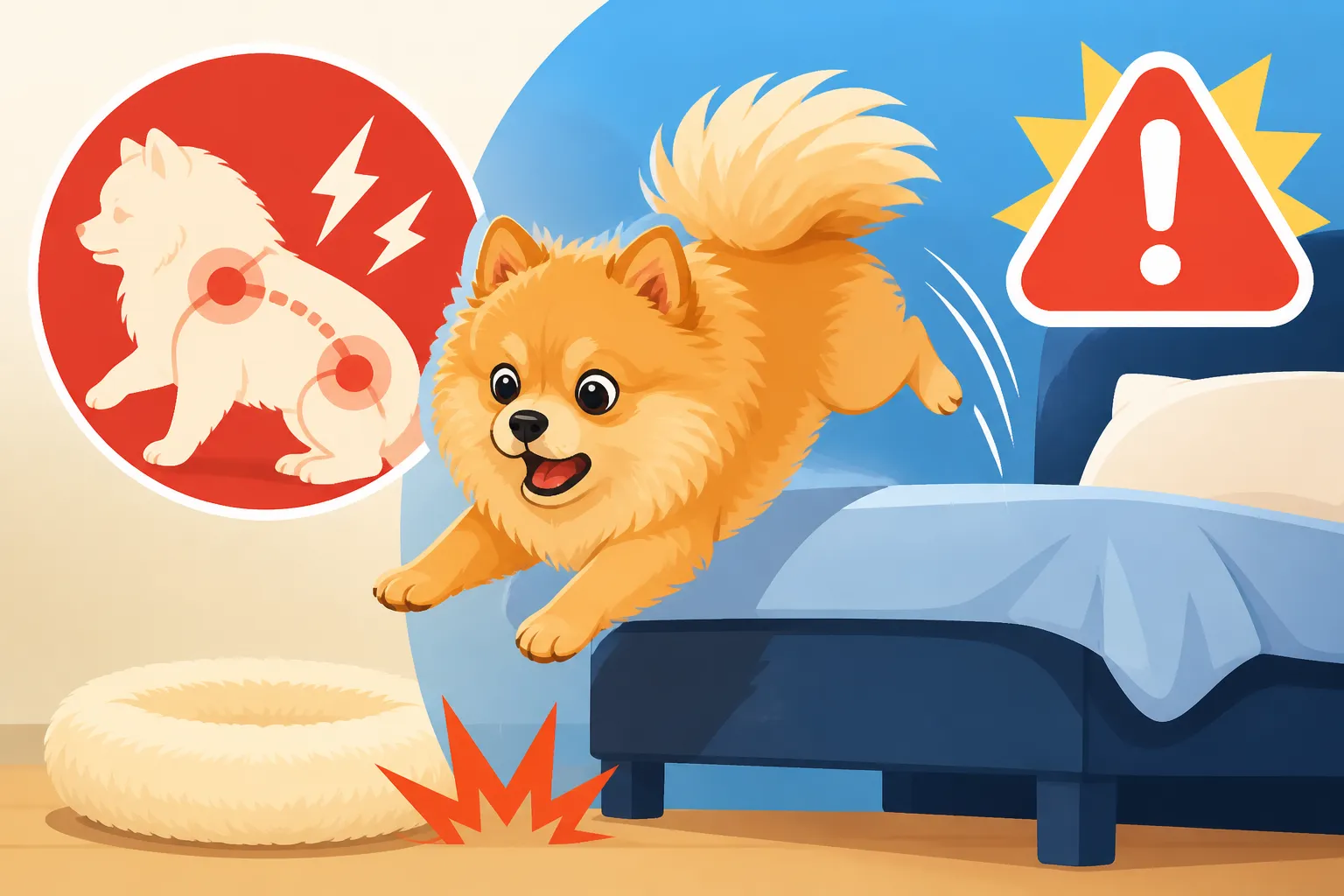
Why a Pomeranian Jumping Off the Bed Is a Risk
It's an all too common scenario: you look over to see your adorable Pomeranian perched happily on the edge of your tall bed, ready to take the plunge to the floor below. While their boundless energy and surprising athleticism might make you think nothing of it, a Pomeranian jumping off the bed, a couch, or even a chair, carries a significant risk of injury that many owners simply don't realize until it's too late. This comprehensive guide will explain exactly why these seemingly innocent jumps are so dangerous for your pint-sized companion, detail the common injuries they can cause, and provide actionable steps to keep your beloved Pom safe and sound.
The Allure of Heights for a Small Dog
Pomeranians, despite their small stature, often have the heart of a much larger dog. They're curious, often brave, and love to be at the center of the action. For many Poms, being up high on furniture isn't just about comfort; it's about vantage points, being close to their human family, and sometimes, simply seeking out a cozy spot.
Instinct and Observation
Think about it: from a Pomeranian's perspective, the world can be a big, overwhelming place at floor level. When they're up on the sofa or bed, they get a better view of their surroundings, mimicking a natural instinct to find a safe, elevated spot to observe. This higher ground allows them to see what's happening, whether it's the mail carrier approaching the front door or you simply moving from room to room. Being able to survey their domain can be very reassuring for them, even if it means taking a leap of faith to get down.
The Comfort of Being Near You
More often than not, a Pomeranian wants to be exactly where you are. If you're relaxing on the couch or settling into bed, your Pom wants to be right there with you. They crave that physical closeness and the sense of belonging it brings. For them, scaling the sofa or finding a way onto the bed is just part of their daily routine to achieve this proximity. They don't weigh the potential consequences of the jump down; they only consider the immediate reward of being by your side. They might think it's perfectly normal, a part of everyday life, unaware of the stress it puts on their tiny joints and delicate structure.
The Delicate Anatomy of a Pomeranian and Jumping Risks
Understanding why jumping is so dangerous requires a closer look at what makes a Pomeranian, well, a Pomeranian. Their small size, delicate bone structure, and predispositions to certain health conditions make them uniquely vulnerable to injuries from even seemingly minor falls.
Fragile Bones and Joints
A Pomeranian's bones are tiny and far more delicate than those of larger breeds. What might be a harmless hop for a Labrador can be a significant impact for a five-pound Pom. Their legs are slender, and the joints are designed for agility and light movement, not for absorbing the shock of a repeated drop from a substantial height. This fragility means that bones can fracture and joints can dislocate or sprain much more easily under stress. Imagine a fall from a height equivalent to ten times your own; that's roughly what a jump from a standard bed feels like for a Pomeranian. It's a jarring, potentially devastating impact on their little bodies.
One of the most common orthopedic issues in Pomeranians is Slipping Kneecaps in a Five Pound Pomeranian, medically known as patellar luxation. This condition, where the kneecap slips out of its groove, can be significantly worsened or even caused by the repetitive trauma of jumping and landing incorrectly. Even if your Pom hasn't shown signs of it yet, constant jumping puts immense strain on those knee joints, increasing their susceptibility. We've talked extensively about Why Jumping Off Furniture Wrecks a Pomeranian's Knees, and it's a serious concern that many owners overlook.
Tracheal Trauma and Back Issues
Beyond their legs, a Pomeranian's neck and back are also extremely vulnerable. Many Poms are genetically predisposed to The Honking Cough of a Pomeranian's Collapsing Windpipe, a condition where the trachea (windpipe) weakens and flattens. A sudden, uncontrolled jump and landing can cause a violent impact, jostling the neck and exacerbating an existing tracheal collapse or even triggering it in a predisposed dog. The harsh landing can cause their neck to snap forward, putting immense pressure on this already delicate structure.
Furthermore, their relatively long backs for their height can make them prone to intervertebral disc disease (IVDD) or other spinal injuries. While less common than in some other toy breeds, a bad landing can compress discs or cause a sudden twist, leading to excruciating pain, nerve damage, and potentially paralysis. The small size often means that complex spinal surgeries are more challenging and carry Anesthesia Risk in a Four Pound Pomeranian, making prevention absolutely key.
Common Injuries from Jumping
When a Pomeranian takes that leap, the consequences can range from a momentary yelp to a lifelong disability or even a life-threatening emergency. Knowing what to watch for, and understanding the severity, can help you act quickly if an accident occurs.
Fractures and Sprains
The most immediate and obvious risk is a broken bone or a severe sprain. Their slender leg bones, particularly in the lower limbs, are prone to spiral fractures from awkward landings. A sprain can involve stretched or torn ligaments in the wrist, ankle, or knee. These injuries are incredibly painful for your dog and often require significant veterinary intervention, including splinting, casting, or even surgery. The recovery period can be long, often requiring strict crate rest and pain medication, which is a huge challenge for an active little Pom.
Consider a situation where your Pom lands awkwardly, perhaps catching a paw on the edge of a rug. That small misstep could lead to a hairline fracture in a delicate metacarpal bone in their foot, or a severe sprain of the hock joint. Even after the initial healing, such injuries can lead to chronic pain or arthritis later in life, particularly in a breed already prone to joint issues.
Luxating Patella Worsening or Onset
As mentioned earlier, jumping and landing heavily or repeatedly from heights puts enormous strain on the knee joints. For a Pomeranian already living with a mild Whether a Pomeranian Can Live With a Grade Two Knee, a bad jump can instantly escalate the condition, causing the kneecap to dislocate more frequently, become more painful, or even lead to severe cartilage damage. In some cases, a particularly rough landing can even cause the first instance of patellar luxation in a dog that previously showed no symptoms. This can necessitate costly surgeries and a lengthy rehabilitation period.
Recovery after such surgery, as detailed in Recovery After a Pomeranian's Knee Surgery, is a commitment that involves strict confinement and physical therapy, often for weeks. Preventing these injuries in the first place is always the better, kinder, and less expensive option.
Spinal and Tracheal Damage
While less common than limb injuries, spinal damage from jumping can be devastating. A hard landing can cause a herniated disc, leading to intense back pain, weakness in the hind legs, or even complete paralysis. This is a medical emergency that often requires immediate veterinary attention and potentially complex surgery.
For Poms with a predisposition to The Age a Pomeranian's Trachea Starts Collapsing, the jolt from a jump can trigger a severe coughing fit, difficulty breathing, or even a full-blown tracheal crisis. Imagine your dog landing hard, gasping for air, and making that terrifying "honking" sound. It's truly frightening for both the dog and the owner. In severe cases, this could lead to a need for oxygen therapy or even specialized surgical intervention to place a stent, which is one of The Surgeries a Pomeranian Owner Should Budget For.
Here's a quick overview of potential injuries and their implications:
| Injury Type | Common Cause (Jumping) | Severity | Potential Outcome |
|---|---|---|---|
| Fracture (Leg/Paw) | Awkward landing, high impact from furniture | Moderate/High | Pain, lameness, surgery, cast, long recovery |
| Sprain (Joint) | Twisting or misstep on landing | Mild/Moderate | Pain, limping, rest, anti-inflammatories |
| Patellar Luxation | Repeated stress, single traumatic landing on knee | Moderate/High | Chronic pain, arthritis, surgery, recurrence |
| Tracheal Collapse | Jerking neck on landing, impact on throat | Moderate/High | Difficulty breathing, chronic cough, emergency care, stent |
| Spinal Injury/IVDD | Hard landing, twisting motion, compression of discs | High | Severe pain, paralysis, complex surgery, nerve damage |
| Head Trauma | Hitting head on furniture or floor | High | Concussion, neurological issues, loss of consciousness |
Preventing Jumping Injuries: Practical Steps for a Safer Home
Thankfully, there are many proactive steps you can take to make your home safer for your Pomeranian and reduce the risk of these painful and costly injuries. It's all about management, thoughtful equipment, and consistent training.
Ramps and Steps: Their Little Ladders to Luxury
One of the most effective ways to prevent jumping injuries is to provide your Pomeranian with safe alternatives for getting on and off furniture. Dog ramps and pet steps are specifically designed with lower risers and stable surfaces that allow your Pom to ascend and descend without straining their joints or risking a fall. Look for models that are sturdy, have a non-slip surface, and are appropriately sized for your small breed. Many fantastic options can be found on platforms like Amazon, offering a wide variety of styles and heights to match your furniture.
Placing a ramp by your bed or sofa might take a little getting used to for your Pom, but with positive reinforcement, they will quickly learn to use it. Start by luring them with treats, making it a fun and rewarding experience. This simple investment can save you thousands in vet bills and spare your dog immense pain. We've discussed Ramps for a Pomeranian That Jumps Off the Sofa in more detail, and the general consensus is that they are indispensable for small dog owners.
Supervised Access and Designated Safe Zones
Even with ramps and steps, it's a good idea to supervise your Pomeranian's access to high places, especially when they are very young or very old. A puppy might not yet have the coordination to use steps reliably, and an older Pom might have vision or balance issues that make them more prone to missteps. When you can't actively supervise, consider creating designated safe zones where your Pom can relax without the temptation of high furniture.
A soft, cozy bed on the floor in a playpen or a securely gated area can be a wonderful alternative. This not only keeps them safe from jumping incidents but also prevents other common household hazards. If you leave your Pomeranian alone for extended periods, even for a quick errand, ensure they are in a space where they cannot access high furniture.
Training for Safety and Recall
Training plays a crucial role in preventing jumping injuries. Teaching your Pomeranian commands like "off" or "down" can be incredibly helpful. If you see them about to leap, a quick, consistent command can interrupt the behavior. Positive reinforcement methods, using treats and praise, work best for Poms. You can work on these commands in short, fun sessions throughout the day.
For more structured training, especially if you're a new dog owner, resources like BAXTER & Bella offer online puppy and dog training programs that focus on foundational commands and safety. These programs can guide you through teaching your Pom to safely navigate their environment and understand boundaries. Remember, consistency is key. Every time you allow them to jump, you reinforce the idea that it's acceptable. Instead, gently redirect them to use their ramp or steps. Teaching a Pomeranian a Door Bell or similar context-based commands can also help manage their excitement and prevent impulsive jumps.
The Long-Term Benefits of Prevention
Taking these preventative measures isn't just about avoiding a single traumatic event; it's about safeguarding your Pomeranian's long-term health and quality of life. Each jump they avoid means less wear and tear on their tiny joints, less risk to their delicate trachea, and a lower chance of developing chronic pain conditions.
A Pomeranian that isn't constantly stressing its body by jumping from heights is more likely to remain active and comfortable well into their senior years. While it might seem like a small thing, preventing those leaps off the bed contributes significantly to your Pom living How Long a Well Bred Pomeranian Actually Lives. It’s an investment in their happiness, mobility, and overall well-being. Think of it as protecting their future self from unnecessary pain and you from potential heartbreak and significant veterinary expenses. The Eighteen Thousand Dollar Lifetime of a Pomeranian can certainly be higher if you face multiple surgeries due to preventable injuries.
Disclaimer
This article is for general informational purposes only and does not constitute professional advice. Laws, prices and regulations vary by location and change over time. Consult a qualified professional for guidance on your specific situation.