Photographs to Bring a Pomeranian Groomer
It’s a scenario many Pomeranian parents know all too well: you drop your beloved fluffball off at the groomer, painstakingly trying to describe the perfect cut, only to pick them up later feeling a pang of disappointment. Maybe the ears are too short, the tail isn't fluffy enough, or they've been given a "teddy bear" trim that looks more like a shave. The truth is, verbal descriptions alone often fall short when it comes to capturing the precise vision you have for your Pomeranian's magnificent coat. This guide will walk you through exactly what kind of photographs to bring to your groomer, ensuring clear communication and a much happier outcome for both you and your tiny companion.
Why Communication Is Key And Photos Are Your Secret Weapon
Grooming a Pomeranian is an art form, and like any art, it requires precise communication between the client and the artist. While you might use words like "fluffy" or "neat," these terms can mean vastly different things to different people. A picture, however, transcends language barriers and provides an undeniable visual reference point.
The "Pomeranian" Look Isn't Universal
When you say "Pomeranian cut," what immediately comes to mind? For some, it's the classic, full-coated show dog look, with a majestic mane and a plume tail. For others, it might be the popular "teddy bear" trim, which gives them a soft, rounded appearance. Then there's the "fox face" or "baby doll" distinction, which isn't about the coat at all, but people often conflate it with grooming styles. The sheer variety in how a Pomeranian can be groomed means that relying solely on generic breed terms is a recipe for misunderstanding.
Consider a groomer who sees dozens of different breeds every week. They might have their own default "Pomeranian trim" that involves significant shortening, especially if previous clients have requested it. Without specific guidance, they'll likely revert to what they know or what they perceive as practical. This isn't a fault of the groomer, but rather a gap in the information provided. Their interpretation might be perfectly fine for some, but if you have a specific aesthetic in mind, you need to arm them with the right tools to achieve it.
Bridging the Language Gap with Visuals
Our brains process images far more efficiently than text or spoken words. When you present a photograph, you're not just offering a suggestion; you're providing a blueprint. This visual guide eliminates ambiguity, leaving far less room for misinterpretation. Instead of wondering if "just a trim" means an inch or half an inch, the groomer can see the desired length and shape directly.
Furthermore, a picture allows you to point out specific details. You might love the way the ears are trimmed on one dog, the foot shape on another, and the overall body length on a third. With photos, you can highlight these elements, creating a composite vision that verbal descriptions simply cannot convey. This level of detail empowers your groomer to execute your vision with greater accuracy, turning a potentially stressful appointment into a successful collaboration.
What Kinds of Photos to Gather for Your Pomeranian's Groom
To give your groomer the best possible roadmap, you'll want a collection of photos that illustrate your desired outcome from several angles and in various states. Think of yourself as an art director, providing comprehensive visual instructions.
The "Ideal Look" Photo
This is perhaps the most crucial photo. It should be a picture of a Pomeranian (or even a similar-coated small dog if you're going for a less traditional look) that embodies the exact style, length, and overall aesthetic you envision for your own dog. Don't be shy about finding multiple examples if one photo doesn't capture everything.
You can find these photos in a variety of places. Grooming magazines are an excellent resource, often showcasing different breed-specific cuts. Social media platforms are goldmines; search hashtags like #PomeranianGroom or #PomeranianTeddyBearCut. Look at breeder websites or even photos of dogs from dog shows to see pristine, breed-standard grooming. When you're browsing online, think about websites like Chewy or Amazon for dog products – sometimes they feature models that have excellent, well-maintained coats that can serve as inspiration. The more examples you have, the clearer your message will be.
Photos of Your Pomeranian's Current Coat
While the "ideal look" photos show the destination, pictures of your Pomeranian's current coat show the starting point. This is incredibly important because it provides context. If your dog comes in with a heavily matted coat, it might not be possible to achieve a long, flowing style immediately. The groomer needs to see the current length, texture, and condition of your Pomeranian's fur to accurately assess what can be done and what limitations might exist.
Take photos of your dog from the front, side, and rear, as well as close-ups of specific areas like behind the ears, the tail, and the feet. If your Pomeranian has any trouble spots, like areas prone to matting or thinning, make sure to capture those too. This transparency helps the groomer manage expectations and advise you on the most realistic and healthy approach for your dog's coat. A healthy coat, often supported by good nutrition from brands like Ollie, can make a huge difference in what's achievable.
The "What Not to Do" Photo Optional but Helpful
Sometimes, it's easier to articulate what you don't want than what you do. For instance, if you absolutely detest the look of a Pomeranian with a shaved body and a fluffy head (sometimes called a "lion cut"), bringing a photo of that style and explicitly stating, "Please, not this!" can be incredibly effective. This isn't about being negative; it's about eliminating potential misunderstandings and safeguarding your dog from a style you wouldn't be happy with.
This type of photo can be especially useful if you've had a bad grooming experience in the past. If a previous groomer cut the ears too short, find a picture of a Pomeranian with overly short ears and say, "I want the ears to be natural and fluffy, never this short." It acts as a clear boundary and prevents accidental repeats of past mistakes, ensuring you and your groomer are perfectly aligned on the outcome.
How to Present Your Photos to Your Pomeranian Groomer for Best Results
Having a collection of photos is a fantastic first step, but how you present them and discuss them can make all the difference. It's about opening a dialogue and ensuring mutual understanding.
Digital vs. Printed: Pros and Cons
Both digital and printed photos have their advantages. Digital photos on your phone or tablet are convenient; you always have them with you, and you can easily zoom in on specific details. However, phone screens can sometimes distort colors or make it harder to see subtle nuances. Printed photos, on the other hand, offer a consistent visual reference that isn't dependent on screen brightness or battery life. They can also be laid out side-by-side for comparison.
I often recommend a hybrid approach. Have your main "ideal" photos printed out so the groomer can refer to them easily throughout the grooming process. Keep additional digital photos on your phone for quick reference or to zoom in on specific features you want to highlight. Just make sure your phone is charged and ready to go! Regardless of the format, ensure the photos are clear, well-lit, and show the dog's coat clearly.
Discussing the Details: Beyond Just Showing
Simply handing over photos isn't enough. You need to engage in a conversation. Point to specific elements in the photos and articulate why you like them. For example, "I love how full this tail is, so I'd like only minimal trimming here," or "See how the feet are rounded but still keep some feathering? That's what I'm hoping for." Don't be afraid to ask the groomer questions. Ask if the desired style is achievable with your Pomeranian's current coat condition. Inquire about the tools they'll use and how they plan to achieve the look.
This is also the time to be realistic. If your Pomeranian has a lot of mats, a very long, flowing coat might not be possible without extensive, painful dematting or a shorter cut. An experienced groomer will be able to advise you on what's healthy and practical. Be open to their professional opinion. Perhaps the exact shade of orange on your Pomeranian isn't quite the same as the one in your reference photo, but the groomer can still achieve the desired shape and texture. Remember, it's a collaborative process to find the best look for your unique dog.
Follow-Up and Feedback
After the groom, take a moment to really look at your Pomeranian. If you're happy, express your gratitude and let the groomer know what you loved. This positive reinforcement is invaluable. If there's something you'd like to adjust for next time, provide constructive feedback. A good groomer wants you to be happy and will appreciate your input.
It's also a great idea to take photos of your Pomeranian after a successful groom. These become your own personal reference photos for future appointments. You can even create a small album on your phone titled "Pomeranian Best Grooms" to quickly pull up for subsequent visits. This creates a continuous feedback loop, refining the process over time and ensuring consistency, so you'll always have a reference for that perfect The Grooming Schedule a Pomeranian Runs On.
Specific Grooming Styles and What to Look For in Reference Photos
Pomeranians have a distinctive double coat that requires careful handling. Understanding the nuances of different styles will help you choose (and articulate) your desired look.
The "Traditional" Full Coat Pomeranian
This is often considered the classic show ring look, emphasizing the Pomeranian's natural beauty. It means maintaining the full length of the double coat, allowing for that impressive ruff around the neck and chest, and the magnificent plume tail. Trimming is minimal, focused on neatening edges and keeping a rounded, natural silhouette.
When looking for reference photos for a traditional full coat, you'll want to find dogs with:
- Full body length: The coat should extend naturally, flowing rather than appearing clipped short.
- Pronounced ruff: The hair around the neck and shoulders should be voluminous, framing the face.
- Plume tail: The tail should be carried over the back, fanning out in a glorious plume.
- Rounded feet: The hair on the feet should be neatly rounded, like a cat's paw, but not shaved tight.
- Natural ear line: The ears should be small and erect, often with some longer hair that blends into the ruff, rather than being sharply cut.
These photos will show off the dog's The Guard Hair and Undercoat of a Pomeranian in its full glory. It's about shaping and tidying, not removing significant length. If you're going for this look, be aware that it requires dedicated Working a Pomeranian's Coat in Sections to the Skin at home to prevent matting.
The "Teddy Bear" Trim
The teddy bear trim is incredibly popular because it gives Pomeranians an adorable, perpetually youthful look. This style involves shortening the body coat to a consistent, plush length, often leaving the face slightly longer and rounded to enhance the "teddy bear" effect. It's crucial to specify that this is a trim, not a shave, to protect the delicate double coat.
For teddy bear trim reference photos, focus on:
- Consistent, shorter body length: The coat should be evenly trimmed, giving a soft, uniform texture all over the body, usually about 1-2 inches long.
- Rounded head: The hair on the head is often left slightly longer and rounded, blending seamlessly into the body, creating a soft, appealing expression.
- Fluffy, rounded ears: Ears are typically trimmed to blend with the head, appearing rounded and soft, avoiding sharp lines.
- Plush tail: While still plumed, the tail might also be trimmed to a uniform, fluffy length that matches the body, rather than being left extremely long.
- Soft, rounded feet: Similar to the traditional trim, but perhaps slightly tidier to maintain the overall neat appearance.
A good teddy bear trim photo should emphasize the softness and uniformity of the coat, making sure it doesn't look choppy or unnatural. This style aims to capture the essence of What a Teddy Bear Trim Takes Off a Pomeranian. You want to avoid Why a Shaved Pomeranian May Not Regrow its coat properly, which can happen if clipped too short.
Practical and Hygienic Trims
Sometimes, the goal isn't a specific aesthetic "look" but rather functional cleanliness and comfort. These trims are essential for your Pomeranian's health and well-being, regardless of their overall style.
Key areas for practical trims include:
- Sanitary Trim: This involves carefully trimming the hair around your Pomeranian's rear end to prevent feces from clinging to the fur. Reference photos can show a clean, short area without being overly exposed. This is crucial for hygiene and preventing skin irritation.
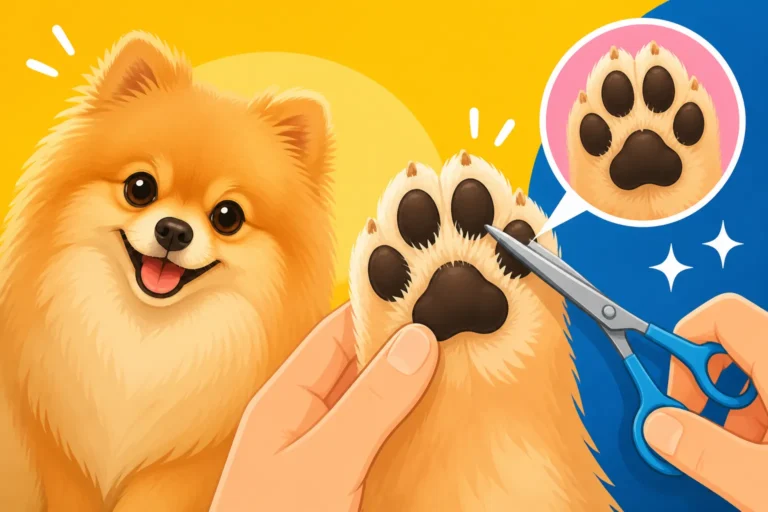
- Paw Pad Trim: The hair between a Pomeranian's paw pads can grow quite long, accumulating dirt, debris, and even causing slippery footing on hard surfaces. Photos for this would show neatly trimmed paw pads, flush with the pads themselves, providing good traction.
- Eye Area Trim: For Pomeranians prone to tear staining or whose hair grows into their eyes, a careful trim around the eyes can improve visibility and reduce irritation. Reference photos can show a clear eye area with the surrounding hair neatly tidied.
- Ear Tidying: While Pomeranian ears are usually left with some feathering, excessive hair can make them look untidy or even impede airflow, potentially contributing to ear issues. Photos would show ears that are neat and blend well with the head, without being overly shorn.
Even if you prefer a full, natural coat, discussing these functional trims with your groomer is vital. It’s about ensuring your Pomeranian is comfortable and healthy, which is often a key aspect of What a Pomeranian's Care Looks Like Past Ten, especially as they age.
| Grooming Style | Key Characteristics to Show in Photos | What to Emphasize | Things to Avoid |
|---|---|---|---|
| Traditional Full Coat | Long, flowing body coat; pronounced ruff; full plume tail; rounded feet; natural ear line. | Maximum length retention, natural shape, neat edges. | Short clips, shaved areas, choppy lines, ears cut too short. |
| Teddy Bear Trim | Uniformly plush, shorter body coat (1-2 inches); rounded head and face; fluffy, blended ears; soft tail. | Soft, rounded appearance, consistent length, blended transitions. | Shaving down to the skin, uneven patches, harsh lines, excessively short ears. |
| Sanitary Trim | Hair around anus and genitals neatly trimmed short; clean and hygienic. | Cleanliness and comfort, minimal visibility of trimmed area. | Over-shaving, creating an unnatural "bald" patch. |
| Paw Pad Trim | Hair between paw pads trimmed flush; neat and tidy; clear visibility of pads. | Good traction, prevention of debris accumulation, natural paw shape. | Shaving up the legs, leaving long tufts, cutting too deep into pads. |
| Eye Area Trim | Hair around eyes cleared for visibility; no hair poking into eyes; clean. | Clear vision, reduced irritation, natural blending with surrounding face fur. | Shaving eyebrows, creating harsh lines, overly short hair near eyes. |
Ultimately, providing clear, visual references is the single most effective way to ensure your Pomeranian gets the groom you want. Don't underestimate the power of a few good photos to transform your grooming experience from a guessing game into a successful, predictable outcome. Your groomer will appreciate the clarity, and your Pomeranian will look fantastic!
The Double Coat That Makes a Pomeranian and Why It Stays On
Why a Pomeranian's Coat Hides Weight Gain
The Comb That Gets Through a Pomeranian's Undercoat
Drying a Pomeranian Without Damaging the Coat
The 60 to 90 Dollar Pomeranian Grooming Appointment
What a Full Pomeranian Groom Includes
Whether a Pomeranian Needs Grooming Every Four Weeks
Groomers Who Refuse to Shave a Pomeranian
What Home Grooming Saves a Pomeranian Owner
Working Through a Mat Behind a Pomeranian's Ear
Whether a Deshedding Tool Damages a Pomeranian Coat
Sanitary Trimming on a Pomeranian
Disclaimer
This article is for general informational purposes only and does not constitute professional advice. Laws, prices and regulations vary by location and change over time. Consult a qualified professional for guidance on your specific situation.