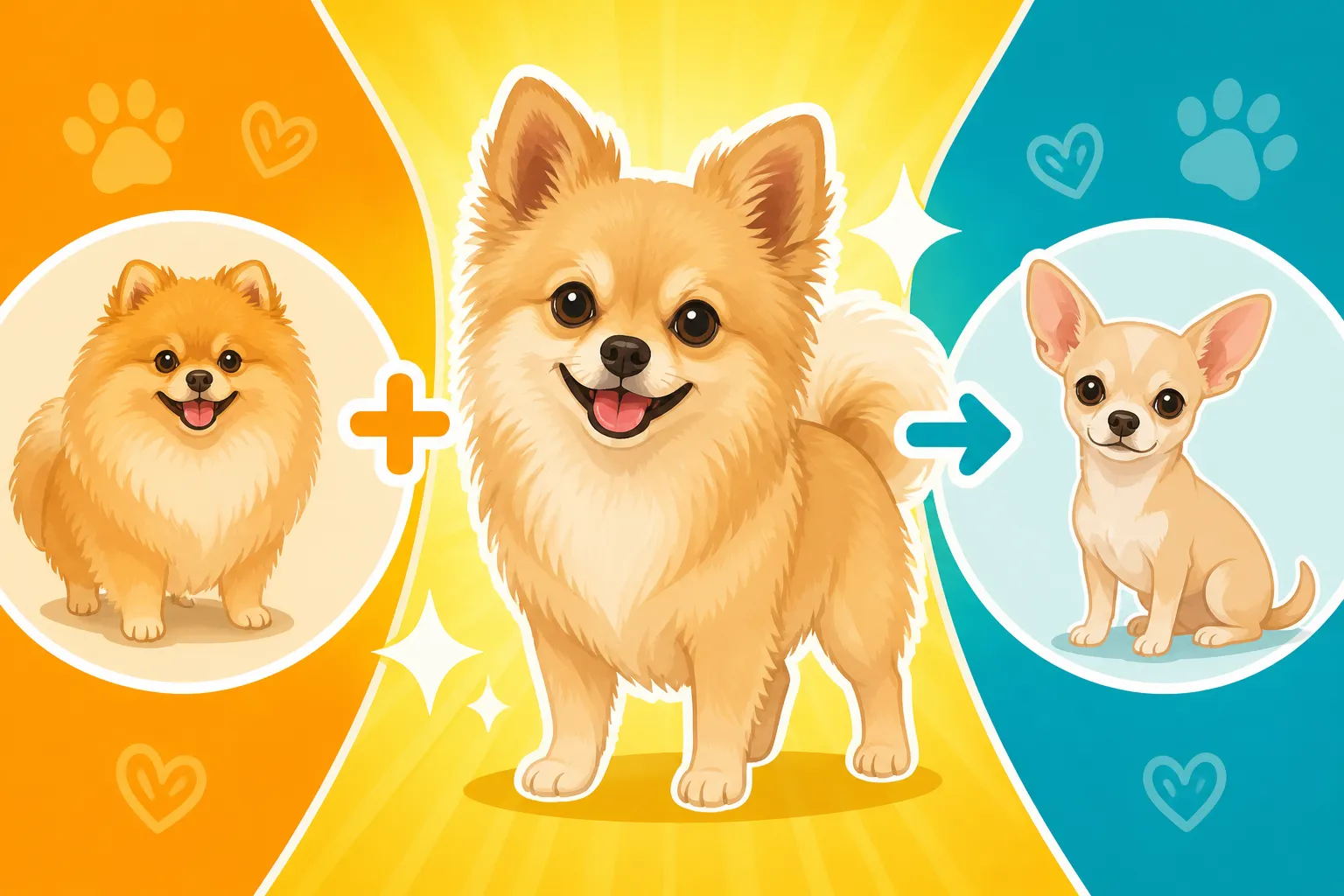
What a Pomeranian Chihuahua Cross Becomes
A Pomeranian Chihuahua cross, often called a Pomchi, is a small companion dog that may combine the Pomeranian’s fluffy double coat and alert nature with the Chihuahua’s bold, devoted personality. But a mixed puppy is not a predictable blend: size, coat, face shape, energy, and temperament can vary—even among littermates. This guide explains what to expect and how to prepare for one.
What a Pomeranian Chihuahua cross may look like
Size and appearance can vary widely
Pomchis are generally small dogs, but there is no single appearance or adult size guaranteed by the cross. A puppy may inherit more of the Pomeranian’s compact, fluffy outline, or have a finer coat and facial features closer to a Chihuahua. Ear shape, muzzle length, tail carriage, and body proportions can also differ from dog to dog.
Adult weight is influenced by the size and build of both parents, as well as the puppy’s individual growth. A very small puppy is not necessarily destined to remain exceptionally tiny, and labels such as “teacup” do not establish a separate breed or guarantee healthy adult size. Ask for the parents’ actual weights and, where possible, see them in person. For more background on what responsible size expectations look like, read The Three to Seven Pounds a Pomeranian Is Allowed.
A Pomchi’s ears may stand upright, tilt outward, or vary slightly in position. Its eyes are often prominent, and its muzzle may be short or more tapered. The tail may curl over the back or be carried differently. These are inherited traits, not features a breeder can precisely promise in every puppy.
| Feature | What you might see | What to keep in mind |
|---|---|---|
| Adult size | A small, light-framed dog, with size varying between individuals | Parent size is a useful clue, not a guarantee |
| Coat | Short, medium, or fluffy; sometimes with a noticeable undercoat | Coat type affects brushing and shedding needs |
| Ears | Upright, partly upright, or less erect | Ear shape may change as a puppy matures |
| Face | Shorter or longer muzzle, round or more tapered features | Appearance alone does not tell you about health |
| Colors | Many colors and markings may occur | Puppy color can change as the coat develops |
Coat and grooming depend on inheritance
A Pomchi may have a short coat like many Chihuahuas, a longer coat, or a dense, fluffy coat more like a Pomeranian. Even dogs with shorter hair can shed, while longer coats may tangle behind the ears, under the collar, in the armpits, and around the trousers. If you are hoping for a low-shedding dog, this cross is not a reliable way to get one.
Check the coat with your hands rather than judging it only by its appearance. Part the hair to see whether there is a dense undercoat close to the skin. A double coat usually needs regular brushing to remove loose hair and prevent compacted tangles. The guide The Double Coat That Makes a Pomeranian and Why It Stays On explains why a fluffy coat needs care beyond a quick surface brush.
Start gentle grooming while the puppy is young. Brief sessions can include touching the feet, lifting the ears, and running a soft brush through the coat, followed by a small reward. A comb that reaches down to the skin can help you catch tangles before they become painful mats. For brushing guidance, see How Many Times a Week a Pomeranian Is Brushed.
A long-haired Pomchi may need more frequent brushing than a short-haired one, but grooming needs are individual. If you shop for supplies through Chewy, compare brush and comb dimensions with the dog’s coat and size rather than choosing a tool just because it is marketed for small dogs. A very stiff tool or oversized brush may be uncomfortable on a tiny dog.
Temperament, training, and everyday life
A small dog can still have a big personality
Pomchis may be alert, affectionate, playful, and strongly attached to familiar people. Some are outgoing with visitors; others take time to warm up. Both Chihuahuas and Pomeranians can be vocal, so a Pomchi may bark at hallway sounds, people outside a window, or the doorbell. That does not mean every dog will be noisy, but it is sensible to plan for training rather than assume a small dog will naturally be quiet.
Early, positive social experiences can help a puppy feel safer around everyday sights and sounds. Introduce new people, calm dogs, handling, and household noises at a pace that lets the puppy stay relaxed. Avoid forcing greetings or allowing larger dogs to crowd a small puppy. If the dog barks at movement or sounds, calmly reward a pause or a turn toward you instead of shouting over the barking, which can add to the commotion.
Both breeds can be clever and independent, and a Pomchi may lose interest if training sessions drag on. Keep lessons short and rewarding. Practice useful skills such as coming when called indoors, waiting before going through a doorway, settling on a mat, and accepting gentle handling. The article What a Spitz Brain Lets a Pomeranian Learn offers useful context for the Pomeranian side of the mix, while Whether Spitz Independence Makes a Pomeranian Difficult explores why patience and consistency matter.
A Pomchi’s attachment to its person can be lovely, but it is still important to teach the dog to spend brief, comfortable periods alone. Begin with a safe resting area and short separations, then build up gradually. Avoid making every departure dramatic or expecting a puppy to manage long stretches alone before it has learned how to settle.
Exercise and home safety need to suit a tiny dog
A Pomchi usually does not need the same exercise as a large working dog, but it still needs daily activity, sniffing opportunities, and play. Short walks and indoor games can provide both movement and mental stimulation. Adjust activity for the dog’s age, fitness, weather, and veterinary advice; small size does not mean the dog should be carried everywhere.
Tiny dogs are also easy to injure accidentally. A jump off a tall sofa or bed, a fall down stairs, or rough play with a much larger dog can be more serious for a small-framed puppy than owners expect. Use supervision, block unsafe access where needed, and teach the dog to use a stable ramp or steps rather than repeatedly leaping from furniture. Ramps for a Pomeranian That Jumps Off the Sofa has practical ideas for reducing that particular risk.
Choose a well-fitted harness for walks rather than relying on pressure around the neck, especially if the dog pulls or coughs. A harness should be secure without rubbing or restricting movement. Check the fit as the puppy grows, and supervise it while it is wearing gear indoors. You can compare harness designs at retailers such as Chewy, but measure the dog and inspect the product’s fitting guidance instead of choosing by breed label alone.
Small dogs also need protection from hazards at ground level and from larger animals. Keep outdoor walks on leash, watch for gaps in gates or fences, and avoid letting a Pomchi approach unfamiliar dogs without a careful introduction. In a home with children, teach gentle handling and give the dog a quiet place where it can rest undisturbed.
Health and care considerations
Mixed ancestry does not remove inherited risks
A Pomeranian Chihuahua cross can inherit health concerns associated with either parent breed. That does not mean a particular Pomchi will develop a specific condition, but it does make thoughtful parent health history important. Ask what health checks the parents have had, what conditions appear in their close relatives, and whether the breeder will share veterinary records. Be wary of anyone who promises that a crossbreed cannot inherit health problems simply because it is mixed.
Both parent breeds are small, so dental care deserves attention. Small mouths can become crowded, and retained baby teeth may need a veterinarian’s assessment. Get the puppy used to having its mouth handled gently and ask your vet how to begin tooth brushing. Dental Disease in a Mouth the Size of a Pomeranian's describes why routine mouth care matters in small dogs.
Kneecap problems and windpipe concerns are also worth discussing with a veterinarian, especially if you notice limping, a skipping step, repeated coughing, or difficulty breathing. A harness may reduce pressure on the neck, but it does not diagnose or treat a breathing problem. For more on the Pomeranian side, see Slipping Kneecaps in a Five Pound Pomeranian and The Honking Cough of a Pomeranian's Collapsing Windpipe.
Set up a veterinary appointment soon after bringing a puppy home, and bring any available vaccine, deworming, and health records. Ask the vet to review the dog’s weight, teeth, knees, heart, and feeding routine. If a dog is unusually small, has a poor appetite, seems weak, or becomes wobbly, seek veterinary advice promptly rather than assuming the behavior is simply part of being a tiny breed.
Feeding and routine should be individualized
A Pomchi’s food portions should be based on age, body condition, activity, and the specific food’s feeding guidance—not on the amount another Pomchi eats. Small dogs can gain weight quickly if treats and table scraps are added without adjusting meals. Keep treats tiny, and use part of the dog’s daily food allowance for training when practical.
Puppies need a feeding schedule appropriate to their age and size. Very small puppies may be more vulnerable to low blood sugar if they miss meals, become stressed, or are unwell. Ask your veterinarian how often your puppy should eat and what warning signs require urgent attention. Blood Sugar Crashes in a Pomeranian Puppy provides additional context on this concern.
If you are comparing food options at Chewy, check that the product is complete and balanced for the dog’s life stage and that the kibble is manageable for its mouth. A small-breed label may be convenient, but the dog’s appetite, stool, body condition, and veterinary guidance matter more than the label alone. Make food changes gradually unless your veterinarian advises otherwise.
Keep a simple routine for meals, walks, play, grooming, and rest. Predictability can help a small dog settle, while regular weight checks make it easier to notice gradual changes hidden beneath a fluffy coat. Chewy may also be a place to compare appropriately sized food containers or grooming supplies, but choose items based on safe fit and practical use rather than decorative features.
Choosing a Pomchi and setting realistic expectations
Ask careful questions before bringing one home
If you are considering a puppy, ask to meet the mother and, when possible, the father. Observe whether the adults appear comfortable, clean, and well cared for. Ask how the puppies are raised, what household experiences they have had, what veterinary care they have received, and what support is available if a health concern arises after adoption.
Request documentation rather than relying on verbal assurances. A responsible source should be willing to explain the puppies’ background and discuss the possible range of adult size, coat type, and temperament. Avoid choosing based solely on claims such as “rare,” “micro,” or “perfectly hypoallergenic.” Those labels are not substitutes for sound breeding practices, health information, and a good match with your household.
A rescue organization may also have adult Pomchis or similar small mixed-breed dogs. With an adult, you may have a clearer idea of its size, coat, and personality, though its medical history may still be incomplete. Ask what the rescue knows about the dog’s behavior around children, other pets, grooming, and time alone. Rescuing an Adult Pomeranian Rather Than Buying offers broader guidance on considering an adult dog.
Match the dog to your household, not just its looks
A Pomchi may suit someone looking for a small companion who can join everyday life, but small size does not automatically make a dog easy. Grooming, house training, barking, dental care, and safe handling all take time. Consider whether your home can protect a tiny dog from falls and rough play, and whether you can provide steady training rather than relying on the dog’s size to make behavior manageable.
If you live in an apartment, plan for alert barking and a reliable routine for outdoor bathroom breaks. If your household includes children or other pets, think through supervision and safe resting spaces before the dog arrives. If you travel often or work long hours, arrange appropriate care and gradual alone-time practice rather than expecting a new puppy to adapt immediately.
The most realistic expectation is a small, individual dog whose traits may lean more toward one parent than the other. A Pomchi can be affectionate and lively, but its adult appearance, coat maintenance, and temperament cannot be guaranteed from the cross alone. Choosing based on health information, responsible care, and the dog’s actual needs is a better guide than choosing for a particular look.
Disclaimer
This article is for general informational purposes only and does not constitute professional advice. Laws, prices and regulations vary by location and change over time. Consult a qualified professional for guidance on your specific situation.