The Colors Two Orange Pomeranians Can Throw
Two orange Pomeranians often have orange puppies, but matching coat colors do not guarantee identical genes or a predictable litter. Hidden inherited color variants, sable patterning, and the way puppy coats change can all affect what you see. This guide explains what two orange Poms may produce, why exact predictions are difficult, and what responsible breeders should consider before planning a litter.
What two orange Pomeranians are most likely to produce
Orange is a visible color, not a complete genetic profile
An orange coat tells you what a Pomeranian looks like; it does not reveal every color variant the dog carries. Two orange dogs may share a similar appearance while inheriting different combinations of genes from their parents and earlier generations. Those hidden variants can influence the color and pattern of their puppies.
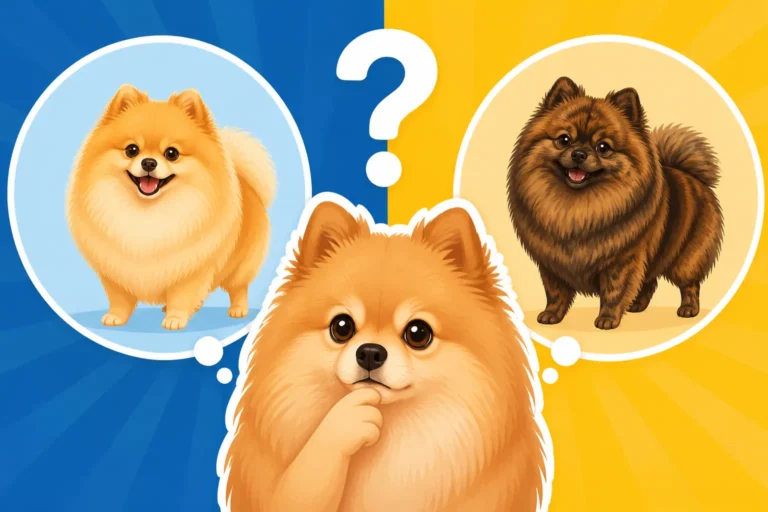
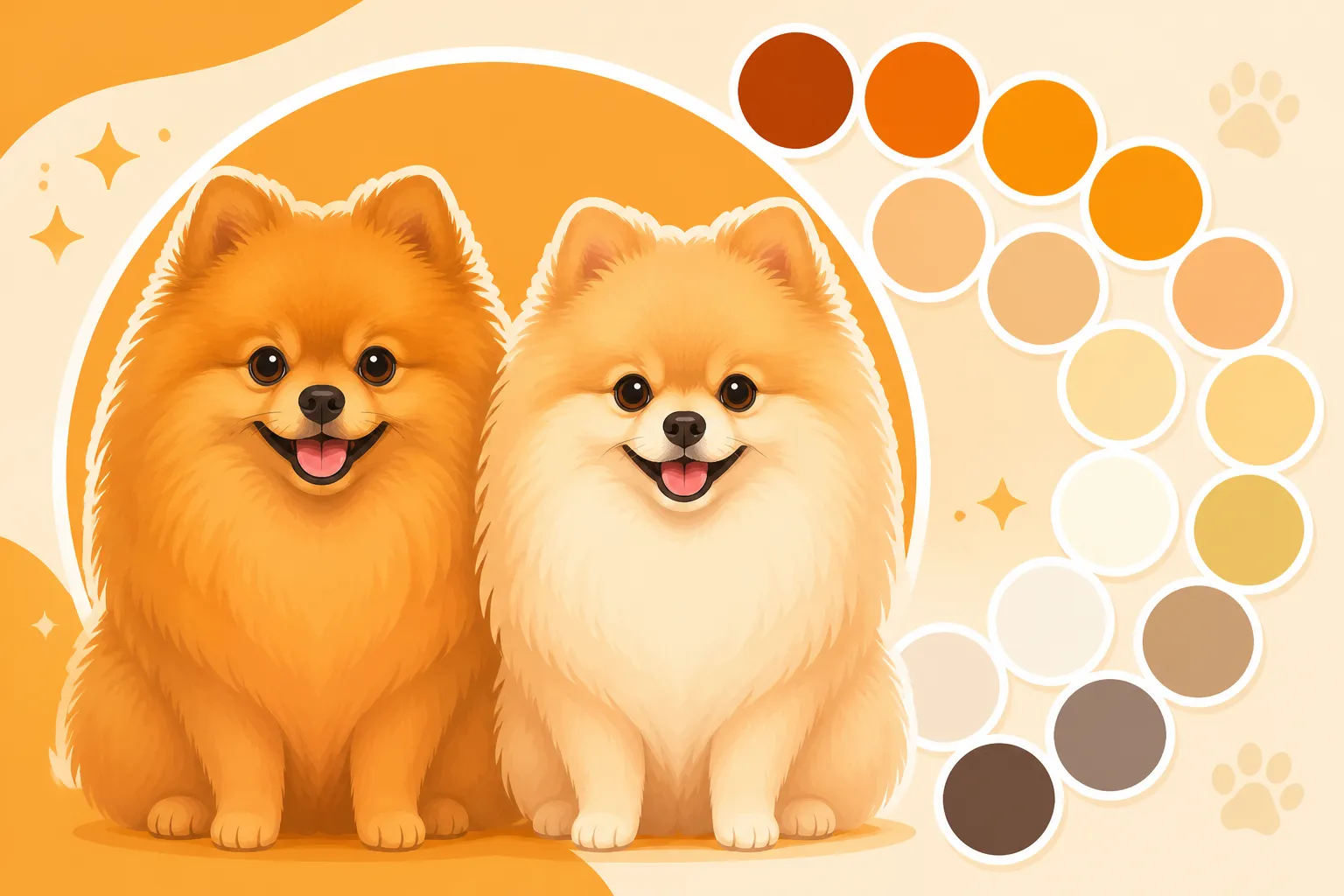
That is why a litter from two orange Pomeranians might include puppies in several shades, from strong orange to pale cream or orange sable. Some differences may be subtle at birth and become clearer as the coat develops. An orange puppy can also darken or lighten with age, so the coat you see during the first weeks is not necessarily the adult color.
The simplest expectation is that orange remains prominent in the litter, especially when both parents come from lines that consistently produce orange dogs. But “likely” is not the same as guaranteed. A breeder needs information about the parents’ ancestry and, where useful, genetic testing to make a more informed estimate.
Why the parents’ family history matters
A pedigree can offer clues that the dogs’ coats alone cannot. If close relatives of either parent have produced cream, sable, black, parti, or other colors, that history may be relevant to what the pairing can produce. The more complete and reliable the pedigree information, the less a breeder has to rely on guesswork.
Even then, a family tree is not a crystal ball. A color seen several generations back may or may not matter to a particular mating, and records may be incomplete. A breeder should treat pedigree color information as one piece of evidence, not as a promise about every puppy.
For a broad introduction to the range of possible coats, see Every Color a Pomeranian Comes In. The orange shade itself also varies widely, as explored in The Orange Pomeranian and Why It Dominates. A Pomeranian described casually as “orange” might be a clear orange, a shaded orange, or an orange sable, and those distinctions can matter when discussing expected puppy colors.
What affects coat-color inheritance
Hidden variants and more than one gene
Dog coat color is shaped by multiple genes. Some affect the pigment a dog can produce; others influence where pigment appears, how intense the color is, or whether the coat has a pattern such as sable. A dog’s visible orange coat can conceal some inherited variants because the visible color does not show every part of its genetic makeup.
This is why simple color charts can be misleading. A chart may show a possible outcome if the parents have specific genetic combinations, but knowing that both dogs look orange does not establish those combinations. Without relevant testing and dependable family information, it is not possible to calculate exact litter percentages from appearance alone.
It is also important to separate a color possibility from a certainty. A breeder might know that a particular color could occur if both parents carry the relevant variants. That does not mean the color will appear in every litter, or that puppies will arrive in equal numbers of each color. The combination inherited by each puppy is individual.
Patterns such as sable and parti
Sable is a pattern, not simply another name for orange. A sable Pomeranian can have darker-tipped hairs over a lighter base, and the amount of shading can vary. Some puppies have more obvious dark shading when young, then look different as the adult coat comes in. Sable and Wolf Sable Pomeranians explains why these coats can be easy to misread.
Parti coloring, which means a coat with distinct patches of color and white, depends on inherited patterning too. Two orange dogs do not automatically produce a parti puppy just because orange is the main color in both parents. The possibility depends on what each dog carries and how those variants combine. For more on those patterns, see Parti Colored and Irish Marked Pomeranians.
A quick way to think about the possibilities is to distinguish what is visible from what needs further evidence:
| What you observe | What it can tell you | What it cannot tell you by itself |
|---|---|---|
| Both parents have orange coats | Orange is part of each dog’s visible coat | That every puppy will be the same shade |
| A parent has sable shading | That the parent shows a sable pattern | Which pattern each puppy will inherit |
| Relatives have produced other colors | That other colors occur in the family | That a specific color is certain in this litter |
| Puppies look pale or dark at birth | Their early coat appearance | Their final adult color |
| A breeder has genetic test results | Information about the variants tested | A guarantee of every puppy’s appearance |
Why puppies may look different as they grow
Puppy coats are not always adult coats
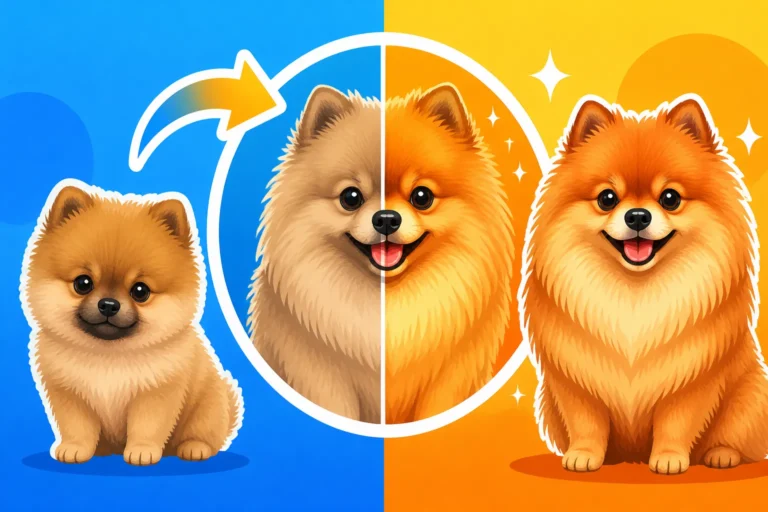
Pomeranian puppies go through coat changes. Their soft early coat can thin, shift in shade, or be replaced by a fuller adult coat. A puppy that looks pale orange in one stage may later show richer color or more noticeable shading. Another may appear dark at first and develop a lighter-looking adult coat.
This changing appearance can cause understandable confusion for new owners. Someone may choose a puppy based on a photo and then wonder why the coat looks different several months later. That does not automatically mean the puppy was misidentified; it may simply be moving through normal coat development. Whether a Pomeranian's Color Changes as It Grows covers this process in more detail.
Breeders should describe puppy colors carefully and avoid presenting a young puppy’s shade as an unchangeable adult result. If color matters to you, ask what the parents’ coats looked like at similar ages, whether the puppy has sable shading, and how the breeder arrived at the color description.
How to follow a coat change without overreacting
A few clear photographs taken in similar lighting can help you track a puppy’s coat over time. Indoor lighting, shadows, and camera settings can make an orange coat look much darker or paler than it does in person. Try to photograph the puppy in natural, indirect light and avoid judging the color from a single snapshot.
Regular grooming can also help you see the coat more clearly. A clean, brushed coat shows its texture and shading better than a coat that is tangled or compressed. Use gentle tools suited to a double coat, and ask a groomer familiar with Pomeranians for guidance rather than shaving the coat to make the color easier to inspect. You can read more about coat development in The Coat Blow and the Pomeranian Puppy Uglies.
For basic grooming supplies, owners may compare options at a local pet shop or Chewy, while focusing on tools appropriate for a Pomeranian’s coat rather than buying products based on color claims. A suitable brush and comb can help with routine coat care; they will not change the dog’s inherited color.
Planning a litter responsibly
Use color predictions as estimates, not promises
If a breeder wants to know what two orange Pomeranians might produce, the practical starting point is a combination of pedigree review, accurate coat descriptions, and genetic testing when it can answer a relevant question. A veterinarian or qualified canine genetics professional can help interpret test results and explain what they do—and do not—mean for a planned pairing.
A prediction should be stated with care. “These dogs may produce orange sable puppies” is different from “this litter will have orange sable puppies.” A responsible breeder should explain the uncertainty clearly, particularly to families choosing a puppy based on color. The puppy’s health, temperament, and suitability for the home should matter more than whether the coat matches a preferred shade.
Color alone is not a reason to breed two dogs. Breeding decisions should take health, structure, temperament, and the welfare of the parent dogs and puppies into account. A visually appealing pairing is not automatically a sound one, and color testing cannot replace appropriate veterinary care or responsible breeding practices.
Questions to ask a breeder
If you are considering a puppy from two orange parents, ask the breeder how they describe each parent’s color and whether either has sable shading. Ask whether the breeder has information about colors produced by close relatives, and whether any genetic testing was done to clarify a specific question. A thoughtful breeder should be comfortable explaining what is known and what remains uncertain.
It is also reasonable to ask how the breeder handles color descriptions in a contract or puppy record. The written description should not imply that a puppy’s shade can never change. If you want a certain adult color, be honest about that preference—but be prepared for the possibility that the dog may look different as its coat matures.
When preparing for a puppy, prioritize practical supplies over color-specific promises. Chewy and other retailers may be places to compare everyday items such as a comb, brush, or gentle grooming products, but no shampoo, supplement, or grooming tool can reliably make an orange Pomeranian produce a particular color in its puppies. Likewise, a retailer listing should not take the place of asking the breeder about lineage and health.
If you are collecting records for a new puppy, save the breeder’s color description and early photos alongside veterinary paperwork. Owners who use Chewy for routine pet supplies can keep purchase records there, but those records are separate from the pedigree or genetic information needed to understand coat inheritance.
Two orange Pomeranians will often have orange puppies, but their litter can include variations in shade and pattern, and appearances may shift as puppies mature. The parents’ ancestry and relevant genetic information offer better clues than coat color alone. Treat predictions as possibilities—not guarantees—and keep health and responsible breeding at the center of any decision.
Disclaimer
This article is for general informational purposes only and does not constitute professional advice. Laws, prices and regulations vary by location and change over time. Consult a qualified professional for guidance on your specific situation.