Whether a Pomeranian Can Have Anything but Dark Eyes
A Pomeranian’s eyes should generally be dark, so a blue, green, or suddenly cloudy eye can be unsettling to notice. The key is to tell normal puppy-eye changes and lighting effects from unusual pigmentation or a health problem. This guide explains what eye colors are typical, when a difference deserves a veterinary check, and which warning signs should not wait.
What eye color is normal for a Pomeranian
Why Pomeranians are expected to have dark eyes
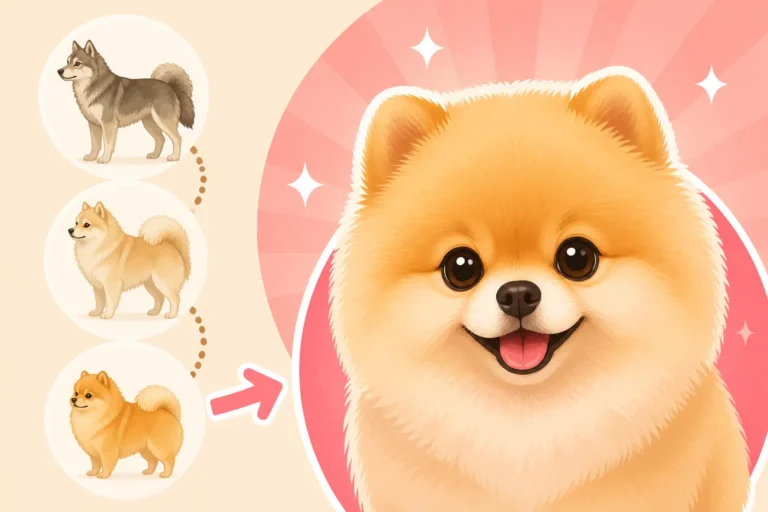
The typical Pomeranian has dark, often dark-brown eyes. The breed’s familiar expression comes from the contrast between those eyes, the small dark nose, and the foxlike face. Eye color can look a little different in photographs or bright sunlight, but the iris—the colored part around the pupil—should still appear dark in ordinary lighting.
Pomeranians’ eyes are not just a cosmetic detail. Their shape, position, and surrounding facial features contribute to the breed’s characteristic expression. A dog with unusually pale eyes may still see normally, but eye color alone cannot confirm that the eyes are healthy or that vision is unaffected. For a broader look at conditions that can affect the breed, see The Eye Problems a Pomeranian Carries.
It is also useful to separate iris color from changes on the surface of the eye. A pale, gray, or milky appearance across the pupil may be cloudiness rather than a light-colored iris. The distinction can be difficult to make at home, particularly in an older dog, so a new or changing appearance is worth discussing with a veterinarian.
Can an adult Pomeranian have blue, green, or amber eyes
Blue, green, or distinctly amber eyes are unusual in an adult Pomeranian. A puppy’s eyes may look blue-gray soon after they open, and their color can deepen as the puppy matures. That early appearance does not necessarily predict the adult eye color. If a young puppy’s eyes remain unusually pale or look different from one another, ask the breeder and veterinarian about it rather than relying on a photo or a general rule.
Lighting can also mislead. A dark iris may look lighter when sunlight reflects from the eye, when a camera flash catches it, or when the photograph has been edited. Look at the dog in indirect natural light and compare both eyes. If the difference appears only in pictures, it may be a reflection or camera effect rather than a genuine color change.
A clearly light-colored iris in an adult Pomeranian is not typical, but it does not automatically mean the dog is blind or ill. It is a reason to have the eyes examined, especially if the color is new, one eye differs from the other, or the dog is squinting, rubbing its face, or bumping into things. A veterinary exam can distinguish iris pigmentation from changes involving the cornea, lens, or other eye structures.
Puppy eye color, coat color, and inherited variation
How puppy eye color changes as the dog grows
Puppies are born with their eyes closed. After they open, the eyes may initially look hazy or blue-gray while pigmentation develops. Over the following weeks, the iris often becomes darker. Because individual development varies, a single early photograph is not a dependable way to predict the adult color.
If you are choosing a puppy, ask to see clear photographs taken in ordinary light, and ask the breeder what they have observed as the puppy matures. Eye color should not be judged from a heavily edited image, a flash photograph, or a brief glance at a very young puppy. A responsible breeder should also be willing to discuss the parents’ health and any known eye concerns in the line.
Puppy eye color is only one small part of a health assessment. The puppy should be alert, comfortable, and able to follow movement appropriately for its age. Persistent discharge, a closed or painful-looking eye, marked redness, or a cloudy surface is not simply a color variation. Those signs merit prompt veterinary advice.
Whether coat color predicts eye color
A Pomeranian’s coat color does not reliably predict that the dog will have light eyes. Orange, cream, black, sable, and other coat colors can all be seen with the breed’s usual dark eyes. Coat shade by itself is not a sound reason to assume that a dog’s eyes should be blue, green, or pale.
Merle-patterned dogs are a special case because merle genetics can affect pigmentation. Merle markings may be associated with unusual eye pigmentation, including a blue eye or eyes that differ in color. However, seeing a merle coat does not tell you whether a particular dog has healthy eyes, and an unusual eye color does not establish the dog’s genetic background. Ask about the parents and the breeder’s health practices; Whether Merle Breeding Damages a Pomeranian's Eyes discusses the concern in more detail.
Breeding two merle dogs can increase the risk of serious health problems in their puppies, including eye and hearing abnormalities. The risks are not a reason to diagnose an individual dog by appearance, but they do make careful breeding history important. You can also read Why Double Merle Pomeranian Puppies Are Born Deaf for more context on why certain breeding combinations deserve particular caution.
| What you notice | What it may mean | A sensible next step |
|---|---|---|
| Both eyes look dark in ordinary light | Typical adult eye color | Mention any concerns at routine checkups |
| A young puppy’s eyes look blue-gray | Pigment may still be developing | Ask the breeder or veterinarian what to expect as the puppy matures |
| An adult’s iris appears distinctly blue or green | Unusual pigmentation or an inherited variation | Arrange a veterinary eye examination, especially if it is new |
| One eye seems lighter than the other | Natural variation, reflection, or a change needing assessment | Compare in natural light and book an exam if the difference persists |
| The pupil or eye surface looks cloudy | Possible eye or lens change rather than iris color | Contact a veterinarian, particularly if the change is sudden |
| The eye is red, painful, or held partly closed | Possible injury or inflammation | Seek prompt veterinary advice |
When a different-looking eye needs veterinary attention
Color variation versus cloudiness or a vision problem
The iris is the colored ring around the pupil. Cloudiness, by contrast, may appear over the pupil or across the clear front surface of the eye. These changes can look similar to an owner, especially when a dog’s coat is long and the eyes are small. A veterinarian can examine the eye and determine whether the appearance comes from pigmentation, the lens, the cornea, or another cause.
Some age-related changes can make an older dog’s eyes look less clear without being the same thing as a color change. Other conditions, including cataracts, can affect vision and need assessment. Don’t assume that a cloudy-looking eye is simply a normal sign of aging. If you notice a gradual change, arrange an appointment; if the change is sudden or accompanied by discomfort, contact a veterinarian sooner. Whether a Pomeranian Loses Its Sight With Age explains some of the eye changes owners may notice as their dog gets older.
Pay attention to how your dog behaves as well as how the eyes look. Hesitating at a familiar step, misjudging a jump, or struggling in dim light can have several causes, but those observations are useful information for the vet. Note when the change began, whether it affects one or both eyes, and whether it varies with lighting.
Warning signs that should not be treated as a color issue
Contact a veterinarian promptly if an eye becomes red, swollen, watery, or painful; if your dog repeatedly rubs or paws at it; or if the eye is held partly shut. Sudden cloudiness, a visible injury, unequal pupils, or an abrupt change in vision also deserves prompt attention. Eye problems can worsen quickly, and waiting to see whether an obvious injury settles on its own can put the eye at risk.
Pomeranians are small, and rough play, branches, grooming tools, or a larger dog’s paw can injure an eye. If you suspect trauma, do not press on the eye or try to remove anything embedded in it. Keep your dog from rubbing the area if you can do so safely, and call your veterinary clinic for instructions. Eye Injuries in a Pomeranian From Rough Play covers common situations that can put the eyes at risk.
Discharge can have more than one cause. A small amount of dried material at the inner corners may be less concerning than thick discharge, a foul smell, persistent tearing, or discharge paired with redness and squinting. Tear staining is not a diagnosis, either. If staining suddenly worsens or the eye seems irritated, ask a vet to check for problems such as blocked tear drainage; see Tear Duct Blockage in a Pomeranian.
Caring for your Pomeranian’s eyes and asking the right questions
Safe everyday checks at home
During routine grooming, look at both eyes in soft, indirect light. Check for redness, crusting, persistent tears, changes in the pupils, or a new difference between the two eyes. Keep facial hair from irritating the eyes, but use care around the eyelids: scissors and combs can cause injuries if a dog moves suddenly. If your Pomeranian is uneasy with face handling, ask a groomer or veterinary team to show you a safe approach.
If there is a little debris on the fur below the eye, gently wipe the fur with a clean, damp cloth. Do not use human eye drops, medicated products, or cleaning solutions unless a veterinarian has recommended them for your dog. A product labeled for pets is not automatically suitable for use inside the eye. If your veterinarian recommends a specific eye-care item, you can check availability through a pet retailer such as Chewy, but follow the vet’s instructions about where and how to use it.
Owners sometimes buy wipes or rinses after seeing tear stains online. That may not address the cause, and some products are intended only for the fur around the eye. If you shop through Chewy, read the label carefully and confirm with your veterinary clinic before putting any product near the eye itself. Avoid home remedies, including peroxide or essential oils, which can irritate delicate tissues.
What to ask a breeder or veterinarian
When speaking with a breeder, ask whether the puppy’s parents have a history of eye problems and whether the puppy has had a veterinary examination. If a puppy has a merle pattern or an unusual eye color, ask about the breeding pair and any available health information. The goal is not to judge a dog by its appearance but to understand what is known about its background and health.
At a veterinary appointment, describe what you see as precisely as possible: which eye is affected, when the difference began, whether it is changing, and whether there is discharge, redness, squinting, or a change in behavior. A photo taken in natural light can help show how the eye looked before the appointment, particularly if the appearance varies during the day.
If your veterinarian recommends an eye specialist or further testing, ask what the examination is intended to assess and what signs should prompt an urgent call. Specialist care may be appropriate for persistent symptoms, suspected injury, or an unexplained change in vision. If the vet recommends a specific cleaning supply for the area around the eye, Chewy may be one place to look for pet-care products, but the veterinarian’s directions—not product reviews—should guide its use.
For a Pomeranian, dark eyes are the expected adult appearance, while a young puppy’s temporarily blue-gray eyes may darken as it grows. An unusual iris color is worth checking, but sudden cloudiness, redness, pain, discharge, or altered vision matters more urgently than color alone. When in doubt, take a clear look in natural light and call your veterinarian for guidance.
Disclaimer
This article is for general informational purposes only and does not constitute professional advice. Laws, prices and regulations vary by location and change over time. Consult a qualified professional for guidance on your specific situation.