Settling a Rehomed Adult Pomeranian
Bringing a rehomed adult Pomeranian into your home can be such a heartwarming experience, but let's be real, it often comes with its own unique set of challenges. These little fluff balls, despite their brave hearts, can struggle immensely with the upheaval of leaving a familiar environment, leading to anxiety, confusion, and behaviors that might leave you scratching your head. This comprehensive guide is here to walk you through the process of helping your new Pomeranian settle in, build trust, and truly become a cherished member of your family, understanding that patience and understanding are your greatest tools.
Understanding the Emotional Landscape of a Rehomed Pomeranian
Imagine your entire world changing overnight. Your home, your people, your routine – all gone, replaced by unfamiliar sights, sounds, and smells. That's precisely what a rehomed adult Pomeranian experiences. Their emotional world can be in complete disarray, and recognizing this is the first step in helping them adapt.
The Stress of Change and Loss
When an adult Pomeranian is rehomed, they aren't just changing addresses; they're often experiencing a profound sense of loss. They might have been with their previous family for years, knowing every creak in the floorboards, every family member's scent, and every single expectation. Suddenly, all of that is gone. This can manifest as anxiety, fear, or even a form of grieving. You might see them pacing, refusing to eat, or perhaps even hiding. It’s not a reflection of anything you’re doing wrong, but rather a direct response to the massive shift in their lives.
Many new owners feel a sense of frustration if their Pomeranian doesn't immediately bond or seems withdrawn. We all dream of that instant connection, those big puppy dog eyes looking up at us with adoration. But with a rehomed adult, particularly one who might have come from a less-than-ideal situation, it often takes time. They need to learn that they are safe, loved, and that this new place is their forever home. It’s a marathon, not a sprint, and your patience during this vulnerable period is absolutely crucial. Remember that their previous life, whatever it was, shaped them, and it will take time to decompress and trust again.
Reading Your Pomeranian's Signals
Pomeranians, like all dogs, communicate through subtle body language long before they resort to barking or growling. Learning to read these signals is vital when settling a rehomed adult. A Pomeranian who is feeling overwhelmed might not always show obvious signs like cowering. Instead, you might notice more nuanced behaviors. Perhaps they're doing a lot of lip licking, even when there's no food around, or yawning excessively, which can be a sign of stress, not tiredness. You might see their tail tucked tightly between their legs, or their ears pinned back. Some Poms might try to make themselves small, squeezing into tight spaces, or actively avoid eye contact.
Consider a scenario where you try to pet your new Pom, and they stiffen, look away, or even give a quick, soft whale eye (showing the whites of their eyes). These are all indicators that they're feeling uncomfortable and need space. Pushing for interaction when they're giving these signals can erode trust and make them more fearful. Instead, acknowledge their need for distance. If they dart under a table, don't follow them immediately. Give them time, speak in a calm, soothing voice, and let them come to you when they feel ready. It's about empowering them to choose connection on their terms, which is a huge step in building a secure attachment.
| Stress Signal | Possible Indication | What to Do |
|---|---|---|
| Lip Licking/Yawning | Mild anxiety, discomfort | Observe, reduce stimulation, offer space. |
| Tail Tucked/Low | Fear, insecurity, submission | Avoid sudden movements, speak softly, don't force interaction. |
| Avoiding Eye Contact | Feeling threatened or uncomfortable | Give space, approach indirectly (side-on). |
| Hiding/Cowering | Overwhelmed, seeking safety | Provide a safe retreat, don't pull them out. |
| Stiff Body/Freezing | Intense fear, preparing for flight or fight | Stop what you're doing, slowly back away, give space. |
| Whale Eye | Unease, potential for snapping if pushed | Retreat, assess situation, ensure safety. |
Creating a Safe and Predictable New Environment
The more secure and predictable you can make your Pomeranian’s new world, the faster they will begin to relax and understand that they are finally home. This means more than just providing food and water; it means carefully curating their physical and routine environment.
Setting Up Their Personal Space
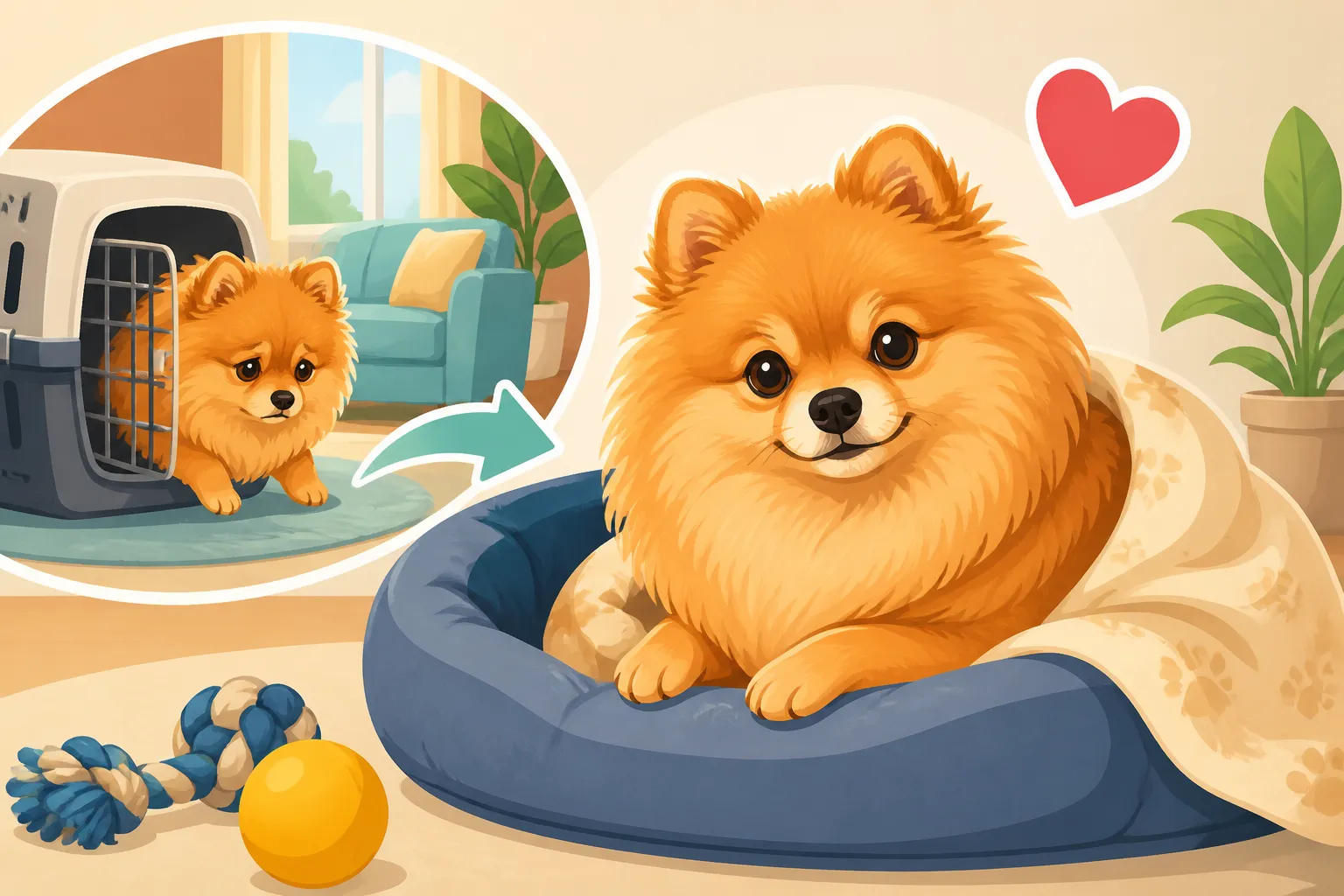
Every rehomed Pomeranian needs a sanctuary – a place that is exclusively theirs, where they can retreat and feel completely safe. This is often best achieved through a well-appointed crate or a cozy bed in a quiet corner of a room that isn't high-traffic. For a small dog like a Pom, a crate can feel like a den, a secure little cave where they can decompress without being disturbed. Make sure it's appropriately sized, not too big, with soft bedding and maybe a blanket that smells like you (after you’ve handled it for a bit). For more guidance, check out Crates Sized for a Pomeranian.
Think about incorporating familiar scents if you were able to get something from their previous home – a toy, a blanket – but if not, infuse their new space with pleasant, calming smells. You might even consider a DAP (dog appeasing pheromone) diffuser, which releases synthetic pheromones mimicking those a mother dog produces, to help reduce anxiety. Placing a few safe, chew-proof toys from brands like KONG, easily found on Amazon, within their designated area can also provide comfort and a sense of ownership. Crucially, teach everyone in the household, especially children, that when the Pomeranian is in their designated safe space, they are not to be disturbed. This respect for their boundaries is paramount to building trust.
Establishing a Consistent Routine
Dogs thrive on routine, and for a rehomed Pomeranian, a predictable schedule is like a comforting security blanket. It tells them what to expect and when, reducing uncertainty and anxiety. From the moment they wake up until they settle down for the night, try to keep things as consistent as possible. This means feeding them at the same times each day, taking them out for potty breaks on a regular schedule (even if they were previously house-trained, they'll need to learn your home's rules), and scheduling specific times for walks and playtime.
A consistent routine helps them learn the rhythm of your home and anticipate events, which significantly reduces stress. For example, if they learn that after breakfast they always go outside, they’ll be less likely to have an accident inside and will feel more in control. Even small things, like the order in which you prepare their food or the specific words you use for potty time, can become reassuring cues. Consistency applies to training sessions too – short, positive reinforcement-based sessions at predictable times. A solid routine is truly the backbone of a settled Pomeranian. We dive deeper into this in The Routine a Pomeranian Needs Every Day.
Building Trust and Positive Associations
Once your Pomeranian feels physically safe, the next step is to nurture their emotional well-being by building a strong bond of trust and ensuring every interaction is a positive one. This takes time, patience, and a delicate touch.
Gentle Introduction and Positive Reinforcement
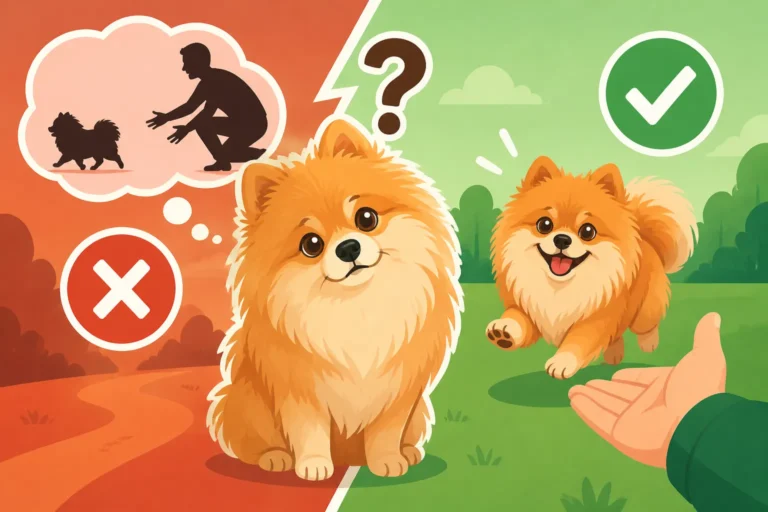
When you first bring home an adult Pomeranian, resist the urge to overwhelm them with immediate attention, even if your heart is bursting to shower them with love. Instead, practice gentle introductions to all family members, one at a time, allowing the Pom to approach on their terms. Have family members sit quietly, perhaps with a high-value treat in hand, and let the Pomeranian come to investigate when they feel ready. If they retreat, don't chase or coax them; simply give them space.
Every positive interaction, no matter how small, should be rewarded with praise, a tiny treat, or a gentle scratch if they invite it. Did they look at you? "Good dog!" Did they take a step towards you? "Wonderful!" We want them to associate you and your family with good things. If you have other pets, introduce them slowly and cautiously, always supervising. Keep initial interactions brief and positive, ending on a good note before anyone gets overwhelmed. Never force interaction or pick them up against their will, as this can easily break nascent trust. Building trust is about respecting their boundaries and showing them that your presence brings comfort and joy, not fear or stress.
Structured Play and Training
Once your Pomeranian is a little more settled, short, fun, and engaging training sessions can be an incredible way to build connection and confidence. These aren't about strict obedience initially, but about creating positive shared experiences. Start with simple cues like "sit" or "come," using delicious, high-value treats as rewards. Pomeranians are smart, despite their often stubborn nature, and they often enjoy learning new things, especially if it involves food! These sessions should be no longer than 5-10 minutes, keeping them upbeat and ending before your Pom loses interest.
Brain games and puzzle toys can also be fantastic for building their confidence and engaging their minds. There are many interactive toys, easily found on Amazon, that require your Pom to work a little for a treat, which can be immensely satisfying for them. Think about things like snuffle mats or treat-dispensing toys. For a more structured approach to training in a new home environment, online programs can be a godsend. Companies like BAXTER & Bella offer comprehensive online puppy training courses that are also highly adaptable for adult dogs learning new behaviors or settling into a new routine. They provide step-by-step guidance that can empower you to communicate effectively with your new Pom and strengthen your bond. When looking for toys, consider Puzzle Toys Small Enough for a Pomeranian to ensure they are appropriate and safe.
Addressing Common Rehoming Challenges
Even with the best intentions and a perfectly structured environment, rehomed adult Pomeranians can present specific challenges. Being prepared for these and knowing how to respond with patience and positive reinforcement will make all the difference.
House Training Regressions
One of the most common and frustrating issues with a rehomed adult Pomeranian is house training regression. Your new Pom might have been perfectly house-trained in their previous home, but suddenly they're having accidents indoors. This isn't usually spite or forgetfulness; it’s almost always stress, confusion, or a complete lack of understanding of the new rules. The scents in your home are different, the routine is new, and they don't yet know where the "approved" potty spots are. It’s like moving to a foreign country and not knowing where the bathrooms are!
The solution is to go back to basics, treating your rehomed adult like a puppy in terms of house training. This means very frequent potty breaks – every hour or two initially, definitely after waking up, eating, and playing. Take them outside on a leash to a specific spot, wait patiently, and immediately reward them with high praise and a special treat the moment they go. Bring them back inside without fuss if they don’t go. Never punish accidents indoors, as this will only teach them to hide their elimination from you, making the problem worse. Clean accidents thoroughly with an enzymatic cleaner to remove all scent. For more on this, you might find A House Trained Pomeranian That Starts Having Accidents helpful. Some owners also explore options like Whether a Litter Box Works for a Pomeranian as a temporary or permanent solution, especially for very small breeds who might be hesitant to go out in bad weather.
Separation Anxiety or Destructive Behaviors
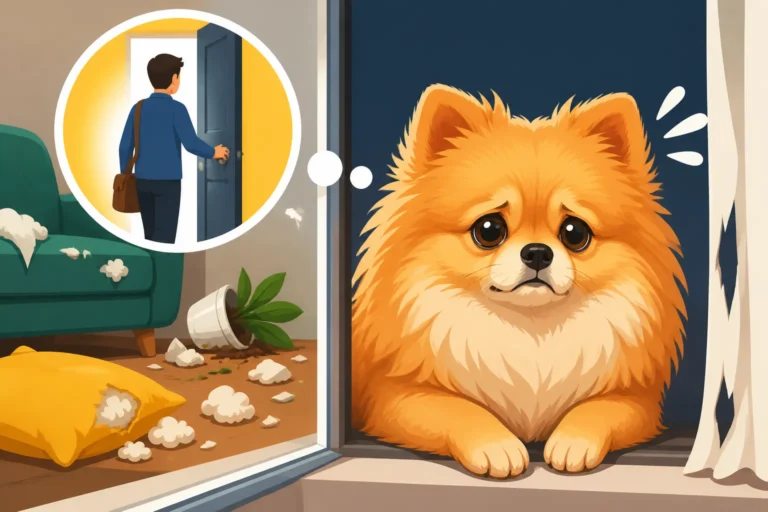
Many rehomed dogs, particularly those who have experienced previous abandonment or significant change, can develop separation anxiety. This can manifest as excessive barking, destructive chewing, scratching at doors, or even house-soiling when left alone. Imagine the terror of being left again after having just found a new home. Signs often appear shortly after you leave or within the first 30 minutes. If your Pomeranian barks incessantly the moment you step out, or if you come home to chewed furniture, it's a strong indicator.
Initial management involves ensuring they have appropriate outlets for chewing (sturdy toys from Amazon or local pet stores), a comfortable and safe space to be left in (like their crate, if they’re comfortable with it), and plenty of exercise and mental stimulation before you leave. Gradual desensitization is key: start with very short absences (just seconds), returning before they show signs of distress, and slowly increase the duration. Never make a big fuss when leaving or returning. The goal is to teach them that your departures are normal and that you always come back. This often takes time and consistent effort. Our article Signs a Pomeranian Has Separation Anxiety offers more insights into recognizing and beginning to manage this challenging condition. Understanding The Hours a Pomeranian Tolerates an Empty House and Whether a Pomeranian Barks When Left Alone can also provide context.
Fear-Based Aggression or Nipping
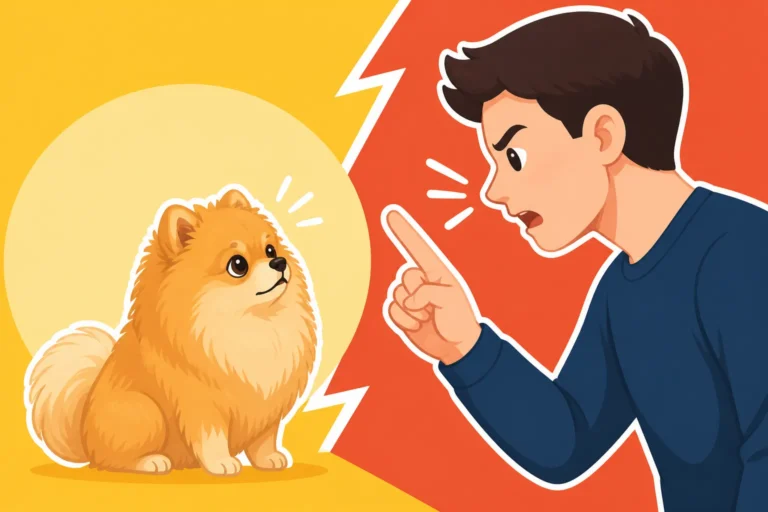
It can be incredibly disheartening, and frankly, a little scary, if your new Pomeranian growls, snaps, or even nips. It’s important to understand that this behavior in a rehomed dog is almost always rooted in fear, not malice. They may be protecting themselves because they anticipate something bad happening, perhaps due to past negative experiences. A Pom who has been mishandled or had their boundaries ignored might learn that growling or nipping is the only way to get people to back off.
If your Pomeranian exhibits fear-based aggression, the absolute priority is safety – for everyone in the home and for the dog. Avoid any situations that trigger these reactions. If they growl when you approach their food bowl, respect that. If they snap when being picked up, stop picking them up for now. Management involves creating predictability and rebuilding trust slowly, showing them that they don't need to resort to aggression to feel safe. This means never punishing growling or snapping, as it removes their warning system and could lead to a bite without warning. Instead, identify the triggers and work to change their emotional response through positive associations from a safe distance. If these behaviors are significant or escalating, seeking guidance from a certified professional dog trainer or veterinary behaviorist is crucial. They can help you develop a tailored plan to address the underlying fear and teach your Pom more appropriate coping mechanisms. For those who suspect a difficult past, Rebuilding Trust With a Mistreated Pomeranian is a great resource. You might also want to explore Whether a Pomeranian Is Stubborn or Just Bored and Whether a Pomeranian Needs a Private Trainer as a rehomed dog often benefits from professional guidance specific to their individual needs.
Disclaimer
This article is for general informational purposes only and does not constitute professional advice. Laws, prices and regulations vary by location and change over time. Consult a qualified professional for guidance on your specific situation.