Whether a Pomeranian Enjoys Agility
Many Pomeranian owners often look at their tiny, fluffy companions and wonder if activities like dog agility are even possible. It's easy to assume such an energetic and demanding sport is only for larger, more traditional working breeds, leaving you feeling like your little Pom is destined for a life of lap-sitting. But I'm here to tell you that this simply isn't true; with the right approach and mindful precautions, many Pomeranians absolutely thrive in agility, finding immense joy and physical and mental stimulation. This guide will explore exactly why your spirited Pomeranian might be the perfect candidate for agility, what considerations you need to keep in mind, and how to get started safely.
The Pomeranian Spirit: Are They Built for Agility?
When you think of an agility dog, a Border Collie or a Sheltie might first come to mind. But don't let the Pomeranian's diminutive size fool you. Beneath that magnificent double coat lies a dog with a surprising amount of drive, intelligence, and a zest for life that can translate beautifully onto an agility course.
The Spitz Brain and Drive
Pomeranians descend from hardy Spitz breeds, meaning they possess a strong, independent spirit and a keen intelligence. They are often far more clever than their adorable appearance suggests, constantly observing and figuring things out. This inherent "Spitz brain" makes them excellent problem-solvers, a crucial trait for navigating complex agility courses. They love having a job to do and excel when their minds are engaged. When you tap into this innate drive, you'll find a dog eager to learn and please, despite their sometimes-stubborn facade. Their quick thinking allows them to pick up new obstacles and sequences with surprising speed, making them incredibly fun to train. What a Spitz Brain Lets a Pomeranian Learn is a great resource if you're curious about their learning style.
Furthermore, Pomeranians tend to be very handler-focused once they bond with their person. This close connection means they're often highly motivated by praise, toys, and treats from their beloved human, which are all vital rewards in agility training. They adore being the center of attention, and nothing makes a Pom happier than showing off its skills and receiving enthusiastic applause, whether it's from you in your backyard or a crowd at an event.
Potential Downsides to the Pomeranian Personality
While their intelligence is a huge asset, Pomeranians also come with a few personality quirks that can present minor challenges in agility. For one, their "big dog in a small body" attitude means they can sometimes be overly confident, even prone to barking at larger dogs or new situations. This bravado, while endearing, needs to be managed in a busy agility environment. Early socialization is key to ensuring they remain focused on you and the course, rather than engaging in a barking contest with the dog next to them.
Another consideration is their sometimes-short attention span. While they're quick learners, they might not How Long a Pomeranian Will Hold Focus during prolonged, repetitive drills. Keeping training sessions short, fun, and varied is essential to maintain their interest and prevent frustration. Always end on a high note, even if it means doing just one successful repetition. This builds their enthusiasm for the next session.
Physical Realities: Pomeranians and the Agility Course
Size might be the most obvious difference between a Pomeranian and a standard agility dog, but it's important to understand both the advantages and the specific health considerations that come with their tiny stature.
Size and Structure Benefits
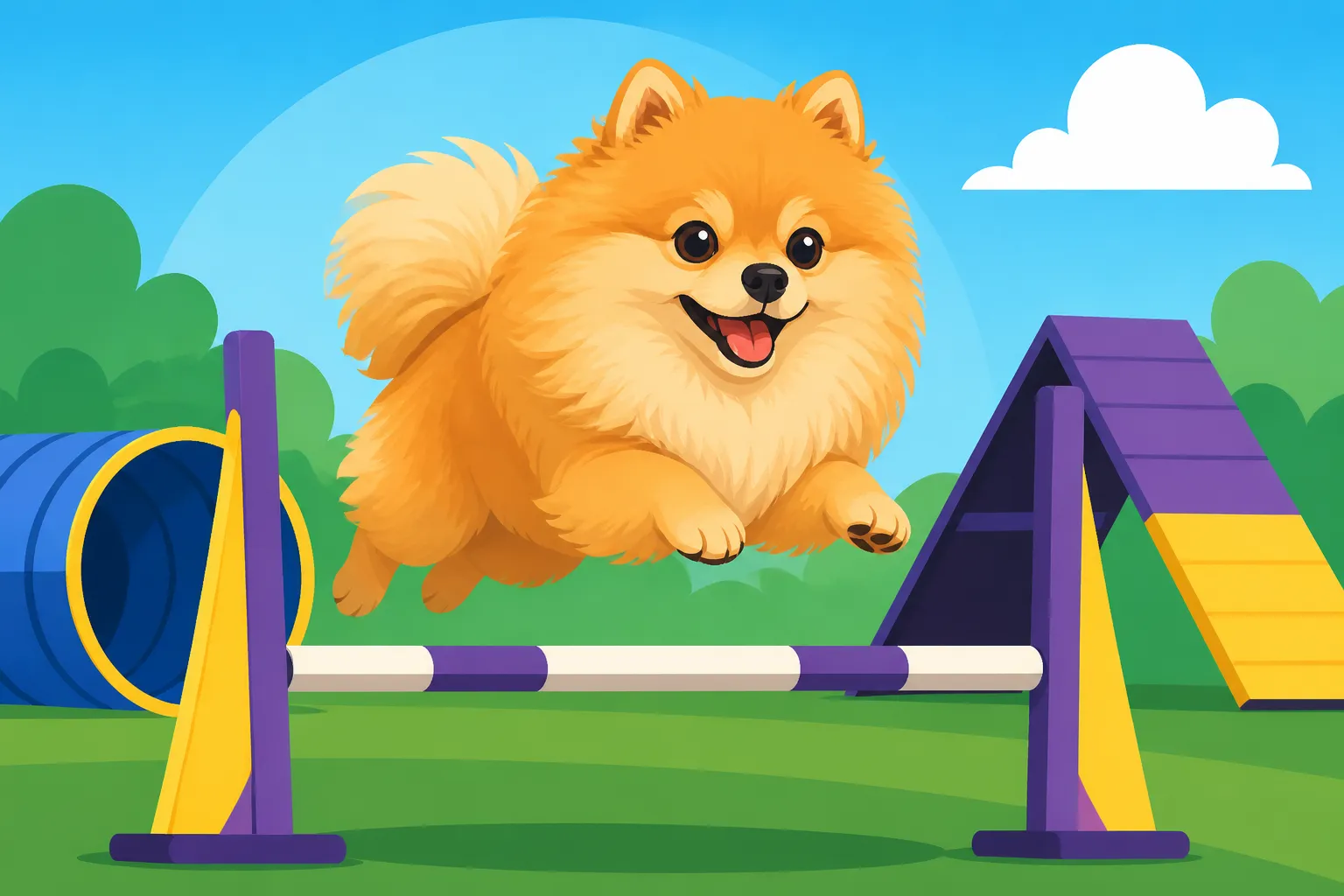
Surprisingly, a Pomeranian's small size can actually be an advantage in agility. They are incredibly agile, capable of quick turns, fast bursts of speed, and can navigate tight spaces with ease. The compact nature of their bodies often allows for a nimbleness that larger breeds simply can't replicate. Imagine them zipping through a tunnel or weaving through poles – it's often a blur of fluff and focused energy!
Their lightweight build also means less impact on their joints compared to heavier breeds, provided they have sound structure. They can leap over low jumps, dart around cones, and tunnel through obstacles without the same physical strain a larger dog might experience. Plus, many agility courses offer "small dog" jump heights and equipment tailored to their size, ensuring they compete fairly and safely against dogs of similar stature.
Health Concerns to Watch For
Despite their agility, Pomeranians are predisposed to certain health conditions that owners must be acutely aware of before embarking on any physically demanding sport. Prioritizing your dog's health and safety is paramount.
| Health Concern | Impact on Agility Training | Precautionary Measures |
|---|---|---|
| Luxating Patella | Pain, lameness, risk of worsening with jumping/twisting | Vet check, slow progression, low impact, strong core exercises, Whether a Pomeranian Can Live With a Grade Two Knee |
| Tracheal Collapse | Difficulty breathing, coughing with excitement/exertion | Harness only (never collar), monitor breathing, avoid excessive barking/excitement, Managing a Pomeranian's Windpipe Without Surgery |
| Hypoglycemia (Puppies) | Energy crashes, weakness, especially with exertion | Ensure regular meals, carry high-energy treats, not typically an issue for adult dogs in good health |
| Dental Disease | Pain, infection, can affect overall well-being and energy | Regular dental care, vet check before starting strenuous activities, can affect overall health |
| Heart Conditions | Reduced stamina, risk with high exertion | Vet cardiac screening, especially for puppies or older dogs, monitor for coughing/fatigue |
The biggest concern for many Pomeranian owners is Slipping Kneecaps in a Five Pound Pomeranian, also known as luxating patellas. This condition means their kneecaps can slip out of place, causing pain and lameness. While agility can be safe, it's crucial to have your Pom thoroughly vetted by a veterinarian before starting any training, especially if you notice a skip in their step. Your vet can assess their knee health and advise on appropriate exercises or limitations. Low-impact training and careful progressions are key.
Another common issue is The Honking Cough of a Pomeranian's Collapsing Windpipe. The excitement and exertion of agility can sometimes trigger or worsen this condition. It's absolutely vital to always use a properly fitted harness, never a collar, when doing any activity with your Pomeranian, especially agility. A harness distributes pressure across their chest, protecting their delicate trachea. Monitor their breathing closely and ensure they don't overexert themselves.
Furthermore, being so small, Pomeranians can be more susceptible to injury if they jump improperly or land awkwardly. It's why teaching them Why Jumping Off Furniture Wrecks a Pomeranian's Knees and other preventative measures are important even at home. Focus on proper form and gradually introduce new obstacles. Always work on soft surfaces when possible, like grass or padded mats, especially in the beginning.
Getting Started: Nurturing Your Pomeranian's Inner Agility Star
So, you've decided your Pom is ready to embrace the agility challenge. That's fantastic! The next step is to set them up for success, focusing on a positive, safe, and fun learning experience.
Finding the Right Class and Instructor
The most important step is finding an agility class specifically designed for small dogs or with instructors experienced in working with toy breeds. A good instructor will understand the unique needs and limitations of Pomeranians, ensuring appropriate jump heights, obstacle sizes, and training methods. Don't be afraid to visit a few classes without your dog first to observe the teaching style and how the small dogs are handled. Look for positive reinforcement methods – lots of praise, treats, and toys – rather than harsh corrections.
Many local dog training clubs or private facilities offer beginner agility courses. Before committing, ask about their approach to health concerns like luxating patellas or tracheal collapse. A responsible instructor will always prioritize your dog's well-being over pushing them too hard. They'll emphasize proper warm-up and cool-down routines, and they'll never force a dog to do something it's uncomfortable with. You might also consider starting with foundation classes, even if not strictly agility, to build obedience and focus. What Six Weeks of Puppy Class Costs a Pomeranian Owner can give you an idea of initial investments in training.
Building Foundation Skills at Home
You don't need a full agility course in your backyard to get started. Many fundamental skills can be taught in your living room or a small, safe outdoor space. This early work is crucial for building confidence, coordination, and a strong bond with your Pom.
Here are some ideas:
- Targeting: Teach your Pom to touch their nose to your hand or a specific object. This is fantastic for guiding them around obstacles.
- Recalls: A reliable recall is essential for safety and control on a course. Make coming when called the most rewarding thing ever. Building a Recall on a Pomeranian That Ignores You can offer some tips.
- Stays: Being able to hold a "stay" is invaluable for waiting at the start line or remaining on an obstacle.
- Body Awareness: Simple exercises like walking over low cavaletti (ground poles), stepping on and off a low platform, or navigating around household objects can improve their understanding of their own body in space. You can find inexpensive tunnel toys or collapsible cones on sites like Amazon to practice with.
- Motivation: Figure out The Reward a Pomeranian Actually Cares About. Is it a specific toy? A high-value treat? Understanding their motivation will supercharge your training.
Online resources can be a fantastic way to learn the basics before committing to in-person classes. Platforms like BAXTER & Bella offer comprehensive online puppy and obedience training programs that lay a solid foundation for any dog sport, including agility. Their structured lessons can guide you through the initial steps of teaching cues and building engagement, all from the comfort of your home. This is especially helpful if you're working with a young Pom, as The Months a Pomeranian Puppy Stops Nipping is also a good time to gently introduce positive training.
For safety at home, consider investing in small ramps or steps. While not strictly agility equipment, they are vital for protecting your Pomeranian's joints from everyday jumps, like getting on and off the sofa. Ramps and Steps Sized for a Pomeranian can prevent future orthopedic issues.
Beyond the Ribbons: The Joy and Benefits of Agility for Your Pom
While competing and earning ribbons can be a goal for some, the true value of agility for a Pomeranian often lies in the journey itself and the myriad benefits it brings to their overall well-being.
Agility provides incredible mental stimulation. Poms are intelligent dogs, and without a constructive outlet for their minds, they can easily become bored, leading to undesirable behaviors like excessive barking or destructive chewing. Agility gives them a "job" to do, challenging them to learn new skills, follow sequences, and think on their paws. This mental workout can be just as tiring, if not more so, than physical exercise, leading to a happy, well-adjusted, and calm Pom at the end of the day.
Physically, agility, when done safely and progressively, can improve your Pomeranian's coordination, balance, and muscle tone. It helps keep them fit and maintains a healthy weight, which is crucial for preventing other health issues. The constant movement, stretching, and low-impact jumping (at appropriate heights) contribute to better overall physical conditioning. Just remember to always prioritize your Pom's comfort and energy levels; a tired Pom is a good Pom, but an exhausted or panting Pom might be overdoing it.
Finally, and perhaps most importantly, agility dramatically strengthens the bond between you and your Pomeranian. It's a team sport, requiring clear communication, trust, and mutual understanding. As you work together to conquer obstacles and celebrate successes, your relationship deepens, creating an incredibly rewarding experience for both of you. Seeing your tiny, spirited companion light up as they zoom through a tunnel or nail a set of weave poles is a joy that truly has no price. Whether you ever step into a competition ring or simply enjoy practicing in your yard with equipment from Amazon, the shared experience is invaluable. You might find you don't even need a Whether a Pomeranian Needs a Private Trainer because you've become such an effective team.
Disclaimer
This article is for general informational purposes only and does not constitute professional advice. Laws, prices and regulations vary by location and change over time. Consult a qualified professional for guidance on your specific situation.