Whether a Show Pomeranian Differs From a Pet
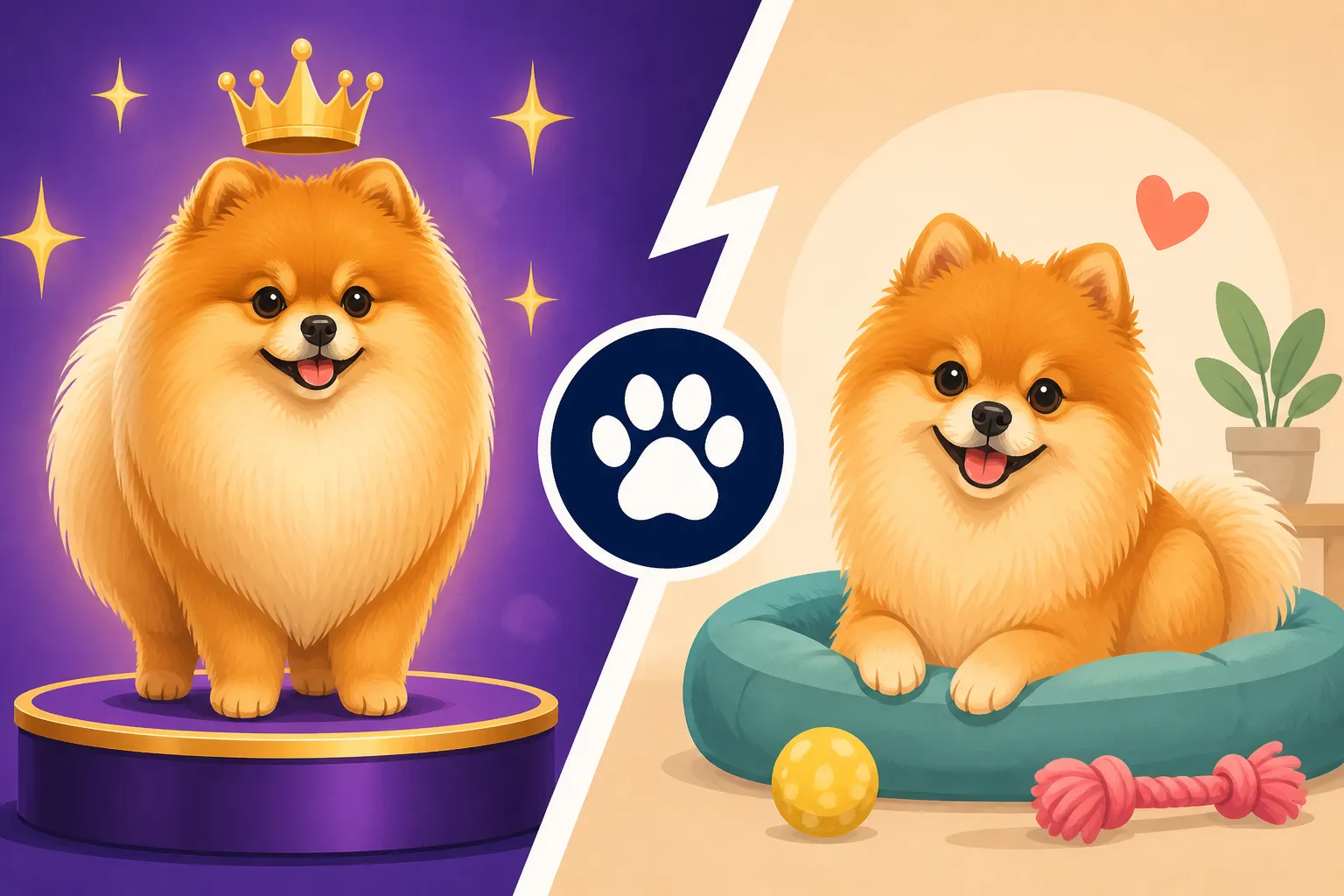
It's easy to look at those absolutely stunning, perfectly coiffed Pomeranians strutting their stuff in the show ring and wonder if they're even the same breed as the fluffy, happy-go-lucky companion curled up on your sofa. Many prospective owners get a little confused, thinking there might be two different types of Pomeranians out there – the "show type" and the "pet type." The truth is, while every Pomeranian is built from the same blueprint, their lives and the expectations placed upon them can be wonderfully distinct. This guide will help clarify the nuances, showing you what truly differentiates a show-ring star from your everyday furry best friend, and why both are incredible.
The Foundation: Understanding the Pomeranian Breed Standard
At the heart of every discussion about show dogs versus pets is the breed standard. This isn't just a suggestion; it's a meticulously detailed written description of the ideal Pomeranian, covering everything from its size and coat to its temperament and gait. For show dogs, adherence to this standard is paramount, while for pet owners, it often serves as a general guide to understanding their beloved companion's heritage.
What the Standard Demands
The breed standard for Pomeranians describes a compact, short-backed, active toy dog. It specifies the ideal weight, which usually falls between The Three to Seven Pounds a Pomeranian Is Allowed, and dictates aspects like head shape (often described as fox-like), ear set, eye color, and muzzle length. But it goes much further than just measurements.
It details the double coat – a dense, soft undercoat and a long, straight, harsh outer coat that stands off from the body, creating that characteristic "powder puff" look. The standard also covers the tail, which should be profusely feathered and carried up and over the back. Even the dog's movement is described, calling for a "smooth, free, and balanced gait." Every single physical trait is laid out, creating a picture of perfection that judges strive to find in the show ring. When you see a show Pomeranian, you're looking at a dog that has been carefully bred and groomed to embody as many of these ideals as possible. The Stand Off Coat a Pomeranian Must Have is a key component here, as is The Ruff a Pomeranian Should Carry.
The Role of Color and Markings
Beyond structure, the breed standard also covers color. Pomeranians come in Every Color a Pomeranian Comes In, and the standard outlines which colors are acceptable and, sometimes, preferred. For example, while many colors are permissible, a show Pomeranian should typically be of solid color or a parti-color with specific markings, depending on the registry.
For a show dog, any deviations from these color standards or presence of disqualifying markings can mean they won't place in the ribbons, no matter how beautifully they move or how perfect their head. What Puts a Pomeranian Out of the Ribbons often relates to these kinds of specific faults. For a pet owner, however, color is entirely a matter of personal preference. A blue Pomeranian or a lavender Pomeranian, while perhaps not typical show colors in some registries or having specific challenges, can be a cherished family member without any judgment. The beauty of a pet Pom is that its worth isn't measured by a judge's discerning eye, but by the love and joy it brings to its family.
The Life of a Show Pomeranian: Dedication and Detail
A show Pomeranian's life is one of precision, training, and meticulous care. These dogs are selected from birth for their potential to meet the breed standard, and their journey to the ring involves significant investment of time, effort, and resources from their owners and handlers.
Breeding and Early Selection
The process of creating a show Pomeranian begins long before the puppy is even born, with careful selection of breeding stock. Reputable breeders will choose parents who not only exemplify the breed standard but also have excellent temperaments and sound health clearances. This is critical because they are not just breeding for looks, but for the overall health and continuation of the breed.
Once a litter arrives, puppies are evaluated closely from a young age. Breeders look for promising structural elements, correct bite, proper coat texture, and confident attitudes. Only a select few from a litter might be deemed "show quality," meaning they have the potential to excel in conformation events. The vast majority of puppies, even from top show lines, are sold as "pet quality," often with limited registration agreements that ensure they won't be bred. This early selection is a major point of divergence from a pet Pomeranian, which is often chosen by a family based on personality and availability, not specific conformation traits.
Intensive Grooming and Conditioning
If you've ever admired a show Pomeranian's magnificent coat, you've witnessed countless hours of dedicated grooming. Achieving that perfectly fluffed, stand-off coat is an art form. It involves regular, thorough brushing to prevent mats and remove dead undercoat, specialized bathing techniques to maximize coat volume, and careful blow-drying to ensure every strand is perfectly positioned.
For a show Pom, grooming isn't just about looking good; it's about maintaining skin health and ensuring the coat is in peak condition for judging. This often means daily brushing, special shampoos and conditioners, and regular trims to shape the dog without taking away from its natural beauty. Working a Pomeranian's Coat in Sections to the Skin is a fundamental technique, as is understanding The Grooming Schedule a Pomeranian Runs On. Pet owners, on the other hand, might opt for a simpler grooming routine, perhaps visiting a professional groomer every few weeks or doing basic maintenance at home. While they still need regular brushing to prevent matting, the intensity isn't the same. Resources from places like Chewy can be invaluable for both show and pet owners, offering a wide array of brushes, combs, and high-quality shampoos suitable for the Pomeranian's unique double coat.
Training for the Ring
Beyond grooming, show Pomeranians undergo specific training to prepare them for the show ring. They must learn to stack (stand still in a specific pose that highlights their structure), gait (walk confidently on a leash in a way that showcases their movement), and be comfortable with a judge examining them, including their teeth and body. This requires patience, positive reinforcement, and often, professional handling lessons.
This "ring craft" training is a completely different skill set from the basic obedience training a pet Pomeranian receives. While a pet Pom benefits from learning commands like 'sit,' 'stay,' and 'come,' a show Pom needs to perform under pressure in a bustling environment, often with many other dogs and distractions. This is where their temperament truly shines; a good show dog must be confident, poised, and eager to please.
The Beloved Pet Pomeranian: A Life of Companionship
Most Pomeranians in the world are cherished pets, living lives filled with cuddles, playtime, and unconditional love. Their purpose isn't to win ribbons, but to be a devoted member of the family.
Chosen for Personality, Not Perfection
When a family chooses a pet Pomeranian, the decision often comes down to connection and personality. They might fall in love with a puppy's playful antics, a quiet dog's gentle nature, or an adult rescue dog's sweet eyes. While health and temperament are always important considerations for any responsible owner, minor deviations from the breed standard in terms of appearance are completely irrelevant.
A pet Pomeranian might have ears that are a little too large, a tail that doesn't curl quite right, or a coat that isn't as profuse as a show dog's. These "faults" in the show ring are simply charming quirks in a pet. The focus shifts from external perfection to internal connection, emphasizing the dog's character, its ability to integrate into family life, and its boundless capacity for affection. Whether a Pomeranian Suits Apartment Living or Whether a Pomeranian Fits a Family With Teenagers are much more critical questions for a pet owner than whether its top line is perfectly level.
Relaxed Grooming and Lifestyle
While a pet Pomeranian still requires regular grooming to keep its double coat healthy and free of mats, the routine is typically less intense than that of a show dog. Owners might opt for professional grooming every 6-8 weeks, or do maintenance brushing a few times a week at home. The goal is cleanliness, comfort, and preventing skin issues, rather than maintaining show-ring readiness. Many owners find good quality grooming tools and shampoos at their local pet store or from online retailers like Chewy, making home care more accessible.
The lifestyle of a pet Pomeranian is also generally more relaxed. They enjoy walks in the park, car rides, and snuggles on the couch. Their exercise needs are moderate, making them suitable for various living situations, including apartments. While some pet Poms might participate in dog sports like agility or obedience, it's usually for fun and bonding, not for strict competition against a breed standard. How Far a Pomeranian Can Walk in a Day is usually far less than a larger breed.
The True Measure of a Pet
The value of a pet Pomeranian isn't quantifiable by points or ribbons; it's measured in wagging tails, happy barks, comforting cuddles, and the joy they bring into a home. They are companions, confidantes, and often, miniature comedians. Their training focuses on being a well-behaved family member – house training, leash manners, and appropriate social interactions.
For many owners, the greatest achievement of their pet Pomeranian isn't a Best in Show title, but successfully learning to Teaching a Pomeranian a Door Bell or peacefully coexisting with the family cat. Whether a Pomeranian Has Prey Drive is often more of a practical concern than how well it stacks. These everyday triumphs are what truly enrich the lives of pet Pomeranian owners.
Similarities That Bind Them: Every Pomeranian is a Pomeranian
Despite the different paths a show Pomeranian and a pet Pomeranian might take, it’s crucial to remember they are, at their core, the same wonderful breed. The fundamental characteristics of a Pomeranian are present in both.
Inherent Temperament and Personality
Regardless of whether they're destined for the show ring or the family sofa, Pomeranians share many innate personality traits. They are generally intelligent, vivacious, and curious little dogs with big personalities. They are known for their spirited nature, their loyalty to their families, and their often-surprising bravery, sometimes forgetting just how small they are.
Both show and pet Poms can be prone to alert barking, a trait inherited from their larger Spitz ancestors, who were often watchdogs. Why a Pomeranian Barks at Everything That Moves is a common topic for all Pom owners! They thrive on human companionship and can develop strong bonds with their owners. While individual personalities vary, the core Pomeranian essence – confident, affectionate, and a little bit sassy – is usually evident in all of them.
Health Considerations
All Pomeranians, whether show or pet, are susceptible to certain breed-specific health conditions. Reputable breeders, whether for show or pet homes, should prioritize health clearances for their breeding dogs to minimize the risk of passing on genetic conditions. Conditions such as Slipping Kneecaps in a Five Pound Pomeranian, The Honking Cough of a Pomeranian's Collapsing Windpipe, Dental Disease in a Mouth the Size of a Pomeranian's, and various eye problems are prevalent in the breed.
Regardless of their intended role, owners of all Pomeranians should be vigilant about their dog's health, maintaining regular veterinary check-ups and addressing any concerns promptly. The commitment to a Pomeranian's well-being is a constant for every owner, and is part of The Eighteen Thousand Dollar Lifetime of a Pomeranian. This is why purchasing from a responsible breeder who performs health testing is so vital for both show and pet quality puppies.
The Same Love and Devotion
Ultimately, the most significant similarity between a show Pomeranian and a pet Pomeranian is the boundless love they offer their human families. Both bring immense joy, laughter, and companionship into their homes. The distinction lies not in their inherent worth, but in the specific roles and expectations placed upon them by their owners. A show Pomeranian can be a beloved pet in addition to a competitor, and a pet Pomeranian can have a pedigree full of champions.
The table below summarizes some key differences and similarities:
| Feature | Show Pomeranian | Pet Pomeranian |
|---|---|---|
| Primary Purpose | Conformation competition, breeding for standard | Companionship, family member |
| Selection | Rigorous, based on breed standard adherence | Based on personality, availability, emotional connection |
| Grooming | Intensive, daily, professional-level techniques | Regular, functional, focused on health & comfort |
| Training | Ring craft, stacking, gaiting, examination comfort | Basic obedience, house training, social manners |
| Lifestyle | Travels to shows, structured routine | Family-centric, varied, flexible |
| Temperament | Confident, poised, spirited, handler-focused | Affectionate, playful, loyal, family-focused |
| Health | Bred from health-tested lines; regular vet care | Should come from health-tested lines; regular vet care |
| Cost | Higher initial purchase, ongoing show expenses | Varies, ongoing pet care expenses |
| Inherited Traits | Same breed characteristics: double coat, Spitz brain, intelligence, alert nature | Same breed characteristics: double coat, Spitz brain, intelligence, alert nature |
| Value | Measured by adherence to standard, competition wins | Measured by love, joy, companionship |
So, whether you're admiring a magnificent Pomeranian gliding across the show ring or cuddling with your fluffy friend on the couch, remember that both are incredible examples of this enchanting breed. The difference isn't in their species, but in their journey and the human hearts they capture along the way.
Disclaimer
This article is for general informational purposes only and does not constitute professional advice. Laws, prices and regulations vary by location and change over time. Consult a qualified professional for guidance on your specific situation.