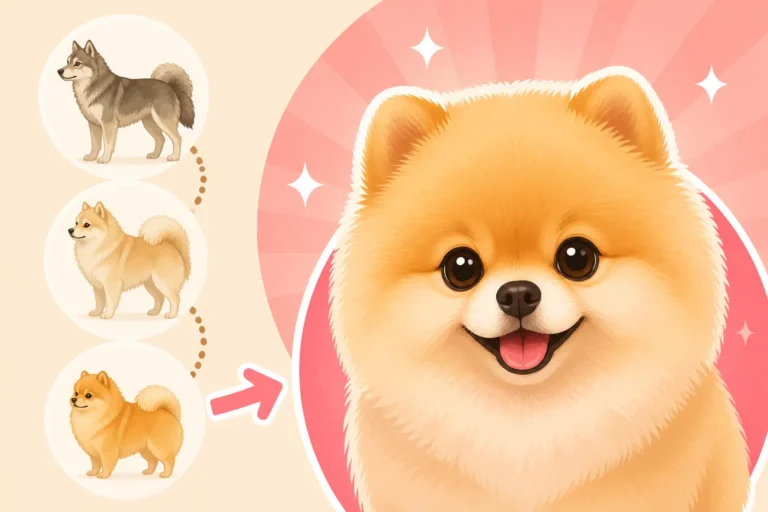
Whether an American and European Pomeranian Differ
It’s a common question, and one I hear often from folks looking to welcome a Pomeranian into their lives: "Is a Pom from the States the same as one from, say, Germany or the UK?" It’s a completely valid thought, especially when you see pictures online and sometimes they just look a little different. This guide is here to unravel those subtle distinctions and give you a clearer picture of whether an American and European Pomeranian truly differ, and what that might mean for you as a potential owner.
The Roots of Divergence: How Standards Shape a Breed
You might assume that a breed is a breed, no matter where you go, right? But with Pomeranians, like many other purebred dogs, national kennel clubs around the world have their own specific written standards. These standards are essentially the blueprints that breeders strive to meet, and while they share a common ancestor, the interpretations, and sometimes even the explicit details, can vary. This leads to subtle divergences over generations, influencing everything from a dog's size to the shape of its muzzle.
The Pomeranian, as we know it, descended from larger Spitz-type dogs in the historical region of Pomerania (which spanned parts of modern-day Germany and Poland). When the breed gained popularity, particularly in England with Queen Victoria's influence, different countries began to establish their own breed clubs and, consequently, their own standards. The American Kennel Club (AKC) and The Kennel Club (KC) in the UK, for example, each have their own document. The Fédération Cynologique Internationale (FCI), an international cynological federation, governs standards for many European countries, and while its standard aims for consistency, national clubs often put their own spin on things within that framework.
Think of it like different dialects of the same language; they’re all English, but a Brit speaks differently from an American, and you can usually tell the difference. Over time, breeders in each region, guided by their respective standards and judging preferences, selected for certain traits, leading to distinct "types" even within the same breed. This isn’t a case of separate breeds, but rather different expressions of the same beloved Pomeranian, shaped by regional preferences and interpretation of the ideal. It's truly fascinating How Pomeranian Type Changed Across the Twentieth Century to reflect these varying ideals.
Key Physical Distinctions You Might Observe
When you look at Pomeranians from different regions, the differences might not jump out at you immediately, but they are there. It’s often in the nuances of proportion, coat density, and facial structure. These aren't just aesthetic preferences; they are often codified in the breed standards.
Size and Bone Structure
One of the most commonly cited differences often relates to size. The AKC standard for Pomeranians typically calls for dogs weighing between 3 and 7 pounds, with an ideal weight often leaning towards the middle of that range. Dogs significantly outside this range are often penalized in the show ring. The emphasis is on a compact, well-proportioned toy dog. You can learn more about The Weight the Pomeranian Standard Requires.
In contrast, many European standards, particularly those under the FCI, allow for a slightly larger range, sometimes up to around 11 pounds. While still small, this can mean that a Pomeranian bred to European standards might appear a bit sturdier or have a slightly larger frame than what you typically see in an American show ring. This isn't universally true, of course, as excellent breeders in both regions strive for quality, but it's a general tendency. This slight difference in allowed size might even influence what kinds of accessories you pick up from a retailer like Chewy, ensuring harnesses or carriers are perfectly sized.
Head, Muzzle, and Ear Set
The head is often where the most noticeable differences appear. The AKC standard generally emphasizes a "fox-like" expression, with a medium-length muzzle that tapers rather finely and ears that are small, erect, and set high on the head, giving that alert, intelligent look. The Head and Expression a Pomeranian Judge Wants is very specific about these features.
European standards, especially those aiming for a more "original" German Spitz type, might allow for a slightly broader skull, a shorter, sometimes blunter muzzle, and ears that are perhaps a touch larger or set a bit wider. This can result in an expression that some describe as more "baby doll" or "bear-like" compared to the foxier American type. While the breed is still definitely a Pomeranian, these subtle facial differences can significantly alter the overall impression. For example, Fox Face, Baby Doll and Teddy Bear Pomeranians further explores these distinctions in facial types.
Coat Texture and Density
The Pomeranian is, of course, famous for its magnificent double coat. Both American and European standards call for a dense undercoat and a long, harsh, straight outer coat that stands off from the body, creating that signature fluffy silhouette. However, there can be subtle differences in the degree of density and standoff desired. The Stand Off Coat a Pomeranian Must Have is crucial for the breed's iconic look.
American show lines sometimes lean towards an incredibly profuse, almost exaggerated coat, with a very full ruff around the neck and shoulders. This can be absolutely stunning and requires dedicated grooming. European lines might still have a beautiful, dense coat, but perhaps with less of the extreme "powder puff" look, favoring a slightly coarser texture that is still very full but perhaps a bit more "natural" in appearance. Either way, regular grooming with high-quality tools, easily found at places like Chewy, is essential to maintain that stunning coat.
Tail Carriage and Bone
Another detail that can sometimes vary is the tail. Both standards require the tail to be high-set and carried flat over the back, ideally not curled or hanging to one side. The tail should be profusely plumed, fanning out over the back.
However, some subtle differences in tail set or the "tightness" of the curl can be seen. American standards typically value a tail that lies very flat and straight over the back. European standards might allow for a slightly looser curl or a tail that arcs more gently, as long as it still adheres to the overall high-set, plumed description. These are truly fine points, often only distinguishable by experienced judges or breed enthusiasts, but they are part of the overall "type" that defines regional preferences.
Temperament, Health, and Practical Considerations
While the physical characteristics might show subtle differences, when it comes to temperament and general health, American and European Pomeranians are largely the same wonderful, feisty little dogs we know and love. Breed-specific health concerns and typical personality traits tend to transcend geographical boundaries because the genetic pool, though separated by breeding programs, originates from the same source.
Temperamental Traits
Pomeranians, regardless of their country of origin, are generally known for their outgoing, intelligent, and often mischievous personalities. They are typically lively, curious, and make excellent companions. Their bold nature, despite their small size, is a hallmark of the breed worldwide. Both American and European Poms are known to be alert barkers, often quick to let you know when someone is at the door or something unusual is happening outside. This isn't a regional trait; it's simply a Pomeranian thing! The Pomeranian That Cannot Be Left Alone can also be a common challenge for owners across the globe.
Of course, individual temperament always comes down to genetics, early socialization, and training. A well-bred, well-socialized Pomeranian from any region is likely to be a confident and affectionate companion, while a poorly socialized one, regardless of origin, may exhibit shyness or aggression.
Common Health Concerns
Similarly, the health issues that can affect Pomeranians are not typically dependent on their American or European lineage. Pomeranians, as a breed, are prone to certain genetic conditions, such as luxating patellas (Slipping Kneecaps in a Five Pound Pomeranian), tracheal collapse (The Honking Cough of a Pomeranian's Collapsing Windpipe), dental disease (Dental Disease in a Mouth the Size of a Pomeranian's), and Alopecia X (also known as Black Skin Disease). These conditions are linked to the breed's genetics as a whole, not specifically to where the dog was bred.
Responsible breeders in both North America and Europe will screen their breeding dogs for these known genetic issues to try and minimize their occurrence in future generations. This commitment to health is far more important than any perceived "type" difference. Regardless of your Pom's origin, make sure you budget for potential veterinary care, and remember that shops like Chewy offer a wide range of products, from dental chews to joint supplements, that can support your dog’s health.
Availability and Breeder Focus
For most people, the most practical difference will be availability. If you live in the United States, finding a reputable breeder who focuses on the AKC standard will be much easier. Likewise, if you're in Germany, breeders will naturally adhere to their national kennel club's interpretation of the FCI standard. It's rare to intentionally seek out a "European" type Pomeranian if you live in America, unless you're a show breeder with a specific vision for your lines, or vice versa.
The focus of breeders in each region is generally to produce dogs that conform to their prevailing national standard. This means judges in an AKC ring will be looking for the AKC ideal, while judges in an FCI ring will be evaluating against the FCI ideal. This shapes the breeding programs and the puppies they produce. If you're passionate about a specific "look," you might have to do some extensive research and potentially even import a dog, which comes with its own set of challenges and costs.
Deciding What's Right for Your Family
So, with these subtle differences in mind, how do you decide if an American or European Pomeranian is "better" for you? The truth is, for most pet owners, these distinctions are largely aesthetic and will have little to no impact on the day-to-day joy of owning a Pomeranian. The core qualities of the breed – their intelligence, loyalty, spunk, and affection – remain consistent across continents.
Here's a table to summarize some general tendencies, keeping in mind that there's always overlap and individual variation:
| Feature | American (AKC) Tendency | European (FCI/KC) Tendency |
|---|---|---|
| Ideal Weight | 3-7 lbs, often aiming for the middle | Up to ~11 lbs (5 kg), can be slightly sturdier |
| Muzzle Shape | More fox-like, medium length, tapering | Can be slightly shorter, sometimes a bit blunter |
| Head Shape | Proportional to body, often favoring refined features | Skull can be a bit broader |
| Ear Set | Small, erect, set high, giving alert expression | Can be slightly larger or set a bit wider |
| Coat Profuseness | Very dense, highly profuse, extreme stand-off often desired | Dense and full, but sometimes less extreme "powder puff" |
| Tail Carriage | High-set, carried flat and straight over the back | High-set, can have a slightly more gentle arc or curl |
| Overall Look | Often described as refined, foxy | Can be described as more rustic, "bear-like" or original Spitz |
Ultimately, what matters most when choosing a Pomeranian is finding a reputable breeder who prioritizes health, temperament, and ethical breeding practices, regardless of their location. A good breeder will be transparent about their lines, health testing, and the specific characteristics of their dogs. They'll also ensure their puppies are well-socialized from an early age.
Don't let the subtle differences in regional types overwhelm you. Focus on finding a healthy, happy puppy from a breeder you trust. Whether that breeder adheres strictly to AKC, FCI, or another kennel club's standard, you're still bringing home a beloved Pomeranian. You can explore topics like The Pomeranian Against the Other Toy Spitz Breeds to see how Poms stand out generally, or The Countries Where Pomeranians Are Most Registered to understand global popularity. The most important thing is the bond you build with your furry companion.
Disclaimer
This article is for general informational purposes only and does not constitute professional advice. Laws, prices and regulations vary by location and change over time. Consult a qualified professional for guidance on your specific situation.