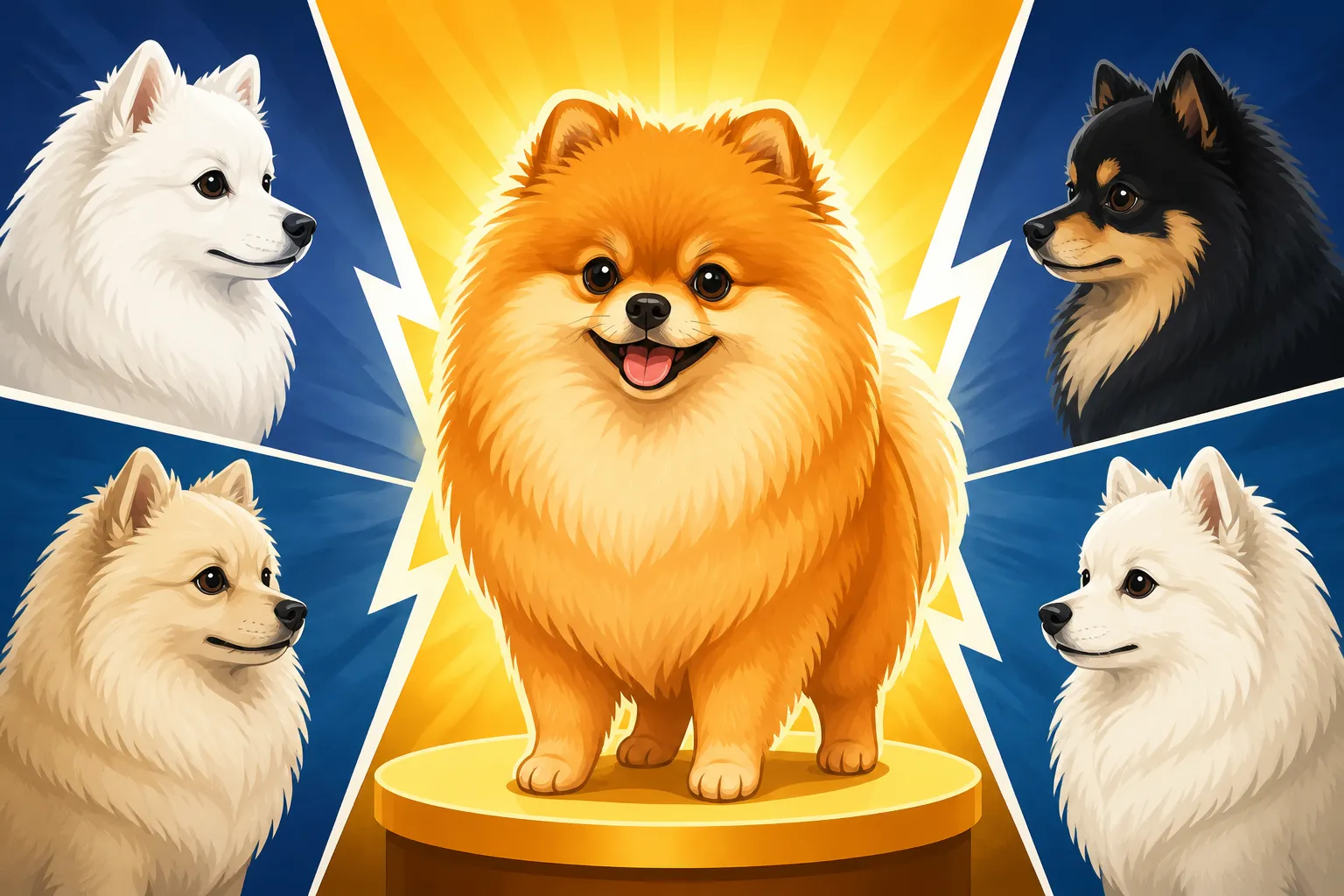
The Pomeranian Against the Other Toy Spitz Breeds
It's so easy to get lost in a sea of fluffy faces when you're looking for a small companion dog. Many of these pint-sized pups share a similar look – pricked ears, curled tails, and a magnificent double coat – leading many to wonder what truly sets a Pomeranian apart from its equally charming cousins. This comprehensive guide is here to untangle the nuances of the toy Spitz family, helping you understand the distinct qualities that make a Pomeranian unique and how it compares to other beloved small Spitz breeds.
Understanding the Spitz Family Tree
The world of dogs is vast and varied, but few groups are as instantly recognizable as the Spitz family. With their characteristic foxy faces, triangular ears that stand alertly, and tails that often curl gracefully over their backs, they project an image of ancient canine dignity combined with a spirited nature. But where does our beloved Pomeranian fit into this grand lineage?
The Northern Heritage of the Spitz Breeds
Think about the quintessential image of a hardy, cold-weather dog – chances are, you're picturing a Spitz. This isn't a coincidence. The Spitz-type dogs trace their ancestry back thousands of years to the Arctic and sub-Arctic regions of the Northern Hemisphere. They were bred by indigenous peoples for a variety of demanding tasks, from pulling sleds across icy tundras to herding reindeer and standing guard over remote homesteads. Their defining physical characteristics – the dense, insulating double coat, the compact body, and the upright ears – are all evolutionary adaptations that allowed them to thrive in harsh environments.
Over generations, as people migrated and settled in different areas, these resilient dogs spread across continents, adapting to new roles and climates. From the formidable Siberian Husky to the noble Samoyed, and the vigilant Norwegian Elkhound, the common threads of their northern heritage are clear. Each breed, though distinct, carries the genetic blueprint of these ancestral working dogs, boasting intelligence, independence, and a keen awareness of their surroundings. This deep-rooted history is part of why many Spitz breeds, even the smaller ones, possess a certain robustness and self-assuredness that belies their size.
What Defines a "Toy Spitz" Beyond Size
While their larger cousins continued to pull sleds or hunt game, a fascinating shift occurred with some Spitz lines: a deliberate miniaturization. This wasn't just about making dogs smaller; it was about refining them for a new, equally important purpose: companionship. The transition from a working dog to a "toy Spitz" involved a careful selection process, not only for reduced size but also for temperamental traits that made them suitable household pets. Yet, they still retained many of the physical and some of the psychological hallmarks of their larger ancestors.
A toy Spitz still has that iconic double coat, designed for warmth, but now appreciated for its plush, luxurious feel. The curled tail remains, a charming flourish rather than a functional rudder for balance on rough terrain. The bright, alert eyes and pricked ears still convey intelligence and attentiveness, even if the primary "job" is now to alert you to the mail carrier or a leaf blowing by the window. The core difference, then, is a matter of scale and intention. These dogs are companions first and foremost, bred to live harmoniously within human families, often thriving in smaller living spaces. However, their minds still carry the spark of their working forebears, meaning they are often intelligent, curious, and sometimes delightfully independent, requiring mental stimulation just like any other bright dog.
The Pomeranian: A Stand-Alone Sparkle
Among the constellation of toy Spitz breeds, the Pomeranian shines with a particular brilliance. It’s a breed that captivates with its ethereal fluff and confident strut, often seeming to float more than walk. But there's more to this tiny titan than just a pretty face; it's a dog with a rich history and a surprisingly robust personality packed into its small frame.
Key Characteristics of the Pomeranian
When you first lay eyes on a well-bred Pomeranian, its defining characteristics immediately stand out. They are tiny, typically weighing between three and seven pounds, and standing a mere six to seven inches tall at the shoulder. Despite their diminutive size, they carry themselves with an air of self-importance. Their most striking feature is undoubtedly their coat: a magnificent double coat that stands off from the body, giving them that iconic fluffy, rounded appearance. This coat consists of a harsh, long outer coat and a soft, dense undercoat, particularly thick around the neck and chest, forming a beautiful "ruff," and on their hindquarters, creating "britches." Their foxy face, often described as "alert" or "intelligent," is adorned with bright, dark, almond-shaped eyes and small, erect ears that disappear into the surrounding hair. And of course, the tail, a plume of fur, curls jauntily over their back, often touching or even resting on their spine.
Beyond their looks, Pomeranians boast a personality that's far bigger than their body. They are incredibly intelligent, often quick to learn tricks and commands, though their independent spirit can sometimes make training an interesting challenge. They are curious and playful, always up for an adventure, whether it's exploring a new park or chasing a favorite toy across the living room. Despite their small size, they possess a surprisingly bold and confident demeanor, often seemingly unaware of their own stature when encountering larger dogs or unfamiliar situations. This spirited nature, combined with their profound loyalty to their families, makes them incredibly endearing companions. They thrive on human interaction and can be quite affectionate, often preferring to be at their owner's side or, even better, in their lap.
The Pomeranian's Unique History and Development
The Pomeranian's journey from a working dog to a celebrated lapdog is one of the most remarkable transformations in canine history. The breed gets its name from Pomerania, a region in north-west Poland and north-east Germany, where its larger ancestors were originally bred. These early Pomeranians were much more substantial, often weighing between 20 and 30 pounds, and were used as sheep herders and general farm dogs. They were rugged, industrious canines, a far cry from the dainty companions we know today.
The turning point for the breed came in the 19th century, particularly through the influence of British royalty. Queen Victoria famously fell in love with the breed during a trip to Florence, Italy, in 1888. She brought a Pomeranian named Marco back to England, a dog weighing a then-small 12 pounds. Marco's influence, coupled with Victoria's subsequent dedication to breeding smaller Pomeranians, dramatically shifted the breed's development. Breeders began to select specifically for smaller size, alongside the dense double coat and other desirable traits. Within a single generation, the average size of the Pomeranian was effectively halved, creating the toy-sized dog we recognize today. This deliberate focus on miniaturization for companionship rather than work is a significant aspect of the Pomeranian's unique lineage. While other Spitz breeds maintained some of their larger forms, the Pomeranian became the quintessential toy Spitz, celebrated for its elegance and portable charm. You can read more about this fascinating historical shift in Queen Victoria, Marco and the Pomeranian.
The German Spitz: The Pomeranian's Closest Relatives
If you're looking at a Pomeranian, you're essentially looking at a very small German Spitz. The Pomeranian is, in fact, the smallest variety of the German Spitz group, which is recognized by the Fédération Cynologique Internationale (FCI) – a major international canine organization. This close relationship means they share a deep genetic connection and many core characteristics, but with some notable distinctions in size and often, temperament.
Kleinspitz and Mittelspitz: The "Bigger Poms"
The German Spitz family includes several size varieties, with the Kleinspitz (meaning "small Spitz") and Mittelspitz (meaning "medium Spitz") sitting directly above the Pomeranian in terms of size. The Kleinspitz typically ranges from 9 to 13 inches at the shoulder and weighs anywhere from 10 to 20 pounds, while the Mittelspitz is larger still, often 12 to 15 inches tall and weighing 15 to 30 pounds. To put it simply, if a Pomeranian is a teacup, the Kleinspitz is a coffee mug, and the Mittelspitz is a pint glass. They possess the same distinctive Spitz characteristics: the foxy face, the alert, pricked ears, and the beautifully plumed tail curled over their backs. Their double coats are also very similar in texture and density to the Pomeranian's, coming in an array of colors from pure white to black, orange, sable, and cream.
In many ways, interacting with a Kleinspitz or Mittelspitz feels very much like interacting with a slightly larger, perhaps more robust, Pomeranian. They move with the same confident gait, their eyes sparkle with intelligence, and their coats demand similar grooming attention to maintain their glorious fluff. The main difference is simply their physical scale. For someone who adores the Pomeranian's look and personality but desires a dog that's a bit sturdier or less fragile feeling, particularly around children or other pets, a Kleinspitz or Mittelspitz can be an excellent alternative. They offer the quintessential Spitz charm without the extreme miniaturization that defines the modern Pomeranian. You can explore The German Spitz Family a Pomeranian Belongs To for more on their heritage.
Comparing Temperaments Within the German Spitz Family
Despite their size differences, the German Spitz varieties share a remarkably consistent temperament, rooted deeply in their shared ancestral traits. All German Spitz are known for their lively, intelligent, and devoted personalities. They are often described as being very attentive to their families, forming strong bonds and thriving on companionship. Like Pomeranians, they tend to be excellent watchdogs, quick to alert their owners with a sharp bark to anything they deem unusual – be it a stranger at the door, a squirrel in the yard, or even a sudden gust of wind. This alertness is a cherished trait but also one that requires mindful training to manage, as their vocal nature can be a point of concern in close-knit communities or apartment living.
While the Pomeranian is often noted for its bold, "big dog in a small body" attitude, the Kleinspitz and Mittelspitz carry this forward with perhaps a slightly less "fragile" disposition. They are generally still spirited and playful, but their larger size can make them seem a bit more self-assured and less prone to the "small dog syndrome" seen in some highly miniaturized breeds. They might tolerate rougher play or be less intimidated by new experiences than a very tiny Pomeranian. However, their intelligence also means they can be prone to boredom or mischief if not given enough mental stimulation and consistent training. They are highly intelligent and eager to please those they love, making them quite trainable, though their independent Spitz streak means they'll always have their own charming opinions on things.
Japanese Spitz: The Cloud-Like Companion
Moving beyond the direct German lineage, we encounter the Japanese Spitz, a breed that often gets mistaken for a larger Pomeranian or a smaller American Eskimo Dog due to its striking white coat and Spitz features. While undoubtedly sharing the core Spitz characteristics, the Japanese Spitz offers a distinct package of size, temperament, and appearance.
Distinguishing Features of the Japanese Spitz
The most immediate distinction of the Japanese Spitz from a Pomeranian is its size. They are significantly larger, typically standing between 12 and 15 inches at the shoulder and weighing anywhere from 10 to 20 pounds. This places them firmly in the small to medium dog category, making them a more robust choice than the diminutive Pomeranian. Their coat is another defining feature: while it's a dense double coat like the Pomeranian's, it is almost exclusively pure white, giving them a cloud-like, ethereal appearance. This pure white coat requires dedication to keep it pristine, a different grooming challenge than the varied colors of a Pom.
Beyond size and color, their facial structure also varies subtly. While still possessing a foxy appearance with pricked ears and dark, almond-shaped eyes, the Japanese Spitz often has a slightly broader muzzle and a distinctive "smiling" expression. Their tail, a heavily plumed curl, rests over their back much like a Pomeranian's. In terms of energy, they tend to be quite playful and active, often described as having a joyful, exuberant personality. They love to run, play, and engage in family activities, often possessing higher exercise needs than a typical Pomeranian. They are fantastic companions for active individuals or families who appreciate a dog that can keep up with them on walks and outdoor adventures.
Temperament and Lifestyle Differences
The Japanese Spitz is renowned for its charming and outgoing temperament, often hailed as an excellent family dog. They are typically very affectionate and devoted to their owners, thriving on close companionship. Unlike some smaller breeds that can be reserved or even wary of strangers, the Japanese Spitz is generally known for being friendly and social, often greeting new people with enthusiasm once they've had a proper introduction. This makes them quite adaptable to various social settings, from busy household gatherings to trips to the local park.
When it comes to children, the Japanese Spitz tends to be quite tolerant and playful, making them a popular choice for families. Their slightly larger size means they are less fragile than a Pomeranian, making accidental injury less likely during enthusiastic play with kids. However, like all dogs, they benefit from proper socialization from a young age and clear boundaries. They are intelligent and eager to please, which generally makes them quite trainable, but they do possess that inherent Spitz independence. Their vocal nature is another shared trait with Pomeranians; they are alert watchdogs and will readily bark to announce arrivals or perceived threats. Regular grooming is essential for their pristine white coats, and while their coats are often surprisingly dirt-repellent, a commitment to brushing and occasional bathing is definitely part of their care. Chewy, for example, offers a fantastic array of brushes and shampoos specifically designed for double-coated breeds, which can be invaluable for keeping that Japanese Spitz coat looking its best.
The American Eskimo Dog Toy/Miniature: A Fluffy Powerhouse
Another prominent member of the Spitz family that often draws comparisons to the Pomeranian, particularly in its smaller varieties, is the American Eskimo Dog. Affectionately known as "Eskies," these dogs come in three size varieties: Toy, Miniature, and Standard. It's the Toy and Miniature sizes that particularly overlap with the Pomeranian's small stature, though they present a distinctly different energy and personality profile.
American Eskimo Dog Toy/Miniature Characteristics
The Toy American Eskimo Dog typically weighs between 6 and 10 pounds and stands 9 to 12 inches tall, while the Miniature ranges from 10 to 20 pounds and 12 to 15 inches. This means a Toy Eskie can be comparable in weight to a larger Pomeranian, but often carries more height and substance. Like the Japanese Spitz, the American Eskimo Dog is predominantly known for its striking pure white, dense double coat, which, similar to the Pomeranian, creates a magnificent ruff around the neck and feathering on the legs and tail. Their eyes are dark, often giving them an intelligent and inquisitive expression, and their ears are pricked and triangular, disappearing into their lush fur.
While both breeds share the stand-off double coat and the curled tail, the Eskie often has a slightly more substantial build and a broader skull compared to the Pomeranian's finer, more fox-like features. The overall impression of an Eskie is one of robustness and athletic capability, even in its smaller forms. These are dogs that carry themselves with confidence and a spark of lively energy. Their bright, intelligent eyes often convey a readiness for action and engagement, reflecting their historical roles as performers and intelligent companions.
Temperamental and Training Considerations
American Eskimo Dogs are renowned for their intelligence and often excel in obedience and dog sports, a testament to their roots as circus performers and working companions. They are highly trainable and eager to learn, often picking up new commands and tricks with remarkable speed. This makes them incredibly rewarding partners for those who enjoy active training sessions and engaging their dog's mind. However, this high intelligence also means they require consistent mental stimulation; a bored Eskie can quickly become a destructive or overly vocal Eskie. Like Pomeranians, they are keen watchdogs and can be quite vocal, making them excellent alert systems for your home, though managing their barking requires dedication and training.
Temperamentally, Eskies are typically affectionate, playful, and devoted to their families. They often bond very strongly with their primary caregivers and can be somewhat reserved or cautious around strangers at first, though proper socialization helps them warm up. They are generally good with children when raised together and supervised, but their higher energy levels mean they need a good outlet for their exuberance. Daily walks, playtime, and puzzle toys are essential to keep them happy and well-behaved. Their thick white coats, while beautiful, demand regular grooming to prevent matting and keep them looking their best. A good slicker brush and comb, readily available on platforms like Chewy, are essential tools for an Eskie owner. For owners looking for a Spitz type with similar beauty to a Pomeranian but with a bit more size, robust energy, and a strong drive for learning and activity, the Toy or Miniature American Eskimo Dog is an excellent candidate.
Other Toy Spitz-Type Breeds
The world of Spitz breeds extends even further, encompassing several lesser-known but equally charming varieties that share the tell-tale characteristics of the family. These breeds, while perhaps not as globally recognized as the Pomeranian, offer unique histories and temperaments that can appeal to specific lifestyles.
Volpino Italiano: The Ancient Italian Fluffball
If you've never heard of the Volpino Italiano, you're not alone, but once you see one, you'll immediately recognize its Spitz heritage. This ancient Italian breed is a true historical gem, with roots tracing back centuries, serving as a watchdog and companion to royalty and commoners alike. They are slightly larger than Pomeranians, typically weighing between 9 to 14 pounds and standing 10 to 12 inches tall. Like the Japanese Spitz and American Eskimo Dog, the Volpino is most commonly seen in pure white, although red is also a recognized color. They boast a dense, stand-off double coat, a foxy face, and pricked ears, all hallmarks of the Spitz family. Their expression is often described as lively and intelligent, with dark, round eyes that miss nothing.
Temperamentally, Volpinos are known for their spirited and affectionate nature with their families, combined with a formidable watchdog instinct. They are alert and vocal, quick to sound the alarm at any perceived intrusion, a trait that served them well guarding property in their historical role. While devoted to their families, they can be more reserved with strangers than, say, a Japanese Spitz. They are intelligent and playful, making them wonderful companions for those who appreciate their unique blend of charm and vigilance. Their grooming needs are similar to other double-coated Spitz breeds, requiring regular brushing to maintain their luscious coat.
Exploring Rarer or Less Common Toy Spitz-Types
Beyond these more established breeds, there are other Spitz-type dogs, or even very small examples of larger Spitz breeds, that can sometimes enter the conversation when looking for a Pomeranian-like companion. For instance, some people might consider an Indian Spitz, a breed highly popular in India but not widely recognized by major international kennel clubs. These dogs resemble a smaller version of the German Spitz or a larger Pomeranian, with similar coats and features, often appearing in white, black, or brown. They are known for being intelligent, adaptable, and playful, making them excellent companions in their native country. However, finding a reputable breeder outside of India can be challenging, and their health and breeding practices may not be as standardized as with globally recognized breeds.
It's also worth noting that some very small individuals of larger Spitz breeds, sometimes called "throwbacks" or simply smaller examples, might be mistaken for toy Spitz. For example, a particularly small Keeshond puppy might, at a glance, share some visual similarities. However, it's crucial to understand that these are not toy breeds and will grow significantly larger, with different temperamental and exercise needs. When considering any Spitz-type dog, the key is to research the specific breed standard and historical purpose. Understanding The Pomeranian Against the Other Toy Spitz Breeds helps you appreciate these subtle but important distinctions. Each breed, regardless of its recognition status, brings its own heritage and set of characteristics to the table, and knowing these details is crucial for finding the right match for your home.
Making the Right Choice: Pomeranian or Another Toy Spitz?
Deciding on a canine companion is a big decision, and when you've fallen for the charms of the Spitz family, the choice can feel even more overwhelming. All these breeds share that captivating fluff and alert intelligence, but their subtle differences in size, temperament, and care can significantly impact how well they fit into your life. It's not just about which one is cuter; it's about which dog truly aligns with your lifestyle and expectations.
Considerations for Your Lifestyle
When choosing between a Pomeranian and another toy Spitz breed, your living situation is a major factor. Pomeranians, being the smallest, are often considered ideal for apartment living or homes with limited space. Their exercise needs are moderate, consisting of short daily walks and indoor play, which is manageable even without a large yard. However, their vocal nature means that managing their barking, especially in close quarters, becomes a priority. You can learn more about managing their vocal tendencies in Why a Pomeranian Barks at Everything That Moves. Larger toy Spitz breeds, like the Japanese Spitz or American Eskimo Dog, while still adaptable to apartments, will generally benefit from a bit more space and more vigorous exercise. A brisk walk or a good romp in a secure yard will be much more appreciated by these slightly larger, often more energetic, dogs.
Grooming is another significant consideration. All double-coated Spitz breeds require consistent brushing to prevent matting and control shedding. However, the pristine white coats of the Japanese Spitz and American Eskimo Dog may require more frequent bathing or stain management compared to the varied colors of a Pomeranian. Think about the time you're willing to dedicate to regular brushing, especially during seasonal "coat blows" when shedding is heaviest. Also consider their hardiness. A Pomeranian is delicate; jumping off furniture can lead to serious injury like Why Jumping Off Furniture Wrecks a Pomeranian's Knees, whereas a slightly larger Spitz might be a bit more robust for active households. Consider your typical day: are you an active person who enjoys long walks, or do you prefer a more relaxed pace? Your answer will point you toward the Spitz breed that best matches your energy level.
Temperament and Family Dynamics
The temperament of your chosen Spitz breed will profoundly affect its integration into your family. Pomeranians are famously bold, intelligent, and fiercely loyal, often forming a strong bond with one primary person. They can be good with children, but their small size makes them vulnerable to accidental injury by very young or boisterous kids, making careful supervision and training of both dog and child essential. Check out A Pomeranian in a House With Small Children for guidance. Similarly, interactions with larger dogs require careful management, as a Pomeranian's confident attitude can sometimes lead it into trouble it can't handle. For more on this, see A Five Pound Pomeranian Around Big Dogs.
In contrast, the Japanese Spitz and American Eskimo Dog are often considered more robust and generally more tolerant of children and other pets, thanks to their larger size and typically more outgoing, playful natures. They might be a better fit for a bustling family home where a more delicate dog could feel overwhelmed. All Spitz breeds are intelligent and trainable, but they often come with an independent streak. They thrive on positive reinforcement and consistent training, recognizing a firm but fair hand. Their intelligence means they need mental stimulation to prevent boredom, whether through training, puzzle toys, or interactive games. This cognitive engagement is just as important as physical exercise for a Spitz brain. What a Spitz Brain Lets a Pomeranian Learn covers this in detail. Furthermore, while all these breeds are devoted, some, like the Pomeranian, can be prone to separation anxiety if not properly conditioned to alone time from a young age. If you work long hours, considering a breed's tolerance for solitude, as discussed in The Pomeranian That Cannot Be Left Alone, is paramount.
Ultimately, the best way to choose is through thorough research, meeting dogs of the breed if possible, and honestly assessing your own lifestyle and what you can offer a canine companion.
| Feature | Pomeranian | German Spitz (Klein/Mittel) | Japanese Spitz | American Eskimo Dog (Toy/Mini) |
|---|---|---|---|---|
| Average Weight | 3-7 lbs | Klein: 10-20 lbs; Mittel: 15-30 lbs | 10-20 lbs | Toy: 6-10 lbs; Mini: 10-20 lbs |
| Average Height | 6-7 inches | Klein: 9-13 inches; Mittel: 12-15 inches | 12-15 inches | Toy: 9-12 inches; Mini: 12-15 inches |
| Coat Color | Wide variety (orange, black, sable, cream, etc.) | Wide variety (white, black, orange, sable, cream, etc.) | Pure white | Pure white |
| Temperament | Bold, confident, intelligent, sometimes feisty, loyal | Lively, intelligent, devoted, vigilant, good watchdog | Playful, affectionate, outgoing, social, energetic | Intelligent, trainable, playful, devoted, can be vocal |
| Exercise Needs | Low to Moderate (short walks, indoor play) | Moderate (daily walks, active play) | Moderate to High (daily walks, active outdoor play) | Moderate to High (daily walks, mental stimulation, sports) |
| Grooming Frequency | Regular brushing (2-3 times/week), occasional baths | Regular brushing (2-3 times/week), occasional baths | Regular brushing (2-3 times/week), frequent bathing for white coat | Regular brushing (2-3 times/week), frequent bathing for white coat |
| Apartment Suitability | Excellent (with bark management) | Good (with bark management) | Good (with adequate exercise) | Good (with adequate exercise and mental stimulation) |
| Watchdog Tendencies | High | High | High | High |
Disclaimer
This article is for general informational purposes only and does not constitute professional advice. Laws, prices and regulations vary by location and change over time. Consult a qualified professional for guidance on your specific situation.