Taking Half a Pound Off a Pomeranian Safely
It’s incredibly easy for a Pomeranian to gain a little extra weight, and because they're such tiny creatures, even half a pound can make a surprisingly big difference to their overall health and comfort. You might look at your fluffy companion and think, "Oh, they just have a lot of coat!" but that extra insulation can cleverly hide a thickening waistline. This guide will walk you through why even a small amount of extra weight is a concern for your Pomeranian and how to safely and gradually help them shed those extra ounces to live a healthier, happier life.
Understanding Why Even Half a Pound Matters for a Pomeranian
When you're dealing with a dog that ideally weighs between three and seven pounds, like a Pomeranian, every single ounce counts. It’s not like a larger breed where a pound or two might go unnoticed; for a Pom, half a pound is a significant percentage of their body weight, akin to a human gaining ten or fifteen pounds. This disproportionate increase can place undue stress on their delicate systems, leading to a cascade of potential health issues that are often preventable.
The Hidden Dangers of "Just a Little Extra"
That cute little pudginess, while endearing, isn't just cosmetic for a Pomeranian. It's a silent stressor on their tiny frame. Their skeletal structure and internal organs simply aren't designed to carry excess weight. Think about a human carrying a backpack that’s 10-15% of their body weight all day, every day – it would quickly lead to back pain, joint issues, and fatigue. For a Pomeranian, this translates to increased pressure on their joints, especially their knees, which are already prone to issues like luxating patellas. Slipping Kneecaps in a Five Pound Pomeranian can become significantly worse, and surgical corrections might be less successful if the dog is still carrying extra weight.
Beyond the joints, that extra fat can infiltrate around their internal organs, including their heart and lungs. This can reduce lung capacity and put a strain on their cardiovascular system. It's not uncommon for an overweight Pomeranian to struggle more in warmer weather or after even short bursts of activity, becoming easily winded. Their energy levels might decrease, and they might become less enthusiastic about walks or playtime, creating a vicious cycle where less activity leads to more weight gain.
How Weight Impacts a Pomeranian's Fragile Systems
Pomeranians are known for certain breed predispositions, and being overweight can exacerbate many of them. Their respiratory systems, for example, are delicate. Many Poms are prone to The Honking Cough of a Pomeranian's Collapsing Windpipe, a condition where their trachea (windpipe) weakens and flattens, making breathing difficult. Extra weight around their neck and chest only puts more pressure on this already compromised airway, potentially worsening symptoms and increasing the frequency and severity of coughing fits. Imagine trying to breathe through a straw, and then imagine trying to do that with a tight belt around your chest; that's what it can feel like for an overweight Pomeranian with a collapsing trachea.
Furthermore, being overweight can increase the risk of other metabolic diseases. Just like in humans, obesity in dogs can lead to insulin resistance, making them more susceptible to diabetes. While not as common in Pomeranians as some other breeds, any factor that increases this risk is worth addressing. Even their grooming can be affected; extra rolls of fat can make it harder for air to circulate through their dense double coat, potentially leading to skin infections or matting in hard-to-reach areas. Essentially, "just a little extra" weight subtracts from their quality of life and potentially their lifespan.
Assessing Your Pomeranian's Current Weight and Recognizing the Need for Change
Before you embark on any weight loss journey, it's crucial to accurately assess your Pomeranian's current condition. Our eyes can play tricks on us, especially with a breed as fluffy as a Pom. What looks like a perfectly round, healthy dog might actually be hiding a few too many pounds beneath that glorious double coat. Getting an objective assessment is the first step toward a successful weight management plan.
The "Rib Check" and Body Condition Scoring
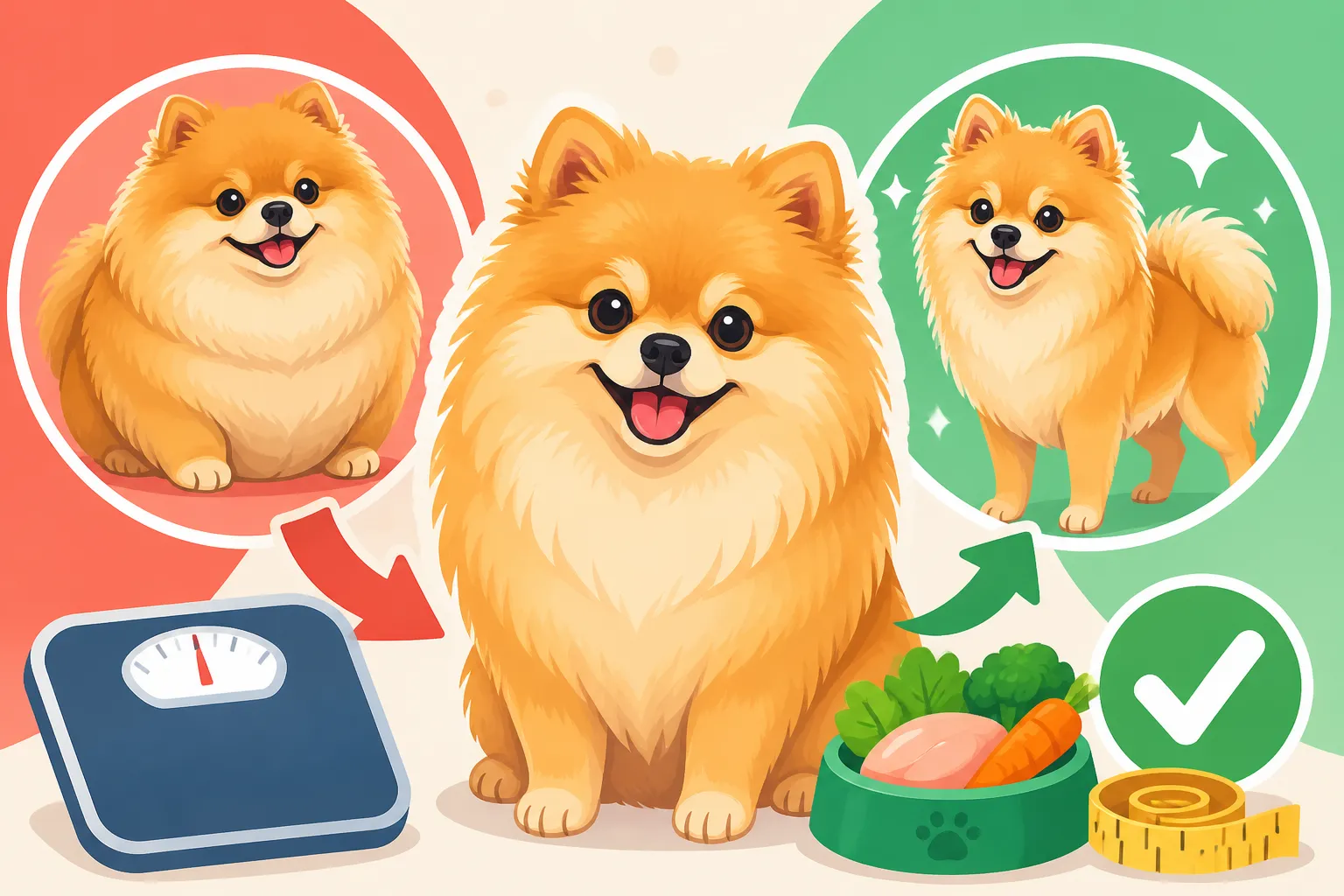
Forget what the scale tells you for a moment – while important, it doesn't always paint the full picture of body condition, especially since the "ideal" weight for a Pomeranian can vary a little based on their build. A much better tool is the "rib check" combined with a body condition score (BCS). This method helps you feel past the fluff and assess their actual body fat. To perform a rib check, gently run your hands along your Pomeranian's sides. You should be able to feel their ribs without pressing too hard, much like feeling the back of your hand. If you have to dig around to find them, or if you can't feel them at all, your Pom is likely overweight. If their ribs are sharply visible and easily felt with no padding, they might be underweight.
A veterinarian will often use a 5-point or 9-point body condition scoring system. A 5-point scale often looks like this:
| Score | Description | What You Feel/See |
|---|---|---|
| 1 | Emaciated | Ribs, spine, pelvic bones easily visible and felt; severe abdominal tuck. |
| 2 | Underweight | Ribs easily palpable and visible; abdominal tuck evident. |
| 3 | Ideal | Ribs palpable with slight fat cover; waist visible; abdominal tuck present. |
| 4 | Overweight | Ribs difficult to feel with moderate fat cover; waist barely discernible. |
| 5 | Obese | Ribs not palpable; no waist; distended abdomen. |
A healthy Pomeranian typically falls into the 'Ideal' category (3 out of 5, or 4-5 out of 9). You should also notice a visible waist when looking down at them from above, and a slight tuck-up in their abdomen when viewing them from the side. For a more detailed guide, check out Finding a Pomeranian's Ribs Through the Coat. This hands-on approach is far more reliable than just looking at them or their weight on a basic bathroom scale.
Why Your Scale Might Not Tell the Full Story
While it’s good to know your Pomeranian's weight, relying solely on a home scale can be misleading. Firstly, standard bathroom scales aren't typically calibrated for such small weights, so minor fluctuations might not be accurate. Secondly, a "healthy" weight range for a Pomeranian (typically The Three to Seven Pounds a Pomeranian Should Hold) is quite broad. A tall, fine-boned Pom might be perfectly healthy at 4 pounds, while a stockier Pom might be ideal at 6 pounds. It's about their individual body composition, not just a number.
Therefore, regular weigh-ins at the vet, where they have precise scales, are highly beneficial. Your vet can tell you if their weight is healthy for their specific build and can identify if that "half a pound" is truly a concern. They can also help rule out any underlying medical conditions that might contribute to weight gain, such as a sluggish thyroid. Don't be shy about asking your vet for their professional opinion on your Pom's body condition. They are your best resource for setting realistic and healthy weight goals.
Implementing a Safe and Gradual Weight Loss Plan
Once you've determined your Pomeranian needs to shed a few ounces, the key is to approach it gradually and consistently. Crash diets or sudden, drastic changes can be detrimental, especially for a small breed with delicate metabolic systems. Our goal here is slow and steady progress, making sustainable changes that lead to long-term health, not just quick fixes.
Adjusting Food Portions Without Causing Hunger Pangs
The most common culprit for weight gain in Pomeranians is simply too many calories. Often, owners unknowingly overfeed, not realizing How Little Food an Adult Pomeranian Needs. The feeding guidelines on commercial dog food bags are often geared towards more active dogs or are simply a general recommendation, which might be too much for your relatively sedentary indoor Pom. The first step is to accurately measure their food. Don't eyeball it; use a measuring cup. If you're currently feeding a quarter cup twice a day, try reducing it by about 10-15% (e.g., a tiny bit less than a quarter cup, or roughly 1/8th of a cup twice daily). You can also look into feeding calculators online that take into account their current weight, target weight, and activity level.
Consider the type of food as well. Some commercial kibbles, while convenient, are very calorie-dense. Switching to a high-quality, small-breed specific formula or even incorporating fresh food options can make a huge difference. Brands like Ollie offer pre-portioned fresh meals that can be an excellent way to control calories while ensuring nutritional balance. When exploring options on platforms like Chewy or Amazon, look for foods with lean protein as the primary ingredient and fewer fillers. Remember that every food change should be gradual to avoid stomach upset. For a more tailored approach, your vet can provide specific caloric recommendations. If your Pom seems constantly hungry, you can try adding a small amount of low-calorie, high-fiber vegetables like steamed green beans or pumpkin (not pie filling!) to their meals to help them feel fuller.
Smart Treat Choices and How to Offer Them
Treats are often where those extra calories sneak in. It's so easy to spoil our Poms with tiny morsels, but even small treats add up rapidly for a dog of their size. If your Pomeranian is used to getting many treats throughout the day, cutting them out entirely might make them feel deprived. Instead, focus on smarter choices and strategic timing. Firstly, understand How Few Treats a Pomeranian Can Actually Have before it impacts their diet.
Opt for very low-calorie options. Small pieces of lean cooked chicken or turkey breast, tiny bits of carrot, apple (seeds removed), or green beans can be excellent, healthy alternatives. You can also buy commercially prepared low-calorie training treats, often available from brands on Chewy or Amazon, but make sure they are genuinely small and low in calories. Break even these tiny treats into even smaller pieces; your Pom won't notice the difference if they're getting the reward. Instead of giving treats for no reason, use them for positive reinforcement during training sessions or to reward calm behavior. This makes the treat a useful tool, not just an empty calorie. Avoid table scraps entirely, as they are often high in fat, salt, and ingredients that can be harmful to dogs.
Increasing Activity Levels Gently
While diet is paramount, increased physical activity is the perfect partner for weight loss. For a Pomeranian, "increased activity" doesn't mean marathon runs or intense agility courses. It means consistent, gentle movement tailored to their size and potential health considerations like The Honking Cough of a Pomeranian's Collapsing Windpipe. The goal is to burn more calories and build lean muscle mass without overexerting them.
Start with slightly longer or more frequent walks. If you currently walk for 10 minutes, try increasing it to 15 minutes. If you walk once a day, add a second short walk. Use a well-fitting harness rather than a collar to protect their delicate trachea. Engaging in indoor play can also be highly effective. Interactive toys, gentle games of fetch down a hallway, or even just encouraging them to follow you around the house more can add up. Puzzle toys, available through retailers like Amazon, that dispense kibble can make mealtime a mentally stimulating, slightly more active event. For more ideas on how to keep your little one moving, check out Exercise a Pomeranian Needs to Stay Trim. The key is consistency and gradual progression – don't go from zero to sixty overnight.
Common Pitfalls and How to Avoid Them
When you’re trying to help your beloved Pomeranian lose weight, it’s natural to want to see results quickly. However, this desire can sometimes lead to mistakes that are not only ineffective but potentially harmful to such a small breed. Understanding these common pitfalls and how to steer clear of them is crucial for a safe and successful weight loss journey.
The Risks of Crash Dieting for Small Dogs
It might seem logical to drastically cut your Pomeranian's food intake to speed up weight loss, but this is a dangerous approach. Crash dieting can lead to serious health problems, especially in small dogs. For a tiny Pomeranian, a sudden and severe drop in calories can trigger hypoglycemia, or dangerously low blood sugar. Their small bodies have less glycogen (stored sugar) reserves compared to larger dogs, making them more vulnerable to sugar crashes if they don't get enough consistent nutrition. This is particularly concerning for puppies, but even adult Poms can be affected. Signs of hypoglycemia include lethargy, weakness, disorientation, and even seizures.
Moreover, extreme caloric restriction can deprive your Pomeranian of essential nutrients, leading to deficiencies that impact their coat health, immune system, and overall vitality. When a dog feels constantly starved, they might also become anxious or develop unhealthy eating habits, like resource guarding their food or trying to What a Pomeranian Steals Off a Coffee Table more frequently. The goal is a healthy, sustainable lifestyle change, not a temporary famine. Always aim for a gradual reduction of about 10-15% of their current caloric intake, and adjust slowly based on their progress and energy levels. Remember, patience is key.
Recognizing When to Seek Veterinary Guidance
While managing your Pomeranian's weight at home is a great start, there are times when professional veterinary guidance is absolutely essential. If you've been diligently following a reduced-calorie diet and increased exercise plan for several weeks or months, and your Pom isn't losing weight, or if they appear lethargic or unwell, it's time for a vet visit. There could be underlying medical conditions contributing to their weight gain or making weight loss difficult.
For instance, a dog with an undiagnosed thyroid condition might struggle to lose weight despite efforts, or a painful joint condition could be limiting their ability to exercise, leading to further weight gain. Your veterinarian can perform a thorough examination, including blood tests if necessary, to rule out any health issues. They can also offer precise dietary recommendations, sometimes even prescribing specific weight-loss formulas designed to provide satiety with fewer calories. They might also refer you to a veterinary nutritionist for a highly customized plan. Don't hesitate to reach out to your vet if you have any concerns or if your Pomeranian's weight loss journey hits a plateau. They are your best partner in ensuring your furry friend achieves and maintains a healthy weight safely.
Disclaimer
This article is for general informational purposes only and does not constitute professional advice. Laws, prices and regulations vary by location and change over time. Consult a qualified professional for guidance on your specific situation.