How Many Layers a Pomeranian’s Coat Has
As a Pomeranian owner, you've probably marveled at that magnificent fluff, wondering just what creates such a luxurious, buoyant coat. It's not just one layer of hair; many new owners are surprised to learn that their beloved Pom is actually sporting a sophisticated, multi-layered system designed for protection and warmth. This guide will take a deep dive into the unique structure of your Pomeranian's coat, explaining exactly how many layers it has and why understanding this is crucial for its health and grooming.
Understanding the Pomeranian's Double Coat: It's More Than Just Hair!
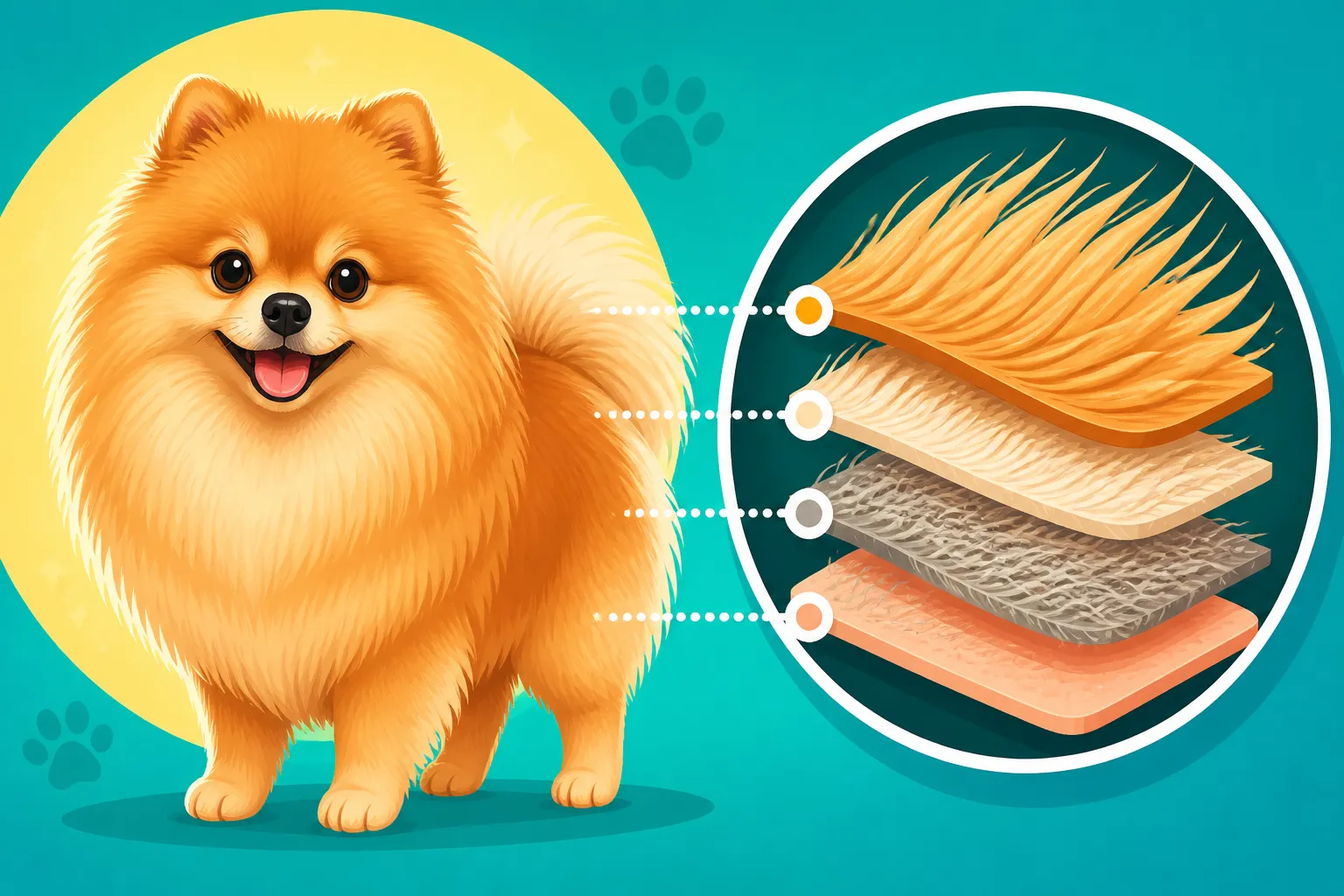
The defining characteristic of a Pomeranian's coat, and indeed, a hallmark of many Spitz breeds, is its double-layered structure. This isn't just a fancy term; it's a highly functional design that has roots in their ancestors who thrived in colder climates. Each layer serves a distinct purpose, working together to give the Pomeranian its iconic look and provide essential protection.
The Guard Hairs: Your Pomeranian's Weatherproof Outer Layer
Think of the guard hairs as your Pomeranian's natural raincoat and sun shield. These are the longer, coarser, and straighter hairs that form the outermost layer of the coat. They're typically quite stiff to the touch, especially compared to the fluff beneath them. The guard hairs are what give the Pomeranian its famous "stand-off" appearance, making the coat seem to float away from the body.
The primary function of these guard hairs is protection. They act as a barrier against the elements, shedding water, deflecting dirt and debris, and protecting the delicate skin underneath from harmful UV rays. Imagine your Pom romping through a dewy field; the guard hairs help keep the moisture from reaching the undercoat and skin. They're also remarkably resilient, helping to prevent tangles in the denser undercoat by creating a protective canopy. Without healthy guard hairs, your Pomeranian's coat would be much more prone to environmental damage and matting.
The Soft, Dense Undercoat: Insulation and Loft
Beneath that protective layer of guard hairs lies the true secret to the Pomeranian's luxurious volume: the undercoat. This layer consists of incredibly soft, fine, and dense hairs that are much shorter than the guard hairs. It feels almost like cotton or wool, and when you part the guard hairs, you'll see just how incredibly thick this undercoat can be. It's so dense that it can be a challenge to brush all the way down to the skin, which is why proper grooming techniques are so vital.
The undercoat's main job is insulation. In cold weather, it traps a layer of warm air close to the body, keeping your Pomeranian toasty. In warmer weather, it actually works in reverse, helping to insulate against the heat by preventing hot air from reaching the skin, as long as it's kept clean and free of mats, allowing for proper airflow. This is often misunderstood, with many people believing a double coat makes a dog hotter in summer, but a healthy double coat, when properly maintained, is a marvel of natural temperature regulation. This dense undercoat is also what provides the incredible volume and "poof" that Poms are so famous for, giving them that adorable teddy bear or lion-like silhouette.
Why This Double Coat Matters for Care and Health
Understanding the dual nature of your Pomeranian's coat isn't just an interesting fact; it's fundamental to providing the best care possible. The unique structure of the guard hairs and undercoat dictates everything from grooming routines to how you approach their health and comfort.
The Importance of Regular Grooming for Both Layers
Because a Pomeranian has two distinct layers, grooming requires a specific approach. You can't just skim a brush over the top; you need to reach both layers. Neglecting either layer can lead to significant problems.
If the dense undercoat isn't regularly brushed, it will quickly accumulate dead hair and shed fur, leading to mats and tangles right down to the skin. These mats are not only painful for your dog, pulling at their skin with every movement, but they also prevent proper air circulation. This can trap moisture, create hot spots, and become a breeding ground for bacteria or parasites. It essentially negates the protective benefits of the undercoat. Imagine trying to wear a tangled, matted sweater; it would be uncomfortable and ineffective. To prevent this, you'll need specialized tools like a good slicker brush and a metal comb. Brands like Amazon and Chewy offer a wide selection of these essential grooming tools, making it easy to find what you need. Focusing on techniques like line brushing, where you part the coat in sections and work your way through, ensures you reach all the way to the skin. You can learn more about this by checking out Working a Pomeranian's Coat in Sections to the Skin.
The guard hairs also need attention. While they are more robust, they can become dull, brittle, or tangled if not maintained. Brushing helps distribute natural skin oils, keeping the guard hairs healthy and shiny, allowing them to perform their protective functions effectively. It also removes loose hairs from both layers, reducing shedding around your home.
How the Double Coat Protects Your Pomeranian Year-Round
One of the biggest misconceptions about double-coated breeds is that they should be shaved down in the summer to keep them cool. This is almost always a detrimental practice for a Pomeranian. The double coat is an incredibly efficient temperature regulator.
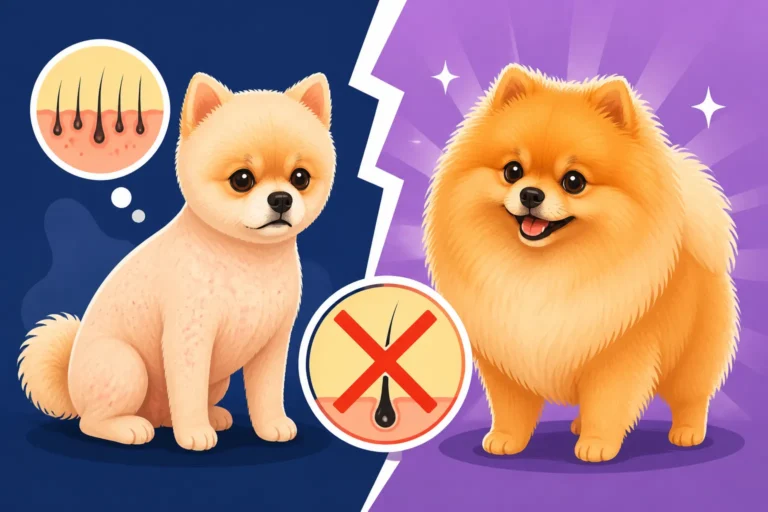
In winter, as we discussed, the dense undercoat provides exceptional insulation, trapping warm air and protecting your Pom from the cold. But in summer, it's equally important. The guard hairs reflect sunlight and act as a barrier against heat, preventing direct sun exposure to the skin. The undercoat, when healthy and free of mats, allows air to circulate, creating a cooling effect much like a thermos. Shaving off this protective layer exposes your Pomeranian's delicate skin to direct sunlight, leading to potential sunburn, overheating (because their natural insulation is gone), and a much higher risk of conditions like Black Skin Disease and the Pomeranian Coat That Never Returns, where the coat may not grow back properly, if at all. It's a sad frustration for many owners who shave with good intentions, only to see irreversible damage.
Instead of shaving, focus on keeping the coat clean, brushed, and free of mats to allow for optimal airflow. Provide plenty of fresh water and shaded areas. This natural coat is truly the best defense your Pomeranian has against both hot and cold extremes.
Common Misconceptions and Troubleshooting the Pomeranian Coat
Despite their distinctive appearance, many Pomeranian owners encounter situations where their dog's coat doesn't seem to fit the textbook description of a luxurious double coat. Understanding these variations and common issues is key to identifying potential problems and ensuring your Pom's coat health.
"My Pomeranian Only Has One Layer": Recognizing Coat Changes
Sometimes, new owners look at their puppy or even an older dog and wonder if they truly have a double coat, especially if it appears thinner or less dense than expected. There are several reasons why a Pomeranian's coat might seem to be lacking that characteristic double-layer fullness:
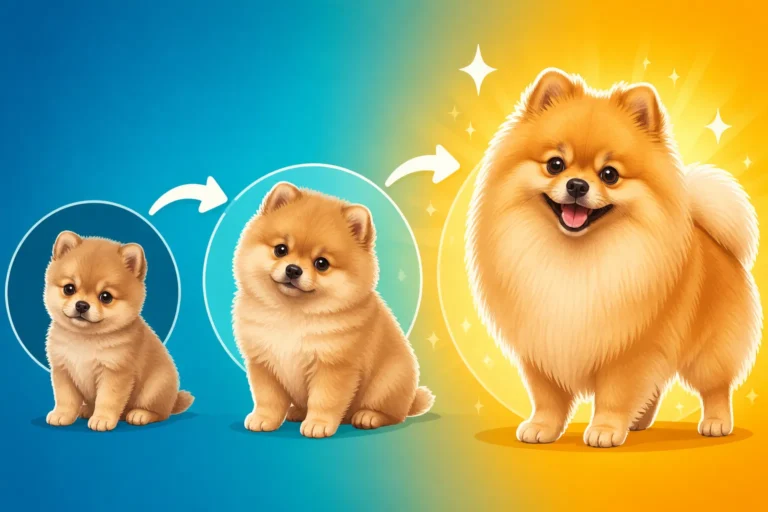
- The "Puppy Uglies": This is a completely normal, albeit sometimes alarming, phase many Pomeranian puppies go through between roughly 4 to 10 months of age. During this period, they shed their soft puppy coat and begin growing in their adult double coat. The process can look patchy, sparse, and, well, a little "ugly," leading owners to worry about their dog's coat quality. Rest assured, this is usually a temporary phase, and with time and proper nutrition, their magnificent adult coat will come in. You can read more about this transition in The Coat Blow and the Pomeranian Puppy Uglies.
- Genetics: Not all Pomeranians are bred equally. Some lines may naturally have a less dense undercoat or fewer guard hairs, resulting in a thinner overall coat. This is often the case with Poms from less reputable breeders.
- Age: As Pomeranians age, their coat can naturally thin, losing some of its density and luster. This is a normal part of the aging process, similar to how human hair thins. You might notice The Age a Pomeranian's Coat Starts to Thin.
- Health Issues: A dull, brittle, or thinning coat can also be a red flag for underlying health problems, such as hypothyroidism, Cushing's disease, or even severe allergies. If you notice a sudden or significant change in your Pom's coat quality, especially if accompanied by other symptoms like lethargy or skin irritation, it's always best to consult your veterinarian. Nutritional deficiencies can also play a role, making a high-quality diet crucial. Brands like Ollie focus on fresh, balanced nutrition which can contribute significantly to overall coat health.
- Previous Shaving or Damage: As mentioned, shaving a Pomeranian can severely damage the hair follicles, leading to "clipper alopecia" or post-clipping alopecia, where the coat either doesn't grow back at all or grows back patchy, dull, and lacking its original double-coat texture.
Shedding and Coat Blows: What to Expect
While no dog is truly "hypoallergenic," Pomeranians are certainly not low-shedders. Their double coat means they shed regularly, and twice a year, they experience what's known as a "coat blow." This is a period of intense shedding where they lose a significant amount of their undercoat to prepare for seasonal changes.
During a coat blow (typically in spring and fall, but can be influenced by indoor living conditions), you'll notice clumps of soft undercoat coming out with every brush stroke. This is a natural process, and while it can seem overwhelming, it's crucial to help your Pomeranian shed out this dead hair. Failing to do so can lead to massive matting and discomfort. The Weeks a Pomeranian Drops Its Undercoat can give you a better idea of what to expect during these periods. Regular, thorough brushing, sometimes daily, is your best defense. Investing in a good vacuum cleaner also becomes a priority during these times!
| Coat Layer | Characteristics | Primary Function | Grooming Needs | Risks if Neglected |
|---|---|---|---|---|
| Guard Hair | Longer, coarser, stiffer, outer layer, "stand-off" look | Protection from sun, water, dirt | Regular brushing to distribute oils, remove debris | Dullness, brittleness, reduced protection |
| Undercoat | Shorter, softer, dense, woolly, inner layer | Insulation (warmth/cooling), volume | Thorough brushing to prevent mats, remove dead hair | Matting, skin irritation, hot spots, improper temperature regulation |
Maintaining That Luxurious Pomeranian Coat
Achieving and maintaining that stunning, fluffy Pomeranian coat isn't just about good genes; it's a testament to consistent care, proper tools, and a healthy lifestyle. It truly is a labor of love, but the rewards are well worth it.
Essential Grooming Tools and Techniques
Regular grooming is non-negotiable for a Pomeranian. Aim for brushing at least 2-3 times a week, and daily during seasonal coat blows. Here's what you'll need and how to approach it:
- Slicker Brush: This is your primary tool for separating the undercoat and removing loose hair. Choose one with fine, bent wire bristles.
- Metal Comb: A good quality metal comb with both wide and fine teeth is essential for checking your work, getting into sensitive areas like behind the ears and armpits, and ensuring you've brushed all the way to the skin.
- Detangling Spray: A light detangling spray can help prevent static and make brushing easier, especially if you encounter small tangles. You can find these at pet stores or online at places like Chewy or Amazon.
Brushing Technique:
The key is to work in sections, layer by layer, starting from the bottom of your Pomeranian's body (like the legs or belly) and working your way up. Use a technique called "line brushing" or "pin brushing." Part the hair with your hand, exposing the skin, and then brush the hair down over your fingers, moving the brush in short, firm strokes. This ensures you are reaching both the guard hairs and the undercoat, removing dead hair from deep within. Pay extra attention to areas prone to matting, such as behind the ears, armpits, and the "britches" (the fluffy hair on their hindquarters). If you encounter a mat, gently try to work it out with your fingers and the wide-toothed comb, using detangling spray. Never pull harshly. If a mat is too tight, it's better to carefully cut it out with blunt-nosed scissors or seek professional help rather than cause pain.
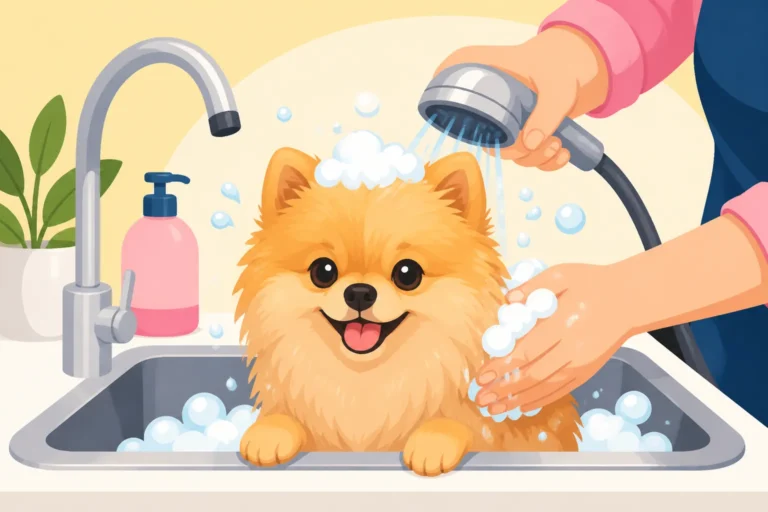
When it comes to bathing, remember that Pomeranians don't need frequent baths, as over-bathing can strip their natural oils. Typically, once every 3-4 weeks is sufficient, or as needed if they get particularly dirty. Always use a shampoo specifically designed for dogs and rinse thoroughly to prevent skin irritation. Proper drying is also crucial; blow-drying on a cool setting, while continuing to brush, helps to fluff out the coat and prevent matting as it dries. Never let a Pomeranian's double coat air dry entirely, as this can encourage matting. For more details on bathing, refer to How Rarely a Pomeranian's Coat Should Be Washed and Blow Drying a Pomeranian's Coat Out Straight.
Nutrition and Hydration for a Healthy Coat
While external grooming is vital, what goes inside your Pomeranian also profoundly impacts their coat health. A shiny, robust coat is often a reflection of excellent internal health.
- High-Quality Diet: Feed your Pomeranian a balanced, high-quality diet rich in protein and essential fatty acids. Look for dog foods where meat is the first ingredient, and avoid excessive fillers. Many owners find that fresh food diets, like those offered by Ollie, or premium kibbles purchased from Chewy, contribute to a healthier, more vibrant coat. Essential fatty acids, particularly Omega-3s and Omega-6s, are crucial for skin and coat health. These are often found in fish oils or certain plant-based supplements.
- Supplements: While a good diet should provide most nutrients, some Pomeranians can benefit from supplements tailored for skin and coat health. Fish oil (salmon, sardine, or anchovy oil) is a popular choice for its Omega-3 benefits, helping to reduce dryness and promote shine. Always consult your vet before adding any supplements to your dog's regimen.
- Hydration: Just like humans, dogs need plenty of fresh water to maintain healthy skin and hair. Ensure your Pomeranian always has access to clean, fresh water. Dehydration can lead to dry, brittle hair and flaky skin.
Remember, a healthy coat is a happy coat, and with consistent care and a good understanding of its unique double-layered structure, your Pomeranian will continue to sport that magnificent, fluffy appearance we all adore.
Disclaimer
This article is for general informational purposes only and does not constitute professional advice. Laws, prices and regulations vary by location and change over time. Consult a qualified professional for guidance on your specific situation.