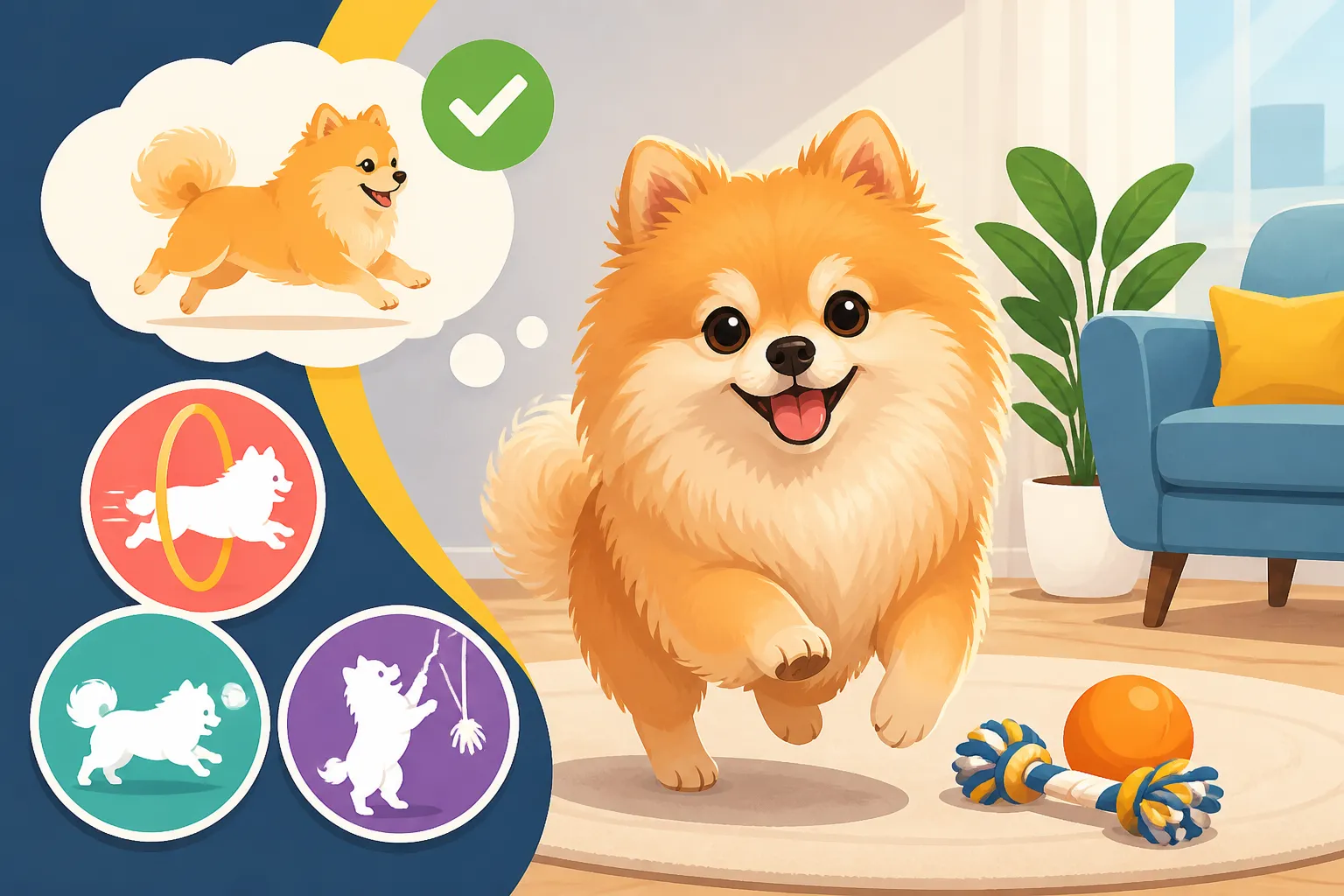
Whether a Pomeranian Gets Enough Exercise Indoors
It's a common dilemma for Pomeranian parents, especially those of us living in apartments or facing inclement weather: can our tiny, vivacious fluffballs truly get enough exercise confined to the great indoors? We worry about them getting bored, becoming destructive, or packing on extra pounds, and the guilt can be real when the weather outside is frightful. This guide is here to reassure you and equip you with practical, creative ways to ensure your Pomeranian thrives physically and mentally, even when all their activity has to happen within the four walls of your home.
The Unique Exercise Needs of a Pomeranian, Even Indoors
Many people look at a Pomeranian and assume that because they're small, they need very little exercise. While it's true they aren't built for marathons, dismissing their exercise needs entirely is a big mistake. Pomeranians are descendants of larger Spitz breeds, and that working dog energy, albeit miniaturized, is still very much present. They are intelligent, curious, and often have a surprising amount of stamina packed into their tiny frames.
Why Indoor Activity is Crucial for Pomeranians
Even if your Pomeranian isn't a fan of long walks in the rain or deep snow, their bodies and minds still crave movement and engagement. Think about it: a bored Pomeranian is often a destructive Pomeranian. They might start excessive barking at every tiny sound, chewing on furniture, or developing nervous habits like tail chasing. Regular physical activity, even if it's all inside, helps burn off that excess energy, keeps their muscles strong, and supports their overall health.
Beyond the physical benefits, indoor exercise is a huge boon for their mental well-being. Pomeranians are smart cookies, and they need mental stimulation as much as physical exertion. A game of hide-and-seek or learning new tricks engages their brain, preventing boredom and promoting a happier, more well-adjusted pup. Neglecting their exercise can lead to behavioral issues that are far more challenging to resolve than simply dedicating a bit of time each day to active play.
Balancing Physical and Mental Stimulation
For a Pomeranian, exercise isn't just about running around. It's a holistic approach that includes both physical exertion and mental challenges. Imagine spending an hour on a treadmill versus an hour solving complex puzzles. Both are taxing, but in different ways. Your Pomeranian needs both kinds of "workouts." Physical games like fetch or tug-of-war get their heart rate up and build muscle. Mental games, like nose work or trick training, tap into their natural problem-solving abilities and canine intelligence. It’s important not to overlook the mental component, especially when outdoor opportunities are limited. A tired mind can be just as important as a tired body for a well-behaved Pomeranian. We want them to feel accomplished, not just winded.
Creative Ways to Get Your Pomeranian Moving Indoors
When the weather outside is truly awful, or if you live in a multi-story building without easy yard access, you need a toolkit of indoor exercise ideas. Thankfully, Pomeranians, being so adaptable and eager to please (most of the time!), are perfect candidates for a variety of engaging indoor activities. Don't let their size fool you; they can pack a punch when it comes to playtime!
Structured Play Sessions and Training
Dedicate specific times each day for interactive play. This isn't just about tossing a toy aimlessly; it's about intentional engagement. Think about short, energetic bursts that mimic their natural instincts. A game of fetch down a long hallway or across the living room can be surprisingly effective. Use lightweight, soft toys that are easy for them to carry and won't damage your floors. Vary the toys to keep their interest piqued; a squeaky plush one minute, a crinkly ball the next.
Training sessions are also a fantastic form of exercise, particularly for their minds. Teaching new tricks like "spin," "weave," or "bow" requires focus and coordination, burning mental energy and building physical dexterity. Even reinforcing basic commands like "sit," "stay," and "come" in different rooms or with distractions can be an excellent mental workout. BAXTER & Bella, for example, offers online training programs that can guide you through fun, indoor-friendly exercises and trick training, which is a great way to structure these sessions. Aim for several short sessions throughout the day rather than one long, exhausting one. Remember, consistency is key to The Routine a Pomeranian Needs Every Day.
Engaging Their Natural Instincts with Scent Work
Pomeranians have an excellent sense of smell, and engaging this natural instinct is a wonderful way to provide mental and physical exercise indoors. Scent work, or "nose work," can be as simple or complex as you like. Start by hiding small, high-value treats in easy-to-find spots around a single room. Let your Pomeranian watch you hide them initially, then release them with a "find it!" command. As they get better, gradually make the hiding spots more challenging – under a blanket, behind a curtain, or tucked into a puzzle toy.
You can also use their regular kibble for this! Scatter a portion of their meal across a snuffle mat, which you can find readily on Amazon, or simply across a clean floor, forcing them to sniff out each piece. This slows down their eating and turns mealtime into a stimulating activity. This kind of "work" can be surprisingly tiring for them, satisfying their innate drive to hunt and forage. For more advanced fun, you can even teach them to find specific toys by name.
Utilizing Household Items and Furniture Safely
Your home environment itself can be a playground. Think vertically! Pomeranians are agile and love to be up high. Providing pet steps or ramps can give them safe access to sofas or beds, allowing them to expend energy by climbing up and down. Make sure these are sturdy and properly sized; you can find excellent options on Amazon. Sofa Steps a Pomeranian Will Actually Use are not just about safety; they're about giving them mini-adventures.
Create a mini-agility course using household items. Weave cones can be improvised with plastic bottles, jumps can be made from broomsticks balanced on books, and tunnels can be fashioned from cardboard boxes taped together. Always supervise these activities closely to prevent injury, especially to their delicate knees. Remember their windpipe is also quite fragile, so keep things low-impact and avoid anything that encourages vigorous pulling or straining against a collar. When exercising, consider Harnesses Fitted for a Pomeranian's Windpipe instead of collars for safety.
Here’s a quick overview of some engaging indoor activities:
| Activity Type | Engagement Level | Physical Exertion | Mental Stimulation | Recommended Gear (Examples) |
|---|---|---|---|---|
| Fetch/Chase Games | High | High | Medium | Soft toys, lightweight balls |
| Tug-of-War | High | Medium | Medium | Durable tug toy |
| Scent Games | Medium | Low-Medium | High | Snuffle mat, small treats, empty boxes |
| Trick Training | High | Medium | High | Training treats, clicker (optional) |
| Indoor Agility | High | High | Medium | Pet steps/ramps, improvised jumps |
| Puzzle Toys | Low-Medium | Low | High | Treat-dispensing toys |
Overcoming Common Indoor Exercise Challenges
Even with the best intentions and a trove of ideas, exercising a Pomeranian exclusively indoors can present its own set of unique hurdles. It's not always as simple as tossing a toy and watching them go. Understanding these challenges and having strategies to overcome them will make your life, and your Pomeranian's, much easier and more fulfilling.
Small Living Spaces and Apartments
Living in a cozy apartment often means limited floor space, which can feel like a major constraint. However, it doesn't have to be. The key is to be strategic and creative with the space you do have. Instead of thinking about grand sprints, focus on short bursts of activity and utilizing vertical space. Can you clear a narrow hallway for a quick game of fetch? Can you use pet steps to let them climb onto a window perch, allowing them to survey their kingdom and engage their curiosity? Even a small area can be transformed into an engaging play zone by rotating toys and adding elements like a small tunnel or a designated "sniffing zone" with hidden treats.
Remember, Games That Tire a Pomeranian Indoors don't require acres of land. Mental games and trick training are perfect for small spaces because they burn significant energy without needing a lot of room. Consider what your Pomeranian loves most – is it chasing? Tug? Sniffing? Tailor the activities to their preferences within your spatial limits. Even small movements, when consistent, add up throughout the day.
Preventing Boredom and Keeping Things Fresh
Pomeranians are intelligent and can quickly get bored with repetitive routines. This is where variety becomes your best friend. Don't stick to the same three games every single day. Rotate their toys, introduce new puzzle toys, and teach them new tricks regularly. Think of it like a kid with a toy box – they get bored if they only have one toy, but if you put some away and bring them out later, they're like new again! A selection of Puzzle Toys Small Enough for a Pomeranian can be a lifesaver here.
Incorporate different types of stimulation. One day might be heavy on scent work, the next on trick training, and another on energetic fetch. Even changing the location of play within your home can make a difference. Play fetch in the living room one day, and then the kitchen the next. Inviting a well-matched, small, vaccinated dog friend over for a supervised playdate (if your Pomeranian is social and enjoys canine company) can also inject novelty and excitement into their routine. This helps to prevent them from developing undesirable habits born of boredom, such as destructive chewing or excessive barking, which can quickly lead to What a Bored Pomeranian Chews Up.
Managing Over-Excitement and Calming Down
Pomeranians can be bundles of energy, and sometimes their excitement can get the better of them. It's important to teach them how to calm down after a play session. If they're constantly revved up, it can lead to stress and make it harder for them to relax. Incorporate calming activities into your routine. After an energetic play session, transition to something quieter like a chew toy, a puzzle feeder, or a gentle massage.
Practice relaxation protocols. This involves rewarding them for being calm and settling down. For example, if they lie down quietly on their bed, offer a small treat or soft praise. Over time, they'll learn that calm behavior also gets positive attention. Avoid inadvertently rewarding frantic energy with continued play or attention. Structure is key; a good training program, like those offered by BAXTER & Bella, emphasizes not just teaching commands but also encouraging a balanced temperament, which includes learning to "settle" or "place." This helps Building a Pomeranian's Independence and self-control, crucial skills for an indoor dog.
Making Indoor Exercise a Daily Habit
Establishing a consistent routine is paramount for ensuring your Pomeranian consistently receives enough indoor exercise. It’s not just about getting them moving; it's about building healthy habits that support their physical and mental well-being over their entire lifespan. Without a routine, it’s easy for exercise to fall by the wayside, leading to a bored, restless, or even destructive Pom.
Structuring Your Pomeranian's Day
Just like us, dogs thrive on predictability. Try to schedule short, engaging exercise sessions throughout the day. Instead of one long, arduous workout, aim for 2-3 shorter bursts of activity. For example, a 10-15 minute fetch session in the morning, another 10-15 minutes of trick training or scent work in the afternoon, and a final gentle play or puzzle toy session in the evening. This breaks up their day, keeps their interest, and prevents them from becoming overtired during any single session.
Think about integrating exercise into existing routines. While you're making coffee, hide a few treats for a quick "find it" game. During commercial breaks of your favorite show, do a quick round of "sit, stay, come" with some high-value rewards. This way, exercise doesn't feel like a separate chore, but rather a natural part of your shared day. Consistency also helps with other training aspects, as a dog that knows what to expect is generally more settled and less anxious. For instance, knowing when playtimes are helps them settle during quiet times.
The Role of Interactive Toys and Puzzle Feeders
Interactive toys are invaluable tools for indoor exercise, especially when you can't be actively engaging with your Pomeranian every single minute. These aren't just toys; they're problem-solving challenges that tap into their natural instincts. Treat-dispensing toys, snuffle mats, and various puzzle toys can keep your Pomeranian mentally engaged for significant periods. Many excellent options are available on Amazon, designed specifically for small breeds.
Remember to rotate these toys to prevent boredom. A toy that was exciting last week might be ignored if it's left out constantly. Introduce new challenges by varying the type of puzzle or the difficulty level. These toys not only provide mental stimulation but can also slow down meal times, which is beneficial for digestion and can prevent them from gobbling their food too quickly. They encourage independent play, which is crucial for building a well-rounded dog that isn't solely reliant on human entertainment.
Monitoring Your Pomeranian's Energy Levels
Every Pomeranian is an individual. Some are little pocket rockets with endless energy, while others are content with shorter, gentler play. It's essential to observe your specific dog and tailor their exercise routine accordingly. Look for signs that they're getting enough (or too much) exercise. Are they resting calmly between sessions? Are they sleeping soundly at night? Are they exhibiting destructive behaviors or excessive barking, which might indicate unmet energy needs?
Conversely, watch for signs of over-exertion, such as excessive panting, lagging behind, or reluctance to play. Given their delicate structure, it's particularly important not to push them too hard. Short, frequent bursts of activity are generally better than one long, intense session. Adjust your routine based on their age, health, and individual temperament. A young, healthy Pomeranian will likely need more vigorous play than a senior dog or one managing The Honking Cough of a Pomeranian's Collapsing Windpipe or Slipping Kneecaps in a Five Pound Pomeranian. Listening to your dog is the most important part of making indoor exercise a truly successful daily habit.
Disclaimer
This article is for general informational purposes only and does not constitute professional advice. Laws, prices and regulations vary by location and change over time. Consult a qualified professional for guidance on your specific situation.