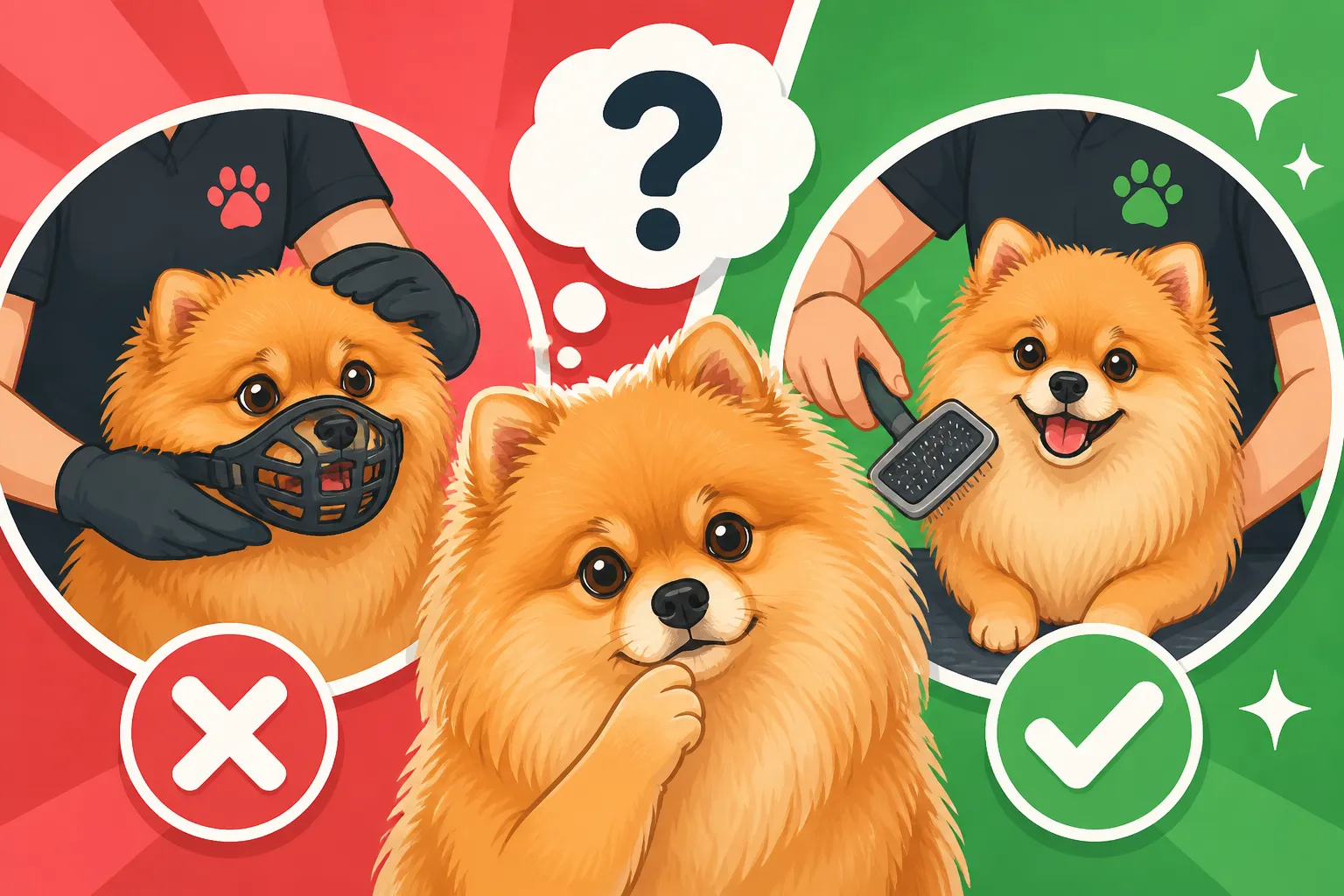
Whether a Pomeranian Should Be Muzzled at the Groomer
It's a heartbreaking situation many Pomeranian owners find themselves in: your fluffy companion, usually so sweet and loving, transforms into a snarling, snapping ball of fur the moment they set foot in the grooming salon. You feel terrible, the groomer looks stressed, and the thought might even cross your mind, "Do they need a muzzle?" This guide will explore the complex reasons why a Pomeranian might react this way at the groomer and help you understand when a muzzle might be considered, as well as crucial alternatives and preventative measures.
Understanding Why a Pomeranian Might Need a Muzzle
It’s never a simple matter of a dog being "bad." When a Pomeranian acts out during grooming, there's always an underlying reason. Often, it's a mix of fear, discomfort, or past negative experiences that have created this stressful scenario for both your pup and the groomer.
Fear, Anxiety, and Stress at the Groomer
Imagine being a tiny Pomeranian, suddenly placed on a high table, surrounded by strange smells, loud dryers, the whirring of clippers, and unfamiliar hands touching every part of your body. It's a lot! For many Poms, this environment is inherently terrifying. They don't understand that the groomer is trying to make them look and feel good; they only perceive threats. The loud noises can be startling, the vibrations of electric clippers can be unsettling, and being held firmly can feel like being trapped. This isn't stubbornness; it's a primal fear response.
Even the gentlest groomer can trigger anxiety if the dog isn't properly introduced to the process. Think about a sudden spray of water, a brush pulling at a tiny tangle, or the sudden lifting of a paw for nail trimming. These actions, if not done with extreme care and positive reinforcement, can quickly lead a sensitive Pomeranian to believe they need to defend themselves. This fear can escalate into growling, snapping, or even biting, not out of malice, but out of pure panic and a desperate attempt to make the scary thing stop.
Pain or Discomfort
Sometimes, what looks like aggression is actually a cry for help. Pomeranians, with their dense double coats, are prone to matting, especially behind the ears, under the legs, and in their "britches." Trying to brush out or clip through a painful mat can understandably cause a dog to lash out. Imagine someone pulling on tangled hair near your skin – it hurts! For a small dog, this pain can be intense and immediate. If your Pomeranian has an underlying medical condition, like arthritis, a Slipping Kneecaps in a Five Pound Pomeranian, or even a sensitive back, being positioned or handled in certain ways during grooming can cause sharp pain, leading to a defensive reaction.
Older Pomeranians, in particular, might have hidden aches and pains that make standing for long periods or having their joints manipulated very uncomfortable. A groomer might unknowingly cause pain when lifting a leg to trim nails or drying the dog in a specific posture. It's crucial for owners to consider any potential physical issues their dog might be experiencing. A quick vet check before a grooming appointment, especially if there's new aggression, can rule out medical causes for their distress. Sometimes, simply knowing about a sensitive spot can allow the groomer to adjust their approach and make the experience less painful.
Learned Behavior and Poor Socialization
Dogs are creatures of habit, and they learn quickly what behaviors get a reaction. If a Pomeranian discovers that growling or snapping makes the groomer back off, it reinforces that behavior. They've effectively trained the human to stop the uncomfortable procedure. This can happen innocently: perhaps the first few grooming sessions were genuinely scary, and the dog’s defensive actions worked to end the session sooner. Over time, this becomes a learned response, even if the subsequent groomers are gentler.
Lack of proper socialization and exposure to handling from a young age also plays a huge role. If a Pomeranian puppy isn't routinely handled, brushed, touched on their paws, and desensitized to various sounds and sensations, they're much more likely to struggle at the groomer. It's not just about meeting other dogs; it's about building a positive association with being touched and manipulated by people other than their immediate family. Early and consistent positive experiences with grooming at home, even if just for a few minutes daily, can prevent many of these issues down the line. A Pomeranian That Screams During Brushing is often a symptom of not enough early positive exposure.
When a Muzzle Becomes a Consideration
No one wants to muzzle their beloved Pomeranian. It feels harsh, restrictive, and can even be upsetting for the owner. However, in certain specific circumstances, a muzzle can be a necessary tool to ensure the safety of everyone involved.
Prioritizing Safety for All
The primary reason a muzzle might be considered is safety. A groomer's job involves sharp tools, slippery surfaces, and often, delicate procedures. If a Pomeranian is snapping, biting, or thrashing uncontrollably, there's a serious risk of injury – not just to the groomer, but also to the dog itself. Imagine a tiny Pom biting down on a groomer's hand while they're holding sharp clippers near a sensitive area. The dog could inadvertently be cut, or the groomer could be severely injured.
A responsible groomer will always prioritize safety. They have a duty of care to their staff and to all the animals in their charge. If a dog's behavior poses an immediate risk, a muzzle can provide a temporary, humane solution to complete essential grooming tasks, like removing dangerous mats or trimming nails that are causing pain. It’s not meant as a punishment, but as a safety measure. Open and honest communication with your groomer about your dog's behavior is vital. They need to know what they're walking into, and you need to trust their judgment if they suggest a muzzle for a portion of the groom.
Types of Muzzles and Their Appropriate Use
It’s important to understand that not all muzzles are created equal. For grooming, the most commonly used and recommended type for a Pomeranian is a basket muzzle. These muzzles allow the dog to pant, drink water, and even take treats, which is crucial for comfort and reducing stress. They prevent biting without clamping the dog's mouth shut entirely. You can find various sizes and materials, often available online, for example, on Amazon. It's important to measure your dog's snout correctly to ensure a proper, comfortable fit.
Fabric muzzles, often called "grooming muzzles" or "soft muzzles," are generally not recommended for anything more than a very brief, specific procedure (like a quick nail trim on a dog that might nip once). These muzzles hold the dog's mouth shut, preventing them from panting effectively, which can lead to overheating, especially in a double-coated breed like a Pomeranian. They are also highly stressful as the dog cannot naturally cool itself or react to the environment. If a groomer suggests a fabric muzzle, it's a good idea to discuss alternatives or ask about a basket muzzle instead, especially if the grooming session will be more than a few minutes.
The Risks of Improper Muzzling
While a muzzle can be a safety tool, it's not without its risks, especially if used improperly. An ill-fitting muzzle can chafe, rub, and cause pain or injury to your Pomeranian's delicate snout. A muzzle that's too tight can restrict breathing, particularly dangerous for a small dog that may already be stressed or prone to The Honking Cough of a Pomeranian's Collapsing Windpipe. Leaving a dog muzzled for too long, especially with a fabric muzzle, can lead to overheating, as dogs primarily cool themselves through panting.
Furthermore, muzzling a dog without addressing the underlying cause of their aggression can actually worsen their fear and anxiety. If the muzzle is simply applied without any counter-conditioning or attempts to make the grooming experience more positive, the dog learns to associate the muzzle itself with the terrifying grooming process. This can create a stronger negative association and make future grooming sessions even more challenging. A muzzle should ideally be a temporary measure, used in conjunction with a plan to desensitize and train the Pomeranian to tolerate grooming without such restraint.
Alternatives and Proactive Training to Avoid Muzzling
The goal should always be to get your Pomeranian to a point where a muzzle isn't necessary. This requires patience, consistency, and often, a change in approach from both the owner and the groomer.
Desensitization and Counter-Conditioning at Home
The best defense against a fearful Pomeranian at the groomer is a good offense at home. Start early, even with a puppy. Begin by simply touching your Pomeranian all over their body – paws, ears, tail, mouth – rewarding them with high-value treats and praise for tolerance. Make it a positive experience every single time. Gradually introduce grooming tools: the soft brush, the nail clippers, the sound of the hairdryer from a distance. Pair each exposure with treats. This process, called desensitization and counter-conditioning, changes your dog's emotional response from fear to anticipation of good things.
For instance, hold the nail clippers, give a treat. Touch their paw, give a treat. Lightly touch a nail, give a treat. This slow, deliberate process builds trust and positive associations. If your Pom is already reactive, go even slower, starting with just having the tools visible and rewarding calm behavior. Resources like online training programs, such as those from BAXTER & Bella, can provide structured guidance for teaching your dog to accept handling and grooming tools, breaking down the process into manageable steps. Remember, consistency is key – short, frequent sessions are more effective than long, infrequent ones. Teaching a Pomeranian to Accept Nail Trims takes time and patience.
Finding the Right Groomer
Not all groomers are created equal, and finding the right one for a fearful Pomeranian is paramount. Look for groomers who specialize in working with anxious or reactive dogs, or who explicitly state they use positive reinforcement methods. Ask about their approach to fearful dogs: Do they offer "happy visits" where your dog can just come in, get treats, and leave without any actual grooming? Do they work slowly, taking breaks when needed? Do they have quiet areas away from the main grooming floor?
A good groomer will prioritize your dog's emotional well-being over getting a perfect haircut done quickly. They should be willing to communicate with you openly about your dog's behavior and discuss strategies. A groomer who rushes or punishes a fearful dog will only escalate the problem. Don't be afraid to try a few different groomers to find one who connects with your Pomeranian and makes them feel safe. The investment in a skilled, patient groomer is well worth it for your dog's long-term comfort and cooperation. Even if The 60 to 90 Dollar Pomeranian Grooming Appointment seems steep, the right groomer is invaluable.
Regular Home Grooming as Prevention
Consistent grooming at home is perhaps the most effective preventative measure. Pomeranians have magnificent, dense double coats that require regular attention. Working a Pomeranian's Coat in Sections to the Skin is vital to prevent mats from forming. When mats develop, they pull on the skin, causing pain and making professional grooming sessions much more difficult and potentially traumatic. Daily brushing, even for just five to ten minutes, can make a huge difference.
Beyond just preventing mats, regular home grooming familiarizes your Pomeranian with being handled, touched, and brushed. It reinforces the positive associations you've built through desensitization. It also means that when your Pom goes to the professional groomer, they'll likely only need a trim, bath, and tidy-up, rather than a full de-matting session. This makes the professional visit much shorter, less stressful, and more pleasant for everyone. Make sure you have the right tools, like a good slicker brush and a metal comb, which you can easily find on Amazon, to tackle that fluffy coat. Keeping up with Sanitary Trims Between Pomeranian Appointments also helps.
Working with Your Groomer and Vet
When facing grooming challenges with your Pomeranian, a team approach involving you, your groomer, and your veterinarian is often the most successful strategy.
Open Communication and Transparency
The most important thing you can do as an owner is to be completely honest with your groomer about your Pomeranian's history and behavior. Don't minimize their anxiety or aggression; explain what triggers it, what they've reacted to in the past, and what methods you've tried. A good groomer would much rather know upfront so they can prepare and adjust their approach. Similarly, if your groomer recommends a muzzle or reports difficult behavior, listen to their feedback without becoming defensive. They are observing your dog in a different environment and their insights are valuable.
Discuss specific concerns: "Fluffy gets really stressed when his nails are done, can we focus on positive reinforcement for that?" or "He has sensitive skin under his ears, please be extra gentle there." A collaborative relationship built on trust and open dialogue will lead to the best outcomes for your Pomeranian. If your dog has bitten in the past, inform the groomer. This allows them to take necessary precautions for their safety, and your dog's, and decide if they are equipped to handle such a situation.
Veterinary Consultation for Underlying Issues
If your Pomeranian's fear or aggression at the groomer is new, sudden, or particularly intense, a visit to your veterinarian should be your first step. As discussed earlier, pain or an underlying medical condition can be the root cause of behavioral changes. Your vet can conduct a thorough physical exam to rule out conditions such as hidden injuries, dental pain, ear infections, skin irritations, or arthritis. For example, a Pomeranian with Dental Disease in a Mouth the Size of a Pomeranian's might snap when their face is touched.
In some cases, if anxiety is severe, your vet might even recommend mild anti-anxiety medication or supplements to be given before grooming appointments. These aren't meant as a long-term fix but can help take the edge off for extremely fearful dogs, allowing them to be more receptive to positive reinforcement during the grooming process. This creates a window of opportunity for training without overwhelming the dog. Always consult your vet before administering any medication. A pre-anesthetic bloodwork might also be discussed if sedation is considered for severe cases, especially for a small dog.
Here's a quick comparison of situations and potential solutions:
| Situation | Potential Cause | Grooming Approach Considerations | Muzzle Consideration |
|---|---|---|---|
| Growling/Snapping at Clippers | Fear of sound/vibration, previous bad experience | Slow introduction to clippers, positive reinforcement, breaks | Temporary (if necessary for safety) |
| Biting During Nail Trims | Pain, fear of restraint, sensitive paws | Desensitization, special clippers, gentle handling, vet check for pain | Temporary (if necessary for safety) |
| Thrashing During Bath | Fear of water, slippery tub, feeling trapped | Non-slip mat, warm water, calm voice, positive association with bath | Rarely (if extreme risk of injury) |
| Aggression When Brushed | Mats pulling skin, sensitive skin, dislike of specific brush | Detangler, correct brush, work in sections, vet check, short sessions | Not typically, address mats first |
| Sudden New Aggression at Groomer | Undiagnosed pain, health issue, new fear trigger | Immediate vet check, gentle handling, identify trigger | Possible, with vet guidance |
| Constant Barking/Whining in Grooming Salon | Anxiety, overstimulation, separation anxiety | Quiet area, comfort items, "happy visits," counter-conditioning | No (behavioral, not safety) |
This article is for general informational purposes only and does not constitute professional advice. Laws, prices and regulations vary by location and change over time. Consult a qualified professional for guidance on your specific situation.