Getting a Pomeranian to Give Up a Paw
It can be incredibly endearing when you see a tiny Pomeranian offer a polite paw, but sometimes teaching this trick feels like an uphill battle. You might be struggling with a Pom who just doesn't seem to get it, or perhaps one who bats at your hand rather than gently offering their foot. This guide will walk you through clear, compassionate steps to teach your Pomeranian how to confidently and politely "give paw," turning a tricky training moment into a rewarding bonding experience.
Understanding the Pomeranian Mindset for Tricks
Before we even get to the mechanics of lifting a paw, it's crucial to understand the unique personality and heritage of our beloved Pomeranians. They're intelligent little dogs, but they also come from a lineage of Spitz breeds, which means they can sometimes have an independent streak that makes certain training efforts feel like a negotiation rather than a simple command.
Their Spitz Heritage and What It Means for Training
Pomeranians, despite their fluffy, toy-like appearance today, descend from much larger, hard-working Spitz dogs. These ancestors, like the German Spitz and even sled dogs, were valued for their intelligence, alertness, and self-reliance. While selective breeding has dramatically reduced their size over centuries, that inherent Spitz "brain" often remains. This means your Pomeranian isn't necessarily dense; they're often quite smart, but they might also be thinking, "What's in it for me?" or "Do I really want to do that right now?"
This independent spirit can manifest as a slight stubbornness or a selective hearing issue when it comes to training. They might pick up on things quickly if they find them rewarding, but if a trick feels tedious or uninteresting, they might just decide it's not worth their effort. This is why positive reinforcement and making training fun and engaging is absolutely paramount. You're not just asking them to perform; you're inviting them to participate in a game where they win by cooperating. Understanding Whether Spitz Independence Makes a Pomeranian Difficult can really help set appropriate expectations for your training journey.
Motivation Matters Most for Your Pint-Sized Partner
For a Pomeranian, motivation isn't just a bonus; it's the engine of learning. Unlike some breeds that live to please, a Pom often needs a clear, compelling reason to engage in a task. This means finding what truly makes your individual Pomeranian tick. Is it a high-value, pea-sized piece of cooked chicken? A tiny dab of peanut butter on your finger? Their absolute favorite squeaky toy? Or perhaps it's your excited praise and a good ear scratch?
You'll quickly learn that generic kibble might not cut it when trying to teach something new and potentially a bit awkward like "give paw." Experiment with different rewards to see what gets the quickest and most enthusiastic response. Keep the treats tiny – remember, a Pomeranian's stomach is small, and you don't want to fill them up or cause digestive upset during a training session. Consistency in using these motivators will cement the idea in their mind that performing the trick leads to wonderful things. The Reward a Pomeranian Actually Cares About is something every Pom owner needs to figure out for successful training.
Building the Foundation: Essential Pre-requisites
Before you even think about luring a paw, there are some fundamental steps and attitudes that will make the entire training process smoother and more enjoyable for both you and your Pomeranian. Rushing these foundational elements can lead to frustration and make your Pom resistant to learning.
The Power of Positive Reinforcement
Positive reinforcement is not just a training method; it's a philosophy, especially when working with small, sensitive breeds like Pomeranians. It's all about rewarding desired behaviors to increase the likelihood they'll happen again. This means no scolding, no force, and certainly no punishment if they don't get it right away. Instead, you're looking for tiny steps in the right direction and celebrating them enthusiastically.
When your Pomeranian even thinks about offering their paw, or makes a small movement towards it, that's your cue to praise and reward. This builds confidence and trust, making your Pom eager to try again. They learn that engaging with you in this way is a fun, safe, and rewarding experience. Think of it as building a positive association with the entire act of training, rather than just with the trick itself. This approach helps prevent your Pomeranian from becoming wary or shutting down when you try to teach new things.
Gentle Handling Practice: The Key to Comfort
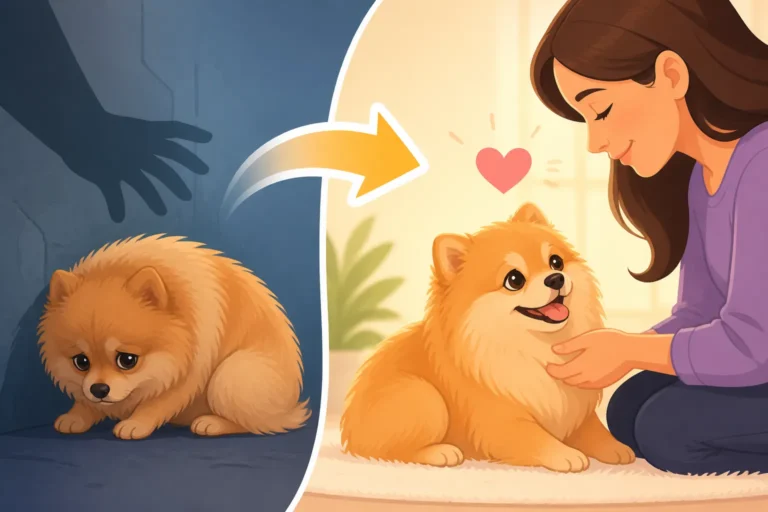
One of the biggest hurdles for "give paw" is that many Pomeranians aren't naturally comfortable with their feet being handled. This can stem from a lack of early desensitization, or even a past negative experience like a quick nail trim gone wrong. Before you start asking for a paw, spend some time simply getting your Pom used to having their feet touched in a positive way.
Start by gently stroking their legs, moving down towards their paws. Do this during calm moments, like when they're relaxing next to you. As you stroke, give soft praise and maybe a tiny, unexpected treat. Don't grab or hold; just touch and release. Gradually, you can try briefly touching a paw pad. If your Pom pulls away, stop, but don't make a big deal of it. Just try again later for an even briefer touch. The goal is to make paw handling feel neutral, then positive. This preparation is also vital for general grooming, like Teaching a Pomeranian to Accept Nail Trims or Trimming the Fur Between a Pomeranian's Toes, and crucial for vet visits where their feet might need examination. Many puppies learn basic handling through programs like BAXTER & Bella, which emphasize gradual, positive exposure.
Step-by-Step Guide to "Give Paw"
Now that we understand our Pomeranian's motivations and have laid the groundwork with positive handling, it's time to dive into the actual training. Remember to keep sessions short, positive, and end on a high note, even if it's just for a small success.
Luring with a Treat to Initiate the Lift
The easiest way to start teaching "give paw" is through luring. You'll need some high-value, tiny treats that your Pomeranian absolutely adores.
- Get their attention: Have your Pomeranian sit in front of you. Hold a treat in your closed fist.
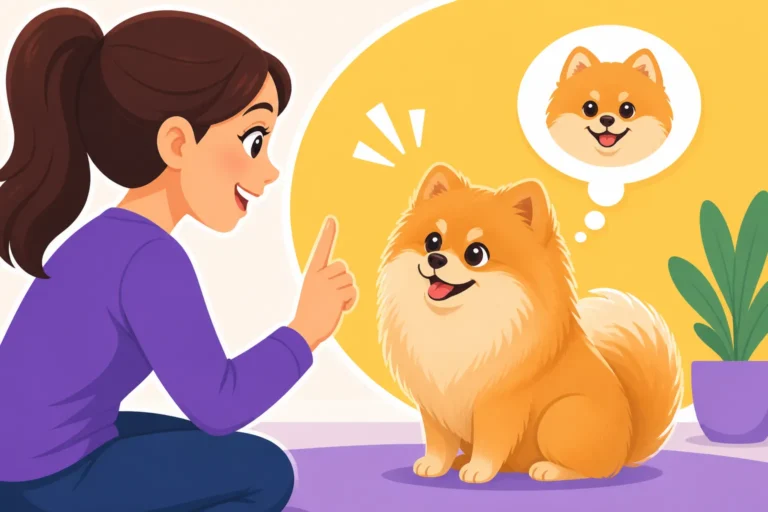
- Lure the lift: Present your closed fist, with the treat inside, towards the ground, slightly under and to the side of one of your Pomeranian's paws. Most dogs will try to paw at your hand to get the treat out. The moment their paw lifts, even slightly, open your hand, say "yes!" or click (if you're using a clicker), and immediately give them the treat.
- Repeat and refine: Do this a few times, always rewarding the moment the paw lifts. Don't worry about the verbal cue "paw" yet, or even getting them to place it in your hand. You're just teaching them that lifting a paw when your hand is in that position leads to a treat. If your Pom tries to nose your hand instead of pawing, reposition your hand slightly further away or closer, observing what encourages the paw lift. You might find a spot slightly behind their wrist works best. Remember, small increments are key.
Adding the Verbal Cue and Hand Target
Once your Pomeranian is consistently lifting a paw when you present your closed hand, it's time to introduce the verbal cue and teach them to place their paw in your open hand.
- Introduce the cue: As your Pomeranian is about to lift their paw (you'll start to anticipate this), say "Paw!" (or "Shake," "Hand," whatever cue you prefer). Immediately follow with your hand lure. The moment the paw lifts and you say "yes!"/click, reward.
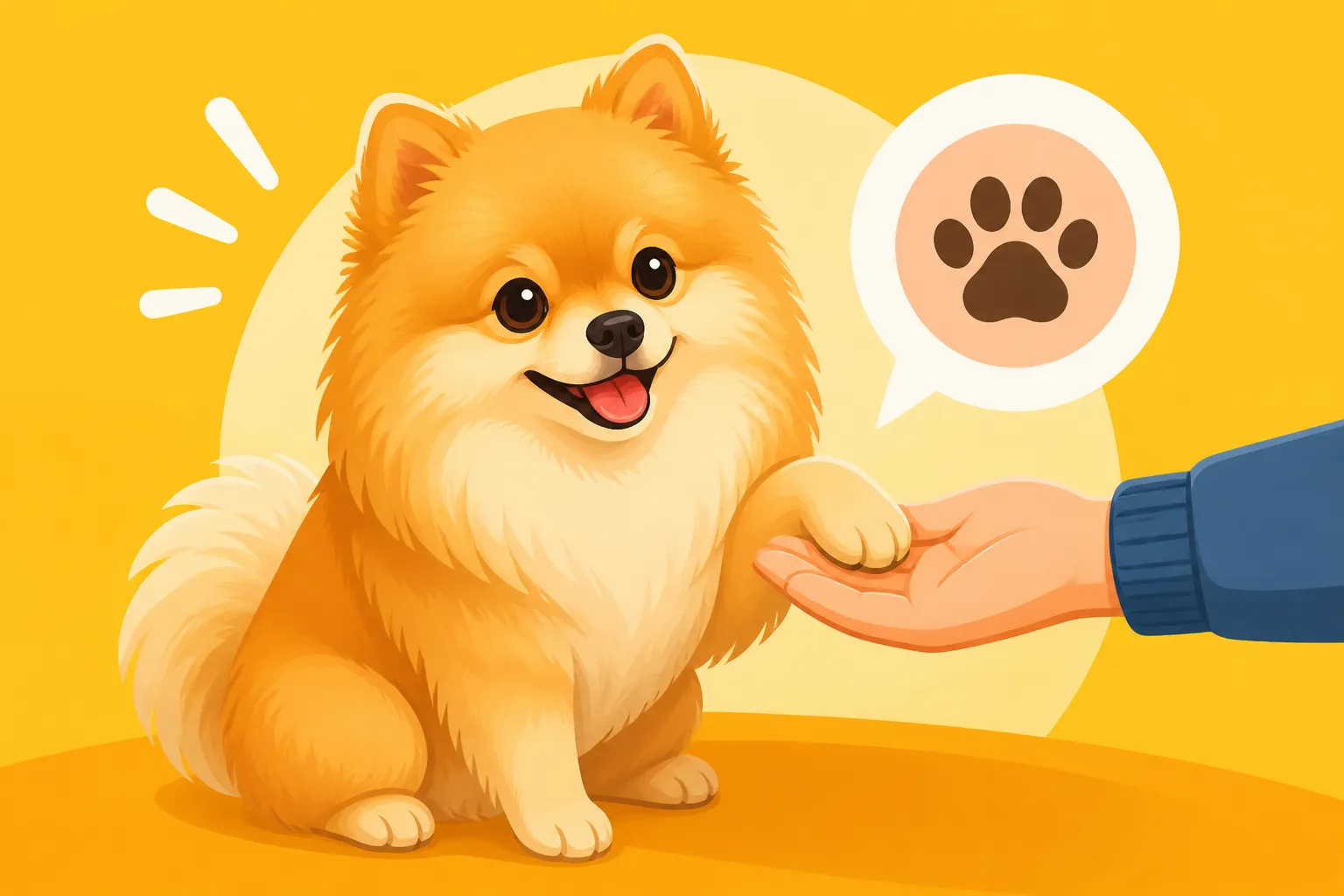
- Open hand target: After a few repetitions where they associate "Paw!" with lifting their foot, try presenting your open hand (palm up) instead of a closed fist, still in the same general area. Say "Paw!" As they lift their paw, gently guide it into your open hand, say "yes!"/click, and reward. The treat should come from your other hand, not the one receiving the paw, to avoid them snapping at your hand.
- Hold and release: Gradually increase the amount of time their paw stays in your hand before you reward. Start with just a second, then two, then three. This teaches them to hold the position. If they pull away, don't worry, just reset and try again. Practice this with both paws, varying which paw you ask for. You can simply repeat the cue and present your hand to the desired paw. Training sessions should be brief; Training Session Length for a Pomeranian should ideally be no more than 5-10 minutes to keep them engaged.
Fading the Lure and Generalizing the Trick
The ultimate goal is for your Pomeranian to offer their paw on command without needing to see a treat in your hand. This is called fading the lure.
- Empty hand lure: Once they're reliably putting their paw in your open hand with the verbal cue, start to use an empty hand as your lure, still making the same motion. Say "Paw!" and present your empty hand. The moment they offer their paw, then reach for the treat with your other hand and reward.
- Minimize the hand motion: Gradually reduce the size of your hand motion until it's just a subtle gesture or even just a pointer finger. Eventually, they should be able to give paw with only the verbal cue.
- Practice in different places: To truly cement the trick, practice in various locations around your home, then in the backyard, and eventually in low-distraction public areas. This helps your Pomeranian understand that "Paw!" means the same thing regardless of the environment. Whether a Pomeranian Can Hold a Sit Long Enough to Pass depends a lot on this generalization practice, too. You can also vary who asks for the paw – have other family members try the command!
Troubleshooting Common Challenges
Even with the best intentions, you might run into a few bumps along the road. Pomeranians can be quirky, and what works for one might not work for another. Don't get discouraged! These challenges are just opportunities to adjust your approach.
The Fear or Discomfort of Paw Handling
This is perhaps the most common reason why "give paw" can be difficult. If your Pomeranian recoils, pulls away sharply, or even snaps when you touch their paw, it's a clear sign of discomfort or fear. Pushing through this will only create negative associations and damage your trust.
Solution: Go back to basics with gentle handling. Seriously, drop the "paw" command entirely for a while. Focus purely on making paw touches positive. Start with incredibly brief, light touches on their leg, far from the paw, followed by a treat and praise. Slowly, over days or even weeks, work your way down to the paw. If they tolerate a touch for one second, reward! Build duration gradually. Associate every touch with something good. You might even find that just letting them lick a smear of peanut butter off your finger while you briefly touch their paw helps. This is essentially counter-conditioning – changing their emotional response from fear to anticipation of a treat. Remember that underlying issues like Slipping Kneecaps in a Five Pound Pomeranian could make paw handling uncomfortable, so always ensure your Pom isn't in pain. If you suspect pain, consult your vet.
The Overly Enthusiastic Paw Battering
Some Pomeranians, in their excitement, might start offering both paws, swatting at your hand, or even pawing at you indiscriminately to get a treat. While adorable, it's not the refined "give paw" you're aiming for.
Solution: Be very precise with your timing. Only reward the one paw that you requested, and only when it's offered gently. If your Pom starts batting, pull your hand away briefly, reset, and try again. Wait for a calmer, single paw lift. If they offer the wrong paw, simply ignore it and wait. You might need to use a clicker or a very sharp "yes!" exactly at the moment the correct paw is presented. This teaches them discrimination. Also, ensure your treat is ready to be delivered immediately after the correct paw touch, not before, and not after a frenzy of pawing. Keeping a small, soft treat like dried liver from brands you can find on Amazon can make the process quicker and cleaner.
Managing Distractions During Training
Pomeranians are alert and curious, which is wonderful, but it also means they can be easily distracted during training. A passing car, a squirrel outside, or even another family member walking by can derail a session.
Solution: Start training in a quiet, low-distraction environment. Your living room with the TV off and no other pets around is ideal. As your Pomeranian gets more confident with the trick, gradually introduce minor distractions. For example, move to a different room, then practice near a window, then outside in a fenced yard. If your Pom gets distracted, don't scold them. Just gently redirect their attention back to you, or take a short break. Make sure your rewards are high-value enough to compete with whatever distraction is vying for their attention. If they still can't focus, the environment is too distracting for their current skill level, and you need to scale back. A structured online training program like BAXTER & Bella can offer guidance on managing distractions as you progress through lessons.
Making it Stick: Consistency and Advanced Paw Tricks
Teaching "give paw" isn't a one-and-done deal. Like any learned behavior, it needs regular practice to remain sharp. Plus, once they've mastered it, there's a whole world of fun paw-related tricks you can explore!
The Importance of Consistent Practice and Generalization
Imagine learning to drive a car on one specific street and then being expected to navigate a bustling city. That's a bit like expecting your Pomeranian to perform a trick flawlessly in any situation after only practicing in one spot. Consistency in practice, and deliberately varying the training environment, is key to making "give paw" a reliable command.
Dedicate a few minutes each day, perhaps during playtime or before meals, to run through the trick. Don't just practice in the living room; try it in the kitchen, the bedroom, and outside. Ask for "paw" when you're sitting, standing, or even kneeling. Have different family members ask for the trick. This "generalization" helps your Pomeranian understand that the command is universal, not just tied to a specific person, place, or posture. It reinforces their understanding that when you say "Paw!", they should offer a paw, no matter what. Without this consistent reinforcement and environmental variety, the trick might become "rusty" or only performed under very specific conditions. The Routine a Pomeranian Needs Every Day often includes these short, fun training bursts.
Advancing to "Other Paw," "Wave," and "High Five"
Once your Pomeranian is a pro at "give paw," you can build on this foundation to teach some really impressive moves. Their understanding of lifting a paw makes these next steps much easier.
- "Other Paw": This is a natural progression. Once they reliably give one paw, start using a different verbal cue for the second paw (e.g., "Other Paw" or "Left Paw" / "Right Paw"). Lure and reward as before. It helps to present your hand to the opposite side to encourage the correct paw.
- "Wave": For "wave," you'll start with "give paw." When they offer their paw into your hand, instead of holding it, gently lift their paw a little higher and then release it, letting their paw hang in the air for a moment. Mark (click or "yes!") and reward when their paw is up and briefly unsupported. Gradually reduce your assistance until they lift their paw and wave it in the air on cue.
- "High Five": Similar to "wave," but you're asking for a paw to touch your upright open hand. Start by holding your hand up high, saying "High Five!" Lure them to touch your hand with their paw (you might need to tap your hand to encourage them). Reward the instant their paw connects. You can use their natural tendency to jump or stretch for a treat to get the initial height.
These advanced tricks not only impress your friends but also provide mental stimulation for your clever Pomeranian, helping to keep their minds active and engaged. The Trick Titles a Pomeranian Picks Up Easily often include these types of paw-based maneuvers, showing just how capable these little dogs are.
Training Tools and Resources for Paw Perfection
Having the right tools can make a significant difference in the effectiveness and enjoyment of your training sessions. From treats to online guidance, there's a wealth of support available.
Choosing the Right High-Value Treats and Clickers
When teaching a new trick like "give paw," the quality and size of your treats matter immensely, especially for a Pomeranian.
High-Value Treats: You want something irresistibly delicious that your Pomeranian doesn't get all the time. Small pieces of cooked chicken, cheese, hot dog, or commercial soft training treats (ensure they are very small) work wonderfully. Brands available on Amazon often offer tiny, soft training treats perfect for little mouths. Avoid anything large or hard that takes a long time to chew, as this slows down the training process. The goal is a quick "chomp and go" so you can move on to the next repetition.
Clickers: A clicker is a precise communication tool. When you click, it marks the exact moment your Pomeranian performs the desired action, followed immediately by a treat. This helps them understand precisely what they did to earn the reward. If you're new to clicker training, spend a session "charging" the clicker: click, then immediately give a treat, repeat many times, so your Pom associates the sound with good things. Then, integrate it into your "give paw" training. Whether Marker Training Holds a Pomeranian's Attention is often a resounding yes, as it clarifies expectations.
| Tool Category | Description | Why it Helps for "Give Paw" |
|---|---|---|
| High-Value Treats | Tiny, soft, and extremely palatable food rewards (e.g., cooked chicken, cheese). | Provides irresistible motivation and quick consumption, keeping sessions flowing. |
| Clicker | A small device that makes a distinct sound. | Precisely marks the exact moment of desired behavior, aiding clear communication. |
| Lure Stick/Target | A stick with a ball or target on the end (optional). | Can be used as an alternative to a treat in hand for luring, especially for "wave." |
| Online Courses | Structured video lessons and guides for dog training. | Offers step-by-step visuals and troubleshooting tips from professionals. |
Online Training Programs and Community Support
Sometimes, you just need a little extra guidance, especially if you're hitting a wall or want to ensure you're using the most effective, force-free methods. Online training programs and community support can be invaluable resources.
Online Training Programs: Many platforms offer comprehensive courses that cover everything from basic obedience to fun tricks like "give paw." Programs often include video demonstrations, step-by-step instructions, and troubleshooting tips. For instance, BAXTER & Bella offers lifetime access to their online puppy school, which includes modules on tricks and handling, providing a structured approach that can be really helpful for new and experienced owners alike. These programs allow you to learn at your own pace from the comfort of your home, which is perfect for a small dog like a Pomeranian who might get overwhelmed in a group class.
Community Support: Joining online forums, social media groups, or even local breed-specific clubs for Pomeranian owners can provide a supportive network. You can ask questions, share your successes and challenges, and get advice from others who understand the unique quirks of Poms. Sometimes, just hearing that another owner struggled with the same issue can be incredibly validating and motivating. Don't underestimate the power of shared experiences and collective wisdom!
Teaching your Pomeranian to "give paw" is more than just a trick; it's a testament to the bond you build through positive, patient, and understanding training. Celebrate every little success, and enjoy the journey with your fluffy companion!
Disclaimer
This article is for general informational purposes only and does not constitute professional advice. Laws, prices and regulations vary by location and change over time. Consult a qualified professional for guidance on your specific situation.