Why a Young Pomeranian’s Femoral Head Deteriorates
There's nothing quite as heartbreaking as watching your lively, bouncing Pomeranian puppy suddenly start to limp, showing signs of pain or discomfort in what should be their most energetic years. It's confusing, it's scary, and it leaves you wondering what on earth could be going wrong when they're so young. This guide is here to shed light on a specific, often perplexing condition called Legg-Calvé-Perthes Disease (LCPD), which can cause a young Pomeranian's femoral head to deteriorate, and what you can do about it.
Understanding Legg-Calvé-Perthes Disease in Young Pomeranians
When your young Pomeranian starts exhibiting a strange gait or showing pain in their hip, it's natural to immediately think of an injury. Perhaps they jumped off the couch too quickly, or landed awkwardly during playtime. But sometimes, the cause isn't external trauma at all. It's an internal process that silently begins to affect the very structure of their hip joint, leading to a condition known as Legg-Calvé-Perthes Disease.
What Exactly is LCPD and Why Does it Happen?
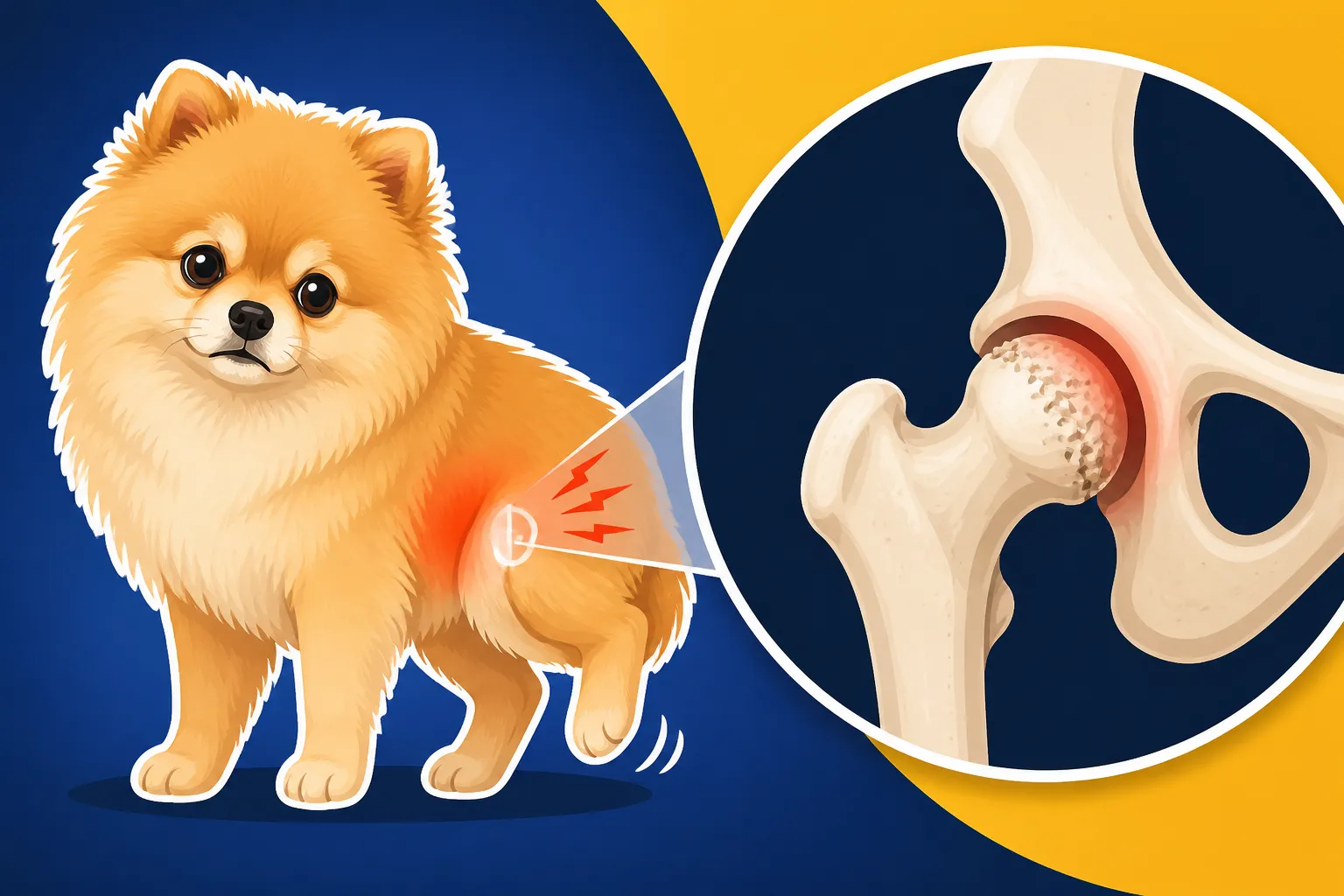
Legg-Calvé-Perthes Disease, often just called LCPD, is a degenerative disease that affects the head of the femur – that's the ball part of the ball-and-socket hip joint. Imagine the hip joint like a perfect smooth sphere (the femoral head) fitting snugly into a cup (the acetabulum in the pelvis). With LCPD, the blood supply to that femoral head becomes interrupted. For reasons not entirely understood, the tiny blood vessels that nourish the bone cells in this area simply stop doing their job.
When the blood supply is cut off, the bone cells can't get the oxygen and nutrients they need, and they start to die. This process is called avascular necrosis. Over time, the dead bone weakens, collapses, and begins to degenerate. The once smooth, spherical femoral head flattens, crumbles, and becomes rough, no longer fitting properly into the hip socket. This leads to friction, inflammation, and immense pain every time your dog moves their leg.
It's crucial to understand that LCPD isn't typically caused by an accident or an injury. It’s usually a spontaneous event, and unfortunately, small breed dogs, including our beloved Pomeranians, are genetically predisposed to it. While it can occur in any small breed, breeds like Pomeranians, West Highland White Terriers, and Miniature Poodles seem to have a higher incidence. Most often, we see the signs of LCPD appearing when a Pomeranian is between 5 and 8 months of age, though it can sometimes manifest a little earlier or later. It’s a frustrating mystery for owners, as there’s often nothing you could have done differently to prevent it from starting.
Recognizing the Early Signs and Symptoms
The onset of LCPD is rarely sudden and dramatic. Instead, it typically develops gradually, which can make it tricky for owners to pinpoint exactly when something went wrong. You might first notice a subtle change in your Pomeranian's gait. Perhaps a slight limp after they’ve been resting, which seems to improve as they warm up, only to return later. This limping usually progresses, becoming more noticeable and consistent over several weeks or even months.
As the condition advances, your Pomeranian might start holding the affected leg up more frequently, refusing to put weight on it. They might even bunny-hop when running, trying to compensate for the pain in their hip. You could observe them becoming less active, reluctant to jump, climb stairs, or engage in their usual enthusiastic play. Pain is a significant component of LCPD, and your Pom might become more irritable, sensitive to touch, or even snap if you try to examine their hip area.
One of the tell-tale signs, particularly if it's been going on for a while, is muscle atrophy. Because your dog is favoring the affected leg, the muscles in that leg won't be used as much, and they'll start to waste away. You might notice the leg looks visibly thinner compared to the healthy one. It's a stark contrast to other common young dog ailments, like Slipping Kneecaps in a Five Pound Pomeranian, which can often present with a distinct "skip" or sudden lameness. With LCPD, it’s more about a growing, persistent discomfort rather than an acute event.
Diagnosing LCPD: What Your Vet Will Look For
When you bring your limping Pomeranian to the vet, you'll undoubtedly be anxious for answers. The diagnostic process for LCPD is thorough, aimed at ruling out other causes of lameness and confirming the specific deterioration of the femoral head. It’s a bit like a detective story, with your vet piecing together clues to understand what’s happening deep inside that tiny hip joint.
The Initial Physical Examination
The first step in diagnosing LCPD is always a comprehensive physical examination. Your veterinarian will carefully watch your Pomeranian walk and run, assessing their gait, posture, and any obvious signs of pain or discomfort. They'll then gently palpate (feel) your dog's hips, evaluating for any swelling, warmth, or crepitus – a grinding sensation that indicates bone-on-bone friction.
A crucial part of the exam involves manipulating the hip joint through its full range of motion. This can be painful for dogs with LCPD, especially when the leg is extended backward or abducted (moved away from the body). Your vet will be looking for signs of pain, stiffness, or a reduced range of motion. They’ll also feel the muscles in both hind legs to detect any muscle atrophy in the affected limb. This thorough hands-on assessment helps your vet narrow down the possibilities, differentiating LCPD from other potential causes of limping that affect young, small dogs, such as trauma, infection, or other congenital joint issues. They might even try to pinpoint if the pain is in the knee rather than the hip, as a slipped kneecap can also cause similar limping, though the mechanism is quite different from what causes the issue in The Age a Pomeranian's Kneecap First Slips.
The Importance of X-rays and Advanced Imaging
While a physical exam can strongly suggest LCPD, the definitive diagnosis almost always comes from X-rays. In fact, if you see your Pomeranian limping, one of the first things your vet might recommend is an X-ray to properly assess the joint, and understand Whether a Limping Pomeranian Needs an X-Ray. These images allow the veterinarian to visualize the bones and joints in detail.
For LCPD, X-rays will reveal characteristic changes in the femoral head and neck. In the early stages, you might see subtle changes in bone density, perhaps a slightly mottled or irregular appearance. As the disease progresses, the X-rays will clearly show a flattened, irregular, or even crumbling femoral head. You might also see increased space in the hip joint due to cartilage loss, or signs of secondary osteoarthritis where the body tries to compensate for the damaged joint.
To get the best images, your Pomeranian may need to be mildly sedated or even receive full anesthesia to ensure they are perfectly still and positioned correctly for various views. This is especially true for anxious or painful dogs. Your vet will take multiple X-ray projections of both hips to compare the affected side with the healthy side, if both aren't impacted. This imaging is crucial for confirming the diagnosis, assessing the severity of the degeneration, and helping your vet determine the best course of action. It's an important part of the planning process, much like preparing for any major procedure, so discussing Whether a Pomeranian Needs Pre-Anesthetic Bloodwork beforehand is always a good idea.
Treatment Options for a Deteriorated Femoral Head
Once LCPD is diagnosed, the conversation naturally turns to treatment. It's a moment filled with worry for any pet parent, but thankfully, there are effective strategies to help your Pomeranian regain comfort and mobility. The approach usually depends on the severity of the disease and your individual dog's circumstances.
Conservative Management: When is it an Option?
Conservative management, which means avoiding surgery, involves a combination of strict rest, pain medication, and physical therapy. This approach is typically only considered for very mild, early-stage cases where the femoral head has minimal damage, or in situations where surgery is not a viable option due to other health concerns or financial constraints.
The goal of conservative management is to reduce inflammation, alleviate pain, and encourage the remaining healthy bone to repair itself. This might involve non-steroidal anti-inflammatory drugs (NSAIDs), other pain relievers, and sometimes even joint supplements. Strict crate rest for several weeks is often prescribed to prevent further damage to the hip joint. Following this, a controlled exercise program with physical therapy might be introduced. However, it’s important to be realistic: the success rate of conservative management for LCPD is quite low. In most cases, the disease continues to progress, and surgical intervention eventually becomes necessary to provide lasting relief and improve quality of life. For small breeds like Pomeranians, who often have specific joint vulnerabilities, active intervention is usually preferred.
Femoral Head Ostectomy (FHO) Surgery: The Gold Standard
For the vast majority of Pomeranians diagnosed with LCPD, Femoral Head Ostectomy (FHO) surgery is considered the most effective and often the "gold standard" treatment. This procedure, while sounding intimidating, is actually a salvage operation designed to eliminate the pain caused by the degenerated femoral head.
During an FHO, the surgeon removes the damaged femoral head and neck entirely. This isn't about replacing the joint, but rather about removing the painful bone-on-bone contact. Once the femoral head is removed, the body naturally forms a "false joint" (a fibrous pseudarthrosis) as the muscles surrounding the hip begin to support the leg. Essentially, the leg is held in place by muscle rather than a bony ball-and-socket.
The benefits of FHO are significant: it eliminates the source of the pain, allowing your Pomeranian to use their leg without discomfort. While it might not result in a perfectly normal gait, most dogs return to a very good level of function and enjoy a pain-free life. It’s a remarkable transformation for a dog that has been suffering. Of course, any surgery comes with a cost. Discussions around Knee Surgery Prices for a Pomeranian can give you a ballpark idea, and while FHO is a different procedure, it falls into a similar category of orthopedic surgery. This is where having pet insurance, like a comprehensive plan from Healthy Paws, can be an absolute lifesaver, helping to cover a significant portion of these unexpected surgical expenses. Healthy Paws policies often kick in after a deductible and cover a good percentage of veterinary bills, which can make the difference when facing such a specialized procedure.
Post-Operative Care and Rehabilitation
Surgery is only half the battle; the post-operative care and rehabilitation are just as critical for a successful outcome after an FHO. Your Pomeranian will need strict rest immediately following the surgery, typically confined to a crate or small, safe area to allow initial healing. Pain management will continue to be a top priority, often involving a combination of medications to keep your pup comfortable.
A structured rehabilitation program is absolutely essential for rebuilding muscle strength and restoring range of motion. This usually begins soon after surgery, often with passive range-of-motion exercises that you can perform at home, guided by your vet or a certified rehabilitation therapist. As your Pomeranian heals, the exercises will gradually increase in intensity, including gentle walking, controlled stair climbing (if appropriate), and sometimes even hydrotherapy (underwater treadmill) which can be incredibly beneficial.
The recovery process takes time and dedication. While some dogs show improvement quickly, a full recovery can take several weeks to a few months. Owners often wonder about timelines, and while every dog is different, information on Recovery After a Pomeranian's Knee Surgery can give you a good general idea of the commitment required for orthopedic post-op care. Throughout this period, maintaining a healthy weight for your Pomeranian is paramount. Excess weight puts additional strain on any joint, including the newly formed false joint, so strategies for taking weight off a Pomeranian safely become even more important. A good pet insurance plan from Healthy Paws can also help with these rehabilitation costs, ensuring you can provide the best recovery care without undue financial stress.
Long-Term Outlook and Prevention
Discovering your young Pomeranian has LCPD is undoubtedly a challenging experience, but the good news is that with proper diagnosis and treatment, the long-term outlook for these little dogs is overwhelmingly positive. It requires commitment, but the reward is a happy, pain-free companion.
Life After LCPD: What to Expect
The vast majority of Pomeranians who undergo FHO surgery for LCPD go on to live full, active, and comfortable lives. While they might never move exactly like a dog with a perfectly sound hip, most adapt remarkably well to the false joint. You might notice a slight residual lameness, especially after intense exercise or in cold weather, but it's typically minor and doesn't impact their quality of life.
Key to their continued well-being is consistent, moderate exercise to maintain muscle strength, as strong muscles are what support the new joint. Avoid high-impact activities, but encourage regular walks and playtime. Maintaining a healthy body weight is critical; any extra pounds will put unnecessary strain on their musculoskeletal system. Joint supplements, while not a cure, can also be beneficial in the long term for overall joint health. You might want to explore articles like Whether Joint Support Helps a Pomeranian's Knees for guidance on selecting appropriate supplements that can also benefit their hips. Regular veterinary check-ups are also important to monitor their recovery and address any emerging issues. Having a reliable pet insurance provider like Healthy Paws can give you peace of mind throughout these check-ups and any future needs, covering unexpected medical events that might arise years down the line.
Breeding Considerations and Genetic Screening
Since LCPD is recognized as having a strong hereditary component in small breeds, responsible breeding practices are absolutely crucial in preventing its spread. Dogs diagnosed with LCPD should never be used for breeding, as they carry the genes that predispose offspring to the condition. Even their parents and siblings should be carefully considered for breeding, and it's essential for breeders to be transparent about any history of LCPD in their lines.
Prospective Pomeranian owners should always seek out reputable breeders who prioritize health and perform genetic screening. While there isn't a specific genetic test for LCPD yet, responsible breeders will have extensive knowledge of their dogs' pedigrees and will avoid breeding animals with a history of the disease. They should be transparent about the health of their puppies' parents and offer health guarantees. This due diligence ensures you're getting a puppy from lines known for good health, minimizing the risk of conditions like LCPD. Understanding what constitutes What a Health Tested Pomeranian Starts at Fifteen Hundred can help you recognize a responsible breeder who invests in genetic health and testing. Choosing a puppy from such a breeder is one of the best preventative measures an owner can take to avoid heartbreaking conditions later on.
The commitment to a healthy, well-bred Pomeranian is an investment in their future, and while conditions like LCPD can still arise unexpectedly, being informed and prepared is always the best approach.
| Aspect | Conservative Management | Femoral Head Ostectomy (FHO) |
|---|---|---|
| Suitability | Very mild cases, non-surgical candidates | Most moderate to severe cases |
| Goal | Pain relief, potential self-repair | Eliminate pain, create false joint |
| Procedure | Rest, pain meds, physical therapy | Surgical removal of femoral head/neck |
| Recovery Time | Weeks to months (often ongoing) | Weeks to months of rehab |
| Pain Relief | Temporary/partial | Significant, long-lasting |
| Return to Function | Variable, often limited | Good to excellent |
| Cost | Lower initial medical costs | Higher surgical + rehab costs |
| Success Rate | Low for long-term resolution | High for pain relief & mobility |
| Anesthesia Risk | None | Present (Anesthesia Risk in a Four Pound Pomeranian) |
Disclaimer
The information provided in this article is for educational purposes only and is not a substitute for professional veterinary advice. Always consult with a qualified veterinarian for any health concerns or before making any decisions about your Pomeranian's care.