Telling a Pomeranian From a Japanese Spitz
A fluffy white dog can look like a Pomeranian at first glance, especially in puppy photos, but a Japanese Spitz is a separate breed with its own size, shape, and temperament. This guide explains the differences you can spot in person, what may be hard to judge from a picture, and which everyday care needs are similar.
The quickest ways to tell a Pomeranian from a Japanese Spitz
Both breeds have pointed ears, a curled tail, and a double coat that creates a fluffy outline. The biggest clues are usually the dog’s adult size, coat color, and overall proportions. Because puppies change so much as they grow, it helps to look at several features rather than relying on one photograph.
Compare size and proportions
A Pomeranian is a very small toy dog. In the United States, the breed standard describes a compact dog generally weighing three to seven pounds. A Japanese Spitz is noticeably larger and more substantial; adult dogs commonly weigh well over ten pounds, though exact standards and individual sizes vary by registry and dog.
That difference can be easy to miss in a photo with no familiar object for scale. A Japanese Spitz puppy may appear about the size of an adult Pom, while a Pomeranian photographed close to the camera can look much bigger than it is. Ask for the dog’s age, current weight, and the parents’ size if you’re trying to identify a puppy.
Proportions help, too. A Pom usually looks compact and fine-boned, with a small frame partly hidden by its coat. A Japanese Spitz tends to have a longer-legged, more athletic outline. If you see the dog standing beside a person or a piece of furniture, compare its height at the shoulder as well as its overall bulk.
Look at coat color and texture
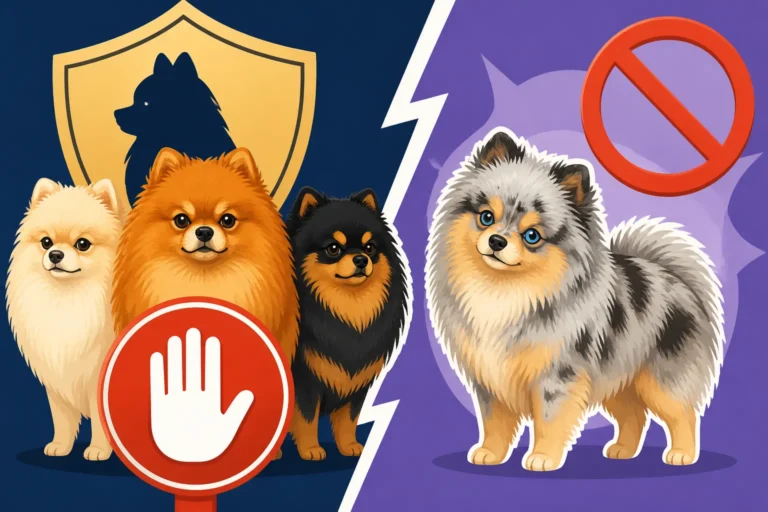
A Japanese Spitz is white. Its coat is thick and bright, with a noticeable ruff around the neck and feathering on the tail and legs. A Pomeranian comes in many colors and patterns, including orange, black, cream, sable, chocolate, and parti-color. White Pomeranians exist, so color alone does not identify every dog—but a non-white coat rules out a Japanese Spitz.
The coat can also create a different impression. A Pom’s abundant coat often makes the dog look round and plush, with a prominent neck ruff and a tail carried over the back. A Japanese Spitz also has a dense double coat, but the dog’s larger frame and longer legs usually remain easier to see beneath it.
If you’re learning about the Pom’s coat, The German Spitz Family a Pomeranian Belongs To gives useful breed-family context, while Every Color a Pomeranian Comes In explains why coat color is such a helpful clue in this particular comparison.
Check the face and expression
Both breeds have alert, foxlike expressions, so facial features can be subtler clues than size. A Pomeranian’s head is small, and the breed comes in different face shapes and expressions. The Japanese Spitz typically has a clean, wedge-shaped face, dark almond-shaped eyes, and a black nose and lips that stand out against its white coat.
Look at the whole head rather than deciding from eye shape alone. Grooming, coat length, age, and the angle of a photograph can change how a dog’s face appears. A Pom with a full coat may look rounder, while a freshly groomed dog can appear more fine-featured. Fox Face, Baby Doll and Teddy Bear Pomeranians describes the range of looks people may see within the Pomeranian breed.
Why the breeds are easy to confuse
Pomeranians and Japanese Spitz dogs share ancestry within the broader Spitz family. That helps explain their upright ears, curled tails, dense coats, and bright, attentive expressions. Still, shared family traits do not make them the same breed, and their appearance, size, and breed histories differ.
The Spitz features they share
Spitz breeds are often recognizable by a combination of pointed ears, a wedge-like head, a tail carried over the back, and a coat suited to colder conditions. Those shared features can make a Pomeranian and a Japanese Spitz look related even when one is tiny and the other is medium-sized.
The confusion is strongest in online listings and puppy pictures. A cropped image may show only a white face and fluffy chest, leaving out the body size that would make the distinction obvious. Some pictures also use flattering angles or heavy coat styling. If identification matters, ask for a full-body photo and information about the dog’s parents and registration.
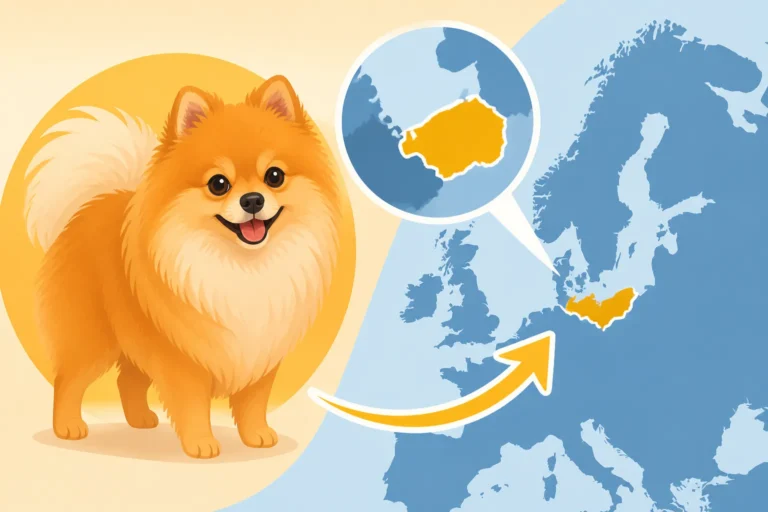
The Pomeranian belongs to the German Spitz family, and its history includes a shift toward a much smaller size. For more background, see How the Pomeranian Halved in Size in One Lifetime and The German Spitz Sizes Above the Pomeranian. These topics help put the Pom’s small build in context without treating every Spitz-type dog as one breed.
Breed history and size are not interchangeable
The Japanese Spitz developed as its own breed, even though its appearance reflects familiar Spitz characteristics. A Pomeranian is not simply a small Japanese Spitz, and a Japanese Spitz is not a large Pomeranian. Breed identity involves more than size: it includes ancestry, recognized standards, and consistent characteristics passed through breeding.
It is also worth separating a dog’s appearance from its paperwork. A white, fluffy dog may resemble either breed or may be a mixed-breed dog. If you need to know a dog’s background for registration, breeding, or health planning, appearance alone is not enough. Ask for reliable records and consult a veterinarian or knowledgeable breed professional when the history is unclear.
A dog’s size can vary within a breed, and coat can make that variation harder to judge. A larger-than-average Pom may still be a Pomeranian, while a small Japanese Spitz may still be larger and longer-legged than most Poms. Breed standards describe an ideal, not a guarantee that every individual dog will match it exactly.
Temperament and everyday life
Both breeds are alert companion dogs, but individual personality depends on more than breed. Early socialization, training, health, and the dog’s experiences all matter. Rather than assuming that every Pom or Japanese Spitz behaves the same way, think about the home and routine the dog will need.
Activity, training, and barking
Pomeranians are small, lively, and often quick to notice activity around them. Many are bright learners, but their alertness can turn into frequent barking if they have not learned how to settle. Japanese Spitz dogs are also active and attentive, and they need regular walks, play, and mental engagement.
Neither breed should be treated as a decorative pet that needs no exercise. Short walks, sniffing time, food puzzles, and brief training sessions can help both dogs use their energy constructively. Keep training sessions upbeat and manageable. A tiny Pom may lose focus quickly if a lesson drags on, while a Japanese Spitz may need consistent practice to learn what is expected around visitors and other dogs.
If you’re choosing a Pom and want to understand its tendency to react to sounds and movement, Why a Pomeranian Barks at Everything That Moves offers more detail. For a broader look at whether this small breed fits a particular home, Whether a Pomeranian Suits Apartment Living is also relevant.
Handling and family fit
A Pomeranian’s small size calls for careful handling. A fall from a couch, a rough game, or an accidental step can be serious for a tiny dog. Children should be taught to sit on the floor for calm interaction, avoid grabbing or carrying the dog without help, and give it space when it is eating or resting.
A Japanese Spitz is larger, but that does not mean it is automatically suited to rough handling or unsupervised play. Any dog can become frightened or defensive if crowded or overwhelmed. Introductions to children, visitors, and other pets should be calm and supervised, with a safe place where the dog can retreat.
Think about the adult dog you will live with, not only the puppy you meet. Ask the breeder or rescue about the dog’s typical energy level, noise sensitivity, comfort with handling, and experience with household routines. The Pomeranian’s tiny frame may be a poor match for a home where play is unpredictable, while a Japanese Spitz may need more room and exercise than someone expects from a fluffy companion.
Grooming, health, and choosing the right match
Both breeds have double coats, so neither is a truly low-maintenance choice for someone hoping to avoid brushing. Their care needs overlap, but the time and practical details differ because of their size and coat volume. Regular grooming also gives you a chance to notice skin changes, tangles, and other concerns early.
Coat care and shedding
A Pomeranian’s coat needs regular, gentle brushing down to the skin to help prevent tangles, especially around the chest, behind the ears, and where a harness sits. A Japanese Spitz also sheds and benefits from routine brushing. During heavier shedding periods, loose undercoat can collect on clothing, floors, and furniture.
Avoid assuming that a fluffy dog should be shaved to make coat care easier. A double coat helps protect the skin, and shaving can cause coat problems in some dogs. If you need help choosing tools, compare a suitable slicker or pin brush and a metal comb with the dog’s coat type; pet retailers such as Chewy may carry those basics, but ask a groomer to show you how to use them without scraping or pulling the skin. For more on safe Pom grooming, see Working a Pomeranian's Coat in Sections to the Skin.
The exact routine depends on the individual dog. A Pomeranian’s small body can make brushing easier in one sense, but its dense coat and delicate frame call for a light touch. A Japanese Spitz has more surface area to brush, and the larger coat may take longer to dry after a bath. Either way, brushing only the top layer can leave mats hidden close to the skin.
Health questions to ask before bringing one home
Pomeranians can be prone to concerns such as dental crowding, kneecap problems, and tracheal issues. Japanese Spitz dogs can have their own breed and individual health concerns. No breed is free of risk, and a dog’s health cannot be judged by a glossy coat or lively behavior alone.
Before committing, ask about health screening, veterinary history, and the health of close relatives. A responsible breeder should be willing to discuss the breed’s known concerns and share relevant records. If you’re adopting, ask what is known about the dog’s past care and arrange a veterinary examination after bringing the dog home.
Size also affects daily safety. A Pom’s small body can be vulnerable to falls, being stepped on, and rough interactions with larger dogs. Use a well-fitted harness rather than putting pressure on the throat, and supervise interactions closely. For related Pom health topics, The Three to Seven Pounds a Pomeranian Is Allowed and The Twelve to Sixteen Years a Pomeranian Lives provide additional context.
A practical comparison before you decide
| Feature | Pomeranian | Japanese Spitz |
|---|---|---|
| Typical adult size | Very small toy dog, commonly three to seven pounds in the United States breed standard | Larger and more substantial, commonly well over ten pounds |
| Coat colors | Many colors and patterns, including white | White |
| General outline | Compact, fine-boned, often looks round beneath its coat | Longer-legged and more athletic in outline |
| Coat care | Regular brushing; dense coat can hide tangles | Regular brushing; larger coat takes more time to work through |
| Main practical consideration | Extra care around falls, handling, and play with larger dogs | Needs a larger physical footprint and regular activity |
| Best identification clues | Very small frame and a wide range of coat colors | White coat, larger body, and more substantial proportions |
If you’re still unsure after comparing the dog’s size and features, don’t rely on a single online image. Ask for the dog’s age, weight, parents’ details, and documentation, then compare those facts with what you see. A retailer such as Chewy can be convenient for routine supplies once you know the dog’s needs, but food, harnesses, and grooming tools should be chosen for the individual dog rather than its fluffy appearance.
A useful final test is to picture an ordinary week with each breed. Could you manage frequent coat care, daily walks, training, and careful supervision around furniture and larger pets? Do you want a very small companion, or would a somewhat bigger Spitz-type dog fit your household better? Those practical questions often matter more than which dog looks cutest in a puppy photo. For broader breed context, The Pomeranian Against the Other Toy Spitz Breeds can help you compare the Pom with related dogs.
Disclaimer
This article is for general informational purposes only and does not constitute professional advice. Laws, prices and regulations vary by location and change over time. Consult a qualified professional for guidance on your specific situation.