Whether a Throwback Pomeranian Grows Larger
A Pomeranian who grows well beyond the familiar toy size can surprise—and worry—the people raising them. The word “throwback” is often used for these bigger Poms, but it does not tell you exactly how large a dog will become or whether that size signals a problem. This guide explains what the term means, how growth unfolds, and how to tell healthy size from excess weight.
What people mean by a throwback Pomeranian
“Throwback” is an informal label, not a separate type
A throwback Pomeranian is generally a Pom that grows larger than the small size many people expect. Owners and breeders use the word to describe a dog whose size seems to recall larger dogs in the breed’s ancestry. It is a conversational label, not a separate breed category or a guarantee about a dog’s family tree.
The term can also be used loosely. One person may call a dog a throwback because it weighs more than the breed standard allows; another may use it for a Pom with a taller, sturdier appearance. That means the label alone cannot tell you whether a particular dog is purebred, healthy, or overweight. Those questions need separate answers.
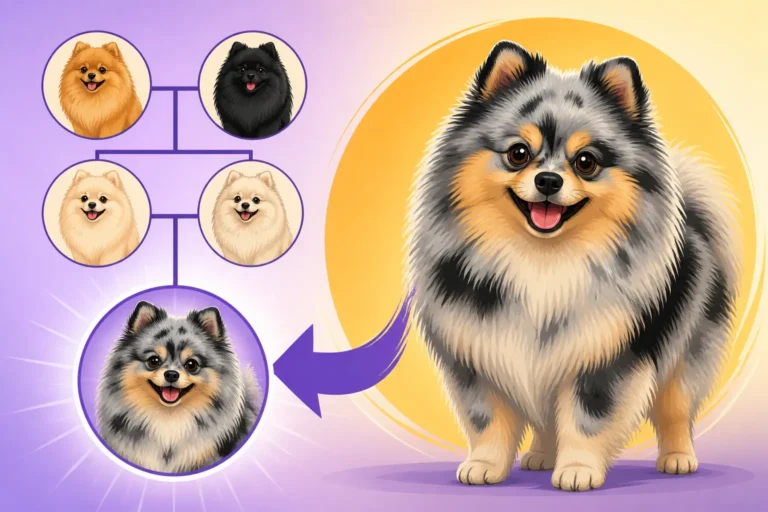
Pomeranians were developed from larger Spitz-type dogs, and breeding gradually favored smaller companion dogs. A Pom that grows larger than expected may reflect inherited variation in size. But a dog’s appearance and weight are shaped by more than ancestry: body structure, age, diet, activity, and health all matter. A bigger Pom is not automatically a “return” to an ancestral size.
Size standards are not a health diagnosis
The American breed standard describes a much smaller dog than many owners may encounter in everyday life. A Pom outside that standard is not automatically unhealthy, and being within it does not guarantee perfect health. A standard is used to describe an ideal for the show ring; it is not a veterinary assessment of an individual dog.
For a quick reference, the expected standard range is discussed in The Three to Seven Pounds a Pomeranian Is Allowed and The Weight the Pomeranian Standard Requires. A dog can exceed that range and still be proportionate, active, and at a healthy body condition. Conversely, a small dog can carry excess fat that is hard to notice beneath a thick coat.
That distinction matters if you are deciding whether your Pom needs a diet. Don’t rely on a breed label, a photo, or a number on the scale alone. Ask a veterinarian to assess body condition, muscle, and overall build. For more detail on a dog who is bigger than the standard, see Whether a Nine Pound Pomeranian Is Off Standard and Whether a Twelve Pound Pomeranian Is Purebred.
How large might a Pomeranian grow?
Size is influenced by inherited traits
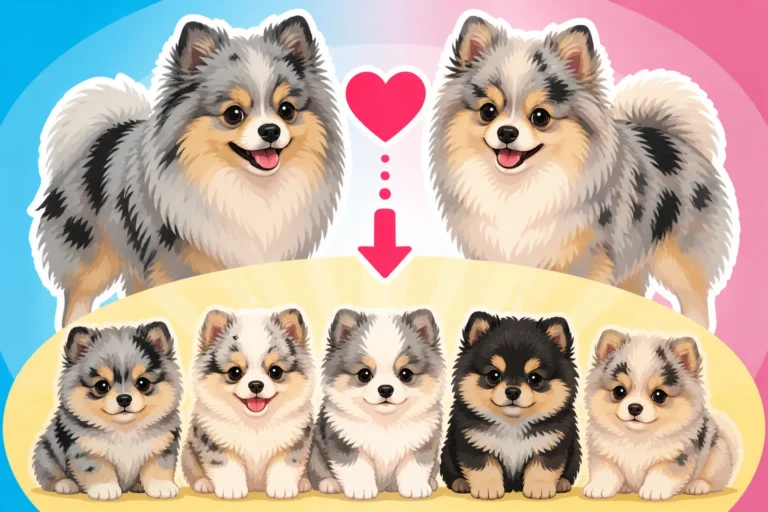
Puppies inherit traits from both parents and earlier generations, so littermates can end up with noticeably different adult builds. A puppy whose parents are small may still grow larger than expected; a puppy from larger relatives may remain petite. Family history can offer clues, but it cannot provide a precise adult-weight promise.
Ask a responsible breeder about the size of the puppy’s parents and close relatives, and look for honest answers rather than assurances that a puppy will remain a particular weight. If the dog is already yours, your veterinarian can help interpret its growth pattern. Predicting a Pomeranian Puppy's Adult Weight covers why puppy size estimates are only estimates.
A larger puppy is not necessarily a throwback, either. Puppies grow at different rates, and a growth spurt can make one look especially substantial for a while. Instead of trying to settle the question from one measurement, keep track of weight and body condition over time. When a Pomeranian Reaches Its Final Weight explains the difference between reaching adult height and continuing to fill out.
Growth slows, but body shape can keep changing
Most small dogs approach their adult height during puppyhood, but their body can continue to mature afterward. Muscle, chest, and overall proportions may change as a young Pom develops. A puppy’s soft coat can also make it look rounder or bigger than its frame really is, which makes visual guesses particularly unreliable.
Weighing your dog consistently can help you notice a trend. Use the same scale when possible, and write down the date and result. For a tiny puppy, small changes can look dramatic when measured as a proportion of body weight, so discuss unexpected gains or losses with a veterinarian rather than making big feeding changes on your own.
If you are preparing for a puppy, ask the breeder what growth information is available and have your vet review it at routine visits. A scale can be useful at home, too; if you’re shopping for one through a retailer such as Chewy, check that it can measure small changes reliably and is easy to use without making your puppy nervous.
Is your Pom large because of build or weight gain?
Look at body condition, not just the number
The scale tells you how much a dog weighs, not how much of that weight is healthy. A naturally larger Pom may have a broader frame and more substantial build while still maintaining a trim body condition. An overweight Pom may have extra fat over the ribs, waist, or abdomen, regardless of whether its number seems high or low.
A thick double coat can hide the outline of the body. Instead of judging by fluff, gently feel along the rib cage and ask your veterinarian to show you what a healthy body condition feels like for your dog. Finding a Pomeranian's Ribs Through the Coat offers more guidance on that practical check. If your dog’s waist seems to be disappearing or its weight is climbing, Whether an Eight Pound Pomeranian Is Overweight can help frame the question—but your veterinarian’s assessment should guide decisions.
Weight changes can also have medical causes. A sudden increase, reduced energy, or changes in appetite deserve attention rather than an automatic assumption that the dog is simply a throwback. For a deeper look at one possible medical concern, see Whether a Pomeranian's Weight Gain Is Thyroid. The right interpretation depends on the whole picture, including examination findings and medical history.
Build matters more for daily care than the label
A larger Pom may need adjustments to everyday equipment, but the right fit depends on the dog’s actual measurements—not a label such as “throwback.” Check that a harness sits comfortably and does not rub beneath the legs or restrict movement. If you are comparing harnesses through a retailer such as Chewy, use your dog’s measurements and the maker’s fitting instructions instead of choosing by expected breed size alone.
Food portions deserve the same attention. A bigger frame does not automatically mean a large increase in food; needs depend on age, activity, body condition, and the food’s calorie density. Measure meals rather than estimating by eye, and make changes gradually with veterinary guidance. When comparing small-breed food options on Chewy or elsewhere, focus on the nutritional information and feeding guidance, not packaging that promises a particular look or size.
It can also help to consider how size affects handling. A larger Pom may be easier to spot and lift than a very tiny one, but it still has a small-dog body and should be handled securely. Keep jumps from furniture and rough play in mind, especially if your dog has joint concerns. For a broader perspective on responsible breeding and size, read Whether the Pomeranian Is Being Bred Too Small.
Caring for a larger Pomeranian
Keep health checks routine
A larger-than-expected Pom should receive the same thoughtful preventive care as any other dog. Keep routine veterinary appointments, discuss dental care and weight, and mention any changes in movement, breathing, appetite, thirst, or energy. The point is not to treat size itself as a disease; it is to make sure your dog’s individual needs are being noticed.
Ask your veterinarian to record weight and body condition at appointments. If your dog’s weight is changing, bring your own notes about meals, treats, activity, and timing. That information can be more useful than trying to remember whether the change began last month or last season.
Be cautious about advice that treats “throwback” as a diagnosis or promises that a particular diet will make a dog smaller. A healthy adult frame cannot be dieted away. If your Pom is carrying excess fat, a veterinarian can help set a safe plan; if the dog is simply larger but lean and well, weight loss may not be appropriate.
Make a practical plan for food and activity
A steady routine makes it easier to keep track of a Pom’s condition. Measure meals, count treats as part of the day’s intake, and choose activity that suits your dog’s age and fitness. Short walks and play can be useful, but build up gradually and pause if your Pom seems unusually tired or uncomfortable.
If your dog needs to lose weight, avoid sudden, severe food restriction. Small dogs have modest calorie needs, and a dramatic cut can leave them undernourished. Your vet can recommend a suitable target and help you review progress. Rechecking weight and body condition regularly is more useful than relying on a one-time number.
Finally, let your dog be an individual. A throwback Pom may be larger than the image you had in mind, but that does not make it less of a companion or less deserving of careful, breed-aware care. Focus on healthy body condition, comfortable movement, preventive veterinary care, and equipment that fits the dog in front of you.
Disclaimer
This article is for general informational purposes only and does not constitute professional advice. Laws, prices and regulations vary by location and change over time. Consult a qualified professional for guidance on your specific situation.