How Merle Got Into Pomeranian Bloodlines
A blue-gray Pomeranian with dark patches can look as though it has an unusual coat color, but merle is more than a color variation: it is a genetic pattern associated with a specific gene. Its presence in Pomeranians has raised questions about breed history, pedigree records, and health. This guide explains how merle likely entered Pomeranian bloodlines and what owners should know.
What merle means in a Pomeranian
Merle is a pattern, not simply a coat color
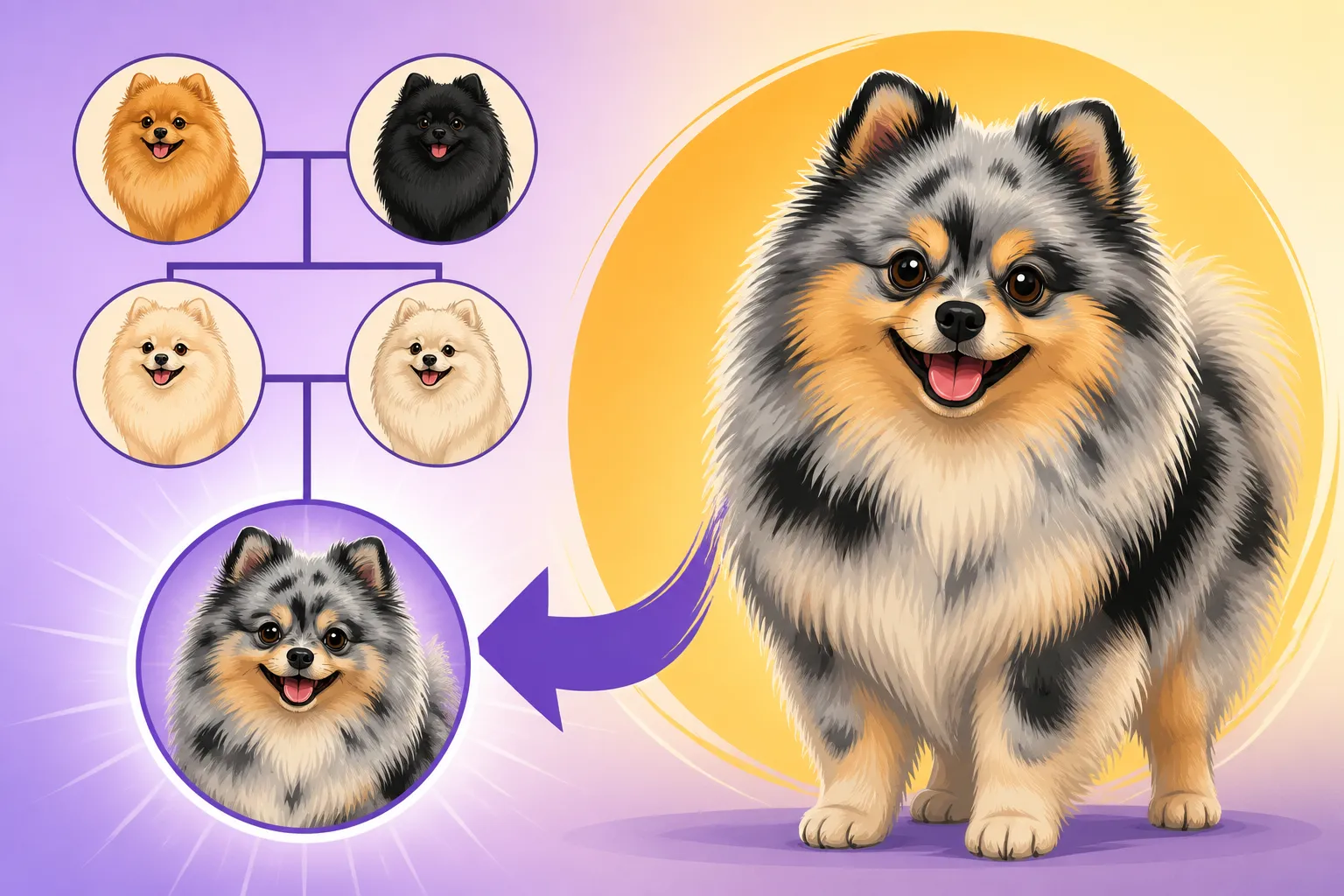
Merle creates irregular areas of diluted pigment alongside darker patches. In a Pomeranian, that can appear as mottled gray and black, brown and lighter brown, or another combination depending on the dog’s underlying coat color. Some merle dogs also have blue or partly blue eyes, although eye color alone cannot confirm that a dog carries the merle variant.
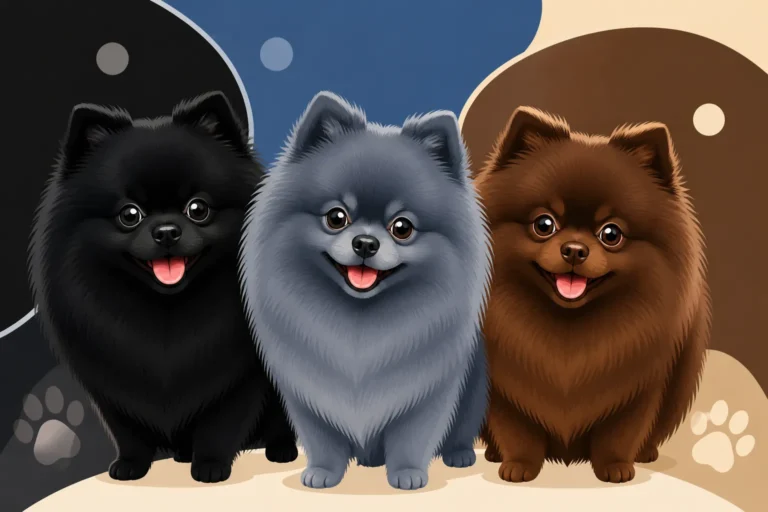
The pattern is linked to a variant in the PMEL gene, which affects how pigment is distributed in parts of the coat. Merle can be obvious, with high-contrast patches, or subtle enough that an owner might mistake it for ordinary shading. It is different from colors such as black, blue, or chocolate, which are discussed in Black, Blue and Chocolate Pomeranians.
This distinction matters because “merle” is not just a sales description for a rare-looking coat. It refers to a genetic trait that can be passed from parent to puppy. A dog’s appearance can offer clues, but coat color is not a reliable substitute for a genetic test or a well-documented pedigree.
The pattern can be hard to recognize
Not every merle Pomeranian has dramatic spots. Some have mostly solid-looking coats with only small areas of dilution, and the pattern may be partly hidden by a thick double coat. A puppy’s coat can also change as it matures, making early guesses about its adult coloring uncertain.
This can complicate breeding decisions. A dog may carry a merle variant without displaying a clear, familiar pattern, depending on the variant and how it affects pigment. That is one reason breeders should not rely on visual inspection alone when deciding whether two dogs can safely be paired.
If you are looking at a puppy listing and the seller calls the dog “blue,” “wolf sable,” or simply “rare,” ask what they mean and request clear information about the parents. A color label by itself does not explain the dog’s genetic makeup. For broader questions about color changes during puppyhood, see Whether a Pomeranian's Color Changes as It Grows.
How merle likely entered Pomeranian bloodlines
The exact first introduction is not firmly documented
There is no universally accepted, well-documented account identifying the first Pomeranian litter to carry merle or naming a single dog that introduced it. The most commonly offered explanation is that merle entered the breed through crossbreeding with a dog from a merle-carrying breed, followed by breeding back into Pomeranians over generations.
That explanation fits how inherited traits can appear in a breed where they were not traditionally established. If a dog carrying merle is crossed with a Pomeranian, some puppies may inherit the variant. Those descendants can then be bred back to Pomeranians, making their appearance increasingly Pomeranian-like over time. But without reliable records, that general pathway does not prove exactly which breeds or dogs were involved.
Stories sometimes point to particular breeds as the source. Unless a claim is backed by verifiable pedigrees or genetic evidence, it is better treated as speculation rather than settled breed history. The cautious answer is that merle’s arrival is associated with outcrossing, while the precise route and timeline remain uncertain.
Why a cross might not be obvious in later generations
A dog’s outward appearance can become more consistent with Pomeranian type over successive generations, even if a distant ancestor came from another breed. Size, coat texture, face shape, and temperament do not provide a dependable way to identify every older cross in a pedigree.
Paperwork also has limits. Registration documents can record ancestry, but they do not automatically establish that every recorded parentage detail is accurate or that a dog has no ancestry outside the listed line. A breeder who wants to make a strong claim about a dog’s background should be able to discuss the pedigree openly and explain what genetic testing can and cannot confirm.
That is why a merle Pomeranian’s ancestry is best considered through several pieces of information together: records from the breeder, the appearance and health history of relatives, and appropriate genetic testing. No single source can fill every gap. For related discussion about breed standards and merle, read Whether a Merle Pomeranian Is Recognized and Whether a Merle Pomeranian Can Be Registered.
What genetic testing and breeding records can tell you
Ask what was tested, not just whether a test was done
A genetic test can help determine whether a dog carries a merle variant, but the words “DNA tested” do not tell you which traits or conditions the test covered. Ask for the actual report, the laboratory’s interpretation, and the names or identification details needed to confirm that the result belongs to the dog in question.
If you see a canine DNA kit listed through a retailer such as Chewy, check the test’s stated coverage carefully and ask your veterinarian or the testing laboratory whether it answers the question you have. A general breed-ancestry estimate is not necessarily the same thing as a targeted test for the merle variant. Chewy may be a place to compare available pet products, but the important details are the test method, the results provided, and how the laboratory explains them.
Testing can be useful for a breeder who needs to avoid an unsafe pairing, and it may help an owner understand an unusual coat. It does not, on its own, prove that a dog meets a particular registry’s requirements or settle every question about its pedigree. Keep the report with the dog’s health and registration records, and ask a veterinary professional to help interpret results that are unclear.
Pedigrees need to be read alongside test results
A careful breeder should be willing to explain which dogs in the pedigree carry merle, whether the parents have been tested, and how the breeding plan avoids producing puppies with two merle variants. If a seller refuses to share basic information, changes the explanation when questioned, or uses “rare” as a substitute for records, take that as a reason to slow down.
Retail listings should not be treated as evidence of ancestry. Chewy, a breeder’s website, or a social media post can describe a dog, but the claim needs to be supported by relevant records and test documentation. When shopping for supplies or considering a DNA kit through Chewy, distinguish product information from proof about a specific puppy’s genetics.
A useful conversation is specific: “Were both parents tested for merle, and can I see the reports?” is more informative than “Is this puppy healthy?” A breeder should be able to discuss both the coat pattern and the wider health screening relevant to their dogs. For more on the concerns that some breed organizations raise, see Why Breed Clubs Object to Merle Pomeranians.
| What you want to know | What may help answer it | What it cannot prove alone |
|---|---|---|
| Whether the dog carries a merle variant | A targeted genetic test from a laboratory that reports the relevant result | That the dog has a complete or accurate pedigree |
| How merle may have entered the family line | Pedigrees, breeder records, and test results from related dogs | The identity of the first dog that introduced merle |
| Whether a planned pairing is appropriate | Testing both parents and consulting a knowledgeable veterinarian or genetic specialist | That every puppy will have the same coat or health outcome |
| Whether a puppy’s coat is merle | Coat examination and, when needed, genetic testing | That a particular color label confirms ancestry or registry status |
Health and responsible breeding considerations
The main concern is breeding two merle-carrying dogs together
The most important practical concern is a pairing in which both parents carry a merle variant. Puppies that inherit a merle variant from each parent are often called double merles. The risk is not simply that they may have a different-looking coat: double merle inheritance is associated with a greater chance of serious eye and hearing abnormalities.
Not every double merle puppy will have the same findings, and an unusual coat does not tell you precisely what a puppy can see or hear. A veterinary examination is important if a dog has suspected vision or hearing problems. Owners should not assume that a dog is unaffected just because it responds to some sounds or navigates a familiar room.
Responsible breeding means establishing the genetic status of both parents before mating and avoiding combinations that could produce double merle puppies. Read What Happens When Two Merle Pomeranians Are Bred and Why Double Merle Pomeranian Puppies Are Born Deaf for more on the inheritance and potential effects.
A merle coat does not automatically tell you the dog’s whole health story
Merle itself is a coat pattern, not a complete health assessment. A puppy may have a merle pattern and no obvious impairment, while still needing the same careful veterinary attention, dental care, vaccination planning, and routine screening as any other Pomeranian. Conversely, a puppy with a solid-looking coat is not automatically free of inherited health concerns.
For a merle dog, pay particular attention to signs that deserve prompt evaluation: trouble navigating, unusual eye appearance, squinting, bumping into objects, or not responding consistently to sounds. These signs can have causes unrelated to merle, too, so a veterinarian should assess them rather than an owner trying to diagnose from coat color.
The coat can also affect how owners judge a puppy’s appearance. Blue eyes or pale patches may attract attention, but they do not replace evidence of good care, health screening, and responsible breeding. The questions to ask are not only “What color is this puppy?” but also “What are the parents’ test results, what health screening has been done, and what support does the breeder provide?”
Look beyond the appeal of a rare coat
A rare-looking puppy can be tempting, especially when photos show striking patches or unusual eye color. But appearance should not outweigh the breeder’s transparency, the puppy’s behavior and health, or a clear plan for lifelong veterinary care. Be wary of claims that merle is healthier, more valuable because it is unusual, or proof of superior breeding.
Before committing, ask for the puppy’s veterinary records, the parents’ relevant genetic test reports, and a written explanation of the breeder’s health practices. If you are uncertain how to interpret a report or pedigree, ask your veterinarian for help or seek advice from a qualified canine genetics professional. The Case Against Buying a Merle Pomeranian offers additional context for weighing the concerns before choosing a puppy.
Merle’s presence in Pomeranians is best understood as a genetic pattern with a history that is not fully documented. The likely explanation involves outcrossing, but claims about a precise origin should be treated carefully unless supported by evidence. For owners, the practical priorities are straightforward: get clear records, use appropriate genetic testing, and ensure breeding decisions account for the risks of pairing two merle-carrying dogs.
Disclaimer
This article is for general informational purposes only and does not constitute professional advice. Laws, prices and regulations vary by location and change over time. Consult a qualified professional for guidance on your specific situation.