The Orange Pomeranian and Why It Dominates
You’ve probably seen them everywhere – those vibrant, fluffy bundles of joy that just light up a room. We're talking about orange Pomeranians, and if you’ve ever wondered why this particular shade seems to dominate the breed, or if there’s something special about them, you’re not alone. It’s easy to feel like orange Poms are the "default" setting for the breed, leaving you curious about what makes them so popular and if there are any unique considerations for their care. This guide is going to peel back the layers of that gorgeous orange coat, exploring the fascinating genetics behind it, its historical journey to prominence, and what owning one of these sunshine-hued pups truly entails.
Understanding Pomeranian Coat Genetics and Color Expression
When you look at a Pomeranian, the sheer variety of colors can be astonishing. But time and again, orange seems to pop up more than any other. It’s not just a coincidence; there’s some fascinating science behind why this particular hue has become so widespread, and it all comes down to a few key genetic factors that determine coat color in dogs.
The Basics of Canine Coat Color Inheritance
Dog coat colors are controlled by a series of genes, often referred to as "loci." Each locus has different alleles (versions of a gene) that interact to produce the final coat color and pattern we see. Think of it like a complex recipe where each ingredient, or gene, adds a layer of flavor or color to the final dish. For Pomeranians, the main players for orange hues are primarily found at the "E" locus and are then modified by other genes that adjust the intensity and distribution of that color.
It's a common misconception that coat color is simply black or white, but the reality is a rich tapestry of genetic interactions. Most dogs have a base color of either black (eumelanin) or red/yellow (phaeomelanin). The "E" locus is particularly interesting because it controls whether a dog can produce black pigment at all in their coat, or if that black pigment is restricted to just the nose and eyes, allowing only red/yellow pigments to show in the fur. This is where the orange really starts to shine through.
How the "E" Locus Influences Orange
The "E" locus in dogs determines the extent to which eumelanin (black pigment) or phaeomelanin (red/yellow pigment) is expressed in the coat. If a Pomeranian inherits two recessive "e" alleles (written as "ee"), it means they cannot produce black pigment in their fur. Instead, only phaeomelanin is expressed, resulting in shades ranging from light cream to deep red. This is the genetic secret behind all orange, red, yellow, and cream Pomeranians. Without that "ee" combination, a dog would likely be black, black and tan, sable, or another color that includes black pigment.
So, when you see a beautiful, solid orange Pomeranian, you're essentially looking at a dog whose genetic switch for black fur production has been turned off. All the other genetic modifiers then come into play to fine-tune that base red/yellow pigment into the specific shade of orange we adore. This genetic simplicity for producing orange or red coats means that if two "ee" Poms are bred together, all of their puppies will also be "ee" and express some shade of phaeomelanin-based color. This inherent ease of breeding for "ee" dogs contributes significantly to the dominance of orange and related colors within the Pomeranian population.
The Role of Rufous Polygenes in Shade Variation
While the "ee" genotype sets the stage for a red-based coat, it doesn't dictate the exact shade. This is where "rufous polygenes" come into play. These are multiple genes that work together to intensify or dilute the phaeomelanin pigment, creating the vast spectrum of orange we see. Some Poms are a pale cream, almost white, while others are a fiery, deep red that practically glows. These polygenes are what cause that variation.
A Pomeranian with many intensifying rufous polygenes will display a rich, deep orange or red. Conversely, a Pom with fewer intensifying polygenes might appear cream or light orange. This means that even within a litter of "ee" puppies, you can have a rainbow of related shades, from a delicate cream to a robust orange. Breeders aiming for specific shades of orange will select breeding pairs that carry the desired combination of these polygenes. It's a subtle science, but it's what gives each orange Pomeranian its unique hue. This also helps explain why a puppy might be born a certain shade, and then its coat develops into a slightly different, often richer, color as it matures. Whether a Pomeranian's Adult Color Changes is a common question among owners, and these polygenes are a big part of the answer!
Historical Prevalence: The Orange Pomeranian's Rise to Fame
The orange Pomeranian didn't just become popular by chance; its journey to prominence is deeply intertwined with the breed's history, specific influential figures, and evolving aesthetic preferences. Understanding this historical context helps us appreciate why this cheerful color is so pervasive today.
Queen Victoria's Influence and the Breed Standard
No discussion of Pomeranian history is complete without mentioning Queen Victoria. Her deep love for the breed in the late 19th century dramatically altered the Pomeranian's trajectory, shrinking it from its larger Spitz ancestors and solidifying its place as a popular companion dog. While she owned several Pomeranians of various colors, her particular fondness for a small, sable-and-white Pomeranian named Marco, and later, a tiny red-sable named Gena, undeniably influenced the breed's development and popularity. Marco, who accompanied her everywhere, weighed a mere 12 pounds, a significant reduction from the 20-30 pound Poms of earlier eras. Her influence created a demand for smaller dogs, and as breeders refined the lines for size, certain colors became more prominent.
Although Victoria herself owned a variety of colors, her enthusiasm for smaller Poms, combined with the efforts of early breeders, led to a more concentrated focus on breeding for consistency in both size and certain appealing colors. The orange and orange-sable colors, being vibrant and eye-catching, naturally benefited from this increased attention. As the breed standard was formalized, these colors were explicitly recognized and sought after, further solidifying their place. Queen Victoria, Marco and the Pomeranian really highlights this pivotal moment in the breed's history.
Early Breeding Goals and Color Selection
In the early days of breed development, especially as Pomeranians were transitioning from larger working Spitz dogs to smaller companions, breeders had a complex set of goals. They weren't just aiming for a specific size; they were also looking for a certain look, temperament, and health. As the gene pool was narrowed to achieve the desired small stature and luxurious double coat, certain genetic traits, including those for orange and red coats, became more concentrated.
Breeders found that the "ee" gene, responsible for red-based coats, was relatively easy to establish and maintain in their lines. This meant they could consistently produce puppies with these appealing colors. Unlike complex patterns or dilute colors, which can sometimes come with associated health challenges or require careful genetic testing, orange was a straightforward and visually rewarding color to breed for. The goal was to create dogs that were both small and aesthetically pleasing, and the vividness of orange certainly fit the bill.
The Visual Appeal and Market Demand for Orange
Let’s be honest: orange Pomeranians are simply stunning. Their coats can range from a soft, warm apricot to a fiery, almost copper red, often with beautiful sable markings that add depth and dimension. This striking appearance naturally made them highly desirable to the public. In a world where many companion breeds were, and still are, white, black, or brown, the vibrant orange stood out. It's a color that evokes warmth, cheerfulness, and vitality.
This strong visual appeal translated into significant market demand. As more people saw and admired orange Pomeranians, more breeders focused on producing them to meet that demand. It became a self-perpetuating cycle: popularity bred more popularity. Today, orange Poms are often the first color people picture when they think of the breed, a testament to decades of selective breeding and public adoration. They truly are the poster children of the Pomeranian world, captivating hearts with their bright, cheerful coats.
The Spectrum of Orange: From Light Cream to Deep Red
It's tempting to think of "orange" as just one color, but in Pomeranians, it's a wonderfully broad spectrum. From the palest whisper of cream to the boldest, deepest red, the nuances of phaeomelanin-based coats are truly captivating. Understanding these distinctions helps appreciate the genetic artistry at play and gives owners a better grasp of what to expect as their furry friend grows.
Distinguishing Between Creams, Oranges, and Reds
The line between cream, orange, and red in Pomeranians can sometimes feel a bit blurry, but generally, it refers to the intensity and saturation of the phaeomelanin pigment.
- Creams: These Poms have the lightest expression of phaeomelanin. Their coats are typically a soft, almost off-white color, with just a hint of yellow or apricot. They lack the strong, deep pigmentation of true oranges and reds. Sometimes, a cream Pomeranian might even be mistaken for white, especially if they have very sparse rufous polygenes that lead to extremely light coloration.
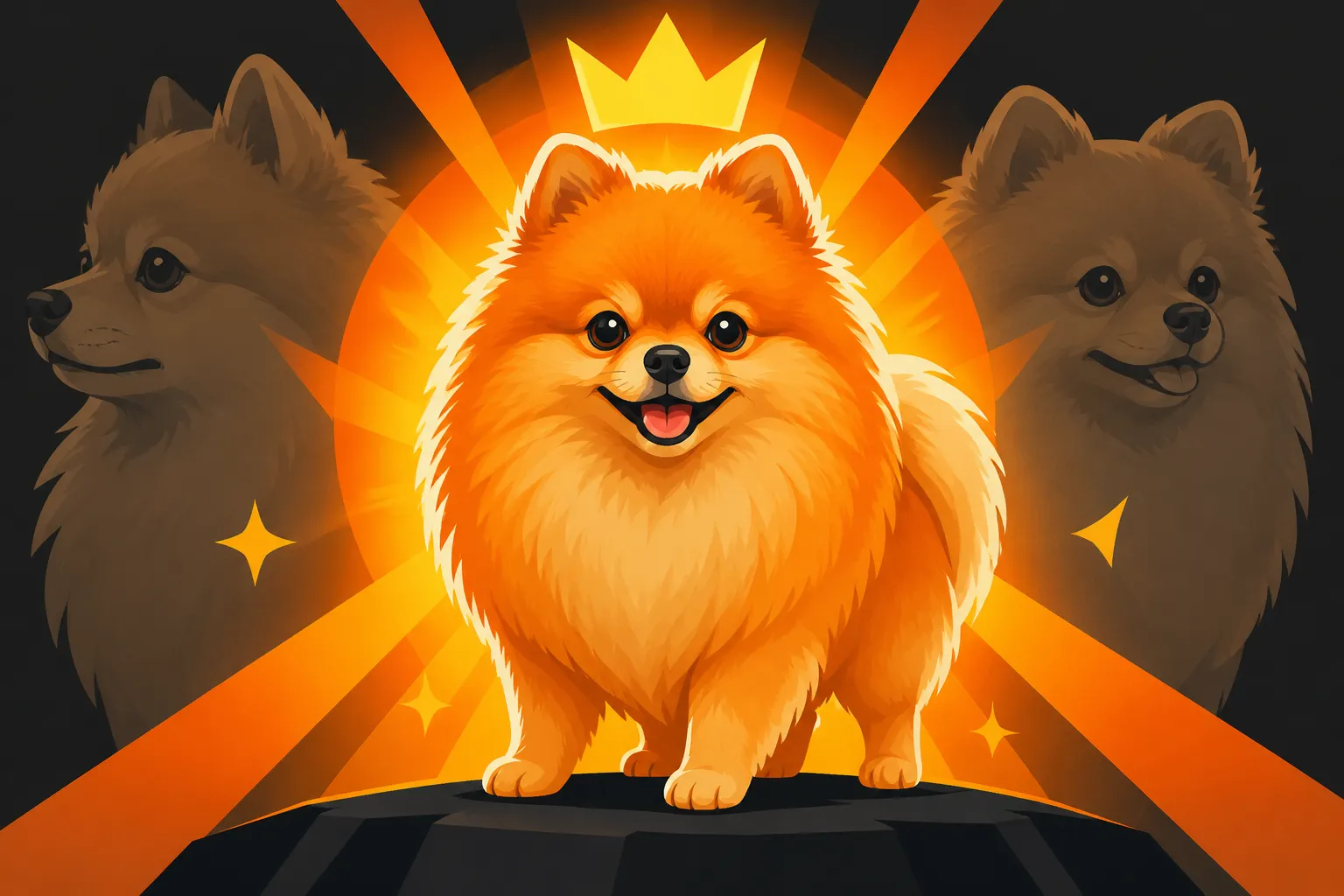
- Oranges: This is the classic, most common shade, sitting squarely in the middle of the spectrum. Orange Pomeranians exhibit a clear, bright orange hue, often reminiscent of a tangerine or a ripe pumpkin. The pigment is richer than cream but not as intense as red. Many people identify this as the quintessential Pomeranian color.
- Reds: Red Pomeranians have the most saturated and deepest phaeomelanin pigment. Their coats can be a rich mahogany, a fiery copper, or even a deep rust color. These dogs often have very little, if any, shading to lighten their coats, presenting a strikingly uniform and intense color.
These distinctions are often clearer in adult coats than in puppies, as Pomeranian puppies go through an awkward "puppy uglies" phase where their coats are thinner and their color might not be fully developed. The Puppy Uglies a Pomeranian Goes Through can really change their appearance!
Sable Markings and Their Interaction with Orange
Many orange Pomeranians aren't just solid orange; they often feature stunning sable markings. Sable refers to black tipping on the ends of the guard hairs, creating a frosted or shaded effect over the underlying lighter color. In an orange sable Pomeranian, you'll see black hairs mixed in with the orange, particularly on the ears, tail, and sometimes across the back. This adds incredible depth and dimension to the coat.
For example, a "wolf sable" might have more extensive black tipping, giving the coat a grizzled, wilder appearance over a lighter cream or silver base. An "orange sable," on the other hand, will have black tipping primarily on an orange background, creating a richer, warmer overall tone. These sable markings are controlled by a separate gene from the "ee" locus but frequently occur in conjunction with red-based coats, making them a common sight. It’s important to note that these black tips can sometimes fade or lessen as the dog ages, which is another fascinating aspect of How a Sable Pomeranian's Coat Changes With Age.
How a Pomeranian's Color Changes as It Grows
It’s one of the most common questions new Pomeranian owners have: "Will my puppy's color stay the same?" The answer, especially for orange and related shades, is almost always no! Pomeranian coats, particularly in the phaeomelanin range, are famous for undergoing significant changes from puppyhood to adulthood.
A puppy born deep orange might lighten to a cream, while a cream puppy might darken to a rich orange. Sable markings can also intensify or recede. This color transformation is largely due to the "puppy uglies" phase, where the soft, fluffy puppy coat is shed and replaced by the dense, harsh double coat of an adult. During this time, which can last from about 3 to 12 months of age, the true adult color begins to emerge.
For example, a puppy might appear quite dark, even brownish-orange, and then, as the adult coat grows in, it settles into a much brighter, clearer orange. The intensity of the rufous polygenes becomes more apparent as the new, thicker guard hairs develop. It’s a bit like watching a painting slowly reveal its true colors as it dries. This process means that while a puppy's color gives you a hint, the final, glorious shade of your orange Pomeranian might not be fully evident until they are well into their first year.
Here’s a simplified look at how some orange shades might evolve:
| Puppy Coat Description | Adult Coat Potential | Common Changes to Observe |
|---|---|---|
| Pale Cream (almost white) | Light Cream, Apricot, or very pale Orange | Darkening of pigment as guard hairs grow, faint orange tones emerge. |
| Golden Yellow / Light Orange | Medium Orange, sometimes with subtle sable | Deepens and clarifies to a true orange, sable tips may become more pronounced. |
| Rich Orange / Orange Sable | Deeper Orange, Red, or more defined Orange Sable | Intensity increases, black tipping may spread or become more distinct. |
| Reddish Brown / Dark Sable | Deep Red, Red Sable, or rich Orange Sable | Darker tones may clarify, revealing a vibrant red or a striking red sable. |
This table offers a general guide, but every Pomeranian is an individual masterpiece!
Care and Characteristics of the Orange Pomeranian
Beyond their captivating color, orange Pomeranians are, at their heart, Pomeranians. This means they share the breed's distinct personality traits and care requirements. However, there are a few considerations, both real and perceived, that owners of orange Poms often ponder.
Grooming Considerations for a Vibrant Orange Coat
An orange Pomeranian’s coat is part of its charm, but maintaining that fluffy brilliance takes commitment. All Pomeranians have a dense double coat, consisting of a soft, downy undercoat and longer, harsher guard hairs. The Guard Hair and Undercoat of a Pomeranian work together to create that distinctive "stand-off" look. The good news is that caring for an orange coat isn't fundamentally different from caring for any other color. However, keeping the color vibrant and the coat healthy does involve consistent effort.
Regular brushing, at least 2-3 times a week, is essential to prevent mats and tangles, which can hide in that thick fur. Using a good slicker brush and a metal comb, available at retailers like Chewy, will help you work through the coat down to the skin. During seasonal shedding, often called "coat blow," which can happen twice a year, brushing may need to be a daily affair. This helps remove dead undercoat and keeps the skin healthy. For orange coats, particular attention to cleanliness can prevent the coat from looking dull or dingy. Regular bathing with a quality shampoo designed for double coats, followed by thorough drying and fluffing, will ensure those orange hues always look their best. Remember, a healthy coat is a vibrant coat, regardless of color.
Common Health Perceptions and Reality
Sometimes, people mistakenly associate certain health issues with specific coat colors. This is a topic that can lead to a lot of anxiety for owners. For orange Pomeranians, it's important to understand that the color itself does not predispose them to any unique health conditions. The "ee" gene that creates the orange pigment is generally not linked to any health concerns.
Pomeranians, regardless of color, can be prone to certain breed-specific health issues like The Honking Cough of a Pomeranian's Collapsing Windpipe, Slipping Kneecaps in a Five Pound Pomeranian, and Dental Disease in a Mouth the Size of a Pomeranian's. These are genetic predispositions of the breed as a whole, not tied to a particular color. Responsible breeders will health test their breeding stock for these conditions, prioritizing overall health over a specific coat color. So, if you have an orange Pomeranian, focus on general Pomeranian health guidelines, regular vet check-ups, and a good diet, rather than worrying about color-specific ailments. The color is just a beautiful wrapper; it's the genetics inside that truly matter for health.
Personality Traits: Is Orange More "Pomeranian"?
Just like health, a Pomeranian’s personality is not dictated by its coat color. An orange Pomeranian will exhibit the same spirited, intelligent, and often feisty personality traits as a black, white, sable, or parti-colored Pom. They are known for being:
- Intelligent and Quick Learners: Poms are smart cookies, eager to please (when it suits them!), and can pick up tricks and commands surprisingly fast.
- Confident and Bold: Despite their small stature, Pomeranians often have big personalities. They aren't afraid to stand up to much larger dogs (sometimes to their detriment!) and see themselves as majestic lions.
- Loyal and Affectionate: They form strong bonds with their families and love to be involved in household activities. Many are total cuddle bugs, happy to nap on a lap or follow you from room to room.
- Alert and Vocal: Poms are excellent watchdogs, quick to alert you to anything out of the ordinary with their distinctive bark. The Doorbell and the Pomeranian Response is a common scenario in a Pom household!
So, while your orange Pomeranian might stand out visually, their inner sparkle and "Pom-titude" are entirely consistent with the breed's beloved characteristics, regardless of their glorious hue. Whether they're a light cream or a deep red, their heart is pure Pomeranian.
Dispelling Myths About Orange Pomeranians
With any popular dog breed and color, myths and misunderstandings inevitably crop up. Orange Pomeranians are no exception. Let's tackle some common misconceptions to provide a clearer, more realistic understanding of these beautiful dogs.
The "Rare" Color Fallacy
One of the most persistent myths in the world of dog breeding, especially with popular colors, is the idea of "rarity" to justify inflated prices. While truly rare colors exist in some breeds, orange is absolutely not a rare color for Pomeranians. In fact, as we’ve discussed, it’s one of the most common and dominant colors in the breed. Its prevalence is a direct result of historical breeding practices, its genetic straightforwardness, and its widespread appeal.
Some less scrupulous breeders might market an orange Pomeranian as "rare" or "exclusive" to command a higher price. This is a red flag. Reputable breeders focus on health, temperament, and adherence to the breed standard, not on inventing scarcity for common colors. If you're encountering a breeder who emphasizes the "rarity" of an orange Pomeranian, it's wise to proceed with caution and seek out someone who prioritizes the well-being and genuine quality of their dogs over marketing hype. Always remember, the value of a Pomeranian lies in its health and temperament, not in a fabricated rarity of its coat color.
Orange vs. Other Colors: No Genetic Superiority
Another common misconception is that one color of Pomeranian is somehow inherently "better" or "more traditional" than another, or that orange Pomeranians possess some form of genetic superiority. This simply isn't true. As a veteran lifestyle blogger who has loved Poms for years, I can tell you that a Pomeranian's genetic makeup for health and temperament is far more important than the specific shade of its coat.
The genetic switch that turns a Pomeranian orange (the "ee" genotype) is a simple, non-complex trait. It doesn't confer extra intelligence, better health, a longer lifespan, or any other inherent advantage over a black, white, or sable Pomeranian. Each color holds its own unique beauty and charm. What truly matters is the responsible breeding behind the dog, the health clearances of the parents, and the care and socialization the puppy receives. A healthy, well-adjusted Pomeranian is a wonderful companion, regardless of whether it's the classic orange, a striking black, or a playful parti-color. Focusing on genetic superiority based on color is a misguided approach that can distract from finding a truly healthy and happy pet.
Understanding Responsible Breeding Beyond Color
The emphasis on specific colors, especially popular ones like orange, can sometimes overshadow the critical importance of responsible breeding practices. A responsible Pomeranian breeder will always prioritize the overall health, temperament, and structural soundness of their dogs above all else. This means:
- Health Testing: They will conduct comprehensive health screenings for common Pomeranian ailments, such as luxating patellas, heart conditions, and eye issues. This information should be transparently shared with potential buyers.
- Adherence to Breed Standard: While color is part of the standard, it's not the only part. A good breeder also considers correct size, coat texture, ear set, and overall conformation. The Weight the Pomeranian Standard Requires and The Stand Off Coat a Pomeranian Must Have are crucial elements.
- Temperament and Socialization: Puppies should be raised in a clean, stimulating environment, receiving early socialization to ensure they are confident and well-adjusted.
- Transparency and Support: A reputable breeder will be open about their practices, answer all your questions, provide a health guarantee, and offer ongoing support throughout your dog's life. They are passionate about their breed and committed to its well-being.
When looking for a Pomeranian, whether orange or any other color, always do your homework on the breeder. Don't let a dog's beautiful coat color be the sole deciding factor. A truly stunning Pomeranian is one that is healthy, happy, and bred with integrity. The vast selection of pet supplies on sites like Chewy ensures that once you find your healthy pup, you'll have everything you need to care for them, from high-quality food to grooming tools for that gorgeous coat.
Disclaimer
This article is for general informational purposes only and does not constitute professional advice. Laws, prices and regulations vary by location and change over time. Consult a qualified professional for guidance on your specific situation.