Whether the Pomeranian Is Actually German
It's a common thought, isn't it? You hear "German Shepherd," "German Shorthaired Pointer," and then you see "Pomeranian," and you just assume there's a strong German connection there. But the truth about the Pomeranian's origins and its current identity is a little more nuanced than a simple nationality. This guide is here to untangle the threads of history, geography, and breed development to clarify exactly where our beloved Poms truly come from and what it means for them today.
The Historical Roots of the Pomeranian: Where Did They Really Come From?
When we talk about the Pomeranian, it's easy to get caught up in the modern image of a tiny, fluffy companion. But this breed has a robust history, tracing back much larger, working dogs from northern Europe. Understanding their ancestry means looking beyond just one country's borders and embracing a broader regional influence.
The Region of Pomerania: More Than Just a Name
The very name "Pomeranian" points directly to its geographical origins: Pomerania. But here's where it gets interesting – Pomerania isn't exclusively German today, nor was it always in the past. This historical region lies along the southern coast of the Baltic Sea, and over centuries, its territories have been divided and rejoined, falling under the control of various powers, including Germany (specifically Prussia) and Poland. So, while a significant portion of what was historically Pomerania is now part of Germany, and another part is in Poland, the name itself signifies a region rather than a single modern nation.
The early Pomeranians, or rather their ancestors, were much larger dogs, often weighing as much as 25 pounds, if not more. These dogs were hearty working animals, used for herding sheep and pulling small sleds in the rugged northern climate. Think of them as miniature versions of the larger Spitz-type dogs, common throughout the Arctic and Nordic regions. It's from this hardy stock that the fluffy, spirited companion we know today eventually emerged. Their original purpose was far from being a lapdog, a testament to their resilient nature, which is sometimes overlooked in their dainty appearance. You can still see echoes of their working past in their intelligence and sometimes stubborn independence. This historical context helps us understand why they carry the name Pomerania and the Sled Dogs Behind the Pomeranian.
The German Spitz Connection: A Family Affair
To truly understand the Pomeranian's "nationality," we must look at its family tree, and that tree is deeply rooted in the German Spitz family. The German Spitz is not just one breed but a group of several distinct breeds that vary primarily in size. These include the Wolfspitz (Keeshond), the Giant Spitz, the Medium Spitz, the Miniature Spitz, and finally, the smallest of them all, the Toy Spitz, which is what the Pomeranian is known as in Germany and by the Fédération Cynologique Internationale (FCI).
This classification by the FCI is crucial. The FCI, an international federation of a large number of national kennel clubs, recognizes the Pomeranian under the German Spitz standard, specifically as the "Zwergspitz," which literally translates to "Dwarf Spitz" or "Toy Spitz." This firmly links the Pomeranian to a German heritage within the purebred dog world. So, while the region of Pomerania might have fluid borders, the breed family it belongs to, according to many international standards, is undeniably German. This means that, genetically and historically, our Poms share a common ancestry with other German Spitz varieties, distinguished primarily by their diminutive size and the intensive breeding efforts that sculpted them into the "toy" companion we cherish. If you've ever wondered about The German Spitz Family a Pomeranian Belongs To, this is where they all connect.
The Role of British Influence: Queen Victoria and the Breed's Transformation
While the Pomeranian's roots are in the German-Polish border region and its family is German Spitz, its development into the tiny, fluffy dog we adore today owes a tremendous debt to another nation: Great Britain, particularly through the influence of Queen Victoria.
How Queen Victoria Popularized and Miniaturized the Pomeranian
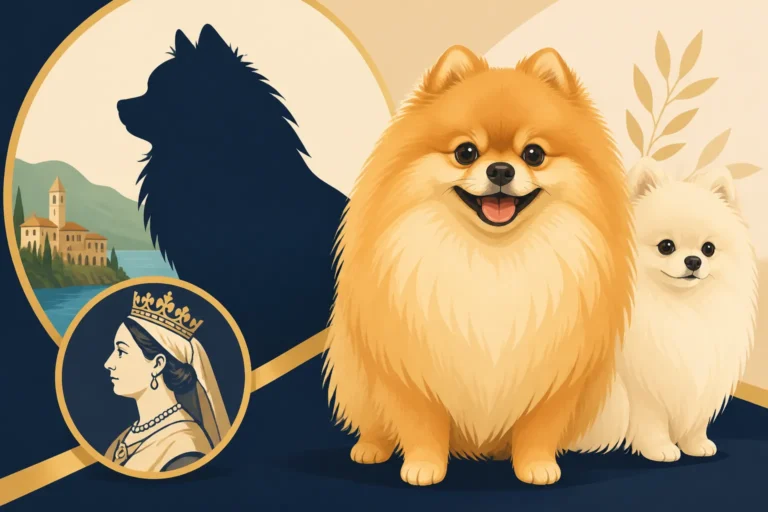
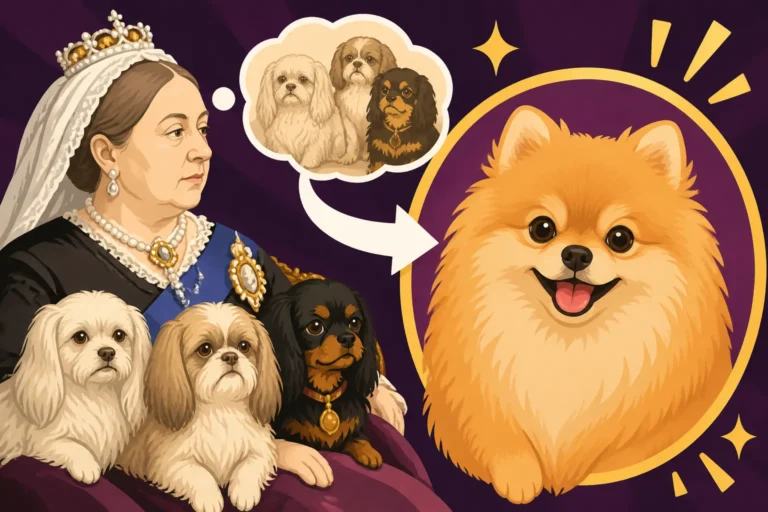
Queen Victoria's passion for the breed began in 1888 when she visited Italy and was captivated by a small, reddish Pomeranian named Marco. Marco reportedly weighed around 12 pounds, which was already significantly smaller than the original working Spitz dogs. When Marco was exhibited at a dog show, his immense popularity led to a widespread desire for smaller Pomeranians. Victoria herself began breeding and showing Poms, and her clear preference for the daintier specimens set a powerful trend.
Breeders, eager to meet the demand generated by royal endorsement, began selectively breeding for smaller size. Over a remarkably short period, perhaps just one or two generations, the average size of the Pomeranian dramatically decreased. This was a pivotal moment, transforming the breed from its larger, hardier form into the exquisite toy dog we recognize today. This rapid miniaturization is a fascinating aspect of the breed's history and highlights the significant impact of influential figures on breed development. Without Queen Victoria's particular taste, the breed might not have become the small companion we know (see The Three to Seven Pounds a Pomeranian Is Allowed). Her direct influence is often credited with How the Pomeranian Halved in Size in One Lifetime.
The Divergence of Breed Standards: British vs. Continental
With the growing popularity and focused breeding efforts in Britain, distinct breed standards began to emerge. The British Kennel Club (KC) developed its own standard for the Pomeranian, emphasizing the qualities that had become desirable in England – the smaller size, the abundant stand-off coat, and the vivacious temperament. This standard became the blueprint for the breed in many English-speaking countries, including the United States, where the American Kennel Club (AKC) largely followed the British model.
On the European continent, however, particularly in Germany, the view was a little different. The German Spitz breeds continued to be recognized as a single group with various size divisions. For them, the Pomeranian wasn't a separate entity but simply the smallest variety, the Zwergspitz. This meant that while the general characteristics were similar, there could be subtle differences in what was prioritized in breeding, leading to slight variations in type. For instance, the original German standard might have allowed for a slightly larger range of sizes or placed less emphasis on certain extreme features that became fashionable in Britain. This divergence is why sometimes when people ask Whether an American and European Pomeranian Differ, you might find subtle distinctions in their appearance or recognized lineage, even though they share the same fundamental heritage. This is a key reason Why the FCI Files the Pomeranian as a German Spitz, maintaining its link to the broader German Spitz classification.
Modern Pomeranian Identity: A Global Breed with Local Ties
Today, the Pomeranian is truly a global citizen, adored by enthusiasts and families across the world. While its historical roots are complex and its development influenced by various nations, its identity in the modern era transcends single national borders.
The Pomeranian in Germany Today: Still a Spitz
In Germany, where the breed retains its deep ties to the larger Spitz family, the Pomeranian is still very much considered the "Zwergspitz." If you were to visit a German dog show, you wouldn't typically see a separate "Pomeranian" category; instead, they would be judged as the smallest of the German Spitz varieties. This perspective underscores their enduring connection to their historical homeland and the lineage from which they sprang. For German breeders, maintaining the health and characteristics consistent with the broader Spitz type is often a priority, alongside the specific traits of the Zwergspitz.
This is a subtle but important distinction that often surprises new owners. They expect a "Pomeranian" as understood in North America or the UK, and while it is essentially the same dog, the classification within breed organizations can differ. It’s a bit like different dialects of a language – the core is the same, but the nuances are distinct. Understanding this helps appreciate the richness of the breed's background and how different cultures have embraced and continued its development. When browsing for supplies for your Zwergspitz, you'll still find plenty of suitable products, whether you're looking on a platform like Chewy in the US or a local German pet store.
The International Reach of the Pomeranian
Despite its regional and national origins, the Pomeranian has become incredibly popular globally. From bustling city apartments in Tokyo to sprawling suburban homes in North America, these little dogs have captured hearts everywhere. Their compact size, vibrant personality, and stunning double coat make them highly adaptable companions, whether they're competing in dog sports or simply cuddling on the couch.
This international appeal means that the Pomeranian's identity is no longer confined to being "German" or "British." It's a breed that belongs to the world. Breeders and enthusiasts from every continent contribute to its ongoing development, focusing on health, temperament, and maintaining the breed standard. This global community ensures a diverse gene pool and a continued dedication to the breed's well-being. When you search for specialized food, grooming tools, or even educational resources for your Pomeranian, you're tapping into a vast network of information and products available worldwide. For example, reputable online retailers like Chewy cater to a global market, offering everything from small-breed kibble to delicate brushes designed for a Pom's stand-off coat. You might even find discussions about The Stand Off Coat a Pomeranian Must Have across forums hosted in various languages, all united by their love for the breed.
Debunking the Myths: German, British, or Simply Pomeranian?
So, after delving into the history, classifications, and global appeal, what's the definitive answer? Is the Pomeranian actually German? It's time to put it all together.
Why the "German" Label Lingers
The "German" label persists for several very good reasons. Firstly, the name Pomerania itself has strong historical ties to German territories. Secondly, and perhaps more importantly, the Pomeranian is undeniably part of the German Spitz family. This fundamental genetic and ancestral link means that in many respects, the Pomeranian is a German Spitz, simply the smallest version of it. Its foundational genetics and the general type of dog it represents are firmly rooted in that lineage. When you look at The Weight the Pomeranian Standard Requires, you're looking at a standard set with this ancestry in mind.
However, the breed's modern appearance – its tiny stature and abundant, puffy coat – was largely developed and popularized in England, under the influential eye of Queen Victoria. So, while the roots are German, the refined "Pomeranian" as most people picture it today has a distinct British chapter in its story. It's a testament to the power of selective breeding and popular culture to shape a breed over time. It's an intricate dance between geography, history, and human preference.
| Aspect | Primary Origin / Influence | Key Characteristics / Notes |
|---|---|---|
| Geographical Name | Pomerania Region | Historical region along the Baltic Sea, spanning parts of modern-day Germany and Poland. Where larger ancestors of the Pom originated. |
| Breed Family | German Spitz | The Pomeranian (Zwergspitz) is formally recognized as the smallest variety of German Spitz by the FCI and in Germany. Ancestry is clearly German Spitz. |
| Miniaturization & Popularity | Great Britain (Victorian Era) | Queen Victoria's preference for smaller dogs led to intensive breeding efforts in England, dramatically reducing the breed's size and shaping its modern "toy" appearance. |
| Modern Identity | Global | Widely popular worldwide, with dedicated breeders and enthusiasts in many countries. Its identity is now international, though historical ties remain significant. |
| Breed Standard | British and Continental | Different kennel clubs maintain standards that, while similar, may have subtle variations reflecting historical development and specific breed goals in different regions. |
Embracing the Breed's Rich, Multinational Heritage
Ultimately, the Pomeranian's story is a beautiful tapestry woven from threads of German ancestry, British refinement, and global adoration. To label it as solely German or solely British would be to diminish the rich, multifaceted history that has shaped this remarkable breed. Our Poms carry the legacy of working Spitz dogs from northern European regions, the focused breeding efforts spurred by royalty, and the continuous dedication of countless breeders and owners around the world.
When we look at our own fluffy companions, we can appreciate the tenacity of their larger ancestors, the meticulous selection that led to their dainty size, and the joyous spirit that makes them such beloved family members. Whether you source your premium small-breed food from a trusted online retailer like Chewy or purchase a specialized shampoo from a boutique breeder, you're participating in the global community that cherishes this breed. So, the next time someone asks, you can confidently explain that while the Pomeranian is indeed deeply connected to its German Spitz heritage, its journey to becoming the charming toy dog we know today is a truly international tale. It's a Pomearian, through and through, with a fantastic story to tell!
Disclaimer
This article is for general informational purposes only and does not constitute professional advice. Laws, prices and regulations vary by location and change over time. Consult a qualified professional for guidance on your specific situation.