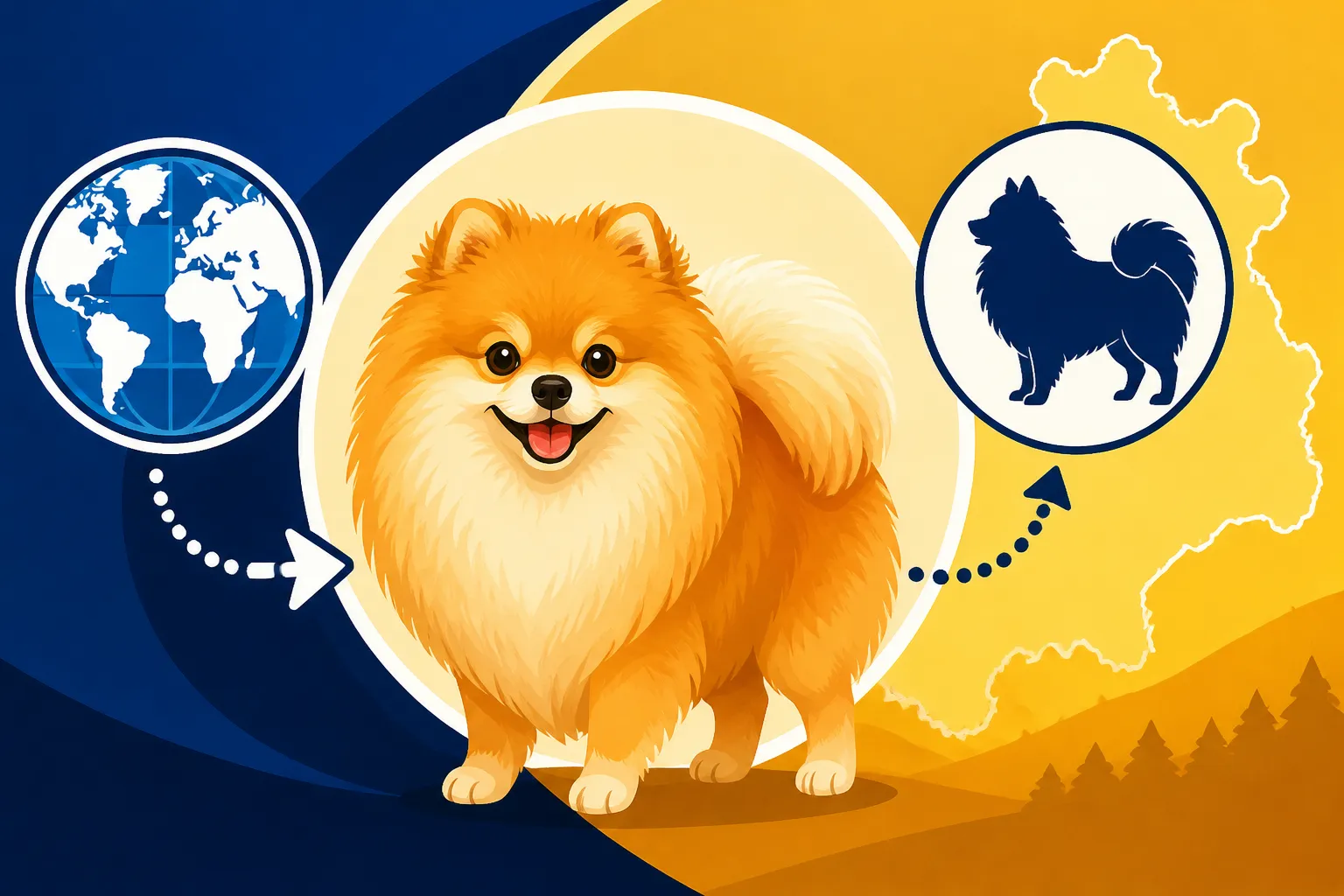
Why the FCI Files the Pomeranian as a German Spitz
It can be incredibly confusing when you're researching our beloved fluffy friends and suddenly encounter terms like "German Spitz" that seem to encompass your tiny Pomeranian. You adore your little Pom, and hearing it categorized under a broader, seemingly larger breed group can feel like your unique companion is being… well, lost in translation. This guide will unravel why the Fédération Cynologique Internationale (FCI), a major international kennel club, classifies the Pomeranian as a variety of the German Spitz, shedding light on the fascinating history and distinctions that lead to this classification.
The Deep Roots of the German Spitz Family Tree
To truly understand why the FCI considers our Poms to be a German Spitz, we have to travel back in time, far before the modern Pomeranian became the small, fluffy companion we know today. The German Spitz is not just one breed; it's a family of dogs with ancient origins, tracing their lineage back to the stone age peats dogs. These dogs were the foundational ancestors for many Nordic and Spitz-type breeds across Europe, known for their distinctive upright ears, dense double coats, and foxy faces.
A History of Northern Spitz Dogs
Imagine a time when dogs weren't bred for specific lap-sitting duties, but for utility. The ancestors of the German Spitz were hardy, watchful companions, often found on farms and barges, serving as vigilant guard dogs. Their thick coats protected them from harsh weather, and their keen senses made them excellent alarm systems. They were robust dogs, typically much larger than today's Pomeranians, and were valued for their intelligence and loyalty. This original stock spread across various regions, adapting to local conditions and giving rise to different sizes and slightly varied appearances. This is where the story of the Pomeranian truly begins, as a regional variant of these ancient spitz dogs.
The Original Pomeranian: A Much Larger Dog
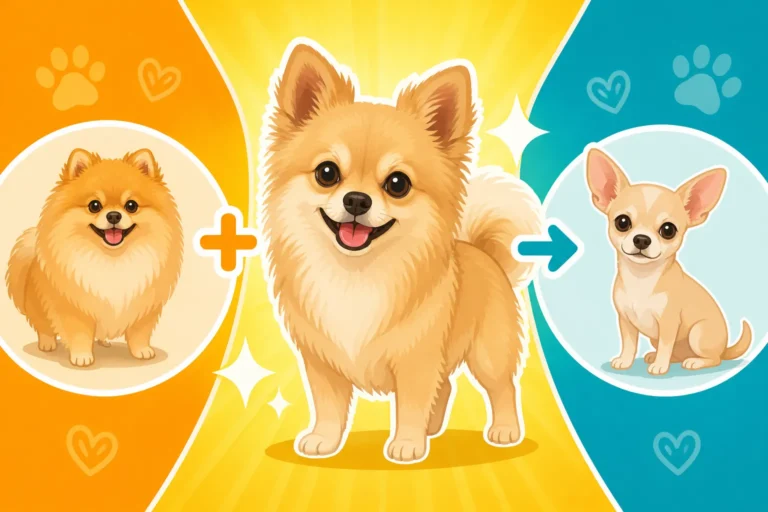
When you hear "Pomeranian," you likely picture a dog weighing between three and seven pounds, a veritable fluffball of charm. However, the original dogs from the historical region of Pomerania (which is now parts of Germany and Poland) were significantly larger. These were the working dogs, the barge guards, and the farm companions, weighing closer to 20-30 pounds. They were still spitz-type dogs, with that characteristic foxy face and luxurious double coat, but their size and build were far more substantial. It's easy to see how The Twenty Five Pound Pomeranian of the 1800s would have been grouped with other medium-sized German Spitz varieties. It was through selective breeding, notably influenced by Queen Victoria's preference for smaller dogs, that the breed was gradually miniaturized over centuries to become the toy breed we recognize today.
How the Pomeranian Became Its Own Distinct Branch
While the modern Pomeranian undeniably descended from the larger German Spitz types, its journey to becoming a distinct breed, particularly in the English-speaking world, involved a fascinating evolution and a bit of naming divergence across different kennel clubs.
Miniaturization and Breed Development
The real turning point for the Pomeranian's size came during the 19th century. As dog shows gained popularity and the Victorian era saw a rise in companion animals, breeders began to select for smaller and smaller individuals within the Pomeranian lineage. Queen Victoria herself played a pivotal role, famously importing a tiny Pomeranian named Marco from Florence, Italy, weighing a mere 12 pounds, and later exhibiting even smaller dogs. Her enthusiasm for these diminutive canines spurred a widespread trend, leading to dedicated breeding efforts to achieve the compact size we cherish today. This process of miniaturization led to a dog that, while still possessing all the classic Spitz traits, was dramatically different in scale from its larger ancestors. This is why when we look at How the Pomeranian Halved in Size in One Lifetime, we're talking about a significant shift in breeding focus.
The FCI's German Spitz Classification
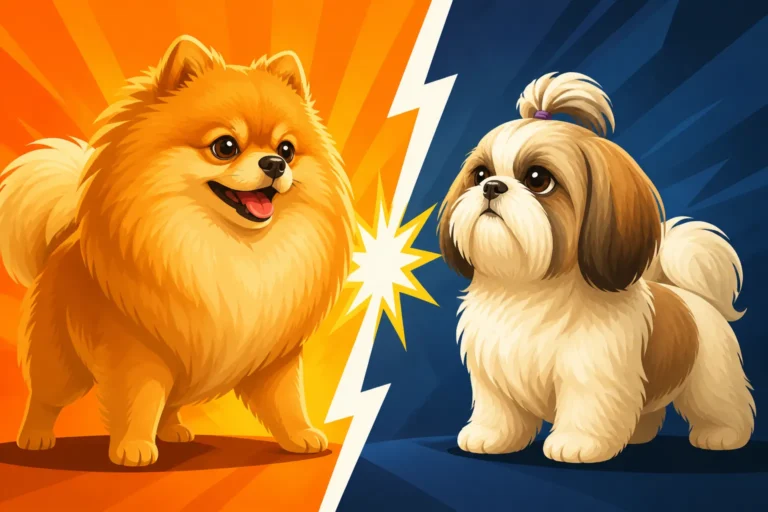
The FCI, which represents a large number of countries, takes a comprehensive view of breed origins and categorizes dogs more broadly based on their shared ancestry and characteristics. For them, the various sizes of German Spitz, from the massive Keeshond (Wolfspitz) down to the tiny Pomeranian (Zwergspitz), are all simply different varieties of the same foundational German Spitz breed. They are all considered "Spitz dogs of Central Europe."
Here's a breakdown of how the FCI groups the German Spitz, with the Pomeranian fitting neatly into the smallest category:
| FCI German Spitz Variety | Typical Height (at shoulder) | Typical Weight | Key Characteristics |
|---|---|---|---|
| Wolfspitz (Keeshond) | 49-55 cm (19-22 in) | 20-30 kg (44-66 lbs) | Grey, plush coat, distinct "spectacles" markings. |
| Giant Spitz (Großspitz) | 42-50 cm (17-20 in) | 17-18 kg (37-40 lbs) | White, black, or brown, proud bearing. |
| Medium Spitz (Mittelspitz) | 30-38 cm (12-15 in) | 7-11 kg (15-24 lbs) | Diverse colors, alert and lively. |
| Miniature Spitz (Kleinspitz) | 23-29 cm (9-11 in) | 3-5 kg (7-11 lbs) | Diverse colors, compact body. |
| Toy Spitz (Zwergspitz) / Pomeranian | 18-22 cm (7-8.5 in) | 1.9-3.5 kg (4-7.7 lbs) | Diverse colors, abundant double coat, smallest size. |
As you can see, the Pomeranian, or "Zwergspitz" (which literally translates to "Dwarf Spitz") in the FCI system, is just the smallest end of a continuous spectrum of Spitz breeds. This approach emphasizes their shared genetic heritage and morphological traits, rather than treating each size variant as an entirely separate breed. This is also why, if you were to ask a European breeder about a Zwergspitz, they would be talking about your fluffy friend. This broad classification makes perfect sense when you consider The German Spitz Family a Pomeranian Belongs To.
Understanding FCI vs. Other Kennel Clubs
The differences in how kennel clubs classify breeds can often be a source of confusion for owners, especially when comparing the FCI's approach to that of organizations like the American Kennel Club (AKC) or The Kennel Club (UK). Each organization has its own history, traditions, and criteria for recognizing and grouping breeds.
The American Kennel Club and The Kennel Club (UK) Perspective
In contrast to the FCI, the American Kennel Club (AKC) and The Kennel Club (UK) recognize the Pomeranian as a distinct breed in its own right, usually categorized within their "Toy Group." They don't typically refer to it as a "German Spitz variety." This distinction highlights a difference in philosophy:
- AKC/KC: Tends to emphasize distinct breed standards based on size, appearance, and perceived function, often recognizing breeds as separate entities once they've been selectively bred to a consistent, unique type over a long period. For them, the Pomeranian's small size, profuse coat, and specific temperament are enough to warrant its own breed status.
- FCI: Prefers to group breeds that share a very close common ancestry and fundamental characteristics, treating different sizes or minor variations as "varieties" of a single overarching breed. This perspective often looks further back into a breed's developmental history.
This means that while your Pomeranian might be registered as a distinct breed by the AKC, its historical and genetic links to the larger German Spitz family are acknowledged by the FCI. It's not a question of one being "right" and the other "wrong," but rather different ways of organizing and understanding the canine family tree. It's a nuanced point that often surprises new owners, who might wonder Whether an American and European Pomeranian Differ.
Why the Discrepancy Matters (and Doesn't)
For the average Pomeranian owner, whether your dog is officially a "Pomeranian" or a "Zwergspitz" might not seem to have much day-to-day impact, and truthfully, it often doesn't. You'll still feed your dog the same high-quality food, perhaps from a trusted brand like Chewy, and shower them with love. However, understanding this classification can be interesting for a few reasons:
- Breeding and Showing: For breeders and those involved in conformation shows, the classification is crucial. Dogs shown under FCI rules must adhere to the German Spitz standard for the Zwergspitz variety, which can sometimes have slightly different nuances than an AKC or KC standard.
- Historical Context: It provides a deeper appreciation for the Pomeranian's rich history and its connection to a much broader lineage of dogs. It reminds us that our little lap companions once had larger, more robust relatives performing vital duties.
- Global Understanding: If you travel internationally with your Pomeranian or speak to enthusiasts from different countries, knowing these classifications helps you understand the terminology they use. For example, a dog described as a "Zwergspitz" in Germany is very much the same as what you call a Pomeranian.
Ultimately, regardless of classification, the core traits of the Pomeranian remain. They are still the intelligent, lively, and incredibly fluffy companions we adore, with their characteristic The Stand Off Coat a Pomeranian Must Have and vibrant personalities.
What This Means for Pomeranian Owners Today
So, you now know that internationally, your beloved Pomeranian is often considered the smallest member of the German Spitz family. Does this change anything about how you care for them? Not really, but it can certainly inform your understanding and choices as a responsible owner.
Appreciating the Spitz Traits
Knowing your Pomeranian's heritage as a Spitz can help you better understand some of their inherent behaviors and physical needs. Spitz breeds are generally known for their intelligence, alertness, and sometimes their independent streak. They often have a strong vocal nature, which explains The Age a Pomeranian Starts Alert Barking at every passerby or leaf blowing by. Their dense double coats, a hallmark of all Spitz dogs, require consistent grooming to keep them healthy and beautiful. You'll want to ensure you have the right tools, and many owners find excellent grooming supplies, from brushes to shampoos, on sites like Chewy.
Consider these aspects:
- Grooming: That magnificent double coat, inherited from its Spitz ancestors, needs regular attention. Daily brushing is ideal to prevent mats and maintain its "stand-off" appearance. This also means you need to be cautious about shaving, as it can damage the undercoat.
- Temperament: Their intelligence and alertness make them quick learners, but also prone to boredom if not adequately stimulated. They are often incredibly loyal to their families, but can be reserved with strangers, a trait common in many guard-type Spitz breeds.
- Exercise: While small, Pomeranians aren't just lap dogs. They have energy and enjoy regular walks and playtime, tapping into that ancestral vigor.
Continuing the Legacy of Care
Regardless of how kennel clubs classify them, our Pomeranians deserve the best care we can provide. Their unique needs, from their dental health in their small mouths to managing their sometimes fragile windpipes, remain paramount. Understanding their Spitz background simply adds another layer to our appreciation of these remarkable little dogs.
Whether you're looking for specific small-breed kibble or a comfortable harness that won't irritate their neck, resources on Chewy and other reputable pet suppliers are always available to help you find what you need. Focusing on preventive care, regular vet check-ups, and consistent training will ensure your Pomeranian thrives, honoring the long lineage of hardy, beautiful Spitz dogs from which they descended. The most important thing, after all, is the love and bond you share with your furry family member.
Disclaimer
This article is for general informational purposes only and does not constitute professional advice. Laws, prices and regulations vary by location and change over time. Consult a qualified professional for guidance on your specific situation.