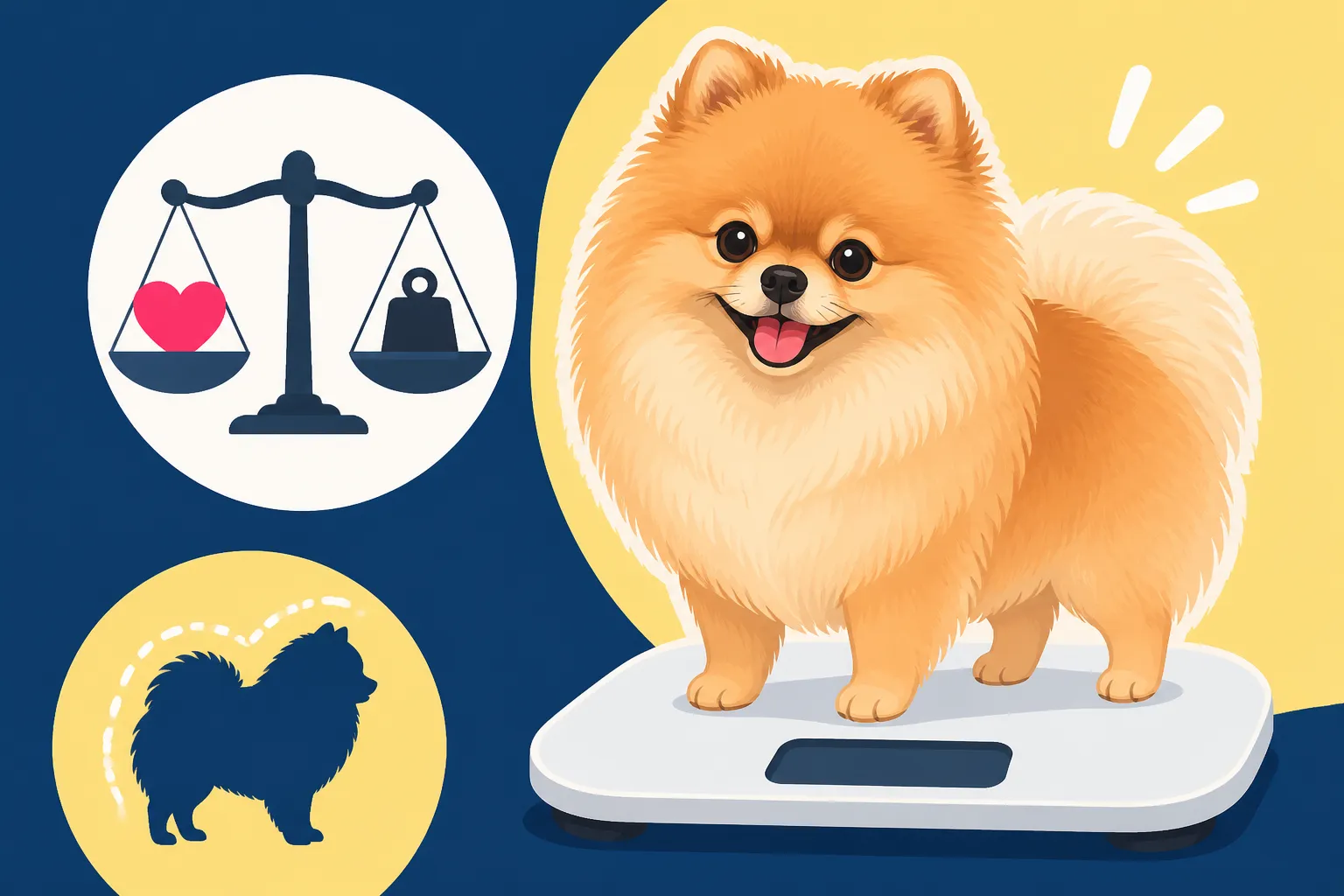
The Weight the Pomeranian Standard Requires
It's incredibly frustrating when you hear all sorts of different numbers about what a Pomeranian should weigh. You see Poms of all sizes out there, from tiny little fluff balls to more robust, sturdy dogs, and it leaves many of us wondering if our beloved companion is truly within a healthy, breed-appropriate range. This guide is here to cut through the confusion and explain exactly what the Pomeranian breed standard dictates for weight, why it matters so much, and what that means for your furry family member's health and well-being.
Understanding the Pomeranian Breed Standard
The world of purebred dogs often comes with a set of guidelines called a "breed standard." Think of it as the original blueprint or a detailed instruction manual for what an ideal example of the breed should look like, how it should move, and even what its temperament should be. For Pomeranian owners, understanding this standard is key to appreciating the unique characteristics that define our little fluffballs.
The Purpose of a Breed Standard
A breed standard isn't just about looks; it's a comprehensive document created by the parent club of the breed (like the American Pomeranian Club) to guide breeders in making responsible choices, ensuring the preservation of the breed's distinct traits, health, and function. For Poms, this means maintaining their spirited personality, their glorious double coat, and, crucially, their distinctive small size without sacrificing robust health. It sets the bar for what a Pomeranian truly is, helping to differentiate it from other breeds and maintaining its integrity over generations.
Breeders use the standard to select dogs for breeding programs, aiming to produce puppies that embody these ideal characteristics. Judges at dog shows also rely on the standard to evaluate competing dogs, determining which ones most closely match the breed's ideal. Without a standard, a breed could easily drift and lose its defining features, becoming a collection of dogs that barely resemble each other.
Key Elements Beyond Just Weight
While weight is a significant part of the Pomeranian standard, it's far from the only factor. The standard meticulously describes everything from head shape, ear set, eye color, and muzzle length, to the texture, density, and color of the famous double coat. It details the desired bone structure, the way the tail is carried (high and flat over the back, fanned out), and the length and proportion of the body. Even gait, or how the dog moves, is described in detail, emphasizing a free, graceful, and brisk movement.
Temperament is also a critical component, with the standard emphasizing an intelligent, vivacious, and extroverted nature. A Pomeranian should be bold and inquisitive, not shy or aggressive. All these elements work together to paint a complete picture of the ideal Pomeranian, where weight is just one piece of a much larger, carefully crafted puzzle.
Historical Context of Pomeranian Size
It's hard to imagine, looking at our tiny companions today, but Pomeranians weren't always so small! Their ancestors were much larger Spitz-type dogs from the historical region of Pomerania, weighing closer to 20-30 pounds. These dogs were often used for herding sheep and as watchdogs, roles that required a more substantial build. If you look up The Twenty Five Pound Pomeranian of the 1800s, you'll see just how much they've changed.
It wasn't until the late 19th century, particularly with the influence of Queen Victoria, that the breed was selectively bred down in size. She was captivated by a smaller Pomeranian she encountered and began advocating for and breeding tinier versions. This started a trend among breeders to focus on miniaturization, gradually leading to the dainty, toy-sized Pomeranians we recognize and adore today. This historical journey highlights why managing weight within the breed standard is such a delicate balance – we want them small, but not so small that they lose their ancestral robustness.
Why Weight is Such a Crucial Element for Pomeranians
For a breed like the Pomeranian, weight isn't just a number on a scale; it's intrinsically linked to their health, their identity, and their place in the canine world. The breed standard's specific weight requirements serve multiple vital purposes.
Preserving Breed Type and Health
The weight specified in the breed standard is not arbitrary. It's the result of generations of breeding aimed at perfecting the Pomeranian's unique "toy dog" characteristics while also promoting health and soundness. A Pomeranian that is too heavy might indicate a deviation from the fine bone structure and compact body that are hallmarks of the breed. Conversely, one that is too light might be excessively fragile, prone to a host of health problems that breeders actively try to avoid.
Maintaining the ideal weight range helps ensure that Poms retain their distinctive, foxy expression and spirited gait without succumbing to the issues associated with extreme size. It's about finding that sweet spot where they are undeniably small and delicate-looking, yet still possess the sturdy constitution expected of a well-bred dog. This balance is crucial for long-term health, helping to prevent issues that can arise from either being too large or too small for the breed's intended structure.
Distinguishing Poms from Larger Spitz Cousins
The Pomeranian belongs to the Spitz family, a group of dogs characterized by their wolf-like appearance, prick ears, and thick, often white, fur. However, within this family, there's a huge variation in size. From the massive Keeshond to the medium-sized American Eskimo Dog, and then down to the tiny Pomeranian, each breed has its distinct size profile. For more on this, you can read The German Spitz Sizes Above the Pomeranian.
The Pomeranian's prescribed weight is what firmly places it in the "Toy Group." If a Pomeranian were significantly larger, it might start to blur the lines with its medium-sized Spitz relatives. The standard's weight guidelines help ensure that a Pomeranian remains distinctively a Pomeranian – small, light, and perfectly suited for companionship rather than herding or guarding. This distinction is important for breed enthusiasts and helps maintain the unique niche the Pomeranian fills.
The Impact of 'Teacup' Trends
In recent years, there's been a growing, albeit concerning, trend towards "teacup" Pomeranians – dogs bred to be significantly smaller than the standard's already small guidelines. While the idea of an even tinier Pom might sound adorable to some, this push for extreme miniaturization comes at a steep cost to the dogs' health. You might be interested to know What Teacup Breeding Costs a Pomeranian.
Dogs bred to be abnormally small often suffer from a range of severe health issues, including fragile bones, increased susceptibility to hypoglycemia (low blood sugar), heart problems, and neurological disorders. Their internal organs may not develop fully, and they can be incredibly delicate, prone to injury from even a small fall. It's a heartbreaking reality that these dogs often require extensive, costly veterinary care throughout their short lives. If you're curious about the specific medical issues associated with these extra-small dogs, check out The Health Cost of Breeding Pomeranians Under Three Pounds. Reputable breeders prioritize health and adherence to the established standard, understanding that ethical breeding means not pushing boundaries to satisfy a fad that ultimately harms the dogs.
The Official Weight Range in the Breed Standard
When it comes to the Pomeranian breed standard, weight is one of the most definitive characteristics, clearly outlining what's considered ideal and what's outside the acceptable parameters. This isn't just a suggestion; for those involved in showing or breeding, these numbers are quite strict.
The Generally Accepted Ideal Weight
The official breed standards, such as those set by the American Kennel Club (AKC), generally state an ideal weight for adult Pomeranians. While specific numbers can vary slightly between kennel clubs globally, they all point to a consistently small, compact dog. For instance, the AKC standard typically specifies an ideal weight for Poms. This range is usually somewhere in the ballpark of 3 to 7 pounds. This small stature is part of what makes them true toy dogs. For a deeper dive into this specific range, you can look up The Three to Seven Pounds a Pomeranian Is Allowed.
It's important to understand that this "ideal" isn't just a static number; it's a range that allows for individual variation while still adhering to the breed's compact, sturdy build. A Pomeranian on the higher end of the scale might be a well-muscled male, while a lighter female might be perfectly within standard. The emphasis is on a well-balanced dog that is neither spindly nor chunky for its size.
Weights That Are Considered Disqualifying or Undesirable
Just as there's an ideal range, the breed standard also identifies weights that are considered disqualifying or highly undesirable in the show ring, and generally indicative of a dog that deviates too far from the breed's true type. Typically, if a Pomeranian falls significantly below the minimum weight (e.g., under 3 pounds) or above the maximum (e.g., over 7 or 8 pounds), it would be disqualified from competition.
These disqualifications aren't just about winning ribbons; they reflect the concern that extreme weights, either too low or too high, can compromise the Pomeranian's health and structural integrity. A dog much larger than the standard might struggle with the desired light, brisk gait, while an undersized dog might be prone to fragility. For example, if you're wondering Whether a Nine Pound Pomeranian Is Off Standard, the answer is usually yes, it would be considered outside the ideal. Similarly, pondering Whether an Eight Pound Pomeranian Is Overweight is a valid question, as this weight might push the upper limits, depending on the dog's build.
Kennel Club Variations
While the core essence of the Pomeranian breed standard remains consistent across major kennel clubs worldwide, there can be subtle variations in their exact wording or emphasis. For instance, while the American Kennel Club specifies an ideal weight range, other international organizations might describe the size primarily by height at the withers, or offer a slightly different interpretation of the weight range.
However, these differences are usually minor and don't change the fundamental expectation that a Pomeranian should be a small, sturdy, and well-balanced toy dog. All reputable clubs and breeders are aligned on the importance of avoiding extremes in size, prioritizing the health and functional correctness of the dog above all else. Owners are always encouraged to consult the specific standard of their country's primary kennel club for the most precise details relevant to their region.
Beyond the Scale: Factors Influencing a Pomeranian's Perceived Weight
It's easy to look at a Pomeranian and make an assumption about its weight based purely on appearance. But as any Pom owner knows, these fluffy little dogs can be quite deceptive! Their glorious double coats and unique builds mean that what you see isn't always what you get on the scale.
Bone Structure and Build
Just like people, Pomeranians come with different bone structures. Some Poms are more finely boned and delicate, while others have a sturdier, more substantial build. A finely boned Pomeranian might be on the lower end of the weight standard, yet still be perfectly healthy and strong. Conversely, a heavier-boned Pom might weigh in at the upper end of the standard and still be lean and athletic. It's not just about the number on the scale, but how that weight is distributed and what it means for the dog's overall body condition.
A vet or experienced breeder will assess a Pomeranian not just by its weight, but by feeling its ribs, spine, and hip bones. They'll look at the tuck of the abdomen and the presence or absence of a waist. A sturdy Pom within the 7-pound range might appear quite different from a dainty 3-pound Pom, but both can be perfectly healthy and conform to the breed's intended structure.
Coat Density and Visual Perception
This is perhaps the biggest trick of the Pomeranian world! Their magnificent double coat, with its soft, dense undercoat and long, straight guard hairs, creates an impressive illusion of size and fluff. A well-groomed Pomeranian, with its coat fluffed out and standing away from its body, can look much larger and heavier than it actually is.
Imagine giving your Pom a bath – suddenly, that big ball of fluff shrinks to a tiny, wet creature that barely seems to have any substance. This visual trickery means that assessing a Pomeranian's weight and body condition solely by sight can be misleading. A Pom that appears a little "chunky" might just have an exceptionally dense coat, while a lean dog might look average due to its abundant fur. This is why feeling their body is so much more important than just looking at them or weighing them in their full coat.
Gender Differences and Maturity
Generally, male Pomeranians tend to be slightly larger and often weigh a bit more than females. This isn't a hard and fast rule, as genetics play a huge role, but it's a common observation within the breed. A healthy adult male Pomeranian might comfortably sit at 6-7 pounds, while a healthy adult female might be closer to 4-5 pounds. Both are perfectly within the breed standard.
Additionally, a Pomeranian's weight will naturally fluctuate throughout its life. Puppies grow rapidly, and their weight needs to be monitored to ensure healthy development. Adult dogs maintain a fairly stable weight, but senior Poms might lose a little muscle mass or gain a few ounces as their metabolism slows. Understanding these natural variations helps owners set realistic expectations and monitor their Pom's health more effectively.
| Weight Range (Approx.) | Body Condition | Potential Health Implications |
|---|---|---|
| Under 3 lbs | Severely Underweight/Fragile | High risk of hypoglycemia, fragile bones, organ underdevelopment, increased anesthesia risk. Often associated with "teacup" breeding. |
| 3-7 lbs | Ideal/Lean to Moderate | Optimal health, good structure, lower risk of breed-specific health issues related to weight. |
| 7-9 lbs | Moderate to Overweight | Increased risk for patellar luxation, tracheal collapse, dental issues, diabetes, heart strain. Body fat might hide underlying issues. |
| 9+ lbs | Obese | Significant risk for severe joint problems, respiratory distress, heart disease, diabetes, reduced mobility, shorter lifespan. |
Health Risks Associated with Deviating from the Standard Weight
While the Pomeranian breed standard outlines an ideal weight for aesthetic purposes, adhering to it also has significant health implications. Deviating too far in either direction, whether being underweight or overweight, can lead to serious health problems for these tiny dogs.
The Dangers of Being Underweight
An underweight Pomeranian, especially one bred to be excessively small (often referred to as "teacup"), faces a unique set of health challenges. One of the most critical issues is hypoglycemia, or dangerously low blood sugar. This is particularly prevalent in very young or extremely small puppies and can be life-threatening if not addressed immediately. You can read more about it here: Blood Sugar Crashes in a Pomeranian Puppy. Symptoms include lethargy, weakness, disorientation, and even seizures.
Beyond blood sugar issues, an underweight Pomeranian often has very fragile bones, making them highly susceptible to fractures from even minor falls or jumps. Their immune systems can be compromised, leaving them more vulnerable to illness. Such dogs may also struggle with proper organ development, leading to lifelong health complications. It's a cruel irony that some people seek out these tiny dogs without understanding the profound health costs involved.
The Perils of Being Overweight
On the other end of the spectrum, an overweight Pomeranian is also at significant risk. Even a pound or two extra on a dog that should only weigh 3-7 pounds is a substantial percentage of their body weight and can put immense strain on their tiny bodies. One of the most common issues exacerbated by excess weight is patellar luxation, where the kneecap slips out of place. Extra weight increases the pressure on these delicate joints, making slips more frequent and potentially more painful. Learn more about this condition by checking out Slipping Kneecaps in a Five Pound Pomeranian.
Furthermore, obesity can severely impact a Pomeranian's respiratory system, particularly for a breed already prone to tracheal collapse. Extra fat deposits around the neck and chest can put added pressure on the windpipe, making breathing difficult and worsening symptoms of a collapsing trachea. For more on how weight impacts breathing, see Keeping a Pomeranian Light Enough to Breathe. Overweight Poms are also at a higher risk for dental disease, heart conditions, diabetes, and a reduced overall lifespan.
Striving for a Healthy, Optimal Weight
The goal for any Pomeranian owner should be to maintain an optimal, healthy weight for their individual dog, aligning as closely as possible with the breed standard while prioritizing overall body condition. This means your Pom should have a discernible waist when viewed from above, and you should be able to feel their ribs easily without seeing them. Their belly should tuck up slightly when viewed from the side.
Achieving and maintaining this healthy balance requires consistent effort through proper nutrition and regular, appropriate exercise. It's a conversation you should have regularly with your veterinarian, who can provide personalized guidance based on your dog's age, activity level, and overall health. Remember, a healthy weight isn't just about avoiding extremes; it's about ensuring your Pomeranian lives the longest, happiest, and most comfortable life possible.
Practical Advice for Managing Your Pomeranian's Weight
Ensuring your Pomeranian stays within a healthy weight range is one of the most important aspects of responsible ownership. It directly impacts their quality of life, their longevity, and their ability to enjoy their spirited nature.
Regular Vet Check-ups and Body Condition Scoring
Your veterinarian is your best partner in managing your Pomeranian's weight. Regular check-ups, typically once a year for adult dogs and more frequently for puppies and seniors, allow your vet to monitor your Pom's weight and overall health. Beyond just stepping on the scale, your vet will perform a "body condition score" (BCS). This involves a hands-on assessment where they feel your dog's ribs, spine, and hip bones and visually inspect their waistline and abdominal tuck.
A BCS is a much more accurate indicator of healthy weight than the number on the scale alone, especially for fluffy breeds like Pomeranians where the coat can hide a lot. They'll advise you if your Pom is a little too lean, a bit too heavy, or perfectly conditioned, and help you create a plan if adjustments are needed. Don't hesitate to ask your vet for their professional opinion on your Pom's body condition at every visit.
Appropriate Nutrition and Portion Control
Feeding a tiny dog like a Pomeranian requires precision. It's not uncommon for owners to accidentally overfeed their Poms, even by just a small amount, which can quickly lead to weight gain. Small breed-specific dog foods are often recommended because they have appropriately sized kibble and a nutrient profile tailored for the higher metabolism of smaller dogs. When looking for food, you might find a great selection on sites like Chewy, which often carries various small-breed formulas.
Portion control is absolutely critical. Always measure your dog's food precisely according to the recommendations on the food bag for their ideal weight, not their current weight, or as advised by your vet. For instance, Feeding a Dog That Weighs What a Pomeranian Weighs means being mindful of very small amounts. Free-feeding, where food is left out all day, can easily lead to overconsumption. Instead, feed two or three small, measured meals throughout the day. And don't forget to factor treats into their daily calorie intake! Those tiny morsels add up quickly for a small dog. Many brands available on Chewy offer low-calorie treat options for small breeds.
Monitoring Growth and Adjusting as They Mature
Pomeranian puppies grow rapidly, but their weight gain needs to be carefully monitored to ensure they're developing healthily without becoming overweight or underweight. Puppy food is formulated to support this rapid growth, but again, portion control is key. A vet can help you understand what a healthy growth curve looks like for your specific puppy.
As your Pomeranian transitions from puppyhood to adulthood, usually around 9-12 months, their caloric needs will change. It's important to gradually switch them to an adult formula and adjust their food portions accordingly. Continue to monitor their weight and body condition regularly. Even adult Poms can have slight weight fluctuations due to changes in activity, age, or health status, so ongoing vigilance is important. If you want to know what to expect during their early development, learning about The Weight a Pomeranian Puppy Should Reach can be very helpful. Keeping them at a healthy weight throughout their lives is a commitment that pays off in a vibrant, active companion for years to come.
Disclaimer
This article is for general informational purposes only and does not constitute professional advice. Laws, prices and regulations vary by location and change over time. Consult a qualified professional for guidance on your specific situation.