How Often a Pomeranian’s Nails Grow Back
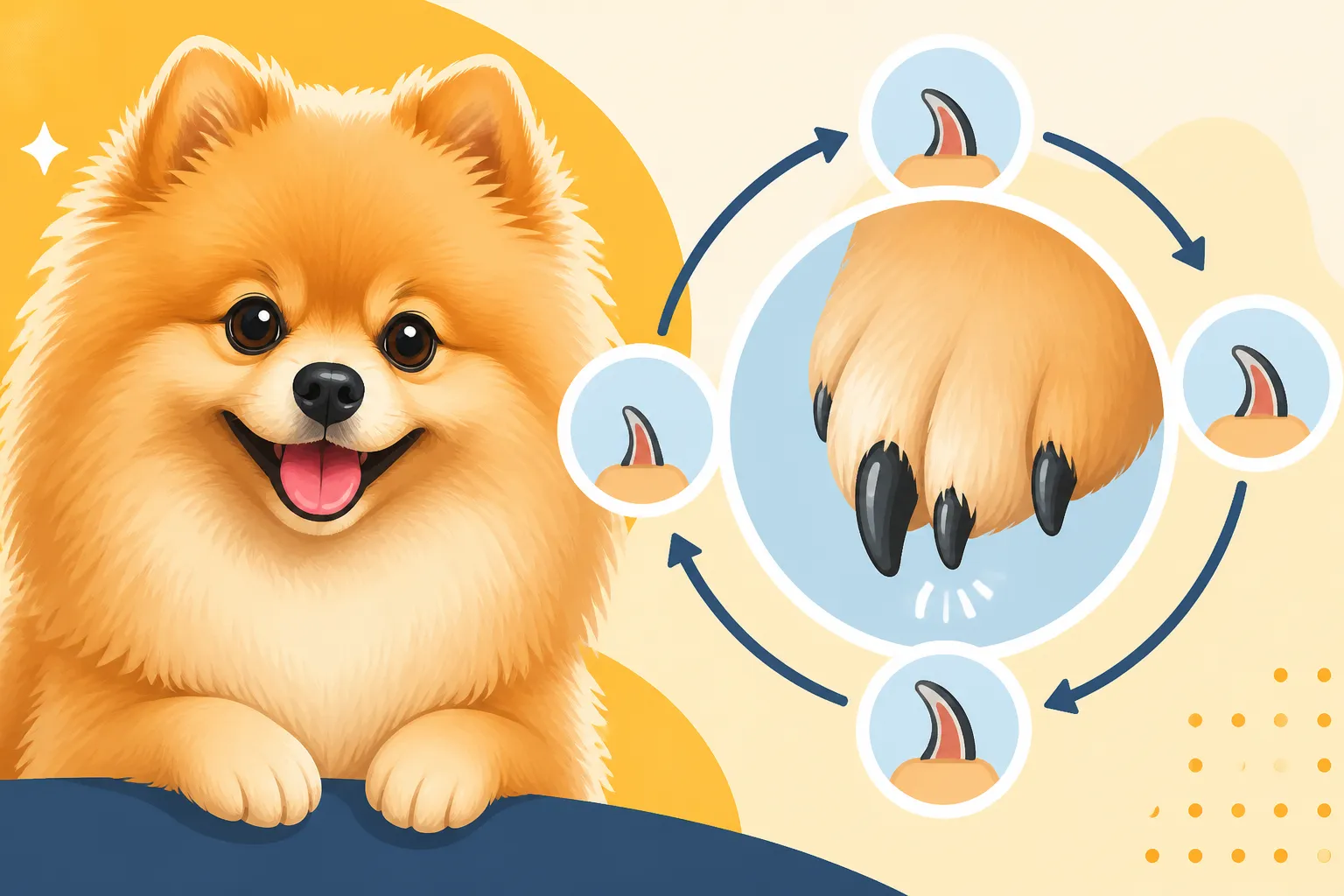
One common concern I hear from fellow Pomeranian parents is about those tiny, fast-growing nails. It feels like you just trimmed them, only to discover a week later they're already clicking on the floor again. It's a never-ending cycle that can feel frustrating, especially with a dog as wiggly and sensitive as a Pom. This guide is here to walk you through exactly how often your Pomeranian's nails grow back, why it matters, and how to stay on top of this crucial part of their care.
Understanding the Growth Cycle of Pomeranian Nails
It’s easy to think of nails as just, well, nails. But for our furry friends, they’re a complex part of their anatomy, constantly growing and changing. Understanding this process is the first step to mastering your Pomeranian’s nail care routine.
The Anatomy of a Pomeranian's Nail
A Pomeranian's nail isn't just a hard, keratin-based shield. It's a living structure, much like our own fingernails, but with a few key differences that make trimming a delicate art. Each nail consists of the hard outer shell and, crucially, the "quick." The quick is a sensitive area within the nail that contains blood vessels and nerve endings. If you've ever accidentally clipped too far back and seen a tiny drop of blood or heard a yelp, you've unfortunately hit the quick.
This quick actually grows along with the nail, extending further as the nail gets longer. This is why consistently long nails become such a problem; the quick itself becomes longer, making it harder to trim the nail back to a healthy length without causing pain. The goal of regular trimming isn't just to shorten the nail, but to encourage the quick to recede, allowing you to gradually achieve shorter, healthier nail lengths over time. It's a slow but rewarding process.
Factors Influencing Nail Growth Speed
Just like human hair and nails, a Pomeranian's nail growth rate can vary. Several factors play a role in how quickly those little claws shoot out. Age is a big one: younger, more active Pomeranians often have faster growing nails than their senior counterparts, whose metabolism might be slowing down. Diet also plays a part; a balanced, nutritious diet contributes to overall health, including healthy nail growth. Quality dog foods, such as those you might find on Chewy or even fresh food options like Ollie, often include ingredients that support skin and coat health, which can indirectly affect nail condition.
Beyond internal factors, external wear and tear are hugely influential. A Pomeranian that spends its days mostly on soft carpets or grass will have faster-growing nails than one that regularly walks on hard surfaces like pavement or concrete. These harder surfaces act like natural nail files, gently grinding down the tips with every step. This doesn't mean you should rely solely on walks to keep nails short – that's rarely enough for a Pom – but it's why an active Pomeranian often needs slightly less frequent trims than a sedentary one.
The Realities of Regular Nail Maintenance
Let's be honest, nail trims are probably nobody's favorite part of dog ownership. But for our Poms, it's not just about aesthetics; it's about their comfort, health, and preventing painful complications down the line.
Why Skipping Trims Isn't an Option
Skipping regular nail trims might seem like a small oversight, but for a Pomeranian, the consequences can be surprisingly severe. When nails grow too long, they start to curve under the paw, eventually growing into the paw pad itself. This is incredibly painful and can lead to infections. Even before they reach that extreme, overgrown nails can cause significant discomfort, making it difficult for your Pom to walk properly. Imagine walking around all day with shoes that are too small, forcing your toes into an unnatural position – that's a bit like what it feels like for them.
Long nails also change your Pomeranian's gait. To avoid pressing on the overgrown nail, they'll shift their weight, putting undue stress on their toes, feet, and even their leg joints. Over time, this can contribute to conditions like arthritis or exacerbate existing joint issues. Given that Pomeranians can be prone to orthopedic problems like Slipping Kneecaps in a Five Pound Pomeranian, maintaining proper foot health is even more critical. It really is a domino effect, starting with those tiny nails.
How to Tell When Your Pomeranian's Nails Are Too Long
The easiest and most common way to tell if your Pomeranian's nails are too long is if you can hear them clicking on hard floors when your dog walks. When your Pom stands normally, their nails should ideally not touch the ground. If they're making contact, they're already past their optimal length. Another sign is when the nails start to visibly curve under, pushing their toes upwards or outwards. This can give their paws an almost splayed appearance.
Visually inspecting their paws is key. Gently pick up each paw and look at the nails from the side and the front. Are they extending beyond the paw pads? Can you see a clear, distinct separation between the pink quick and the white/clear part of the nail? If their nails are dark, which is common in many Poms, it can be harder to see the quick, adding to the challenge of knowing where to cut. This is where consistent, small trims become even more important, or perhaps even using a nail grinder which provides more control.
The Ideal Trimming Schedule for Most Poms
For most Pomeranians, a nail trim every 2-3 weeks is the sweet spot. This frequent schedule allows you to take off small amounts of the nail at a time, gradually encouraging the quick to recede without causing discomfort. If you're able to keep up with this, you'll find that nail care becomes much less stressful for both you and your Pom. If you notice their nails are clicking after just a week, you might even need to trim a little every week. It really does depend on their individual growth rate and activity level.
Some Poms, particularly those who are very active on abrasive surfaces, might be able to stretch it to 3-4 weeks. However, I wouldn't recommend waiting longer than that, especially if your Pom spends a lot of time indoors on soft surfaces. Remember, the goal is to maintain short nails, not to wait until they're overgrown and then try to take off a lot at once. Regularity is far more important than the exact number of days, so find a rhythm that works for your schedule and stick to it. It also ties into their overall grooming needs, which can include The Grooming Schedule a Pomeranian Runs On.
Tools and Techniques for Effective Nail Care at Home
Navigating the world of pet nail care tools can be daunting. There are so many options, and it’s hard to know what’s truly best for a tiny, fluffy Pomeranian. But with the right equipment and a calm approach, you can absolutely master home nail trims.
Choosing the Right Nail Trimmers or Grinders
When it comes to tools, you generally have two main choices: clippers or grinders. For clippers, I always recommend a scissor-style clipper for small breeds like Pomeranians. They offer better control and a cleaner cut than guillotine-style clippers, which can be a bit bulky for tiny paws. Look for sharp, stainless steel blades to ensure a quick, clean cut without crushing the nail, which can be painful. You can find excellent options on Amazon or Chewy. Make sure to choose a size appropriate for small dog nails.
Nail grinders, on the other hand, file the nail down slowly. Many owners find grinders less intimidating than clippers, especially if they’re worried about cutting the quick. They also allow for a smoother finish, which is great for preventing snags. The downside is the noise and vibration, which can upset some sensitive Poms, so you might need to introduce it very gradually. Whether the Noise of a Grinder Upsets a Pomeranian is a common concern, and desensitization is key. Whichever tool you choose, always have styptic powder (a clotting agent) on hand, just in case you accidentally cut too far.
| Feature | Nail Clippers (Scissor Style) | Nail Grinder |
|---|---|---|
| Pros | Quick cut, inexpensive, easy to clean, silent operation | Reduces quick over time, smooth finish, less risk of quicking if careful |
| Cons | Risk of quicking if not careful, can crush if dull | Noise and vibration can be frightening, takes longer, requires charging/batteries |
| Ideal for | Confident owners, Poms tolerant of quick trims | Owners new to nail trims, Poms with dark nails, Poms who dislike quick cuts |
| Maintenance | Keep blades sharp, sanitize regularly | Clean grinding head, ensure battery charged |
Step-by-Step Guide to Trimming Your Pomeranian's Nails
Alright, let's get down to business. Start by finding a comfortable, well-lit spot where both you and your Pom can be relaxed. Have your clippers or grinder ready, along with treats and styptic powder.
- Get your Pom comfortable: I often recommend holding them gently but firmly on your lap, or having someone else hold them. Speak in a calm, reassuring voice.
- Expose the paw: Gently take one paw and push the fur back to clearly see the nails. Sometimes you need to Trimming the Fur Between a Pomeranian's Toes to get a good view.
- Identify the quick: If your Pom has clear or white nails, you'll see a pink area – that's the quick. You want to cut just before the quick, only taking off the white tip. For dark nails, this is trickier. A good rule of thumb is to cut small amounts at a time, looking at the underside of the nail. As you trim, you'll see a white or grayish oval; stop when you see a small black dot in the center of the cut surface – that's the beginning of the quick.
- Make the cut: Position the clippers perpendicular to the nail and make a swift, confident cut. If using a grinder, touch the grinder to the tip of the nail for only a few seconds at a time, removing small amounts and then moving to the next nail to prevent heat buildup.
- Treat and praise: After each nail, or even every couple of nails, give your Pom a high-value treat and lots of praise. This positive reinforcement is absolutely critical.
- Check dewclaws: Don't forget the dewclaws (the thumb-like nail higher up on the leg). These don't touch the ground and won't wear down naturally, so they're prone to growing into the leg.
Consistency is key, and it's something you can work on with training, as detailed in Teaching a Pomeranian to Accept Nail Trims.
Making Nail Trims a Positive Experience
No one wants nail trims to be a wrestling match. The key to making them easier is positive association and gradual desensitization. Start young if you can, but it’s never too late to teach an old Pom new tricks! Begin by simply handling your Pomeranian's paws frequently, praising and treating them for calm acceptance. Don't even bring out the tools at first. Once they're comfortable with paw handling, introduce the clippers or grinder. Let them sniff it, touch it to their paw (turned off if it’s a grinder), and give treats.
When you start trimming, only do one or two nails at a time if that’s all your Pom can tolerate. The goal is to end each session on a positive note, even if you don't get all the nails done. Over several days, you can gradually increase the number of nails you trim per session. High-value treats, like bits of cooked chicken or cheese, work wonders. Remember, patience and consistency are your best tools here. For some Poms, their comfort level with handling extends to other areas, such as Getting a Pomeranian Through an Exam Calmly.
When to Seek Professional Help
While home grooming is empowering and cost-effective, there are times when bringing in a professional groomer or your vet is the smartest and kindest choice for your Pomeranian. Don't ever feel guilty about seeking help!
Recognizing Overgrown Nails and the Quick
Sometimes, despite our best efforts, a Pomeranian’s nails can get severely overgrown. This often happens if a dog has been neglected, or if an owner is simply too nervous to trim them. When nails get extremely long, the quick grows out with them, sometimes almost to the very tip. If you’re looking at your Pom's nails and they look more like talons, or if you simply can't tell where the quick ends and the dead nail begins, it's definitely time to call in the professionals.
A groomer or vet has experience safely shortening severely overgrown nails, often taking off very small amounts repeatedly over several visits ("dremeling down the quick"). This process encourages the quick to recede, allowing the nails to eventually be brought back to a healthy length. Trying to do this all at once at home is not only painful but can cause significant bleeding and trauma for your dog, making them even more fearful of future trims. This is a situation where professional expertise is invaluable.
Addressing Fear and Anxiety Around Nail Care
Some Pomeranians develop a deep-seated fear or anxiety around nail trims, perhaps due to a previous bad experience, or just a naturally nervous disposition. They might thrash, bite, vocalize excessively, or try to escape the moment the clippers come out. For these Poms, trying to force the issue at home can damage your bond and make the problem worse. This is another prime situation for professional intervention. A skilled groomer has techniques and experience working with fearful dogs, often using calm restraint and positive reinforcement to make the experience less traumatic.
In severe cases, your veterinarian might be able to offer solutions, such as mild sedatives that can make the process less stressful for truly phobic dogs. This isn't a long-term fix, but it can be a humane way to get extremely overgrown nails under control and then allow you to start fresh with a desensitization protocol at home. Remember, your Pom's emotional well-being during care routines is just as important as the physical outcome.
The Benefits of Professional Grooming Services
Aside from addressing specific problems like overgrown or fearful nails, routine professional grooming can be a huge benefit for Pomeranian owners. A professional groomer will handle all aspects of care, including brushing out that magnificent double coat, bathing, drying, and, of course, nail trims. They have specialized tools and techniques to ensure a thorough yet gentle process. Many owners find it worth the investment to have an expert take care of tasks they might struggle with, like getting a Pomeranian used to a blow dryer or handling intense matting. What a Full Pomeranian Groom Includes often encompasses these services.
The cost of a professional grooming appointment for a Pomeranian usually runs from The 60 to 90 Dollar Pomeranian Grooming Appointment, depending on your location and the services required. While this might seem like an expense, consider What Home Grooming Saves a Pomeranian Owner versus What a Year of Pomeranian Grooming Adds Up To. For many, the peace of mind and the assurance that their Pom is receiving expert care is well worth it. Plus, groomers can catch other issues like skin problems or ear infections that might otherwise go unnoticed. For purchasing your own Tools a Pomeranian Owner Buys to Groom at Home, online retailers like Chewy and Amazon offer a vast selection.
Disclaimer
This article is for general informational purposes only and does not constitute professional advice. Laws, prices and regulations vary by location and change over time. Consult a qualified professional for guidance on your specific situation.