Whether Raw Feeding Suits a Pomeranian’s Teeth
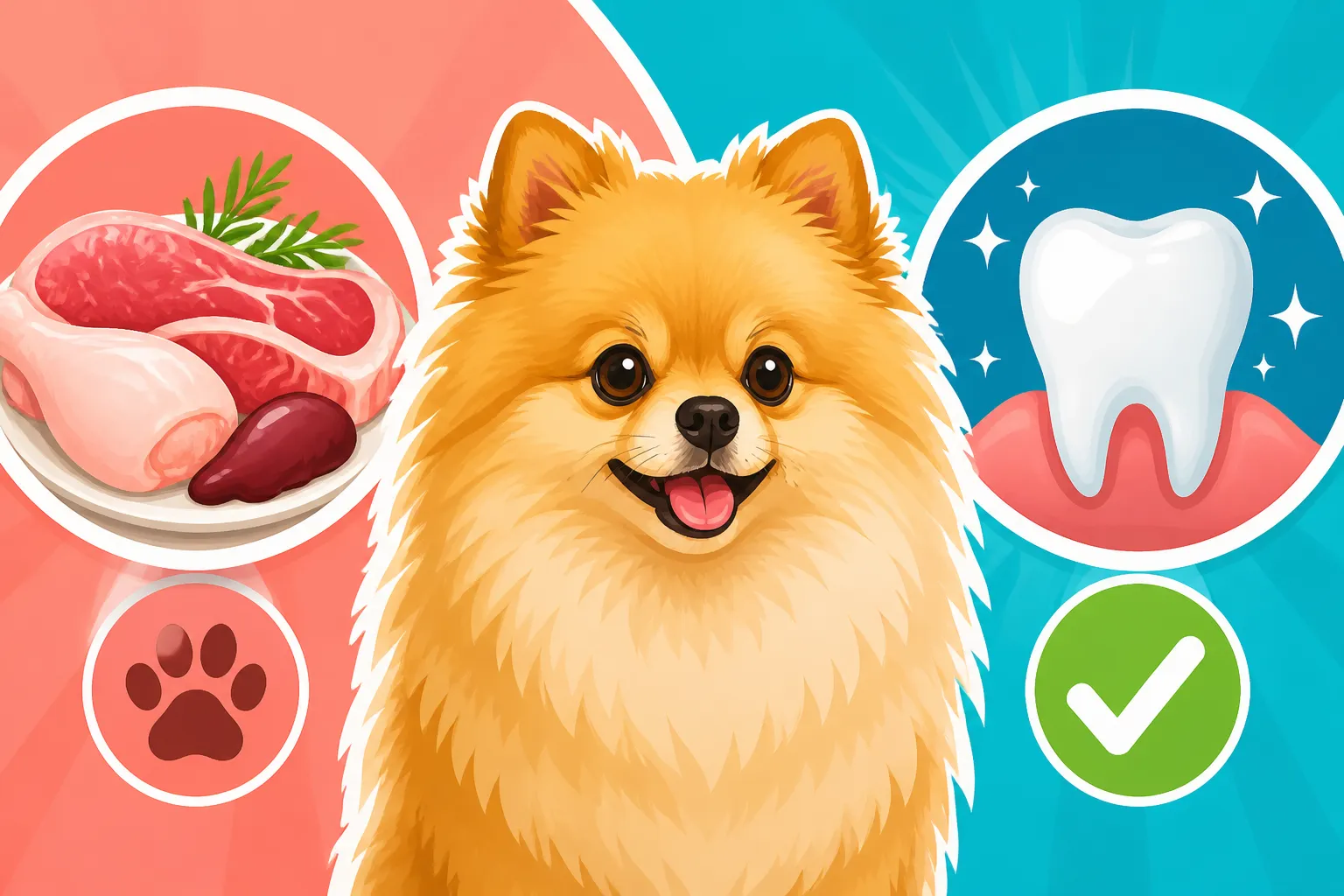
One of the most common questions I hear from Pomeranian owners, especially those who are deeply invested in their dog's well-being, is about raw feeding. Specifically, they often wonder if the natural gnawing and chewing associated with a raw diet can really solve the chronic dental problems that plague our little Poms. It’s a valid thought process; after all, in the wild, animals don't have toothbrushes or dental clinics. This guide is going to dive deep into whether raw feeding truly suits a Pomeranian's teeth, exploring the promises, the realities, and the very real risks involved, so you can make an informed decision for your beloved companion.
Understanding the Pomeranian's Unique Dental Landscape
Before we even begin to discuss raw feeding, it's crucial to understand why Pomeranians are so notoriously prone to dental issues in the first place. It's not just bad luck; it's a combination of genetics, anatomy, and sometimes, our own well-intentioned but misguided care.
The Crowded, Delicate Mouth of a Pomeranian
Take a moment to truly look at your Pomeranian's mouth. It's tiny, isn't it? And yet, crammed into that small space are 42 adult teeth – the same number as a much larger Labrador Retriever. This simply means there isn't enough room. The teeth are often crowded, rotated, or misaligned, creating perfect little crevices for food particles and bacteria to hide. This crowding is a breeding ground for plaque and tartar. Think of trying to clean between tightly packed books on a shelf versus books with plenty of space – it’s just harder to get in there.
Beyond the crowding, Pomeranians are also famous for The Baby Canines a Pomeranian Fails to Lose. These are deciduous (baby) teeth that don't fall out on their own as the adult teeth erupt. When both the baby and adult teeth occupy the same socket, it creates an even tighter, more problematic situation. Food gets stuck, and the gumline is constantly irritated, paving the way for serious periodontal disease. It's not just an aesthetic issue; it's a structural one that directly impacts dental health. Many Poms need these retained baby teeth extracted under anesthesia to give the adult teeth a fighting chance.
Beyond Just Cleaning: What a Pomeranian's Teeth Really Need
The problem with Pomeranian dental health goes far beyond just needing a good "scrub." While surface plaque is the start, the real danger lies beneath the gumline, where periodontal disease takes hold. This is an infection of the tissues supporting the teeth. It begins with plaque hardening into tartar, which then spreads under the gums, causing inflammation, infection, and ultimately, bone loss around the teeth.
Once the disease progresses, it can lead to painful abscesses, loose teeth, and even systemic health issues as bacteria from the mouth enter the bloodstream, potentially affecting organs like the heart, kidneys, and liver. Gum Disease in a Pomeranian is not merely a cosmetic concern; it's a major health threat. This deep-seated infection isn't something a chew toy or a raw bone can easily reach or resolve. It requires professional veterinary intervention, often involving scaling and polishing under anesthesia, and sometimes, Extractions in a Pomeranian's Small Jaw. Relying solely on chewing action to address this complex issue is simply not enough.
The Promise of Raw Feeding for Dental Health (and its Realities)
The appeal of raw feeding often stems from the idea that it's "natural" and thus inherently better for a dog's health, including their teeth. Proponents often point to the supposed "scrubbing" action of raw bones as a miracle cure for plaque and tartar. Let's break down this idea and look at the realities for a small breed like a Pomeranian.
The "Scrubbing" Myth and Raw Bones
The theory goes that when a dog chews on a raw bone, the abrasive action helps scrape away plaque and tartar from the tooth surfaces. For some larger, more robust breeds with strong jaws and broad teeth designed for crushing, this can offer some benefit to the outer surfaces of the teeth. However, for a Pomeranian, it's a much different story.
First, a Pomeranian's tiny, delicate jaw and small, crowded teeth are not built for gnawing on hard, dense bones. While they might enjoy the sensation of chewing, the effectiveness of a raw bone to "scrub" away plaque deep in the crowded crevices of their mouth is highly questionable. Often, the parts of the teeth that need the most cleaning – the inner surfaces, the gumline, and the spaces between teeth – are precisely the areas that a bone doesn't effectively reach. Instead, the dog typically chews on the prominent outer surfaces, leaving the vulnerable areas untouched.
Furthermore, the type of bone matters immensely. Weight-bearing bones from large animals (like beef femurs) are far too hard and can easily fracture a Pomeranian's small teeth. Softer, recreational bones (like chicken necks or wings) are often recommended, but even these carry risks. While they might provide some mechanical abrasion, they are more likely to be gulped down quickly than methodically chewed to clean every tooth. The idea that simply giving a raw bone will magically clean all your Pomeranian's teeth and prevent periodontal disease is a misconception that can lead to disappointment and, more seriously, injury.
Whole Prey vs. Ground Raw: The Important Distinction
When people talk about raw feeding for dental health, they are usually envisioning a dog tearing into a whole piece of meat or a raw bone. This is often referred to as a "whole prey" or "BARF" (Bones And Raw Food) diet. The theory is that the chewing, ripping, and tearing action is what provides the dental benefits.
However, many commercial raw diets available today, like those you might find through a service like Ollie or on Chewy, are often ground raw. This means the meat, organs, and bones are all blended into a fine mince. While nutritionally balanced, this type of raw food offers absolutely no dental benefits. There's no chewing, no abrasive action, no "scrubbing" of the teeth. The dog simply eats it like soft pate. If your interest in raw feeding is primarily driven by dental health, then a ground raw diet, while potentially offering other health benefits, will not address your Pomeranian's dental needs. It's crucial to understand this distinction: ground raw food does not contribute to cleaning teeth in the way whole bones are thought to.
The Risks and Rewards of Raw for Pomeranian Dental Care
Like any dietary choice, especially one as specialized as raw feeding, there are potential benefits and significant risks that need to be weighed carefully, particularly when focusing on dental health for a delicate breed like a Pomeranian.
Potential Benefits: What Raw Might Offer
While the direct dental benefits of raw feeding for Pomeranians are often overstated, there are some theoretical upsides often cited by raw feeding advocates. These are not exclusive to dental health, but are sometimes linked:
- Enzyme Action (Debated): Some proponents suggest that the natural enzymes in raw food contribute to oral health. However, scientific evidence directly linking dietary enzymes to significant plaque reduction in dogs is largely anecdotal and not widely supported by veterinary dentistry research.
- Firmer Stools: Raw diets often result in smaller, firmer stools, which is sometimes indirectly linked to overall gut health. A healthy digestive system can contribute to overall well-being, but this is a far cry from directly improving dental health.
- General Health Boost (Indirect): Owners who feed raw diets often report shinier coats, more energy, and fewer allergies. If a dog is healthier overall, it might have a slightly stronger immune system to fight off infections, including oral ones. However, this is an indirect and unproven link to actual dental disease prevention. The fact remains that even the healthiest dogs need proactive dental care.
It's important to approach these claims with a critical eye. While a balanced, species-appropriate raw diet can certainly be good for a dog's general health, it is not a magic bullet for dental disease, especially for a breed with such inherent dental predispositions as the Pomeranian.
The Very Real Dangers for a Pomeranian's Teeth
Now, let's talk about the significant risks associated with feeding raw bones, particularly to a small dog like a Pomeranian, when dental health is the goal. These aren't minor concerns; they can lead to emergencies and expensive veterinary bills.
- Fractured Teeth: This is perhaps the biggest and most common danger. A Pomeranian's teeth, while sharp, are small and delicate. Chewing on bones that are too hard – even some raw bones that seem "soft" to us – can easily lead to a slab fracture or a broken cusp. Imagine the pain of a broken tooth, with the nerve exposed! This is an incredibly painful emergency that requires a trip to the vet and often a root canal or extraction, which is costly and invasive. The Bill When a Pomeranian Loses Six Teeth can be substantial, and a single fractured tooth can incur significant expense.
- Choking Hazards: While not directly a tooth issue, small raw bones, or pieces broken off larger bones, can become lodged in a Pomeranian's throat, leading to choking. This is a terrifying and potentially fatal situation. Even softer bones can present this risk if the dog tries to swallow a piece too large.
- Internal Obstruction or Puncture: If a bone fragment is swallowed, it can cause internal obstruction or even puncture the digestive tract. This is an immediate life-threatening emergency requiring surgery.
- Bacterial Contamination: Raw meat and bones, regardless of where you source them (whether from a reputable raw food company or a grocery store butcher), carry bacteria like Salmonella, E. coli, and Listeria. While dogs' digestive systems are more robust than ours, they can still get sick, and more importantly, they can shed these bacteria, posing a risk to human family members, especially children, the elderly, or immunocompromised individuals. This is a public health concern that veterinarians often highlight. Good hygiene is paramount, but the risk can never be entirely eliminated.
- Exacerbating Existing Issues: If your Pomeranian already has mild periodontal disease, introducing hard bones could irritate inflamed gums or cause pain. It's not a solution for existing problems, and could even worsen them.
It's crucial to understand that the risks often far outweigh the perceived benefits when it comes to raw bones for Pomeranian dental cleaning.
Practical Approaches to Pomeranian Dental Health, Raw or Not
Regardless of your overall dietary philosophy, achieving good dental health for your Pomeranian requires a multi-faceted and proactive approach. There's no single magic bullet, and certainly, raw feeding, especially with bones, is fraught with too many risks for such a delicate breed to be considered the sole or primary method of dental care.
Daily Brushing: The Undisputed Champion
If there is one thing you can do for your Pomeranian's teeth that makes the most significant difference, it is daily tooth brushing. Yes, daily! Just like humans, plaque forms on their teeth every 24 hours. Regular brushing physically removes this plaque before it can harden into tartar and lead to disease.
I know what you're thinking: "My tiny Pom? Let me brush their teeth every day?" It takes patience, consistency, and starting early. Use a small, soft-bristled toothbrush designed for pets or a finger brush. There are even micro-head toothbrushes that fit better in a small mouth. Crucially, use enzymatic pet toothpaste, which comes in flavors dogs love (like poultry or peanut butter) and is safe for them to swallow. Never use human toothpaste, as it contains fluoride and other ingredients that are toxic to dogs.
Start by letting your Pom lick the toothpaste off your finger, then gently introduce the brush. Focus on the outside surfaces of the upper teeth, where plaque tends to accumulate most. Even a minute of brushing each day can make a world of difference. It's truly the gold standard for at-home preventative care. Brushing a Pomeranian's Teeth Every Day is non-negotiable for optimal dental health.
Safe Chews and Dental Aids: What Actually Works
While raw bones present too many risks, there are plenty of safe, veterinarian-approved dental chews and additives that can support your Pomeranian's oral health in conjunction with brushing.
- Veterinary Dental Chews: Look for chews that carry the Veterinary Oral Health Council (VOHC) seal of acceptance. This means they have been scientifically proven to reduce plaque and/or tartar. These chews are designed to be abrasive enough to clean but soft enough not to fracture teeth. Brands like Greenies or VeggieDent often have small sizes perfect for Pomeranians. You can find these at pet stores or online at places like Chewy or Amazon.
- Dental Water Additives: These are liquids you add to your dog's drinking water daily. They contain ingredients that help reduce bacteria in the mouth and can inhibit plaque formation. They are easy to use and can provide an extra layer of protection, especially for the areas brushing might miss.
- Oral Gels and Wipes: If daily brushing is still a challenge, oral gels or wipes can be applied to the teeth and gums. While not as effective as brushing, they can help reduce bacteria and freshen breath.
- Appropriate Chew Toys: Choose rubber or nylon chew toys that are flexible enough to give when pressed but firm enough to provide some abrasion. Avoid anything rock-hard, like antlers or sterilized bones, which pose the same fracture risk as hard raw bones.
When selecting any chew or dental aid, always supervise your Pomeranian to ensure they are chewing safely and not attempting to swallow large pieces.
| Dental Care Method | Effectiveness for Pomeranians (Dental) | Risks for Pomeranians | Cost Implication | Effort/Frequency |
|---|---|---|---|---|
| Daily Tooth Brushing | High (removes plaque) | Minimal | Low (toothpaste, brush) | High (daily) |
| Raw Bones (Hard) | Low (fracture risk) | Very High (fractures, choking, internal injury) | Can be low per bone, but high for vet bills | Intermittent |
| Raw Bones (Soft/Recreational) | Moderate (surface cleaning only) | High (choking, bacterial, some fracture risk) | Can be low per bone, but high for vet bills | Intermittent |
| Ground Raw Diet | None (no abrasive action) | Bacterial contamination | Moderate to High | Daily |
| VOHC Dental Chews | Moderate (plaque/tartar reduction) | Low (supervision needed) | Moderate | Daily/Several times a week |
| Dental Water Additives | Low to Moderate (inhibits bacteria) | Minimal | Low | Daily |
| Professional Dental Cleanings | Very High (removes tartar, addresses gum disease) | Anesthesia risk (low in healthy Poms) | High | Annually/Bi-annually |
Regular Veterinary Dentals: The Non-Negotiable
Even with the most diligent at-home care, professional dental cleanings under anesthesia are absolutely essential for a Pomeranian. These are not a luxury; they are a necessary part of preventative healthcare. Your vet can perform a thorough examination, including dental X-rays, to assess the health of the teeth below the gumline – an area you can't see or clean at home.
During a professional dental, your vet will scale away tartar from all tooth surfaces, both above and below the gumline, using specialized ultrasonic instruments. They will polish the teeth to smooth the enamel, making it harder for plaque to adhere. They can also address issues like retained deciduous teeth, cavities (yes, dogs get them too!), and diseased or fractured teeth that may require extraction. Whether a Pomeranian needs its teeth scaled annually is a common question, and for many Poms, especially those prone to heavy tartar buildup, annual or even semi-annual cleanings become a crucial part of maintaining their oral health and preventing more serious issues.
The thought of anesthesia can be daunting for small dog owners, and Anesthesia Charges on a Five Pound Pomeranian can feel like a big investment. However, modern veterinary anesthesia protocols are very safe, especially with pre-anesthetic bloodwork to ensure your Pom is healthy enough. The risks of untreated dental disease far outweigh the carefully managed risks of anesthesia.
In conclusion, while the idea of raw feeding as a natural solution for your Pomeranian's teeth is appealing, the reality is far more complex and risky. For a breed already predisposed to significant dental challenges, relying on raw bones as a primary dental care method can lead to fractured teeth, choking hazards, and bacterial exposure, while often failing to address the deeper issues of periodontal disease. A combination of daily brushing, VOHC-approved dental chews, and regular professional veterinary cleanings remains the most effective and safest path to ensuring your cherished Pomeranian maintains a healthy, pain-free smile throughout their life.
Disclaimer
This article is for general informational purposes only and does not constitute professional advice. Laws, prices and regulations vary by location and change over time. Consult a qualified professional for guidance on your specific situation.