Building a Pomeranian’s Independence
Pomeranian independence strategies help prevent separation anxiety and incessant barking through crate training and patience.
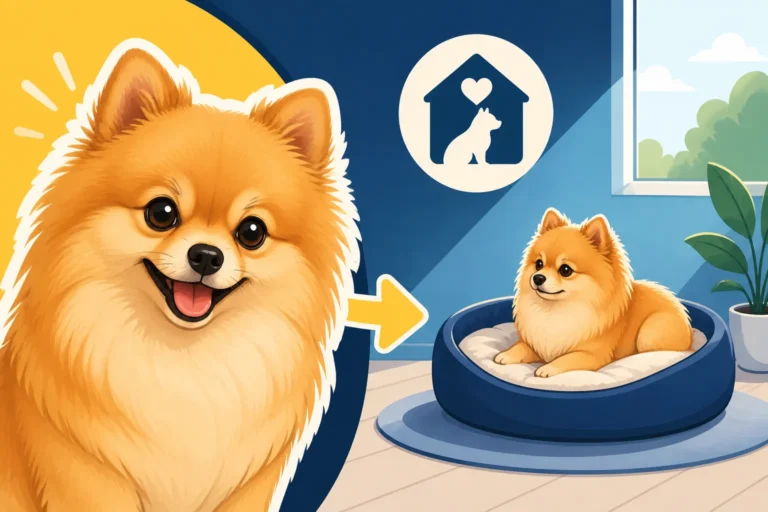
Pomeranian independence strategies help prevent separation anxiety and incessant barking through crate training and patience.

Pomeranian tolerance for long workdays involves considering their high companionship needs, tiny bladders, and energy levels.

Leaving a Pomeranian with a sitter requires managing separation anxiety, physical vulnerabilities, and maintaining daily routines.

Crate time for an anxious Pomeranian can either provide a calming haven or intensify fear depending on training methods.

Pomeranian separation anxiety causes barking and chewing, but understanding root causes helps dogs build confidence and cope.

Pomeranian pen training techniques help stop barking and whining by addressing natural instincts and previous negative associations.
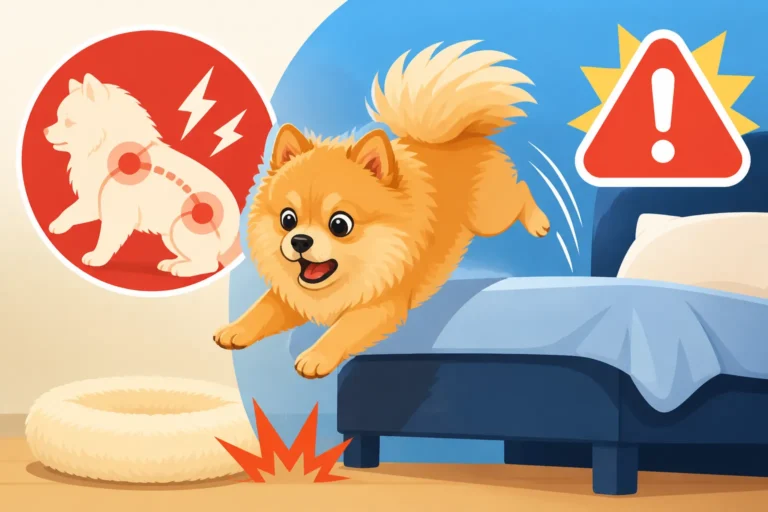
Pomeranian jumping off high beds risks severe injury because fragile bones, delicate joints, and slipping kneecaps cannot handle the impact.

Pomeranian loneliness and separation anxiety differ significantly, helping owners determine if a second dog solves isolation distress.
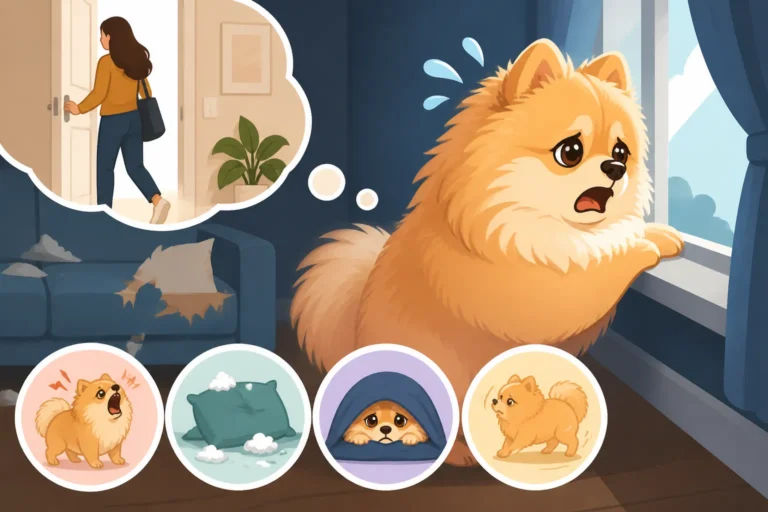
Pomeranian separation anxiety signs include continuous barking, destructive chewing, inappropriate elimination, and pacing when left alone.
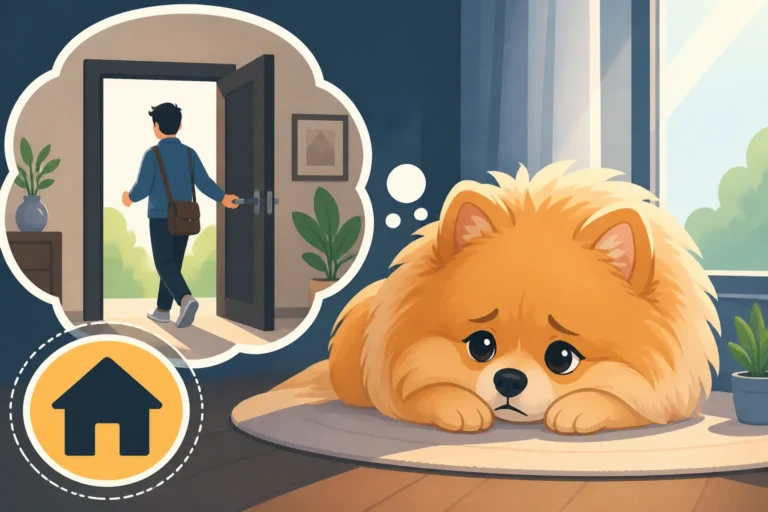
Pomeranian alone time limits depend on age, training, personality, and health, especially for puppies under six months of age.