Games That Tire a Pomeranian Indoors
We all know the feeling: it's pouring rain outside, or maybe it's just too scorching hot, and your energetic Pomeranian is pacing, looking at you with those bright, questioning eyes. You want to tire them out, but a long walk isn't an option, and letting them zoom around the house without purpose often leads to mischief. This guide is here to help you discover a whole world of engaging indoor games designed to mentally and physically exhaust your beloved Pom, ensuring they stay happy, healthy, and out of trouble, no matter the weather.
Why Indoor Play is Crucial for Your Pomeranian's Well-being
It's easy to underestimate how much activity a small dog like a Pomeranian truly needs, especially when they seem content napping in your lap. However, beneath that fluffy exterior is a keen, intelligent dog with roots in working Spitz breeds. They aren't just decorative ornaments; they crave stimulation and a chance to use their brains and bodies, even within the confines of your home.
The Challenges of Outdoor Exercise for Small Breeds
Outdoor adventures, while wonderful, aren't always practical or safe for a Pomeranian. Their delicate size makes them vulnerable to a host of environmental factors and hazards. Imagine a sudden downpour or a sweltering summer day where the pavement is hot enough to burn their tiny paw pads. These conditions can quickly turn a fun outing into a dangerous situation.
Beyond weather, safety is a huge concern. A Pomeranian's small stature means they can easily be overlooked by larger dogs, or even mistaken for prey by some wildlife, depending on your location. Their physical delicate nature also means specific health concerns, such as The Honking Cough of a Pomeranian's Collapsing Windpipe or Slipping Kneecaps in a Five Pound Pomeranian, can be exacerbated by overly strenuous or uncontrolled outdoor play. A quick dart across the yard could lead to an injury that requires significant recovery. This makes controlled, safe indoor exercise not just a convenience, but often a necessity for their long-term health.
Mental Stimulation is Just as Important as Physical Activity
Many people focus solely on physical exercise when they think about tiring out a dog. While burning off zoomies is important, mental stimulation is equally, if not more, exhausting for a Pomeranian. These are smart, inquisitive dogs who thrive on problem-solving and learning. If their minds aren't engaged, they can quickly become bored, leading to undesirable behaviors like excessive barking at every shadow, destructive chewing on furniture, or even digging at carpets.
A mentally under-stimulated Pomeranian might develop what some call "nuisance behaviors" simply because they're trying to find a job to do. That job might be shredding your tissue box or unrolling the toilet paper. Engaging their brains with puzzles, training sessions, and interactive games helps satisfy this innate need, keeping them calmer, more focused, and ultimately, a more pleasant companion. Think of it like sending a child to school – they come home tired, not just from running around, but from all the thinking they've done.
Engaging Games for Physical Activity Indoors
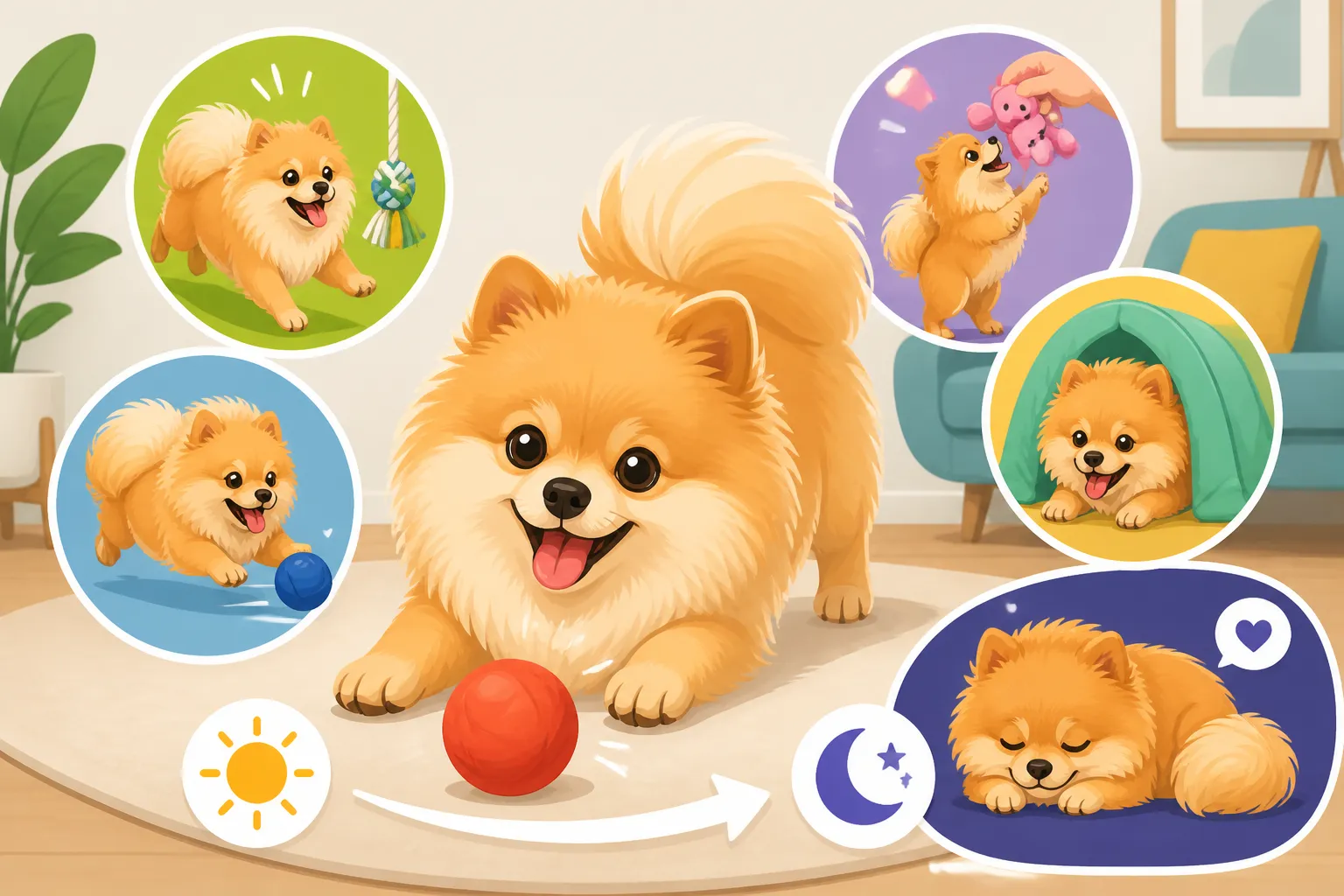
When the weather prevents outdoor romps, or you just need to burn off some energy without leaving the house, there are plenty of physical games you can play indoors with your Pomeranian. The key is to adapt these games to their small size and delicate frame, prioritizing safety above all else.
Fetch and Tug-of-War with a Twist
These classic games can absolutely be played indoors, but they need a Pomeranian-specific approach. Forget those heavy tennis balls; opt for small, lightweight, soft toys that are easy for them to pick up and won't damage anything if they miss a catch. Think plush mini-balls or crinkle toys.
For fetch, clear a path in a hallway or a large room. Toss the toy a short distance, encouraging them to retrieve it. Keep throws low and gentle to protect their neck and back. Short, frequent sessions are better than one long, exhausting one. After a few throws, take a break.
Tug-of-war can also be a wonderful outlet, but again, use a soft fabric toy or a specific tug toy designed for small mouths. Avoid yanking aggressively or lifting your Pom off the ground. The goal is a fun, interactive challenge, not a strength contest. If your Pomeranian gets too excited or aggressive during tug, or if you notice any changes in their breathing or discomfort, it's always best to stop and reassess. We want to avoid any strain on their delicate structures, especially if you're concerned about issues like The Honking Cough of a Pomeranian's Collapsing Windpipe.
Indoor Agility and Obstacle Courses
You don't need fancy equipment to set up an engaging agility course for your Pomeranian. Your living room can be transformed into a fun challenge with everyday household items.
- Low Jumps: Use a broomstick laid across two low stacks of books, or even rolled-up towels. Start with the broomstick directly on the floor and encourage them to step over it, gradually raising it just an inch or two as they gain confidence. Never force them to jump high; their little knees, which can be prone to Slipping Kneecaps in a Five Pound Pomeranian, aren't designed for it.
- Tunnels: A child's play tunnel or even a large cardboard box with both ends open makes for a fantastic crawl-through obstacle. Entice them with a treat at the other end.
- Weave Poles: Arrange a few water bottles or plastic cones in a line and guide your Pom through them with a treat, teaching them to "weave."
- Balance Beam: A wide, low plank of wood or even a thick cushion can serve as a balance challenge. Always supervise closely and keep it very low to the ground to prevent falls.
Keep the courses short, fun, and positive. Celebrate every success with praise and treats. The goal is mental and physical engagement, not competitive performance.
Hide and Seek with a Favorite Toy
This simple game is incredibly effective for getting your Pomeranian moving and using their keen sense of smell. Start by letting your Pom see you hide their favorite squeaky toy or ball in an obvious spot, like partially under a cushion or behind a chair leg. Say "Find it!" with enthusiasm. When they succeed, lavish them with praise and a small treat.
As they get the hang of it, you can make the hiding spots more challenging. Hide the toy behind a closed door, under a blanket, or even in another room while they wait in a "stay" (if they know the command). This game taps into their natural instincts, providing both physical movement as they search and mental stimulation as they problem-solve. It's a fantastic way to burn off steam without needing a lot of space.
Brain-Boosting Puzzle Games to Zap Energy
Beyond physical exertion, truly tiring out a clever Pomeranian means engaging their brain. These dogs are remarkably intelligent, and working their minds through puzzles and problem-solving can be far more exhausting than a simple walk.
Snuffle Mats and Treat Dispensing Toys
These tools are absolute gold for mental enrichment. A snuffle mat is a fabric mat with various pockets and fabric strips where you can hide small treats or pieces of their kibble. Your Pomeranian has to sniff, paw, and nudge their way through the fabric to find the hidden rewards. This activity mimics natural foraging behavior and can keep them engrossed for a surprising amount of time. You can find a wide variety of snuffle mats and other interactive feeders on platforms like Amazon.
Treat-dispensing toys, often made of durable plastic or rubber, require your Pom to roll, nudge, or manipulate the toy in specific ways to release kibble or treats. Some are simple, while others have adjustable difficulty levels. Look for designs specifically marketed for small breeds to ensure the openings are appropriate for your Pomeranian's mouth and the toy isn't too heavy or cumbersome. The mental effort involved in figuring out how to get the food out is incredibly tiring and satisfying for them.
Shell Games and Cup Games
These classic mental games are fantastic for building focus and problem-solving skills in your Pomeranian.
The Shell Game:
- Gather: You'll need three opaque cups (plastic or paper works best) and a small, high-value treat.
- Show & Hide: Let your Pomeranian watch you place the treat under one of the cups.
- Shuffle (Slowly!): While your Pom is watching, slowly and obviously shuffle the cups around. Start with just two cups, moving them back and forth.
- Find It!: Encourage your Pom to "find it!" and nudge or paw at the cup they think holds the treat.
- Reward: If they pick the right cup, lift it to reveal the treat and praise them enthusiastically. If they pick the wrong one, lift it to show them it's empty, and then lift the correct cup.
- Increase Difficulty: As they get better, you can gradually speed up your shuffling, add the third cup, or even move the cups further apart.
This game is all about observation and memory.
The Muffin Tin Game:
- Gather: A muffin tin and several tennis balls (or other small, safe balls that fit loosely into the cups).
- Hide: Place a treat in a few of the muffin tin cups.
- Cover: Cover each treat-filled cup with a tennis ball.
- Explore: Let your Pomeranian sniff around and try to figure out how to get the treats by nudging the balls out of the way.
These games are simple, require minimal setup, and provide excellent mental exercise.
Training Games: Learning New Tricks
Believe it or not, a dedicated 10-15 minute training session can be just as tiring as a brisk walk for a Pomeranian. The concentration, focus, and mental effort involved in learning new commands or tricks really engages their brains.
Think of training as a game. Instead of just drilling "sit" and "stay," make it fun. Teach them to "spin" in a circle, "bow," or "wave." These tricks are not only entertaining but require coordination and focus, burning mental energy. You can also work on more complex behaviors like fetching specific toys by name or putting their toys away. Many online platforms, such as BAXTER & Bella, offer virtual training courses that can guide you through teaching a variety of tricks and behaviors, making it easy to incorporate structured learning into your daily routine.
Learning new things taps into their intelligence and gives them a sense of accomplishment. It also strengthens your bond and builds their confidence. Even simple obedience commands, practiced in new environments or with added distractions, can be a great brain workout. For more ideas, explore resources like Tricks a Pomeranian Learns Quickly.
Creating a Safe and Stimulating Indoor Environment
To truly make indoor games effective and enjoyable for your Pomeranian, it’s not just about the games themselves, but also the environment in which they play. A thoughtful setup ensures safety and maximizes engagement, helping them burn off energy without stress or injury.
Designated Play Zones and Safe Spaces
Just like a toddler, your Pomeranian benefits from having a designated safe zone for play. This doesn't mean a whole room needs to be cordoned off, but rather an area where they can move freely without encountering hazards. Before starting any indoor game, do a quick "Pomeranian-level" sweep of the area.
- Remove Fragile Items: Any breakables, precious heirlooms, or items that could be knocked over should be put away.
- Secure Cords: Electrical cords are a huge temptation for chewing and a tripping hazard. Tuck them away or use cord covers.
- Clear Clutter: Loose rugs can slip, small objects can be swallowed, and sharp corners can be bumped. A clear, open space is safest.
- Soft Landings: Consider placing a soft rug or a few cushions in key play areas, especially if your Pomeranian is prone to jumping or has knee issues. This extra padding can cushion any accidental tumbles.
A safe, designated play zone allows your Pom to fully engage in the game without you constantly worrying about their safety or the integrity of your home. It also creates a routine, signaling to them that "now is play time!"
Rotating Toys to Maintain Interest
Pomeranians, like many intelligent dogs, can quickly get bored with the same old toys day in and day out. The novelty wears off, and suddenly that exciting squeaky ball is just another thing lying on the floor. To keep their interest piqued and maximize the effectiveness of your indoor games, implement a toy rotation system.
Instead of having all their toys available all the time, divide them into a few groups. Keep one group out for a few days, then put them away and bring out a different group. When a toy reappears after a week or two, it often feels brand new and exciting again! This simple strategy prevents toy fatigue and ensures that when you bring out a toy for a game of fetch or hide-and-seek, your Pomeranian is genuinely thrilled to see it. This also applies to puzzle toys – rotating them helps maintain the challenge and keeps their minds engaged.
Incorporating Training into Play
The best way to get the most out of your indoor play sessions is to seamlessly blend them with training. Every interaction is an opportunity to reinforce good behavior or teach something new. For instance, before a game of fetch, ask your Pomeranian to "sit" and "wait" for the toss. During hide-and-seek, use their name and a clear "find it!" command.
Even the most energetic play can be structured with cues. Asking for a "down" or a "stay" for a few seconds during a game helps them practice self-control and focus amidst excitement. This isn't about dampening their fun; it's about channeling their energy productively. When you combine physical activity with mental tasks and obedience, you're engaging your Pomeranian on multiple levels, leading to a much more satisfying and tiring experience for them. It helps build good habits and reinforces their understanding of your commands, making them a more well-behaved companion overall.
Here's a quick look at some indoor games and their benefits:
| Game Type | Physical Exertion | Mental Stimulation | Safety Considerations | Best For |
|---|---|---|---|---|
| Indoor Fetch | Moderate | Low | Use soft, small toys; clear paths; low, gentle tosses | Burning quick energy, reinforcing recall, rainy days |
| Tug-of-War | Moderate | Low | Use appropriate tug toys; avoid rough pulling/lifting | Release of prey drive, bond building, short bursts of energy |
| DIY Agility Course | Moderate | Moderate | Low obstacles; soft landings; clear space; close supervision | Building confidence, coordination, structured exercise |
| Hide & Seek (Toy) | Moderate | Moderate | Ensure hiding spots are safe; clear obstacles | Engaging scent work, problem-solving, recall practice |
| Snuffle Mat/Puzzles | Low | High | Supervise to prevent chewing of mat/toy; use appropriate treats | Foraging instinct, calming, brain workout, independent play |
| Shell/Cup Game | Low | High | Use non-toxic cups; supervise treat consumption | Focus, observation, problem-solving, building trust |
| Trick Training | Low | High | Adjust difficulty to dog's ability; short sessions; positive reinforcement | Mental fatigue, bond building, manners, confidence, skill development |
Disclaimer
This article is for general informational purposes only and does not constitute professional advice. Laws, prices and regulations vary by location and change over time. Consult a qualified professional for guidance on your specific situation.