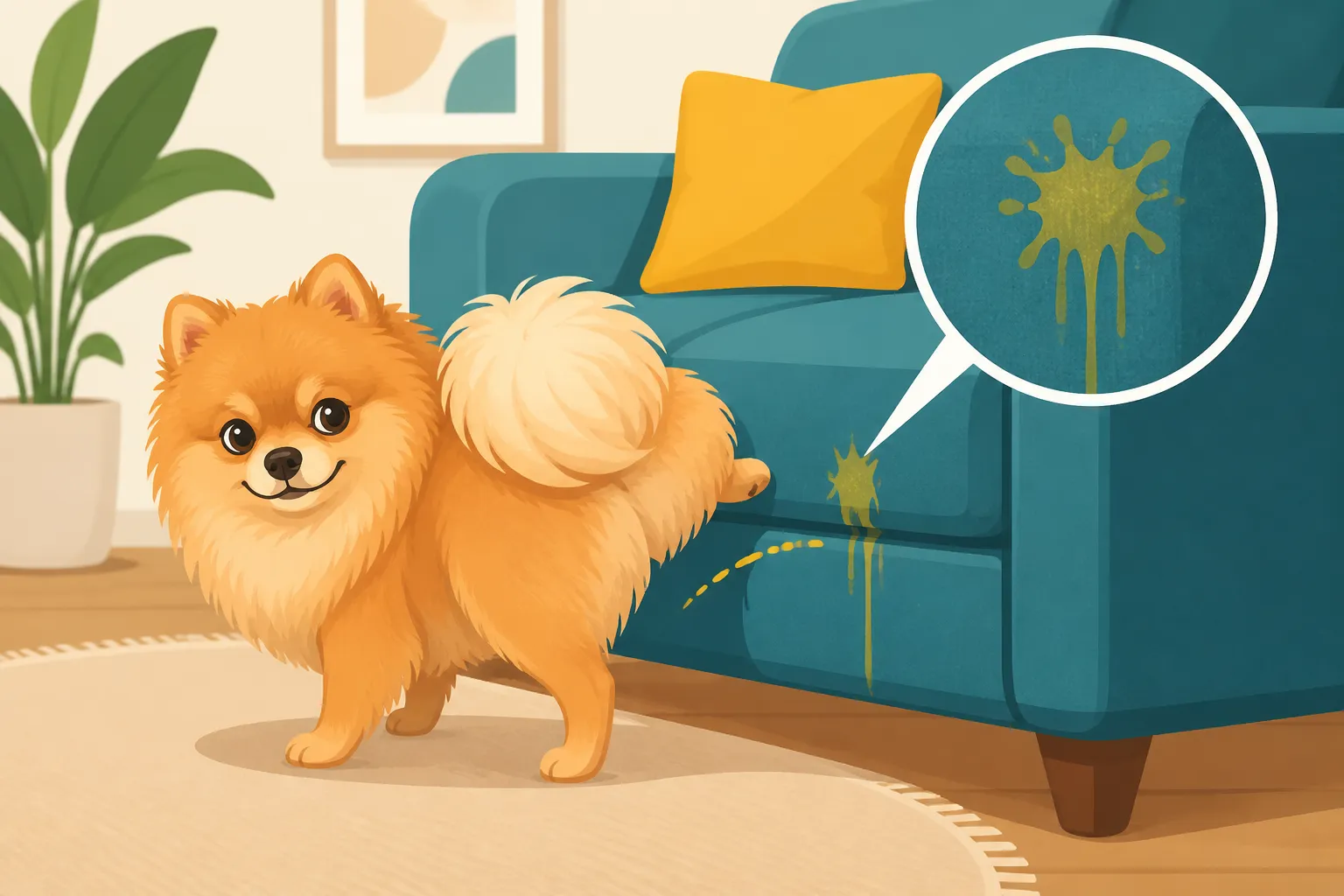
A Male Pomeranian That Marks the Furniture
It's incredibly frustrating, isn't it? You love your little male Pomeranian to bits, but you walk into a room, catch that tell-tale whiff, and there it is – another puddle or damp spot on your favorite armchair, the leg of the dining table, or even your perfectly clean rug. It feels like a betrayal, especially if you thought he was perfectly house-trained. This guide is here to unravel the mystery of why male Pomeranians mark furniture and, more importantly, equip you with practical, empathetic strategies to put an end to this unwelcome behavior.
Understanding Why Your Male Pomeranian Marks Inside
When your male Pomeranian lifts his leg on your heirloom cedar chest, it's rarely out of spite or a deliberate attempt to upset you. It’s far more complex than that, often rooted in deeply ingrained canine instincts, hormonal influences, or even underlying emotional states. Understanding the 'why' is the first crucial step toward finding an effective 'how to stop it'.
It's Not Always About "Being Stubborn" – The Instinctual Drive
Many Pomeranian parents mistakenly believe their dog is being stubborn or defiant when they mark indoors. While Poms can certainly be spirited and have their own ideas, marking is fundamentally different from a simple potty accident. It's about communication and territory. In the canine world, urine is like a calling card, a way to leave information about themselves – their sex, their reproductive status, and even their current mood – for other dogs. When a male dog marks, he’s essentially saying, "I was here, this is my space, and I'm letting everyone know." This instinct is incredibly powerful, even for a tiny dog like a Pomeranian who may feel the need to assert himself in his environment, be it against an invisible rival or simply to reinforce his presence. He might be responding to scents from previous pets, new smells brought in on your shoes, or even just feeling a bit insecure in a particular area.
Think of it like us leaving a sticky note or a business card. It’s a very natural, instinctual behavior for dogs. The challenge arises when our homes become the canvas for these "messages." It's not about being 'bad'; it's about channeling a natural drive into appropriate outlets.
Unpacking Hormones and Intact Male Behavior
One of the most significant drivers behind indoor marking in male Pomeranians, especially persistent marking, often comes down to hormones. If your male Pomeranian is unneutered, his body is constantly producing testosterone, which fuels a strong desire to identify and claim territory, and to signal his availability to potential mates. This isn't just an outdoor thing; the urge can be incredibly strong indoors too, particularly if he senses another dog (even through a window or on your clothes) or if there are female dogs in heat nearby.
Even after neutering, some male Poms might continue the behavior, though often with reduced intensity. This is because while the hormonal drive decreases, the learned behavior of marking can persist. Neutering generally significantly reduces the likelihood and frequency of marking, but it's not a magic bullet. It’s usually much more effective if done before the marking behavior becomes deeply ingrained. For some owners, the question of Whether Neutering Ends a Pomeranian's Marking is a big one, and while it helps, it's just one piece of the puzzle. It takes time for the hormones to dissipate from the system, and old habits can be hard to break without consistent training.
Anxiety, Stress, and Changes in Environment
Sometimes, marking isn't purely territorial or hormonal; it can be a sign of underlying anxiety or stress. Pomeranians, despite their bold personalities, can be quite sensitive to changes in their environment or routine. A new piece of furniture, a visitor, a change in your work schedule, another pet joining the household, or even loud noises can trigger stress that manifests as marking. It's their way of coping or trying to regain a sense of control over their space.
For instance, if you've recently moved, brought home a new baby, or even just rearranged the living room, your Pomeranian might feel unsettled. This insecurity can lead to an increase in marking as he tries to re-establish his scent and comfort zones. They might feel the need to overcompensate if they feel their space is being invaded or threatened. It’s worth observing when the marking happens – is it when you leave the house? When guests arrive? After a walk? Pinpointing the triggers can give you valuable clues about the emotional state driving the behavior. If your Pom exhibits other signs of stress, like excessive barking or destructive chewing, the marking could be part of a larger anxiety picture, and a behaviorist or trainer, perhaps even one recommended by BAXTER & Bella, might be helpful in identifying and addressing the root cause.
Strategies to Stop Indoor Marking in Male Pomeranians
Once you understand the potential reasons behind your Pomeranian's indoor marking, you can start implementing targeted strategies. This isn't about punishment, which rarely works and can actually increase anxiety; it's about management, training, and sometimes, medical intervention.
Re-evaluating House Training and Potty Routines
Even if your Pomeranian was once perfectly house-trained, persistent marking inside means it’s time for a refresher course. Treat him like a brand new puppy again. This means super consistent potty breaks. Take him out frequently – every hour or two, after waking up, after eating, and before bed. Praise him lavishly and give him a high-value treat every single time he eliminates outside. This positive reinforcement teaches him that doing his business outdoors is incredibly rewarding.
Consider creating a very strict The Routine a Pomeranian Needs Every Day. Consistency is paramount. If you typically let him out into the yard, make sure you actually go out with him to supervise and ensure he’s not just sniffing around but actually eliminating. Don't assume he's gone just because he spent five minutes outdoors. If he doesn't go, bring him back inside and try again in 15-20 minutes. Keep him on a leash inside between potty breaks to prevent secret marking missions. This constant supervision, coupled with consistent outdoor opportunities, is vital. Remember, The Reward a Pomeranian Actually Cares About might be tiny pieces of cooked chicken or cheese, not just a pat on the head.
Management Tools: Belly Bands and Crate Training
While you're working on retraining, management tools are your best friends for preventing further damage and breaking the habit.
-
Belly Bands: These are wraps that go around your male Pomeranian's waist, covering his private parts. They have an absorbent pad inside (or you can insert a human feminine hygiene pad) that catches any urine. They're not meant to be a permanent solution, but they are incredibly effective at preventing urine from reaching your furniture. Many people find great options for belly bands on Amazon, often in multi-packs with washable inserts. The key is to fit them snugly but comfortably. Your dog won't like it at first, but it prevents the actual act of marking, which in itself can help break the habit. Plus, it saves your furniture!
-
Crate Training: A crate, when used properly, is not a punishment but a safe den for your Pomeranian. Dogs are naturally clean animals and generally won't soil their sleeping space. If your Pom isn't already crate trained, now is a great time to start. Crate Work With a Pomeranian Puppy That Cries has great tips, even for adult dogs. The idea is that when he's in his crate, he's not marking your furniture. When he's out, he's under strict supervision. This significantly reduces opportunities for marking. Gradually increase the time he spends in the crate, always ensuring it's a positive experience with treats and toys. This also helps with issues like The Hours a Pomeranian Tolerates an Empty House, as a dog who is comfortable in his crate will be less anxious and therefore less likely to mark when alone.
Addressing the Root Cause: Spaying and Training Reinforcement
As mentioned earlier, if your male Pomeranian is intact, spaying should be a serious consideration. While it's not a guaranteed fix for established marking habits, it significantly reduces the hormonal drive behind the behavior, making subsequent training much more effective. Discuss this option with your veterinarian.
Beyond spaying, consistent training reinforcement is critical.
-
Interrupt and Redirect: If you catch your Pomeranian in the act of lifting his leg indoors, immediately clap loudly or make a startling noise to interrupt him (without frightening him). Then, quickly take him outside to his designated potty spot. If he finishes his business there, reward him enthusiastically. Never punish him for an accident you discover later; he won't connect the punishment to the old puddle.
-
Desensitize and Counter-Condition: If certain triggers, like new visitors or strange smells, cause marking, you can work on desensitizing him. For example, if he marks when guests arrive, have friends visit frequently but keep your Pom on a leash or in his belly band. Give him treats and praise for calm behavior, redirecting any attempts to mark. The BAXTER & Bella online puppy school (or similar positive reinforcement programs) offer structured approaches to these kinds of behavioral challenges, providing clear steps to teach new, desired responses.
-
Exercise and Mental Stimulation: A bored or under-exercised Pomeranian can also be a stressed Pomeranian. Ensure he's getting enough appropriate exercise for his size and breed, like short walks and indoor play. Mental stimulation through puzzle toys and short training sessions can also reduce anxiety and give him appropriate outlets for his energy.
Cleaning Up and Preventing Future Incidents
You can't effectively stop marking if you don't thoroughly clean up past accidents. Canine noses are incredibly sensitive, and residual odors will simply invite your Pomeranian to mark the same spot again.
The Importance of Thorough Odor Removal
Regular household cleaners might remove the visible stain, but they won't eliminate the microscopic urine crystals that contain the potent scent marking pheromones. For a dog, those invisible scents are a giant "mark here" sign. You must use an enzymatic cleaner specifically designed to break down and neutralize pet urine odors. Popular brands are readily available on Amazon and at pet supply stores.
- How to Use Enzymatic Cleaners: Blot up as much urine as possible with paper towels. Then, saturate the soiled area with the enzymatic cleaner, making sure it penetrates as deeply as the urine did (e.g., if it soaked into carpet padding, use enough cleaner to reach that depth). Let it sit for the time recommended on the product label (often 10-15 minutes or more), then blot it up and allow the area to air dry completely. You might need to repeat this process several times for older or heavily soiled areas. A black light can sometimes reveal old, dried urine spots that your nose might miss.
Protecting Your Home Environment
While you're working on training and cleanup, take proactive steps to protect your home.
- Remove or Cover Tempting Items: If your Pomeranian has favorite marking spots like a specific chair leg or rug, temporarily remove those items, or block access to them. For upholstered furniture, consider waterproof covers that can be easily washed.
- Restrict Access: Use baby gates to restrict your Pomeranian's access to certain rooms or areas of the house where marking is an issue, especially when you can't actively supervise him. A playpen can also be an excellent "safe zone" for him when you need to focus on something else but don't want him in his crate.
- Consider Dog-Friendly Furnishings: In the long term, if marking becomes an ongoing challenge, you might consider furniture materials that are easier to clean, or simply make peace with the fact that some items are just going to be more difficult to protect than others.
| Strategy | Description | Pros | Cons |
|---|---|---|---|
| Consistent Potty Breaks | Take dog out frequently, reward outdoor elimination. | Builds strong outdoor association, reduces accidents. | Requires significant time and vigilance from owner. |
| Belly Bands | Absorbent wraps for male dogs worn indoors. | Prevents urine from reaching furniture immediately. | Not a training solution, dog might dislike wearing it. |
| Crate Training | Providing a den where dog won't soil; used for unsupervised times. | Prevents marking, provides safe space, aids house-training. | Requires proper introduction, dog needs to be comfortable. |
| Enzymatic Cleaners | Specialized cleaners to neutralize urine odor. | Eliminates scent triggers for re-marking. | Can be costly, may require multiple applications. |
| Spaying | Surgical removal of testes. | Significantly reduces hormonal drive for marking. | Not 100% effective for established habits, requires surgery. |
Consistency is Key for Lasting Success
Successfully stopping indoor marking in a male Pomeranian requires patience, dedication, and above all, consistency. This isn't a problem that gets solved overnight. Every member of the household needs to be on board with the training plan, the potty schedule, and the use of management tools. Inconsistency will only confuse your Pomeranian and prolong the behavior.
Celebrate every success, no matter how small. Every time he goes potty outside, every time he wears his belly band without complaint, every time he chooses to settle in his crate, you're making progress. If you feel overwhelmed, don't hesitate to reach out to a professional dog trainer or your veterinarian. They can provide tailored advice and support to help your beloved Pomeranian become the perfectly house-trained companion you both deserve.
Disclaimer
This article is for general informational purposes only and does not constitute professional advice. Laws, prices and regulations vary by location and change over time. Consult a qualified professional for guidance on your specific situation.