The Age a Pomeranian Starts Alert Barking
Oh, the sweet, innocent days of a quiet Pomeranian puppy! Many new Pom parents envision a fluffy, playful companion, and then one day, it happens. A leaf blows across the driveway, the mail carrier dares to approach, or a neighbor sneezes three houses down, and suddenly, your tiny fluffball transforms into a miniature guard dog with a surprisingly mighty bark. It can be startling, and honestly, a little frustrating when you're just trying to enjoy a peaceful afternoon. This guide is here to help you understand precisely when that alert barking phase typically kicks in for Pomeranians and, more importantly, what you can do about it.
Understanding the Pomeranian's Innate Vocal Tendencies
Before we dive into the "when," it's really important to appreciate why Pomeranians are so vocal. It's not just a random quirk; it's deeply ingrained in their heritage. These aren't just pretty faces; they come from a long line of working dogs!
The Spitz Heritage of Being Alert
Pomeranians, despite their small size today, are descendants of much larger Arctic Spitz breeds, like the Samoyed and the German Spitz. These ancestors were bred for specific roles, often involving guarding property, herding, or alerting their human companions to potential threats. While your Pom probably isn't guarding a flock of sheep or a vast estate, that ancestral wiring for vigilance is still very much present.
Their keen senses are a big part of it. A Pomeranian can hear sounds and notice movements long before you do. That little head tilt and sudden woof often mean they've detected something you're completely oblivious to. They see it as their job to let you know, and bless their tiny, brave hearts, they take that job very seriously! It’s not aggression; it’s an alert system. They're telling you, "Hey, I saw that! Did you see that? We should probably do something about that!" Understanding this helps us approach their barking with empathy rather than annoyance.
Early Puppy Vocalizations vs. True Alert Barking
When you first bring home a tiny Pomeranian puppy, you'll hear plenty of vocalizations. There will be soft whimpers when they're cold or lonely, sharp yips during excited play, and perhaps a mournful cry if they need to go potty or are confined in their crate. These are normal puppy sounds, expressing basic needs or emotions. They're learning to communicate.
True alert barking, however, is different. It's usually more sustained, repetitive, and directed at a specific stimulus, whether seen or heard. It's the "intruder alert" signal, even if the "intruder" is just a squirrel on the fence. It's a deliberate sound meant to draw your attention and, in their mind, deter the perceived threat. Puppy vocalizations are often a cry for help or attention, while alert barking is a proclamation – "I see something!" It's important to distinguish between these so you can respond appropriately. Responding to a hungry whimper is different from managing a "squirrel alert."
When Does Alert Barking Typically Begin in Pomeranians?
The timeline for when a Pomeranian starts their distinct alert barking can vary a bit from one dog to another, just like with kids, right? But there are some general windows to watch out for. It usually doesn't start the day you bring them home, but rather as they grow, learn, and gain confidence.
The "Fear Period" and Heightened Awareness (Around 8-12 Weeks)
Many puppies go through what's often referred to as a "fear period" or "critical socialization window" generally between 8 and 12 weeks of age. During this time, puppies are highly impressionable, and negative or startling experiences can have a lasting impact. Suddenly, sounds or sights they previously ignored might become alarming. A new sound, a strange person, or even a novel object can trigger a hesitant, almost questioning bark. It's their way of saying, "What was that?!"
This is a crucial time for positive socialization. If every new sound or sight is met with a comforting word and a tasty treat, your puppy learns that new things aren't necessarily scary. If, however, they're left to process these new stimuli alone, their default response might become fear, which can manifest as barking. Enrolling in a good puppy class, or even using an online program like BAXTER & Bella, can provide structured guidance for these early, formative weeks, helping you introduce new experiences in a positive way. Positive, controlled exposure is key to helping them develop confidence and learn that not everything warrants a full-blown alarm. Socializing a Pomeranian Before Its Shots Finish is an excellent resource for navigating this delicate period safely.
Adolescent Barking and Testing Boundaries (4-9 Months)
This is often when the true, more persistent alert barking really blossoms. As your Pomeranian puppy moves into adolescence, generally between 4 and 9 months, they gain more confidence, their personality solidifies, and they start to test boundaries. They understand their environment better, and their sense of "territory" expands. That mail carrier who was just a blur at 10 weeks old now represents an encroaching threat to their domain!
During this phase, you'll likely notice their barks becoming more frequent, louder, and more insistent. They're trying to figure out what happens when they bark. Does it make the scary thing go away? Does it get your attention? If they learn that barking achieves these goals, they'll keep doing it. Common triggers during this time include:
- People walking past the house: Especially if they walk by regularly, like school children or dog walkers.
- Sounds from outside: Delivery trucks, sirens, neighbors talking, construction noise.
- Other animals: Squirrels, birds, cats, or other dogs.
- The doorbell or knocking: These are classic triggers for a reason!
This is the prime time to start serious training to manage their vocalizations, rather than letting the habit become entrenched.
Environmental Factors and Learned Behavior
It's easy for us, as loving Pom parents, to inadvertently reinforce barking behavior. Imagine your Pomeranian barking at the window, and you walk over, peer outside, and say, "Oh, it's just the mail carrier!" From your Pom's perspective, they barked, you came, and the "threat" (the mail carrier) eventually left. They made it go away! Victory! They’ll be more likely to bark next time.
Similarly, if they bark for attention and you give it to them – even if it's to scold them – they've still achieved their goal: your focus. Environmental factors play a huge role. If your Pom has free access to windows all day, they're constantly stimulated by the world outside. Sounds from thin walls in an apartment, or even other dogs barking nearby, can egg them on. The more practice they get, the better they become at it, and the harder it is to break the habit.
Proactive Steps to Manage and Minimize Excessive Alert Barking
So, you understand when it starts and why it happens. Now, let's talk about what you can actually do to manage this adorable, but sometimes deafening, trait. Early intervention and consistency are your best friends here.
Early Socialization and Exposure
Starting early is paramount. As soon as your puppy is cleared by the vet to be out and about, expose them to a wide variety of sights, sounds, people, and other well-vaccinated, calm dogs. The goal isn't just exposure, but positive exposure.
- Sound Desensitization: Play recordings of common household sounds, sirens, children playing, or traffic at a very low volume while your puppy is relaxed and receiving treats or playing. Gradually increase the volume over days and weeks.
- Novelty in Small Doses: Introduce new objects, textures, and even different types of people (hats, glasses, loud voices) in a controlled, positive way. Always pair new experiences with high-value treats and praise.
- Controlled Meetings: Arrange playdates with calm, gentle adult dogs. Visit quiet parks and sit a distance away, rewarding your puppy for calmly observing the world.
Think of it this way: a well-socialized Pomeranian learns that the world isn't a constant threat to be barked at, but rather an interesting place to explore. The more positive associations they build with new stimuli, the less likely they are to perceive them as a reason to sound the alarm.
Consistent Training for "Quiet" and "Thank You"
Teaching a "Quiet" command is invaluable, but it needs to be taught before your Pom is in a full-blown barking frenzy. Here's a basic approach:
- Induce a bark: Have someone knock softly at the door, or simulate a minor trigger.
- Let them bark a few times: You want them to engage in the behavior.
- Interrupt the bark: Gently hold a high-value treat near their nose. The moment they stop barking (even for a split second to sniff the treat), say "Quiet!" and immediately reward them.
- Increase duration: Gradually increase the time they need to be quiet before getting the reward.
- Add a release command: Once they're quiet, use a "Thank you!" or "Okay!" command to let them know they can resume normal activity.
This teaches them that barking is okay, but you get to decide when it stops. You can also teach them to bark on command first ("Speak!") which often makes teaching "Quiet" even easier. The key is never to reward barking itself, only the cessation of barking. Remember, consistency is everything. Everyone in the household needs to use the same commands and timing. Getting a Barking Pomeranian to Stop on Command provides even more detailed steps for this essential training.
Managing Environmental Triggers
Sometimes, the best offense is a good defense – reducing what they feel they need to bark at in the first place.
- Window Management: Curtains, blinds, or even decorative window film can block their view of outside triggers. Many affordable options are available on Amazon for window film that still lets light in but obscures specific sights.
- Sound Masking: White noise machines, fans, or a radio/TV playing softly can help mask external sounds that might trigger barking.
- Create a Safe Zone: Designate a quiet area away from windows and high-traffic areas where your Pomeranian can relax undisturbed.
- Redirect Attention: If you know a trigger is coming (like the mail carrier), have a high-value treat or a favorite toy ready to redirect their attention before they start barking. "Oops, there's the mail truck! Look, a treat!"
By proactively managing their environment, you're not allowing them to practice the unwanted behavior, making it easier to train alternative responses. If your Pom spends hours staring out the window, they are essentially practicing barking. Check out A Pomeranian That Barks at Mirrors and Windows for more tips on managing visual stimuli.
Providing Adequate Mental and Physical Stimulation
A bored Pomeranian is often a noisy Pomeranian. While Poms are small, they are intelligent and energetic dogs. If they aren't getting enough mental and physical exercise, they will find ways to entertain themselves, and often that means barking.
- Regular Exercise: Even small walks around the block, several times a day, can make a huge difference. These walks provide mental stimulation through new smells and sights, and physical exertion to burn off energy.
- Puzzle Toys: Toys that dispense treats when manipulated can keep their minds engaged. There are many options available through retailers like Amazon, designed specifically for small breeds.
- Training Sessions: Short, fun training sessions throughout the day, teaching new tricks or reinforcing old ones, are fantastic for mental exercise. Pomeranians are smart and love to learn when motivated! Games That Tire a Pomeranian Indoors offers a variety of ideas to keep your little one engaged.
- Playtime: Interactive play with you, using flirt poles or engaging toys, helps satisfy their prey drive in a constructive way.
A tired dog is a good dog, and a mentally stimulated dog is less likely to resort to barking out of boredom or frustration.
Addressing Common Barking Scenarios
While the general principles apply, some barking scenarios have specific nuances that are helpful to address.
The Doorbell Dilemma
The doorbell is a classic trigger. It's loud, sudden, and signifies an immediate "intruder" at the threshold of their territory. Many Poms launch into a full barking frenzy the second it rings.
Instead of trying to stop the bark once it starts, preempt it. Practice the doorbell sound, then immediately ask for a "sit" or "place" command, rewarding generously before anyone even gets to the door. You want the doorbell to predict a reward for calm behavior, not a reason to bark. Gradually, they'll associate the doorbell with sitting quietly, not with an alarm. You can also teach a "go to mat" command specifically for when guests arrive. This gives them a job to do and a designated spot away from the commotion. The Doorbell and the Pomeranian Response has more ideas on tackling this common issue.
Barking at Other Dogs or Strangers on Walks
This is often leash reactivity. Your Pomeranian feels vulnerable on a leash and perceives other dogs or strangers as potential threats, choosing to "bark first" to keep them away.
- Distance is your friend: If your Pomeranian barks at a certain distance, find the distance where they notice the other dog/person but don't react.
- Positive Association: At that "safe" distance, continuously feed them high-value treats while the other dog/person is in sight. The goal is to change their emotional response from "scary, bark!" to "other dog/person means treats!"
- Change Direction: If they're about to react, calmly turn around and walk in the opposite direction, creating more space.
- Avoid Dog Parks: For many Pomeranians, the chaos of a dog park can be overwhelming and contribute to reactivity. It's generally safer and less stressful to arrange playdates with known, calm dogs.
Remember, patience is vital here. It takes time to change a deeply ingrained emotional response. Whether a Pomeranian Should Meet Dogs on Leash offers more insights into managing on-leash greetings.
Barking When Left Alone
While often mistaken for alert barking, barking when left alone is usually a sign of separation anxiety or boredom, not necessarily an "alert" to an intruder. This type of barking can be particularly distressing for owners and neighbors.
- Gradual Departures: Start with very short absences and slowly increase the time.
- Enrichment Before You Go: Provide a stuffed KONG or a puzzle toy to keep them occupied as you leave.
- Desensitize Departure Cues: Pick up your keys, put on your coat, then sit back down. Repeat this without actually leaving, so these actions don't automatically trigger anxiety.
If your Pomeranian truly struggles with being alone, this is a separate issue that requires a dedicated approach. Signs a Pomeranian Has Separation Anxiety can help you determine if this is the case and how to address it.
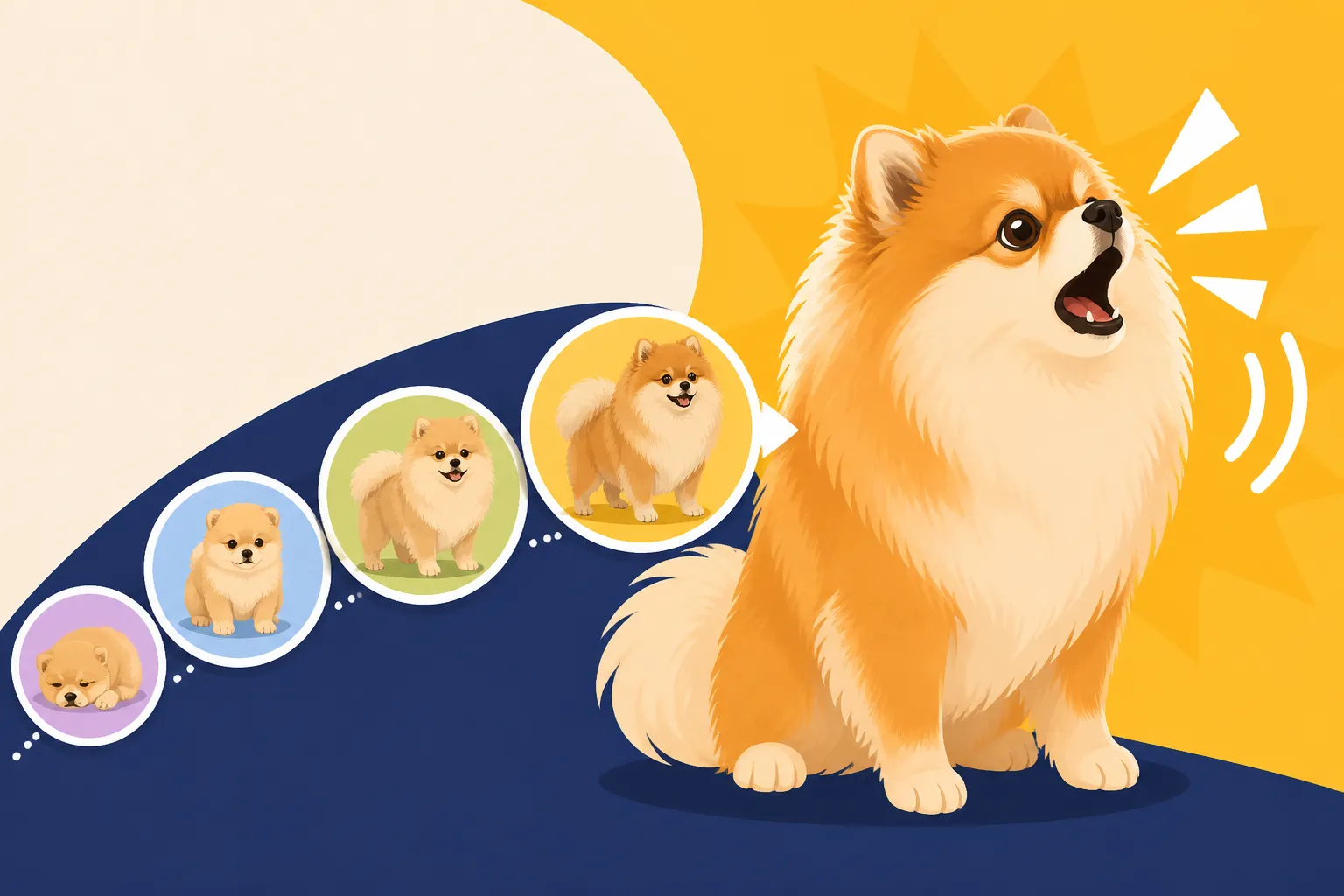
Puppy Vocalization Timeline
Understanding the stages of your Pomeranian's vocal development can help you anticipate and address barking behaviors effectively.
| Age Range (Approx.) | Typical Vocalizations | Primary Cause/Reason | Management Focus |
|---|---|---|---|
| 0-8 Weeks | Whimpers, cries, soft yips, grunts | Expressing basic needs (hunger, cold, discomfort), exploring sounds | Comfort, meeting needs, gentle handling |
| 8-12 Weeks | Short, inquisitive barks, whines, excited yips | Curiosity, "fear period," initial responses to novel stimuli | Positive socialization, gentle exposure, reward calm observation |
| 3-6 Months | More frequent barks, focused alert barks, growls in play | Growing confidence, territorial awareness, testing boundaries, adolescence | Consistent "Quiet" training, environmental management, continued socialization |
| 6-12 Months | Established alert barking patterns, demand barking | Solidified habits, learned responses, full adolescent confidence | Refine "Quiet" command, reinforce calm, high mental/physical stimulation |
| 1+ Year | Barking patterns generally established | Routine triggers, learned behaviors, boredom, anxiety | Consistent training, trigger management, address underlying issues (anxiety) |
No matter when your Pomeranian starts their alert barking, remember that it's a natural behavior for them. With understanding, patience, and consistent positive reinforcement, you can teach them to use their voice appropriately, ensuring a happier and quieter home for everyone.
Disclaimer
This article is for general informational purposes only and does not constitute professional advice. Laws, prices and regulations vary by location and change over time. Consult a qualified professional for guidance on your specific situation.