Teaching a Pomeranian to Walk on a Loose Harness
It’s a sight many Pomeranian owners know well: your tiny, spirited companion pulling with all their might on the leash, straining against their collar or harness, often making that alarming little honking sound that makes your heart leap into your throat. You want to enjoy a peaceful stroll, but instead, every walk feels like a battle of wills, or worse, a genuine worry about their delicate little windpipe. This guide is dedicated to helping you teach your Pomeranian to walk politely on a loose harness, turning those stressful outings into enjoyable bonding experiences for both of you.
Understanding Your Pomeranian's Walking Quirks
Before we dive into the "how-to," it’s important to acknowledge why walking a Pomeranian can feel uniquely challenging. These aren't just small dogs; they're small dogs with big personalities, a double coat, and a surprisingly delicate anatomy. Their breed history as miniature Spitz dogs means they often retain a good deal of their larger ancestors' confidence and drive, packed into a tiny, fluffy package.
The Delicate Pomeranian Trachea
One of the most significant concerns for Pomeranian owners is the breed's predisposition to tracheal collapse. Their windpipes are naturally fragile, and any consistent pressure or sudden jerking on a collar can lead to irritation, inflammation, and even permanent damage. This isn't just a minor cough; it can be a serious health issue that dramatically impacts their quality of life. Many owners have experienced that terrifying moment when their Pom suddenly starts reverse sneezing or gasping, and it often happens during a walk when they've pulled too hard. This is precisely why a proper harness and gentle training are non-negotiable. It's about protecting them from themselves. For more on this, you might want to read The Honking Cough of a Pomeranian's Collapsing Windpipe.
Big Dog Personality in a Small Body
Pomeranians might be small, but they rarely see themselves that way. They often possess an unwavering confidence and a bold, sometimes feisty, spirit. This means they're not always intimidated by larger dogs or the hustle and bustle of the outside world, which can lead to them pulling towards distractions or lunging at things they want to investigate. Their enthusiasm is charming in many ways, but it needs to be channeled appropriately on a leash. Trying to physically overpower a Pomeranian rarely works and can damage your bond, or worse, their neck. Instead, we need to appeal to their intelligence and desire to please (when treats are involved, of course!).
Choosing the Right Equipment: Harnesses are a Must
Forget the collar for walks. For a Pomeranian, a collar should primarily be for ID tags, never for leash attachment. The risk to their trachea is simply too great. Investing in the right harness is the first, crucial step toward safe and comfortable walks. You’ll find a huge variety of options on platforms like Amazon, but not all harnesses are created equal for a Pom.
Why Collars Are a No-Go for Pomeranians
It bears repeating: collars are dangerous for walking a Pomeranian. Even if your dog rarely pulls, a sudden lunge after a squirrel, a surprise encounter with another dog, or even just an excited burst of speed can put immense pressure on their neck. This pressure directly impacts the trachea, which for many Pomeranians is already genetically prone to weakening. That tell-tale honking cough is often a direct result of tracheal irritation or collapse, and a collar greatly exacerbates this. Think of it this way: their neck is tiny and delicate, with little muscle or fat to protect the fragile cartilage rings of the windpipe. Why a Collar Threatens a Pomeranian's Windpipe goes into more detail on this critical issue.
Types of Harnesses and What to Look For
When choosing a harness, your main goal is to distribute pressure across the chest and shoulders, away from the neck. Look for harnesses that have a Y-shaped front, where the straps go around the chest and then down between the front legs, avoiding the throat entirely.
Here's a breakdown of common types and what works best for Poms:
| Harness Type | Description | Pros for Pomeranians | Cons for Pomeranians |
|---|---|---|---|
| Vest/Step-In Harness | Fabric wraps around the chest, dog "steps in" with front legs. | Wide straps, comfortable, easy to put on. | Can be less secure if not fitted perfectly, some have more chest strap. |
| Y-Front Harness (e.g., Freedom No-Pull) | Straps form a "Y" over the chest, preventing neck pressure. | Excellent for trachea protection, distributes pressure well. | Can sometimes chafe armpits if not sized right. |
| Back-Clip Harness | Leash clips to a ring on the dog's back. | Comfortable, easy to use. | Can still allow pulling, as it doesn't offer much leverage. |
| Front-Clip Harness (e.g., Easy Walk) | Leash clips to a ring on the dog's chest. | Discourages pulling by redirecting the dog. | Some dogs dislike the chest redirection; can tangle legs. |
| Dual-Clip Harness | Offers both front and back clip options. | Versatile, great for training, combines benefits. | Can be a bit bulkier or more complex to put on. |
For Pomeranians, a Y-front or vest harness is generally the safest and most comfortable choice. If you're dealing with a strong puller, a front-clip or dual-clip harness can be incredibly helpful for training, as it gently steers them to the side when they pull, naturally discouraging the behavior. Just be sure to find one with soft, non-abrasive material to protect their delicate skin and ample fluffy coat. Remember that fitting is key; a harness should be snug enough that your Pom can't back out of it, but loose enough that it doesn't restrict movement or rub. For specific guidance, check out Harnesses Fitted for a Pomeranian's Windpipe.
Acclimating Your Pomeranian to the Harness and Leash
Before you even think about stepping outside, your Pomeranian needs to be completely comfortable wearing their new walking gear. Rushing this step will only make future walks more challenging. Patience and positive associations are the name of the game here.
Making the Harness a Happy Experience
Start by simply showing your Pomeranian the harness. Let them sniff it, explore it. Give them a high-value treat when they show interest. Don't force anything. The next step is to gently place the harness on them for just a few seconds, immediately followed by lavish praise and a delicious treat. If your Pom is especially wary, you might even just drape it over their back initially. Repeat this several times a day, gradually increasing the duration they wear the harness.
The goal is for them to associate the harness with good things – tasty treats, gentle praise, and fun play. Never put the harness on only for something they dislike, like a trip to the vet, at least not initially. Put it on when they're relaxed, or even during meal times, so they barely notice it. You'll know they're ready for the next step when they willingly come over and allow you to put the harness on, maybe even looking forward to it.
Introducing the Leash Indoors
Once your Pomeranian is comfortable wearing the harness, it’s time to introduce the leash. Again, start small and positive. Attach the leash to the harness while indoors, and let it drag on the floor for a few minutes while you supervise. This allows them to get used to the feel and sound of it. Reward them for ignoring it.
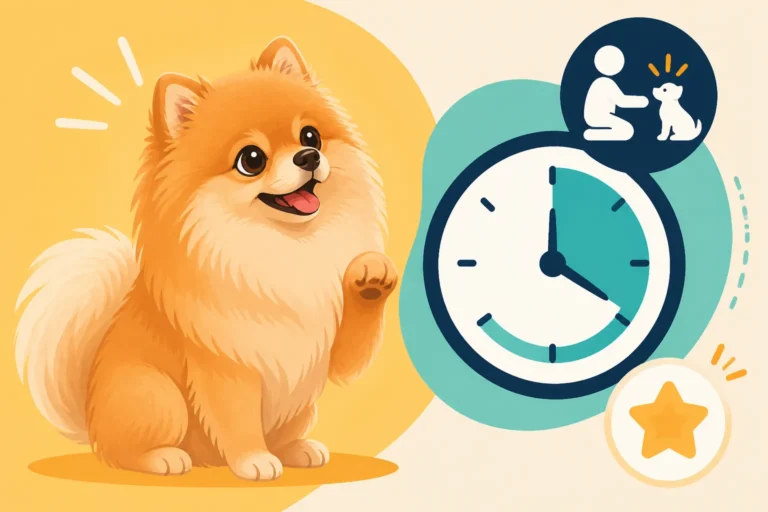
Next, pick up the leash and practice walking a few steps around your living room. Hold a treat at your Pomeranian's nose level to lure them forward, praising them as they walk beside you. Take just a few steps, then release the leash and let them play. Keep these sessions extremely short – literally 30 seconds to a minute – and always end on a high note. Pomeranians have short attention spans, and keeping training brief and fun is crucial. Training Session Length for a Pomeranian emphasizes the importance of these short bursts.
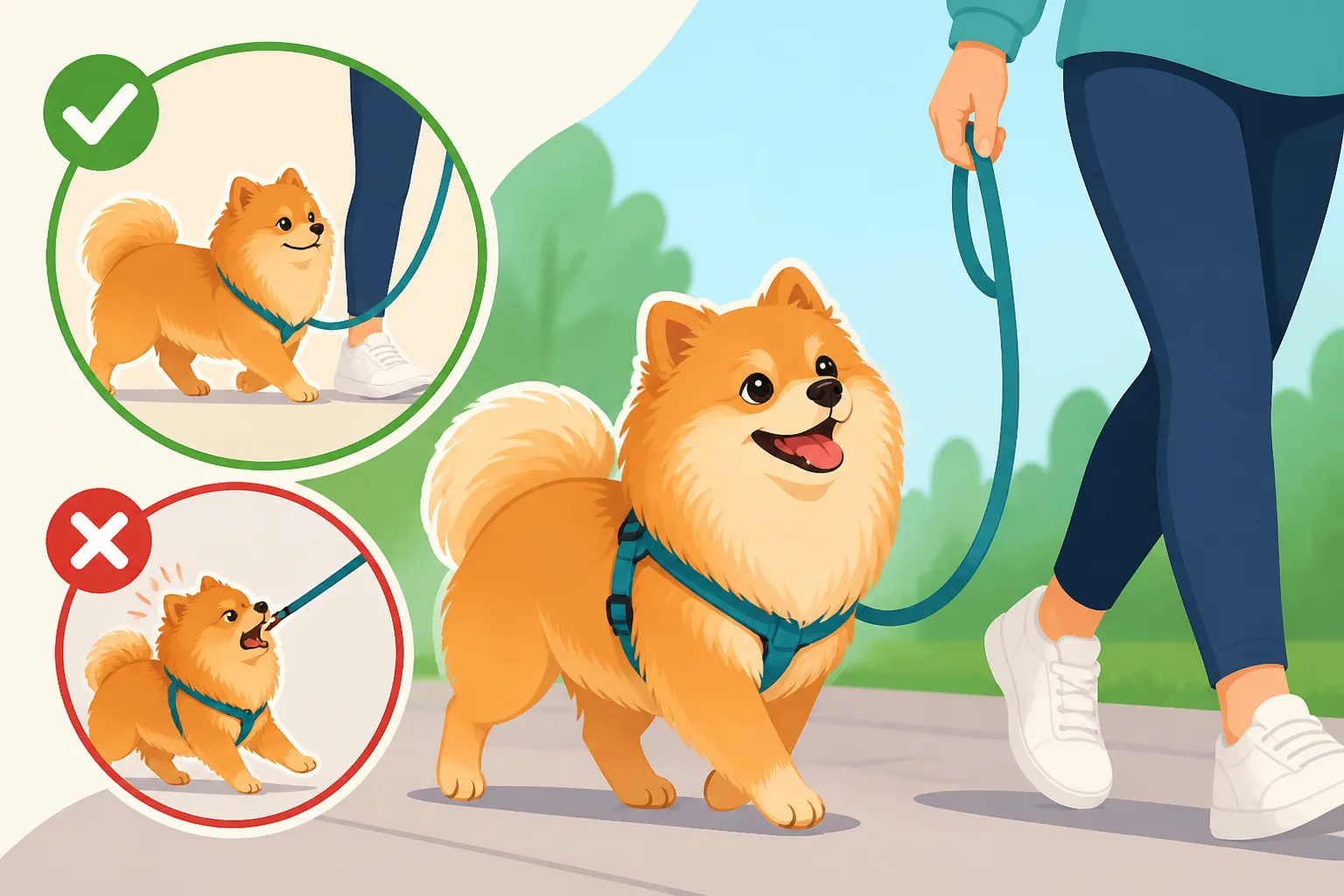
Remember, the leash should be loose. If your Pom pulls, stop immediately. The moment the leash goes taut, you freeze. The moment they ease up, even for a second, you praise and move forward. This teaches them that pulling gets them nowhere, while a loose leash means progress.
Foundation Training for Loose Leash Walking
Now that your Pomeranian is comfortable in their gear, it's time to teach them the actual mechanics of loose leash walking. This is where consistency and positive reinforcement shine. We're building good habits from the ground up, focusing on rewarding the behavior we want to see.
The "Magnet Hand" and Rewarding Position
One of the most effective techniques for teaching loose leash walking is the "magnet hand." Hold a high-value treat in your hand, keeping it at your Pomeranian's nose level, just slightly to the side of your leg where you want them to walk. As they follow the treat, praise them softly and move forward. Take just a few steps, then stop and give them the treat.
The key is to reward them for being in the correct position next to you, with a loose leash. Don't wait for a long stretch of perfect walking; reward every single tiny step in the right direction. If they drift away, simply stop. Don't tug the leash. Just stop. When they look back at you or come back to your side, mark that moment with a "Yes!" or a clicker, and then reward them. This teaches them that staying close to you, without tension on the leash, is what earns them good things. Finding The Reward a Pomeranian Actually Cares About will make this process much smoother!
"Red Light, Green Light" for Stopping Pulling
This simple game is incredibly effective for teaching a Pomeranian that a tight leash means no forward movement.
- Start walking: Begin walking with your Pomeranian in a low-distraction environment, like your hallway or backyard.
- Green Light: As long as the leash is loose, you keep walking ("Green Light!"). Offer praise and occasional treats for their good work.
- Red Light: The instant your Pomeranian's leash tightens, stop dead in your tracks ("Red Light!"). Become a statue. Do not say anything, do not yank the leash, just stop.
- Reset: Wait for your Pomeranian to relax the leash. This might mean they turn to look at you, or even just take a step back, causing the leash to slacken.
- Green Light Again: The very moment the leash is loose, say "Let's go!" cheerfully and start walking again. Reward them for that initial step on a loose leash.
Repeat this endlessly. Your Pomeranian will quickly learn that pulling immediately halts their forward progress, and a loose leash makes the walk continue. This technique requires consistency, but it's incredibly powerful because it lets your dog figure out the consequence of pulling on their own.
Moving to Outdoor Walks and Managing Distractions
Once your Pomeranian is confidently walking on a loose leash indoors, it's time to take your skills outside. This is often where the real challenge begins, as the world is full of exciting (and often overwhelming) distractions for a small dog.
Gradual Exposure to the Outside World
Don't go from your living room straight to a busy city park. Start with your quiet backyard, then a calm street outside your house during a less busy time of day. Gradually increase the level of distraction. The goal is to set your Pomeranian up for success, not overwhelm them.
When you first go outside, your Pom might be so excited or overwhelmed that they forget all their indoor training. That’s completely normal! Revert to shorter sessions and higher-value treats. You might even only walk a few houses down the street and back, just focusing on getting a few steps of loose leash walking before heading home. Make the treats even more appealing – tiny pieces of cooked chicken or cheese work wonders.
Always be aware of your Pomeranian's body language. If they seem too stressed or overstimulated, it's okay to cut the walk short and try again another time in a quieter setting. We want walks to be a positive experience.
Handling Distractions Like a Pro
Distractions are inevitable on outdoor walks. Squirrels, other dogs, children, strange noises – your Pomeranian will encounter them all. Here’s how to manage them using your loose leash walking training:
- Proactive Management: Scan your environment constantly. If you see a potential distraction approaching, like another dog, get your Pomeranian's attention before they react. Use their name, hold a treat at your side, and walk quickly past the distraction, rewarding them generously for staying focused on you.
- Change Direction: If your Pomeranian starts to pull towards something, immediately change direction. Don't wait for the leash to tighten. A quick, unexpected change of direction often snaps them out of their focused pulling and reminds them to pay attention to you. Reward them for following your lead.
- "Watch Me" Command: Teach your Pomeranian a "Watch Me" command indoors first. Hold a treat near your eye, say "Watch Me," and reward them when they make eye contact. Practice this until it's reliable. Then, on walks, use "Watch Me" to refocus their attention when a distraction appears. This is a valuable tool for building impulse control.
- Be a "Treat Dispenser": Especially in new or distracting environments, keep a steady stream of small, high-value treats coming every few steps, as long as the leash is loose and they are walking nicely. You want them to think, "Walking next to my human with a loose leash means delicious things!" Platforms like Amazon offer a wide array of treat pouches for easy access.
Remember that a Pomeranian’s focus can be easily broken by excitement or fear. If you find your Pom struggling to maintain a loose leash, evaluate the environment. Is it too noisy? Too many dogs? Too many people? It might be best to find a quieter route or time of day. Consistency and patience will pay off, eventually turning those chaotic walks into calm, enjoyable outings.
Troubleshooting Common Pomeranian Walking Issues
Even with the best training, you might run into specific challenges. Pomeranians are smart, but they can also be creatures of habit or simply have ingrained instincts that make certain aspects of walking tricky.
The Pomeranian Who Backs Out of Their Harness
This is a terrifying scenario that many small dog owners face. If your Pomeranian gets spooked or simply doesn't want to go in a certain direction, they might suddenly try to back out of their harness. This is incredibly dangerous, especially near traffic or other dogs.
The best defense here is a well-fitted harness, ideally one with a snug design and multiple points of adjustment, or a "escape-proof" style that has an extra strap around the waist. Always check the fit before every walk. You should be able to comfortably slip two fingers under the straps, but no more. If your Pom does try to back out, instead of pulling them forward, scoop them up quickly and safely. Practice putting the harness on and taking it off in a calm environment, rewarding them each time. You might even use a training program like BAXTER & Bella, which often has modules on desensitization and positive handling, to help them feel more secure. For more tips on this specific issue, check out Fitting a Harness on a Pomeranian That Backs Out.
Lunging and Barking at Other Dogs or People
This is a classic Pomeranian trait – loud, confident, and sometimes confrontational. They might lunge and bark at other dogs, people, or even inanimate objects. This isn't usually aggression in the traditional sense, but often a combination of fear, overexcitement, and a lack of socialization or impulse control.
The key here is to manage their environment and train a strong "look at me" or "leave it" command. As soon as you spot a trigger, redirect your Pom's attention to you with a treat and praise. If they can't focus, you're too close to the trigger. Increase the distance, get their attention, and then reward them for staying calm. Over time, you can gradually decrease the distance as they learn to associate the presence of other dogs/people with good things (treats from you) rather than fear or excitement. Consider enrolling in a positive reinforcement puppy class or seeking advice from a certified professional dog trainer if this behavior is severe, as they can provide tailored guidance.
The Pomeranian Who Just Won't Walk
Sometimes, a Pomeranian will simply dig in their heels and refuse to move, or they'll plant themselves and try to head home. This could be due to fear, discomfort (hot pavement, cold feet), or simply stubbornness.
First, rule out any physical discomfort. Is the ground too hot or cold? Is their harness chafing? Are they feeling unwell? If all seems well, try to make the walk more exciting. Vary your route, bring their absolute favorite treats, or incorporate short bursts of play. If they stop, try using the "magnet hand" again to lure them forward a few steps. If they still refuse, don't drag them. Pick them up, carry them a short distance, and then try again. Sometimes, a change of scenery or a brief break is all they need. Remember that Pomeranians don't always need to walk for long distances; How Far a Pomeranian Can Walk in a Day discusses appropriate exercise levels. The most important thing is that the experience is positive and enriching for them, even if it's just a short sniffari around the block.
By understanding your Pomeranian's unique needs, choosing the right gear, and patiently applying positive reinforcement techniques, you can transform your walks from a source of stress into a joyful part of your daily routine.
Disclaimer
This article is for general informational purposes only and does not constitute professional advice. Laws, prices and regulations vary by location and change over time. Consult a qualified professional for guidance on your specific situation.