Whether Picking a Pomeranian Up Rewards Bad Behavior
It's such a common sight, isn't it? A tiny Pomeranian, looking up at its human with those big, soulful eyes, perhaps letting out a little demand bark or doing a happy dance, and whoosh! — into your arms they go. It feels so natural, so loving, and often, so necessary. But what if this seemingly innocent act of scooping up our beloved Poms is actually, without us even realizing it, rewarding behaviors we'd rather not see? This guide will explore the deep-seated reasons why we instinctively pick up our Poms, how this can inadvertently create behavioral patterns, and, most importantly, how we can foster a more independent, well-adjusted, and truly confident little companion.
The Instinct to Scoop: Why We Pick Up Our Poms
Let's be honest, those of us who share our lives with Pomeranians often develop a strong, almost parental urge to protect them. They're so small, so delicate, and frankly, so adorable that it's hard not to want to keep them safe and close. Picking them up becomes a reflex, a go-to solution for a myriad of situations, whether we're aware of it or not.
Protecting a Small Dog
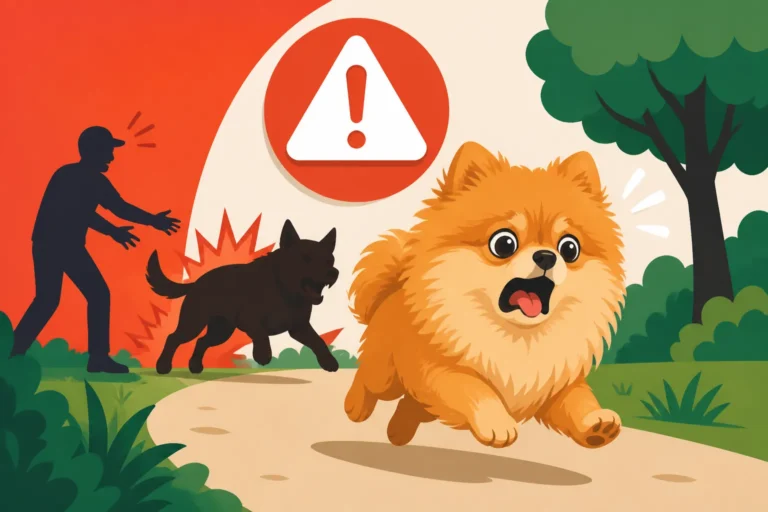
One of the most powerful reasons we scoop up our Poms is for their safety. In a world full of big feet, curious children, and larger, boisterous dogs, a Pomeranian can seem incredibly vulnerable. Imagine you're at the park, and a big Golden Retriever bounds over, tail wagging, oblivious to the tiny fluffball it's about to trample. Your heart leaps into your throat, and before you even think, your Pom is safely tucked under your arm. This isn't just a reasonable reaction; it's a deeply ingrained protective instinct. We know our Poms aren't built for rough-and-tumble interactions with something three, four, or even ten times their size. A Five Pound Pomeranian Around Big Dogs is a valid concern, and lifting them out of harm's way feels like the only sensible choice. This is particularly true when navigating crowded spaces or when unexpected loud noises or fast movements occur, which can easily startle a small dog.
Beyond immediate physical threats, we also want to protect them from perceived emotional distress. If your Pom is looking nervous or appears overwhelmed by a new environment or person, picking them up can feel like providing a secure refuge. You're offering comfort, a safe haven from whatever is making them anxious, reinforcing their reliance on you as their ultimate protector.
Comfort and Affection
Who doesn't love a good cuddle with their Pomeranian? Their soft fur, their warm little bodies, and those eager licks make them irresistible. Picking up your Pom is often simply an act of affection, a way to express love and bond with your furry family member. When you come home from a long day, and your Pom greets you with excited barks and wiggles, the natural response is often to scoop them up for a loving embrace. It's a mutual exchange of comfort and joy.
This physical closeness is a significant part of the human-animal bond. For many of us, our Poms are like our children, and holding them close is a deeply satisfying experience. It releases feel-good hormones for both you and your dog, strengthening your connection. They learn to associate your touch with security and love, and you learn that their presence brings immense happiness. This is not inherently bad; in fact, it's wonderful! The key lies in understanding when and how this comfort is given to ensure it doesn't inadvertently reward undesirable behaviors.
Managing Unwanted Situations
Sometimes, picking up your Pomeranian isn't about protection or affection; it's about crisis management. Your Pom is barking incessantly at the mail carrier, tearing up the carpet, or nipping at a guest's ankles. In the heat of the moment, scooping them up and removing them from the situation can feel like the fastest, most effective way to stop the unwanted behavior. It provides immediate relief for you and, superficially, for the situation.
For instance, if your Pom is engaging in The Doorbell and the Pomeranian Response, picking them up and carrying them to another room might stop the barking temporarily. If they're jumping on visitors, lifting them onto your lap can prevent further jumping. While these actions might resolve the immediate problem, they often don't address the underlying cause of the behavior. Instead, they can inadvertently teach your Pomeranian that their unwanted actions lead directly to your attention or a desired outcome – even if that outcome is simply being held.
How "Scooping" Can Accidentally Reinforce Behaviors
While our intentions are always good, the act of picking up a Pomeranian, especially in response to specific behaviors, can unintentionally create a cycle of reinforcement. Our Poms are incredibly intelligent and quickly learn what actions lead to desired outcomes, even if we're not consciously teaching them.
Rewarding Fear or Anxiety
Imagine your Pomeranian is out on a walk and suddenly a loud truck rumbles by, startling them. They might cower, bark nervously, or try to hide behind your legs. Your immediate, loving response is to bend down, scoop them up, and comfort them, murmuring reassuring words. While this feels like the right thing to do, from your Pom's perspective, this sequence of events teaches a crucial lesson: "When I get scared and react nervously, my human picks me up, cuddles me, and removes me from the scary thing."
This inadvertently rewards the fearful reaction itself. Your Pom learns that being scared is an effective way to get your attention and escape an uncomfortable situation. Over time, this can lead to an increase in fearful or anxious behaviors, as they become conditioned to rely on you as their constant escape mechanism rather than developing coping strategies of their own. This can prevent them from learning to be resilient. For instance, if your Pom consistently reacts with fear to new people, and you always pick them up, they never learn that many strangers are friendly and can be approached calmly. Instead of building their confidence, you might be unintentionally solidifying their anxiety.
Encouraging Demand Barking or Nipping
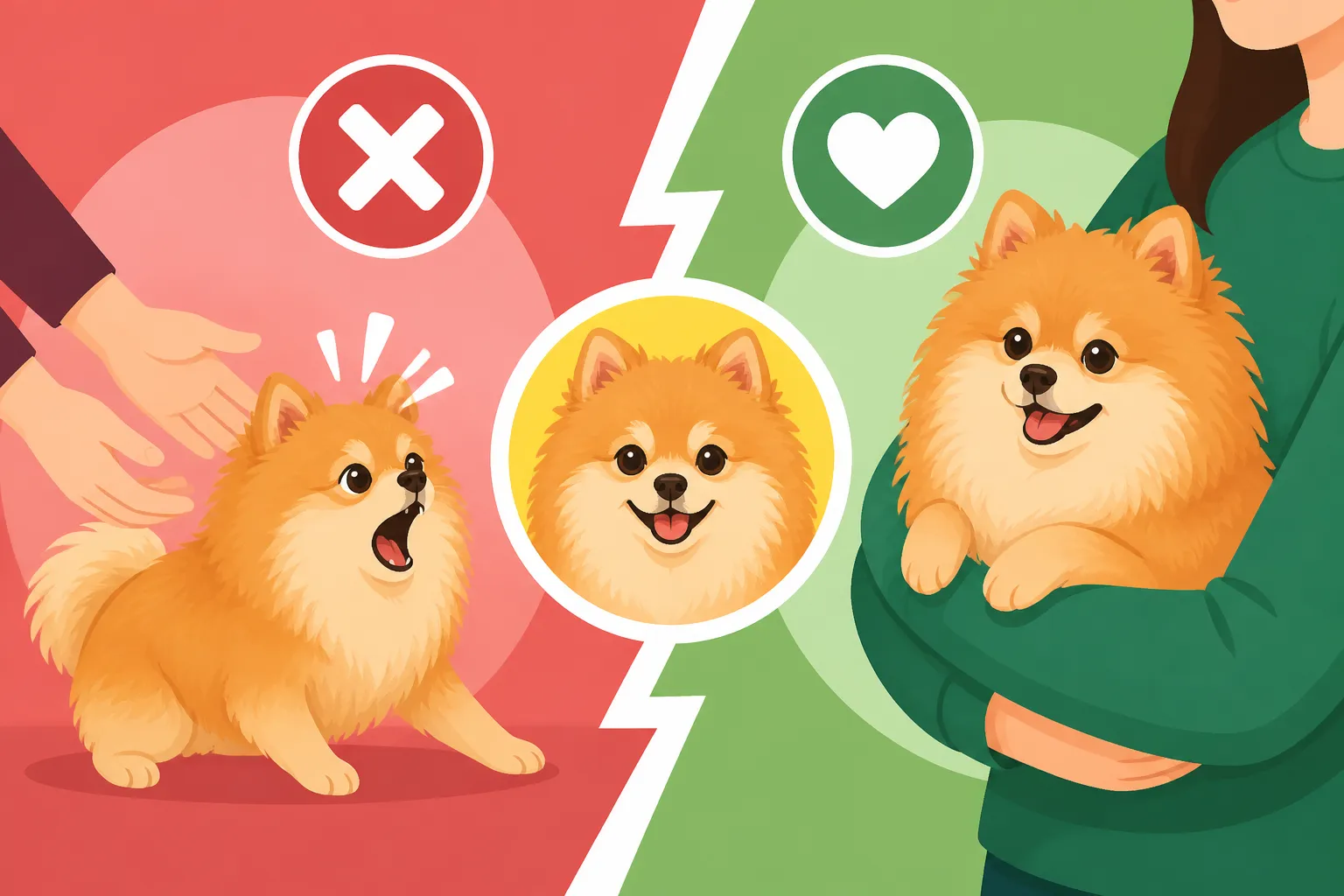
Pomeranians are notorious for their strong personalities and their ability to get what they want. If your Pom barks, paws at your leg, or even gives a little nip to demand attention, and your response is to pick them up, you've just given them a masterclass in manipulation. They quickly connect their "bad" behavior with the positive outcome of being held or getting your focused attention.
Consider a scenario where your Pom is sitting by your feet, barking pointedly until you relent and lift them onto your lap. They wanted up, they barked, and they got up. Success! They will absolutely try that tactic again. Similarly, if they're nipping at your clothes or fingers for play or attention, and you pick them up to soothe or redirect them, the nipping behavior has, in their minds, led to a desired physical interaction. This doesn't mean your Pom is being naughty; it simply means they are highly effective learners. They've discovered an efficient way to communicate their desires and get a reaction from you. The trick is to teach them more appropriate ways to ask for what they want. The Pomeranian That Cannot Be Left Alone might also develop demand behaviors for attention.
Preventing Socialization and Coping Skills
A Pomeranian that is constantly picked up whenever they encounter something new or potentially challenging is a Pomeranian that misses out on crucial learning opportunities. If your dog spends most of their time in your arms during walks, at social gatherings, or when meeting new dogs, they don't get the chance to develop essential social skills or learn how to navigate the world on their own four paws.
They don't learn how to read other dogs' body language, how to interact appropriately with unfamiliar people, or how to confidently explore new environments. This over-reliance on being carried can lead to a lack of confidence, making them more prone to anxiety and reactivity in situations where they aren't being held. Instead of learning to cope with the sights and sounds of a busy street or the presence of a friendly, larger dog, they learn that the only safe place is in your arms. This can make them less adaptable and potentially more stressed in situations where they are expected to interact independently. Introducing a Pomeranian to a Much Bigger Dog can be done on leash, but not in your arms.
Understanding Your Pomeranian's Motivation
To truly address the behaviors that lead us to scoop up our Poms, we first need to understand why they're acting the way they are. Their actions are always a form of communication, and by deciphering their motivations, we can respond more effectively and lovingly.
Seeking Attention
Pomeranians are deeply social animals. They thrive on companionship and interaction with their humans. When they engage in behaviors like barking, pawing, or even mischievous nipping, it's often a direct plea for your attention. They've learned that these actions, even if they result in you scolding them or picking them up to remove them, still deliver that coveted focus from you. For a dog, negative attention is often better than no attention at all.
Think about it: if your Pom is quietly lying in their bed, you might not notice them as much. But if they're doing something disruptive, you immediately react. This teaches them that being "naughty" gets a reaction. They might just want a pat, a cuddle, or some playtime. If they're not getting enough positive attention for being calm or independent, they'll ramp up their bids for attention until they find something that works. They aren't trying to be difficult; they're simply trying to connect with you in the most effective way they know how, and if picking them up is the consistent result, that's what they'll aim for.
Reacting to Perceived Threats
For a tiny Pomeranian, the world can seem like a giant, overwhelming place. Many common situations that we humans take for granted—a large dog walking by, a child running and shouting, a sudden gust of wind—can be genuinely perceived as threats by a small dog. Their reactions, such as barking, growling, lunging, or trying to hide, are often rooted in fear or defensiveness. When you pick them up in these moments, you're confirming their assessment: "Yes, that was scary, and I've saved you from it."
While this provides immediate relief for your Pom, it doesn't help them learn to differentiate between real and imagined threats. They don't learn that most large dogs are friendly, or that children are often just playing. Instead, their fear response is validated and reinforced. Over time, this can lead to an increasingly reactive dog that sees danger in many everyday situations, leading them to vocalize or lash out in an attempt to protect themselves, knowing that you'll eventually intervene by picking them up. A Pomeranian That Growls at Visiting Kids could stem from this perceived threat.
Resource Guarding of the Owner
Resource guarding isn't just about toys or food; it can also extend to people. Some Pomeranians might begin to view their owner as a valuable resource that needs to be protected from others. This can manifest as growling, snapping, or barking at other pets or even human visitors who approach you, especially when you're sitting down or holding your Pom. The behavior is often an attempt to control access to their beloved human.
When you scoop up your Pom in response to this guarding behavior, it can inadvertently strengthen the idea that their guarding was effective. They "successfully" chased away the perceived competition (the other pet or person) and solidified their claim to you. This can escalate over time, making it difficult for your Pom to tolerate others near you, leading to increased possessiveness and potential aggression. It's a nuanced motivation because it comes from a place of deep attachment to you, but it can quickly become problematic if not managed carefully. It's similar to A Pomeranian That Guards a Toy From the Family, but applied to you!
Breaking the Cycle: Teaching Alternative Behaviors
The good news is that once we understand why our Poms behave a certain way and how our reactions might be inadvertently reinforcing those behaviors, we can start to change the dynamic. The goal isn't to stop showing affection or protecting our dogs, but to teach them healthier coping mechanisms and more appropriate ways to interact.
Rewarding Calmness and Independence
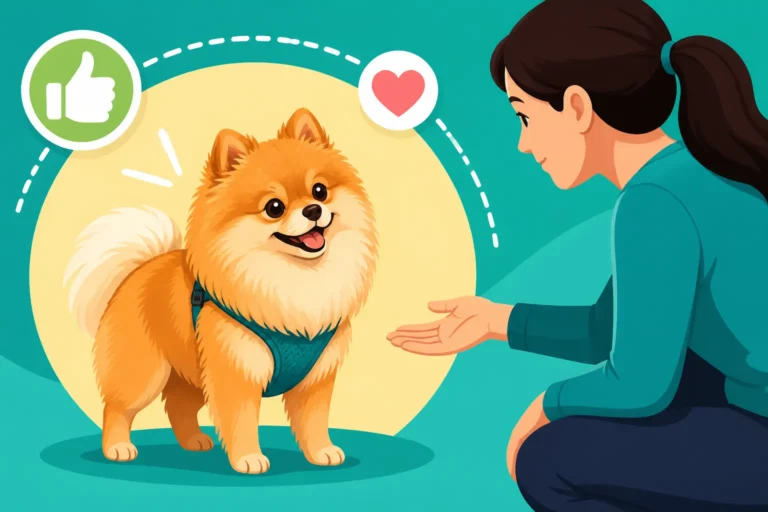
One of the most powerful tools in our training arsenal is positive reinforcement, and it’s especially effective when teaching your Pom that being calm and independent gets them what they want. Instead of waiting for your Pom to demand attention or react fearfully, actively look for moments when they are settled, quiet, or engaging in appropriate behaviors on their own.
When your Pomeranian is lying calmly in their bed, chewing on a toy, or simply relaxing nearby, that’s your cue to offer praise, a gentle pet, or a small, delicious treat. You can quietly walk over and offer a treat, or toss a high-value chew like those available on Amazon near them. The key is to reward the absence of the unwanted behavior, teaching them that being calm and content brings positive attention. This also applies when they are in a situation that might normally trigger a fear response; if they manage to observe a new dog or a loud noise without reacting, that's a moment to reinforce. Programs like BAXTER & Bella often emphasize this kind of proactive reinforcement, building a strong foundation of desired behaviors rather than just reacting to unwanted ones. Over time, your Pom will learn that calmness is a highly rewarding state.
Using Positive Reinforcement and Training
Beyond rewarding calm, actively engaging your Pomeranian in positive reinforcement training can equip them with a toolkit of alternative behaviors. Instead of just stopping unwanted actions, you're teaching them what to do instead. This means teaching foundational commands like "sit," "stay," "come," and "leave it." These aren't just parlor tricks; they are crucial life skills that give your dog structure and allow you to redirect their attention in challenging situations.
For example, if your Pom typically barks at the doorbell, instead of scooping them up, you can teach them to go to their mat and "stay" when the bell rings, rewarding them heavily for doing so. If they usually jump on guests, teach them to "sit" politely for greetings. A structured training program can guide you through this process effectively. Many owners find value in online resources and programs, which provide step-by-step instructions and support. By consistently practicing these alternative behaviors, your Pomeranian learns that following your cues and offering desirable actions leads to rewards, rather than relying on demanding or fearful behaviors to get what they want. Whether a Pomeranian Needs a Private Trainer can be a great option for personalized guidance here.
Creating a Safe Space for Your Pomeranian
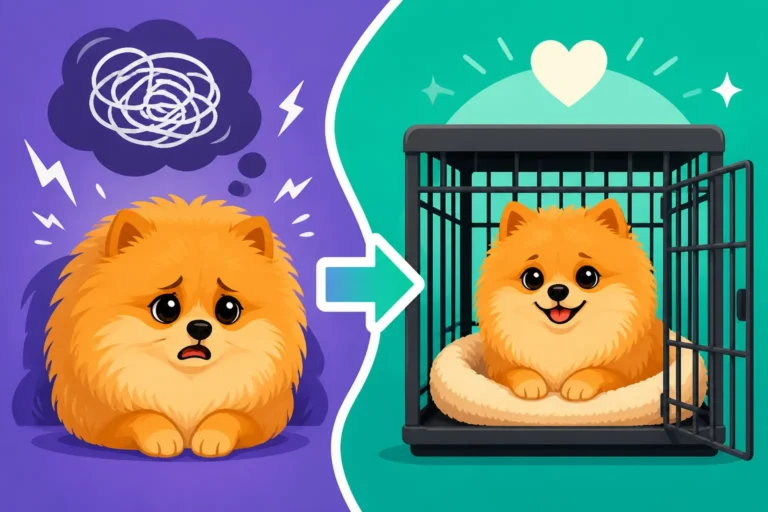
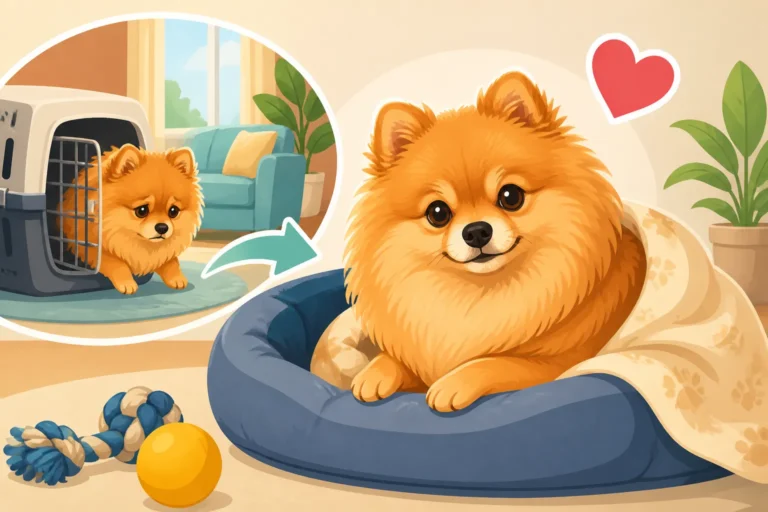
Every Pomeranian, no matter how confident, benefits from having their own designated safe space where they can retreat, relax, and feel secure. This could be a crate, a cozy dog bed in a quiet corner, or even a small playpen. The key is to make this space consistently positive and accessible to your Pom. Introduce the space with treats and positive associations, never using it for punishment.
This safe haven empowers your Pomeranian by giving them agency. Instead of being picked up and removed from a stressful situation by you, they learn they have a comfortable, secure place they can choose to go to on their own when feeling overwhelmed or simply needing some quiet time. Stock it with favorite toys, a comfortable blanket, and perhaps a long-lasting chew. If visitors come over and your Pom seems anxious, you can calmly direct them to their "den," praising them for going there. Crates Sized for a Pomeranian are readily available on platforms like Amazon and can become a wonderful sanctuary. This fosters independence and self-soothing, reducing their reliance on you to physically remove them from situations they find uncomfortable, which in turn reduces the need for you to scoop them up as a problem-solving measure.
Safe and Appropriate Handling Techniques
Teaching your Pomeranian alternative behaviors is crucial, but there will still be times when you need to pick them up – for safety, for transport, or just for a loving cuddle. The way you handle these interactions can make a huge difference in reinforcing trust and avoiding unwanted behaviors.
Approaching and Lifting Properly
The foundation of safe handling is building trust and making the experience predictable for your Pomeranian. Avoid sudden movements or grabbing them unexpectedly. Always approach them calmly, speaking in a reassuring tone. Before you even touch them, give them a verbal cue like "Up!" or "Cuddle time!" This allows them to anticipate your action and mentally prepare.
When you do lift them, ensure you're supporting their small, delicate body properly. Place one hand under their chest, just behind their front legs, and the other hand under their hindquarters. This distributes their weight evenly and prevents undue stress on their back or abdomen. Never lift a Pomeranian by their front legs alone, or by the scruff of their neck. Holding them securely against your body will make them feel safer and reduce the likelihood of them squirming or feeling uncomfortable. Teaching a Pomeranian to Be Picked Up Properly is paramount for their safety and comfort.
Teaching "Up" and "Down" Cues
Just as you teach "sit" or "stay," you can teach your Pomeranian specific cues for being picked up and put down. This gives them a sense of control and predictability over the action. Start by using your chosen cue, like "Up," just before you lift them, and reward them with a treat and praise as you gently pick them up. Practice this in calm, neutral environments.
Similarly, have a cue for being put down, such as "Down" or "Floor." As you lower them to the ground, say the cue and then reward them for calmly standing or sitting once their feet are on the floor. This teaches them that being picked up is a temporary state, and they will be safely returned to the ground. This process transforms lifting from a potentially startling or anxiety-inducing event into a predictable, even pleasant, interaction. It helps prevent behaviors like struggling to get down or snapping when being handled, as they understand the routine.
Building Confidence Through Controlled Exposure
A key component of breaking the "scoop-me-up" cycle for fear-related behaviors is to help your Pomeranian build confidence through gradual, controlled exposure to the things that make them nervous. This process, often called desensitization and counter-conditioning, needs to be done slowly and carefully to avoid overwhelming your dog.
Start by identifying the triggers (e.g., specific types of people, sounds, other dogs). Then, expose your Pom to these triggers at a distance where they notice them but do not react with fear. For instance, if another dog makes them nervous, start by observing other dogs from across a large field. At that safe distance, reward your Pom with high-value treats and calm praise for simply observing without reacting. Slowly, over many sessions and days, reduce the distance, always staying below their threshold for fear. If they start to show signs of anxiety, increase the distance again. The goal is to create positive associations with the trigger at progressively closer ranges. This builds their resilience and teaches them they can cope without needing to be lifted to safety. Socializing a Pomeranian Before Its Shots Finish needs to be done carefully and with proper vet guidance, but the principles of controlled exposure apply once they are ready.
This methodical approach, potentially guided by a professional trainer or an online program like those offered by BAXTER & Bella, helps your Pom learn to trust their own ability to navigate the world, rather than relying solely on your arms as their ultimate safe space. Remember, patience is key, and every small victory in confidence building is a huge step forward for your tiny companion.
Here’s a quick overview of how our actions can shape our Pomeranian’s learning:
| Scenario | Owner's Instinctive Action | Potential Negative Reinforcement | Recommended Training Approach |
|---|---|---|---|
| Pom barks at delivery person | Scoops up Pom to quiet them | Pom learns barking gets attention/removal from "threat" | Redirect with "sit/stay" away from window, reward quiet behavior, use desensitization |
| Pom growls at another dog | Scoops up Pom for protection | Pom learns aggression gets safety/removal from "threat" | Increase distance from other dogs, reward calm observation, practice "look at that" cue |
| Pom nips at guest's pants | Scoops up Pom to stop behavior | Pom learns nipping gets owner's attention/interaction | Crate or designated safe space, teach "leave it," redirect with appropriate chew toy from Amazon |
| Pom whines for lap time | Scoops up Pom to comfort | Pom learns whining is an effective demand for attention | Ignore whining, reward calm settling nearby, invite onto lap only when quiet and relaxed |
| Pom hides during thunderstorm | Scoops up Pom to soothe | Pom learns fear gets comfort and removal from "threat" | Create a safe, quiet den, use calming wraps, gradually desensitize to storm sounds |
| Pom jumps on owner's leg | Scoops up Pom for a cuddle | Pom learns jumping is an effective way to get physical contact | Ignore jumping, reward "four paws on the floor," invite for cuddle when calm |
Ultimately, our Pomeranians thrive on our love and guidance. By understanding the subtle ways our actions can influence their behavior, we can empower them to be more confident, independent, and well-adjusted members of our families, enjoying those precious cuddles on our terms, not theirs.
Disclaimer
This article is for general informational purposes only and does not constitute professional advice. Laws, prices and regulations vary by location and change over time. Consult a qualified professional for guidance on your specific situation.