Whether a Pomeranian Barks From Fear or Habit
Oh, the Pomeranian bark! If you own one, you know exactly what I'm talking about. That sharp, insistent "yap-yap-yap" can be both endearing and, let's be honest, absolutely grating. One of the biggest puzzles for us Pom parents is figuring out why they do it. Is our little fluffball genuinely terrified by the mail carrier, or have they simply learned that barking at every passing shadow gets them a reaction? This guide is here to help you unravel the mystery behind your Pomeranian's vocalizations, exploring the nuances between fear-driven barks and those that have simply become a deeply ingrained habit, so you can address the root cause effectively.
The Pomeranian's Voice: A Legacy of Sound
Let's start by understanding that Poms are not inherently "quiet" dogs. Their heritage predisposes them to be quite vocal. It's part of their charm, and sometimes, part of their challenge!
Why Pomeranians Are Naturally Vocal
Our beloved Pomeranians descend from larger Spitz-type dogs, and if you look at their Northern brethren, like the Norwegian Elkhound or the Keeshond, you'll see a common thread: they're talkers. These dogs were often bred to be alert, to watch over their territory, and to signal the approach of strangers or potential threats. While a modern Pomeranian might weigh a mere handful of pounds, they still carry that ancestral programming.
Imagine a tiny, fluffy sentinel, perched on your sofa, convinced it's guarding the kingdom from the perils of a squirrel on the fence or a delivery truck rumbling down the street. Their bark is their primary way of saying, "Hey! Something's happening!" or "Beware, intruder!" It's their small size that often makes their bark seem more urgent or piercing, as if they're compensating for their stature with the volume of their voice. They genuinely believe they are protecting you and the home, and that's a hard instinct to override entirely. This innate vigilance is deeply woven into their breed identity, making them fantastic, albeit noisy, little alarm systems.
When Barking Becomes More Than Just Communication
The line between a natural alert bark and excessive, problematic barking can often feel blurry. A quick "woof" when someone knocks on the door is perfectly normal and even desired for many owners. It’s when that woof turns into a sustained, high-pitched frenzy every time a leaf blows past the window, or when it’s directed at you for seemingly no reason, that it moves from communication to a behavioral concern.
The truth is, many of us, without even realizing it, can accidentally encourage our Poms to bark more. Perhaps you rush to see what they're barking at, inadvertently rewarding the vocalization with attention. Or maybe you pick them up to soothe them, teaching them that barking is a surefire way to get held. These small, consistent reactions can quickly turn an infrequent alert into a deeply ingrained habit. It's a tricky cycle to break because our first instinct is often to respond, even if that response is to scold, which can still be perceived as attention. Understanding this distinction is the first step toward figuring out how to manage your Pom's vocal habits.
Barking Born of Fear: The Anxious Pomeranian
Sometimes, your Pom isn't just being habitually noisy; they're genuinely scared. Fear-based barking can be heartbreaking to witness, as it often stems from deep-seated anxiety or past negative experiences.
Common Triggers for Fear-Based Barking
Pomeranians, with their small stature, can perceive the world as a much scarier place than larger dogs do. Imagine living in a world where everything is gigantic! Common triggers for fear-based barking can be anything from sudden, loud noises like thunder or fireworks, to the arrival of strangers in your home, or even the appearance of unfamiliar objects like a new vacuum cleaner. Other dogs, especially larger ones, can also be a significant source of anxiety, leading to a frantic flurry of barks. They might be trying to make themselves seem bigger or to ward off what they perceive as a threat before it gets too close.
Even everyday occurrences can be overwhelming. A delivery driver at the door, a child playing loudly outside, or even a sudden movement from you could trigger a fear response if your Pom is particularly sensitive or has had negative experiences. For many rescue Pomeranians, previous environments might have left them with lasting anxieties about specific sounds, smells, or types of people. A dog who was previously neglected might bark out of fear when approached by a new hand, simply because they associate hands with something unpleasant. These deep-seated fears require a gentle, empathetic approach to help your little one feel safe.
Recognizing the Signs of Fear Versus Alertness
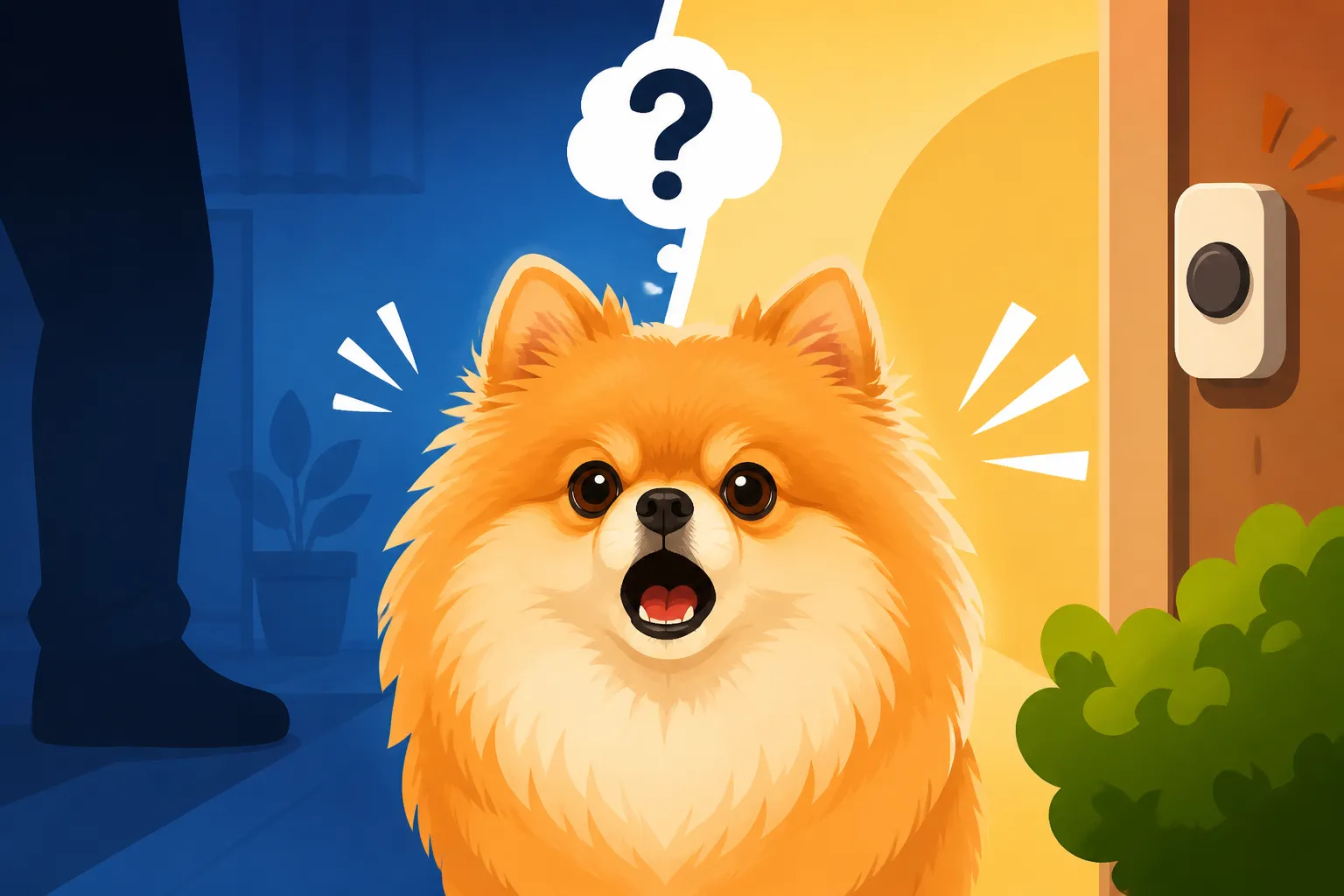
It's crucial to differentiate between an alert bark and a fear bark. An alert bark often sounds confident, directed, and might cease once the "threat" is identified as non-threatening (e.g., you open the door to a friend). A fear bark, however, is usually accompanied by a whole host of other anxious body language cues.
Look for a tucked tail, ears flattened back against their head, lip-licking, yawning (not out of tiredness, but stress), or trembling. Your Pom might try to back away, hide behind your legs, or even snap if the perceived threat gets too close. Their barking might be high-pitched, frantic, and continuous, sometimes even escalating into growling or air-snapping. They're not just informing you; they're actively trying to fend something off. If you see these signs, it's a clear indicator that your Pom isn't just being a nuisance; they're genuinely distressed. This understanding is key to choosing the right intervention. You might also notice them exhibiting displacement behaviors like excessive grooming or suddenly sniffing the ground intensely.
Addressing Fear-Based Barking Through Counter-Conditioning
When fear is at the root of the barking, the solution isn't to punish the barking, but to change your Pomeranian's emotional response to the trigger. This is where desensitization and counter-conditioning come in. The goal is to gradually expose your Pom to the scary thing at a very low intensity, pairing it with something highly positive.
For example, if the mail carrier causes a frenzy, start by playing a recording of a mail truck sound at a barely audible level while showering your Pom with their absolute favorite, high-value treats. As they remain calm, very slowly increase the volume over days or weeks. Eventually, you might have someone stand far down the driveway in a uniform, again, paired with treats and praise, gradually moving closer. Never push them past their comfort level, and always stop before they start barking. The key is to create positive associations, so they begin to anticipate good things (treats!) when they see or hear the trigger, rather than fear. Creating a safe, quiet "den" or crate where they can retreat when feeling overwhelmed can also be incredibly helpful. This space, perhaps with a comfy bed and a long-lasting chew, can be their sanctuary. You might find some excellent ideas for these calming items on Amazon. Remember, patience and consistency are your best friends here. For specific situations, such as separation anxiety, you might find more in-depth advice in A Pomeranian That Will Not Be Left Behind.
Barking as a Learned Habit: The Demanding Pomeranian
Sometimes, it's not fear at all. Our smart little Poms quickly learn what works to get them what they want. And often, what works is barking!
The Accidental Reinforcement Loop
This is perhaps the most common reason for excessive Pomeranian barking, and it's almost always an innocent mistake on our part. We love our Poms, and when they bark, our natural inclination is to respond. But every time we react to a bark – whether it's by looking at them, talking to them, picking them up, or even sighing dramatically – we are, in essence, accidentally reinforcing the behavior. Your Pom quickly connects the dots: "I bark, I get attention." This creates a powerful reinforcement loop.
Think about it: your Pomeranian barks for food, and you put down their bowl. They bark to go outside, and you open the door. They bark when you're on the phone, and you glance over or scold them. Each time, they've achieved their goal through barking. They don't understand the difference between positive and negative attention; any attention is a win in their book. This is why a Pomeranian might "demand bark" at you from across the room, simply because they want you to acknowledge them. They've learned that their voice is a powerful tool to manipulate their environment and get what they desire. Breaking this loop requires a conscious effort to change your reactions.
Barking for Attention or Resources
Pomeranians are incredibly clever and charismatic. They know how to work their charm, and their bark is a key part of their arsenal. They will absolutely bark to demand your attention. This could be a persistent "yap" while you're trying to work, read, or watch TV, simply because they want you to engage with them. It could also be barking specifically for resources: that treat you're holding, their dinner, or even your lap.
I've seen Poms who will bark incessantly at the dinner table, knowing full well that eventually, a scrap might "accidentally" fall their way. Or the one who barks at the back door, not because they desperately need to potty, but because they've learned that barking leads to outdoor adventures. They are masters of Pavlovian conditioning, where they are the ones training us. The challenge lies in remembering that giving in, even "just this once," can reset weeks of progress. They're not being malicious; they're simply being dogs, utilizing a successful strategy they've developed over time. Figuring out The Reward a Pomeranian Actually Cares About can be a game-changer in redirecting these behaviors.
Breaking the Habit: Training Strategies
The good news about habit-based barking is that it's often easier to address than fear-based barking, primarily because it's a learned behavior that can be unlearned. The golden rule here is: never reward the bark. Instead, reward the silence.
Here’s how you can approach it: When your Pomeranian starts barking for attention or a resource, completely ignore them. Turn your back, walk away, or even leave the room. The moment they stop barking, even for a second, immediately turn back, praise them calmly, and give them what they wanted (or a high-value treat). This teaches them that silence, not barking, gets them rewards. It takes incredible patience and consistency. You might also want to teach a "quiet" cue. Start by letting them bark once or twice, then hold a treat to their nose, say "Quiet," and when they stop barking to sniff the treat, immediately reward. Gradually increase the duration of silence before the reward. Consistency is paramount; everyone in the household must be on the same page. If you're looking for structured online training support, programs like those offered by BAXTER & Bella can provide excellent guidance and step-by-step instructions for these kinds of challenges. For more specific techniques, check out Getting a Barking Pomeranian to Stop on Command.
Environmental Factors and General Management
Beyond direct training, managing your Pomeranian's environment and ensuring their needs are met can significantly reduce barking. Sometimes, it's about prevention as much as it is about correction.
Managing Triggers in the Home Environment
Our homes are full of sights and sounds that can trigger our Pomeranians. While we want them to be aware, we don't want them to be constantly on high alert. Simple environmental modifications can make a huge difference. If your Pom barks at everything outside the window, consider using privacy film on lower window panes or even just drawing the blinds during peak "trigger times" (like when kids are walking home from school or the mail is delivered).
White noise machines or calming music can help mask external sounds that might otherwise prompt a bark. Sometimes, a plug-in diffuser with calming pheromones can also take the edge off a particularly anxious or alert dog. For periods when you know triggers are high – like during a party or when a maintenance worker is in your home – creating a designated "safe zone" for your Pom can be invaluable. This might be a quiet room or their crate, where they have a comfy bed and a long-lasting chew to distract them from the commotion. Reducing their exposure to overwhelming stimuli can significantly reduce their need to bark. Whether Apartment Walls Muffle a Pomeranian can give you more insights into managing noise in shared living spaces.
Enrichment and Exercise: Preventing Boredom Barking
A bored Pomeranian is often a noisy Pomeranian. Just like human toddlers, if they don't have enough to do, they'll invent their own entertainment, and often that involves their vocal cords. Ensuring your Pom gets adequate mental and physical stimulation is crucial for a quieter household.
Physical exercise doesn't mean marathon runs for a Pomeranian; short, regular walks (even just 15-20 minutes a few times a day) are usually sufficient. Focus on sniff walks, allowing them to explore and engage their senses. Beyond walks, indoor games like fetch or hide-and-seek can burn off energy. Mental enrichment is just as important. Puzzle toys, where they have to work to get treats, can keep their minds engaged for extended periods. Simple training sessions, even just 5-10 minutes a day, teaching new tricks or reinforcing old ones, can be incredibly enriching. A tired Pom, both mentally and physically, is generally a much calmer and quieter Pom. You can find a vast array of suitable puzzle toys and enrichment tools on Amazon that are perfect for a Pomeranian's size. For more ideas on how to keep your little one engaged indoors, read Games That Tire a Pomeranian Indoors.
The Importance of a "Quiet" Cue
Teaching your Pomeranian a "quiet" command is an indispensable tool for managing their barking. It gives you a way to politely ask them to stop, rather than constantly reacting or scolding. The process involves waiting for a specific trigger to initiate barking, then interrupting it with your cue.
Start by having someone (or something) trigger a bark. Let your Pom bark once or twice, then say "Quiet" clearly and confidently. Immediately after, present a high-value treat right under their nose. The moment they stop barking to sniff the treat, praise them ("Good quiet!") and give them the treat. Practice this in short, frequent sessions. Gradually, you can extend the time they need to be silent before receiving the treat. The goal is to make "Quiet" a positive association, not a reprimand. It's about teaching them an alternative behavior – silence – that gets them rewarded, rather than just stopping the unwanted behavior. This is a process that requires patience and consistency, but it's incredibly empowering for both you and your Pom.
When to Seek Professional Help
Even with the best intentions and consistent effort, sometimes you might find yourself feeling overwhelmed or that the barking issue isn't improving. That's okay, and it's a sign that it might be time to bring in the pros.
Recognizing When You're Out of Your Depth
There's no shame in admitting you need help. If your Pomeranian's barking is persistent, escalating, or is accompanied by other concerning behaviors like aggression, severe anxiety, or destructive tendencies, it might be more than you can handle on your own. If you've tried various methods consistently for weeks or months without seeing significant improvement, or if you feel that the barking is genuinely impacting your quality of life (and your neighbors'!), then it's a clear signal.
Another indicator is if the barking seems to be tied to pain or discomfort. Any sudden increase in vocalization in an otherwise quiet dog should always prompt a visit to the vet first, just to rule out underlying medical issues. It's easy to get frustrated, but remember, your Pom isn't barking to spite you. There's always a reason, and sometimes that reason is complex enough to warrant expert intervention. Don't let the situation fester; addressing it early can prevent it from becoming an even bigger challenge down the road.
Consulting a Veterinarian or Certified Professional
Your first stop should always be your veterinarian. They can perform a thorough check-up to rule out any medical conditions that might be contributing to the barking. Pain, dental issues, hearing loss (especially in older Poms), or even cognitive dysfunction can all manifest as increased vocalization. Once medical causes are eliminated, your vet can often recommend a certified professional dog trainer or a veterinary behaviorist.
A certified professional dog trainer, particularly one experienced with small breeds like Pomeranians and with specific behavioral challenges, can provide invaluable guidance. They can observe your Pom in their home environment, identify triggers you might have missed, and develop a tailored training plan using positive reinforcement techniques. For more severe cases of anxiety or fear-based barking, a veterinary behaviorist might be necessary. These are veterinarians with specialized training in animal behavior, who can prescribe medication if appropriate, in conjunction with behavioral modification protocols. They can provide a more comprehensive, holistic approach to addressing deep-seated behavioral issues. Investing in professional help is an investment in your Pom's well-being and your peace of mind. For instance, Whether a Pomeranian Needs a Private Trainer discusses the benefits of one-on-one training for specific issues.
| Barking Type | Primary Motivation | Common Body Language | Best Initial Approach | Potential Triggers |
|---|---|---|---|---|
| Fear-Based | Anxiety, perceived threat | Tucked tail, flattened ears, trembling, backing away, licking lips, panting | Desensitization, counter-conditioning, safe spaces | Strangers, loud noises, other dogs, new objects |
| Habit-Based | Learned behavior, attention, resource guarding | Confident posture, direct stare, sometimes demanding body language, may cease when ignored | Ignoring barking, rewarding silence, teaching "quiet" cue | Doorbell, mail delivery, owner's attention, meal times, wanting to play |
Disclaimer
This article is for general informational purposes only and does not constitute professional advice. Laws, prices and regulations vary by location and change over time. Consult a qualified professional for guidance on your specific situation.