Whether a Pomeranian Suits a Cold Climate
A Pomeranian’s thick coat can make winter walks look effortless, but it does not make this tiny dog immune to cold. Wind, wet fur, icy pavement, and long stretches outdoors can still cause real trouble. This guide explains how Pomeranians handle cold climates, what signs to watch for, and how to adjust walks, clothing, and paw care so winter stays comfortable and safe.
Can a Pomeranian Live Comfortably in a Cold Climate
What the double coat does and does not do
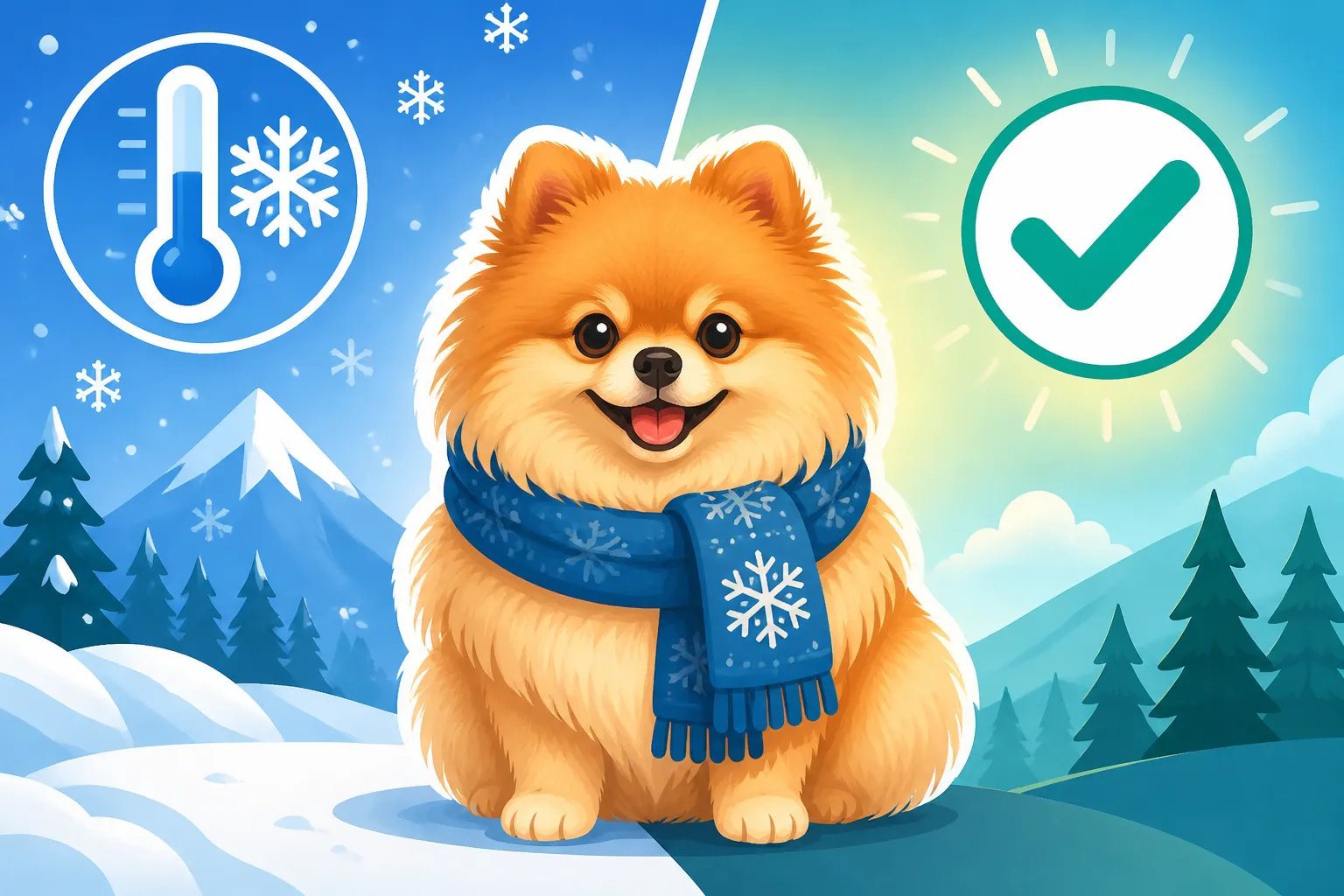
Pomeranians have a double coat: a softer, dense undercoat beneath a longer outer coat. Together, these layers offer insulation and help the breed cope with chilly weather better than many short-coated toy dogs. A Pomeranian who enjoys a brisk walk on a crisp, dry day may seem surprisingly unfazed by the temperature.
That coat is not a guarantee of warmth in every situation. Cold wind can cut through exposed areas, and wet fur loses much of its insulating usefulness. A small dog also has less body mass to hold warmth than a large one. If your Pom is standing still, getting soaked, or shivering on a long outing, its coat is not doing enough to keep it comfortable.
Coat condition matters, too. Mats can trap moisture and irritate the skin, while a close clip removes some of the coat’s protective function. Regular, gentle brushing helps keep the layers in good condition. For more on how the coat works, see The Double Coat That Makes a Pomeranian and Why It Stays On and The Guard Hair and Undercoat of a Pomeranian.
Why cold tolerance varies between individual dogs
There is no single temperature that tells you whether every Pomeranian is comfortable. Age, health, body condition, coat density, wind, rain, and activity level all make a difference. A lively adult Pom walking at a steady pace may tolerate a short outing that an elderly dog with stiff joints finds miserable.
Puppies and very small Pomeranians deserve extra caution. They can lose body heat quickly, and young puppies may not reliably communicate that they are getting cold. Older dogs, dogs recovering from illness, and those with health conditions may also need shorter outdoor trips and closer observation. A dog that is underweight or has a thin coat may be less comfortable than a healthy adult in full coat.
Pay attention to your own dog rather than relying on breed reputation or a weather app alone. If your Pom turns back toward the house, lifts its paws, trembles, slows down, or repeatedly tries to be picked up, treat that as useful information. Some dogs love snowy paths; others want to do their business and head straight back indoors.
Winter Walks and Outdoor Time
Adjust outings to the weather and your dog
In cold weather, several short walks may be more comfortable than one long outing. Choose a sheltered route when wind is sharp, and avoid letting your dog stand around while you chat or wait. On wet or icy days, keep the outing focused: give your Pom time to sniff and toilet, then return home before it gets chilled.
Use your dog’s behavior to set the pace. A happy, energetic walk is different from a Pom who is lagging, trembling, or holding up a paw. If your dog starts showing discomfort, head indoors and warm it gradually. Don’t assume that a dog who is eager to go out at the door will stay comfortable once it encounters wind, slush, or frozen ground.
Cold-weather exercise can also be balanced with indoor activity. Hide a few pieces of kibble for a sniffing game, practice familiar cues, or offer a puzzle toy sized safely for your dog. This helps maintain routine on days when the sidewalk is slick or the weather is too harsh for a normal walk. For broader seasonal guidance, see Whether a Pomeranian Enjoys Winter and How a Double Coated Pomeranian Handles Summer.
Protect paws from ice, salt, and slush
Paw discomfort is easy to miss beneath a Pomeranian’s foot feathering. Snow can cling between the toes and form hard clumps, while ice-melting products may irritate the pads or cause problems if licked off. After a walk, check between each toe and around the pads. Rinse off visible salt or grit with lukewarm water, then dry the paws thoroughly.
Boots can help some dogs, but they should fit securely without pinching or restricting movement. Introduce them indoors first, with short, positive practice sessions. If your Pom refuses to walk in boots, don’t turn every winter outing into a struggle. You can instead choose cleared routes, keep walks shorter, and clean the paws after coming inside. Ask your veterinarian which paw-protection products are appropriate if your dog has irritated or cracked pads.
Long foot hair may collect snow and debris, so keep it tidy without clipping the coat short overall. If you are unsure how much to trim, a groomer can show you a safe maintenance approach. Related care tips are covered in Ice Balling Up in a Pomeranian's Foot Feathering and Trimming the Fur Between a Pomeranian's Toes.
| Winter condition | What your Pomeranian may need | What to watch for |
|---|---|---|
| Cold but dry and calm | A normal, supervised walk if the dog is comfortable | Slowing down, shivering, or turning back |
| Windy or very cold | A shorter route, a sheltered area, and possibly a well-fitted coat | Trembling, tucked posture, seeking to be carried |
| Wet snow or rain | A brief outing, then a thorough towel-dry indoors | Damp coat, persistent shivering, reluctance to move |
| Icy or salted pavement | A cleared route, paw checks, and rinsing after the walk | Licking paws, lifting feet, redness, or discomfort |
| Severe weather | Indoor toileting and enrichment where practical | Any signs of distress or abnormal behavior |
Clothing, Grooming, and a Warm Home
When a coat or sweater can help
A Pomeranian’s coat may provide useful insulation, but an extra layer can be helpful in wind, wet weather, or for a dog that becomes uncomfortable quickly. Choose clothing that fits without squeezing the chest, restricting the legs, or rubbing beneath the armpits. The garment should be easy to remove, and your dog should be able to walk, toilet, and settle naturally while wearing it.
Clothing is not automatically necessary for every Pom. Some dogs stay comfortable without it on brief outings, while others benefit from a light layer. Watch for signs the garment is too warm, such as panting, restlessness, or trying repeatedly to remove it. Never leave a dressed dog unsupervised if the clothing could snag or become twisted.
If you are comparing sizes, measure your dog rather than choosing by breed label alone. A small harness or coat that fits another Pomeranian may sit differently on your dog. Chewy can be one place to compare available coat styles and sizing information; check the individual product details and return conditions before buying. For safe clothing choices, see Whether a Pomeranian Ever Needs a Jacket.
Keep the coat clean, dry, and functional
After a snowy walk, towel-dry the coat and pay attention to the chest, belly, legs, and feet. Don’t leave a damp Pomeranian to air-dry in a chilly room. If you use a dryer, use a gentle setting and keep it at a comfortable distance, checking the air temperature with your hand. A dog should never be left unattended with a dryer running.
Routine brushing helps prevent mats, especially where clothing or a harness rubs. Work patiently through the coat in sections rather than tugging at tangles. If the coat is badly matted, painful, or wet close to the skin, ask a groomer or veterinarian for help rather than cutting blindly with scissors. Clipping the coat very short to make winter care easier can reduce its natural protection, and hair may not always return to its previous condition. See Whether a Pomeranian Should Ever Be Clipped Short for more on that concern.
Keep your home warm and give your Pom a dry bed away from drafts. A bed should be easy for the dog to reach, especially if cold weather aggravates stiffness or makes jumping uncomfortable. Avoid placing the bed directly beside a heater or fireplace, where a small dog may overheat or be unable to move away safely.
Recognizing Cold Stress and Making a Winter Routine
Signs your Pomeranian is too cold
Shivering is an obvious clue, but it is not the only one. A cold or uncomfortable Pomeranian may hunch its body, tuck its tail, lift its paws, walk more slowly, seek shelter, or repeatedly ask to be picked up. Some dogs become quiet rather than visibly distressed. If your Pom usually enjoys walks but suddenly resists going out, consider weather, paw soreness, or a health issue rather than assuming it is being stubborn.
If your dog seems chilled, bring it into a warm, dry space and remove any wet clothing. Use a dry towel or blanket and let it warm gradually. Avoid very hot water, heating pads set to high, or direct contact with a heater, since a small dog can be burned. If your dog is weak, unusually drowsy, confused, breathing abnormally, or continues to tremble after coming indoors, contact a veterinarian promptly.
A coat can add comfort, but it should not be used to justify prolonged exposure in harsh conditions. The safest choice during severe cold, freezing rain, or dangerous ice may be a quick toilet break followed by indoor play. Your dog’s comfort and behavior matter more than completing a usual walking distance.
Build a routine that fits your dog
A useful winter routine is flexible rather than fixed. Check the ground and weather before leaving, keep a towel near the door, and make paw inspection part of coming home. If your Pom is new to cold weather, start with short outings and see how it responds. A dog that seems comfortable can gradually enjoy a little more outdoor time, while a dog that consistently dislikes the cold should not be pushed to match another dog’s routine.
Prepare for the practical annoyances, too. Keep a spare towel by the entrance, have a dry place for wet clothing, and carry a small bag for waste even when snow makes it harder to spot. If you are shopping for winter supplies, Chewy may help you compare options such as coats, paw-care items, and grooming tools; make sure anything you choose is appropriate for your dog’s size and needs. For coat maintenance between visits, see The Grooming Schedule a Pomeranian Runs On.
Indoor enrichment makes cold days easier for both of you. Rotate a few safe toys, practice short training sessions, or set up a simple scent game in a room without slippery floors. If your Pomeranian has mobility problems, a cough, or another condition that affects exercise, ask your veterinarian how to adapt outdoor activity. Cold weather can make a dog’s usual limitations more noticeable, and a personalized plan is more useful than guessing.
A Pomeranian can often enjoy life in a cold climate, especially with a healthy coat, attentive paw care, and outings adjusted to the day. But small size and thick fur do not make winter risks disappear. Follow your dog’s signals, keep it dry, and shorten outdoor time whenever conditions or behavior call for it.
Disclaimer
This article is for general informational purposes only and does not constitute professional advice. Laws, prices and regulations vary by location and change over time. Consult a qualified professional for guidance on your specific situation.