Whether a Pomeranian Fits a Family With Teenagers
A Pomeranian can be a lively, affectionate companion for a household with teenagers, but a small dog is not automatically an easy dog. School schedules, sports, visitors, noise, and inconsistent routines can all affect how well the match works. This guide explains what teens can realistically manage, where a Pomeranian needs protection, and how the whole family can share care.
What living with a Pomeranian is like for teenagers
A big personality in a very small body
Pomeranians are alert, bright, and often eager to be near their people. A teenager may enjoy teaching one tricks, playing short games, or having a little shadow settle beside them while they study. Their size can also make them seem like an easy fit for a busy home, but they still need exercise, companionship, training, grooming, and veterinary care.
A Pom may bark when someone comes to the door, when a dog passes the window, or when the family gets excited. That can be surprising in a home where teens have friends over, play music, or move in and out frequently. Barking is often a response to what the dog notices, rather than a sign that the dog is being difficult on purpose. Consistent reward-based training and a calm household response can help, but no family should assume the dog will simply stop alert barking without guidance.
Pomeranians can also be lively and bold around dogs much larger than themselves. That confidence is charming until a larger dog knocks them over during play or the Pom rushes into an interaction it cannot safely manage. Teens need to understand that a Pomeranian’s enthusiasm does not make it physically sturdy. For more on household handling and expectations, see Whether a Pomeranian Is Too Fragile for a Family Home and A Pomeranian in a House With Small Children.
A good match depends on more than affection
A teenager may genuinely love dogs and still have a full schedule. School, homework, activities, friends, and time away from home can make daily care harder than it sounds during the excitement of choosing a puppy. It helps to discuss the ordinary tasks before bringing a dog home: who feeds the Pom, who takes it outside, who brushes it, and who handles care when a teen has a late practice or an exam week.
Pomeranians are social dogs. A family should not expect one to stay content simply because it has toys, a comfortable bed, and a teenager who loves it. If everyone is gone for long stretches, the dog may struggle with boredom or distress. A teen can contribute to companionship and training, but an adult needs to make sure the dog is not left with more time alone than it can handle. Whether a Pomeranian Can Be Left During Work Hours is useful background for thinking through a household schedule.
It is also worth asking whether the family wants a companion whose needs fit the home, rather than a dog who fits a particular image. A fluffy puppy may seem like the perfect social-media-friendly pet, but coat care, training, and supervision are part of the everyday reality. The Part of Pomeranian Ownership Nobody Mentions covers some of the less glamorous work that can get overlooked when everyone is focused on the fun parts.
The responsibilities teenagers can share
Agree on specific jobs, not vague promises
“Everyone will help” sounds reassuring, but it often leaves the adults doing most of the work. Before adoption or purchase, assign clear duties and decide who is the backup. A teenager might handle an after-school walk or play session, while an adult remains responsible for veterinary appointments, food decisions, and making sure care happens when the teen is busy.
A simple plan could look like this:
| Care task | A teenager might do | Adult responsibility |
|---|---|---|
| Meals and fresh water | Follow the established feeding routine | Set portions and monitor appetite or weight changes |
| Toilet breaks | Take the Pom out at agreed times | Ensure breaks still happen when the teen is away |
| Brushing | Help with short, calm sessions | Check the skin and coat and arrange grooming when needed |
| Training | Practice a few known cues and reward good choices | Keep rules consistent across the household |
| Exercise and play | Offer supervised walks and indoor games | Adapt activity to the dog’s health, age, and comfort |
| Veterinary care | Help notice changes in behavior | Make appointments and decide on treatment |
The plan should include a realistic backup for school trips, exams, illness, and changing interests. Teens’ lives can shift quickly. A family that expects one young person to be the sole caregiver may be caught off guard when extracurriculars take over or the teen leaves for college. The adults in the home should be ready to care for the dog for its lifetime, not just during the years the teenager is at home.
Make grooming and handling a shared routine
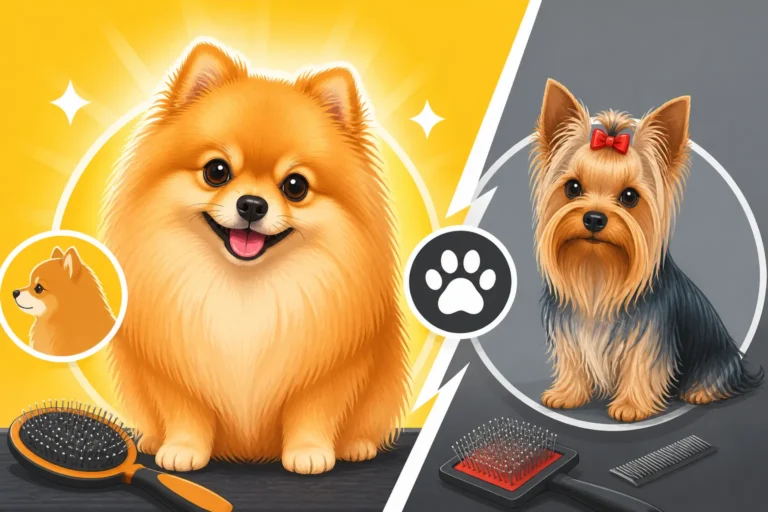
A Pomeranian’s coat needs regular attention. Brushing only when tangles are obvious can make grooming uncomfortable, especially where friction occurs around the ears, collar or harness, and legs. A teen can learn to brush gently in short sessions, rewarding the dog for standing or settling calmly. If the Pom resists, the answer is to make the process easier and more positive, not to hold it down and force a long session.
The family should also agree on how the dog is picked up and carried. A small dog can be hurt by a fall, a sudden squeeze, or being lifted with no support. Teens should approach the Pom calmly, support its body, and avoid lifting it while distracted or rushing out the door. For a more detailed look at safe handling, see Teaching a Child to Hold a Pomeranian and Whether a Pomeranian Enjoys Being Held.
A few appropriately sized supplies can help make the routine manageable. A family might keep a brush and comb near the dog’s usual resting area and store a properly fitted harness with its leash. Chewy is one place families may browse for pet-care supplies, but the important thing is choosing items that suit the individual dog and learning how to use them safely. A brush should not be scraped hard against the skin, and a harness should fit securely without putting pressure on the throat.
Keeping a Pomeranian safe in a busy household
Set house rules around doors, furniture, and play
Teenagers often have friends coming over, and a busy front door can create opportunities for a small dog to slip outside. Decide who is responsible for keeping the Pom away from an open doorway, and ask visitors not to let the dog rush through when they arrive. A gate, pen, or closed interior door can help create a safer buffer during busy moments. Families can compare options at pet retailers such as Chewy, but setup and supervision matter more than the brand on the packaging.
Furniture can be another everyday hazard. A Pom that leaps off a bed or sofa can land awkwardly, especially if it is young, elderly, or already has joint trouble. Teens can help by teaching the dog to wait for assistance and by using a suitable ramp or steps where appropriate. However, a ramp is only helpful if the dog is taught to use it and the family keeps it positioned safely. Why a Pomeranian Jumping Off the Bed Is a Risk explains why those casual little jumps deserve attention.
Play should match the dog’s size and temperament. Tugging, chasing, and fetch can be enjoyable when they are gentle and supervised, but rough wrestling is a poor fit for a tiny dog. Friends should not pick the Pom up as a novelty, crowd it in a corner, or keep touching it when it tries to move away. Teach teens to notice signs that the dog needs a break, such as turning away, moving off, hiding, or becoming tense.
Manage introductions to other dogs and guests
A confident Pomeranian may bark or rush toward a larger dog, while a larger dog may not recognize how easily a small companion can be injured. Introductions should be planned, controlled, and based on the dogs’ behavior—not on the assumption that they will sort things out by themselves. Keep the Pom close enough to protect it, give both dogs room, and stop the interaction if either becomes overwhelmed. Introducing a Pomeranian to a Much Bigger Dog offers more guidance on this particular match.
When teens invite friends over, give the dog a quiet place where it can rest without being followed. A crate or pen can be useful when the dog has been positively introduced to it, but it should not be used as punishment. Explain the house rules to visitors: let the dog approach rather than grabbing for it, avoid feeding it without permission, and leave it alone while it eats or sleeps.
If the Pomeranian is worried around guests, barking or hiding should not be treated as a joke or encouraged for entertainment. Help it settle at a comfortable distance, reward calm behavior, and avoid forcing greetings. A teen can follow this plan, but adults should set the household rules and make sure everyone uses them consistently.
How to decide whether the fit is right
Ask the family these questions first
A Pomeranian may suit a family with teenagers when the household has time for daily interaction, willingness to train, and adults prepared to remain responsible. It may be a more challenging match if the home is frequently empty, visitors are hard to supervise, or family members expect the dog to tolerate unlimited handling because it is small.
Before committing, talk through the following questions together:
- Who will take the dog out before school, after school, and before bed?
- Who takes over when the teenager has exams, sports, work, or a school trip?
- Can the household provide regular coat care and arrange professional help when needed?
- Are visitors willing to follow rules about doors, handling, food, and quiet time?
- Is an adult prepared to make veterinary decisions and cover the dog’s care throughout its life?
- Can the family offer companionship without expecting the dog to be carried or entertained constantly?
Honest answers matter more than enthusiasm. If the family cannot agree on a backup caregiver or a basic routine, it may be better to wait until life is less hectic. A dog should not have to depend on one teenager’s changing availability for every part of its care.
Look beyond the puppy stage
Puppies need frequent supervision and patient training. They may nip, have accidents, chew household items, and need help learning how to settle. A teenager can participate in training, but adults should supervise and keep household expectations steady. A puppy is not a low-effort way to make a busy teen more responsible; it is a dependent animal whose care remains the adults’ job.
An adult Pomeranian may be a better fit for some families because its size, temperament, and established habits are easier to assess. That does not mean an adult dog requires little effort. It still needs time, enrichment, grooming, safe handling, and attention to its health. Whether the family chooses a puppy or an adult, the dog’s individual personality and history matter more than the assumption that all Pomeranians behave alike.
The best outcome is a family in which teenagers participate willingly, adults provide reliable oversight, and the dog is treated as a companion with boundaries—not a toy or an accessory. When those pieces are in place, a Pomeranian can bring plenty of fun and affection to a household with teens. When they are not, the breed’s small size can hide how much care and consistency it actually needs.
Disclaimer
This article is for general informational purposes only and does not constitute professional advice. Laws, prices and regulations vary by location and change over time. Consult a qualified professional for guidance on your specific situation.