What a Pomeranian Steals Off a Coffee Table
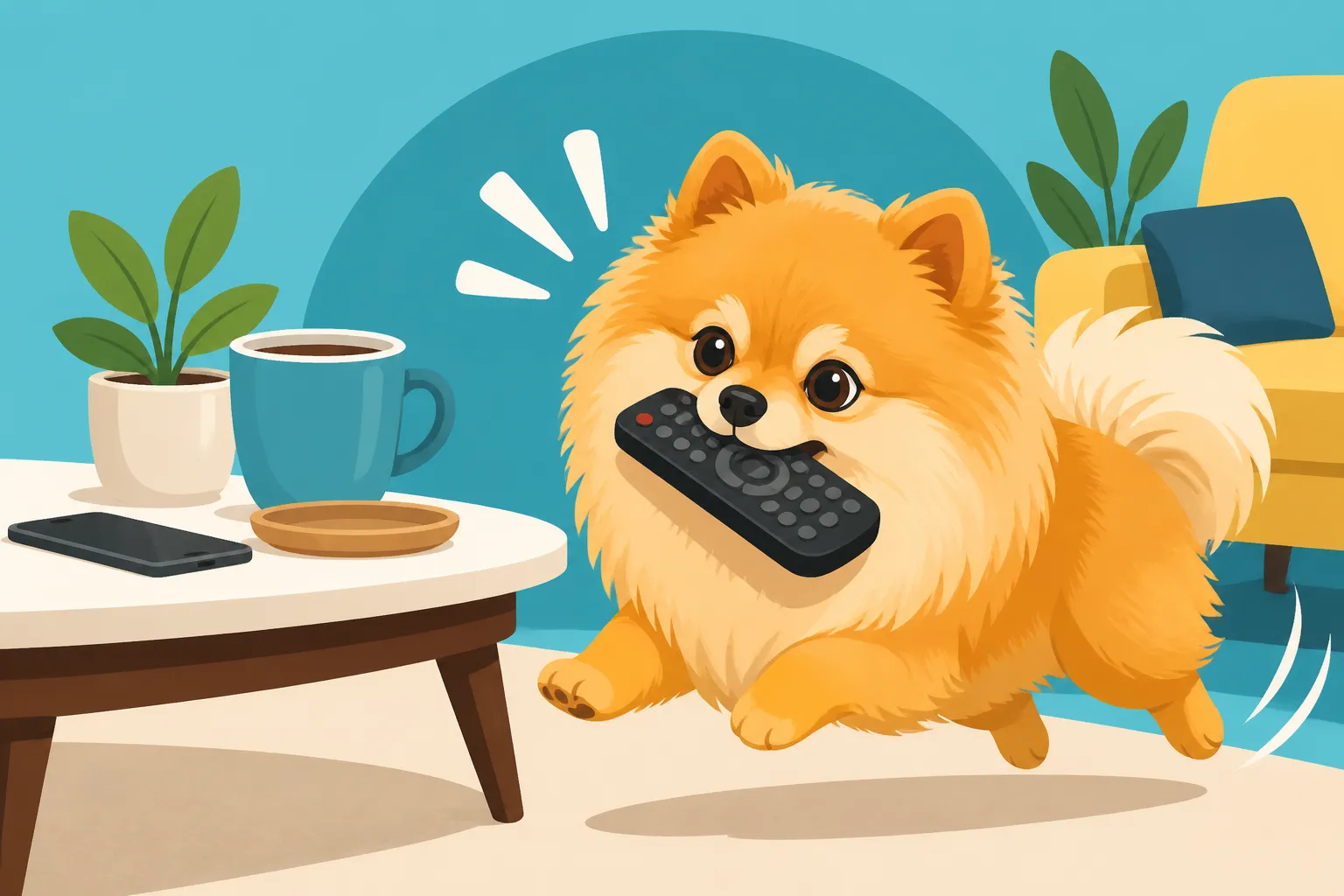
It's a scene many Pomeranian parents know all too well: you turn your back for just a second, maybe to grab another cup of tea, and suddenly, that tiny, fluffy whirlwind is on the coffee table, a forbidden treasure clamped firmly in its mouth. Whether it's a remote control, a rogue potato chip, or your reading glasses, these clever little pups have a knack for turning ordinary household items into their personal playthings or snacks. This guide is here to help you understand why your Pomeranian might be eyeing your coffee table with such mischievous intent and, more importantly, how to put a stop to these daring heists for good, keeping your home and your beloved Pom safe.
The Irresistible Lure of the Coffee Table for a Pomeranian
For such a small dog, Pomeranians possess an outsized personality, a sharp mind, and a surprisingly agile body. This combination often makes your innocent coffee table a playground of endless possibilities in their eyes. It's not always about defiance; sometimes, it's simply a matter of curiosity meeting opportunity. Your coffee table, strategically placed in the heart of your living space, is a hub of human activity and, therefore, potential "treasures."
The thing is, Poms are observant. They watch what you do, what you touch, and what you value. And if something is regularly handled by you, or smells interesting, it immediately becomes more enticing. Add to that their natural Spitz instincts for scavenging and exploring, and you've got a recipe for a little domestic bandit. They're smart enough to figure out how to get up there, often using furniture or even a stack of books as a launchpad, making no item truly safe if left within reach.
Common Culinary Heists
Let's be honest, food is often the primary driver for any canine caper, and our coffee tables often serve as prime targets for culinary pilfering. A moment of inattention can lead to a missing snack or a potentially dangerous ingestion.
You might have left a half-eaten sandwich while answering the door, or perhaps a bowl of forgotten chips from movie night. To a Pomeranian, these aren't just leftovers; they're an unmissable feast. They are drawn in by the scent, often much more potent to their sensitive noses than it is to ours. A crumb might seem insignificant to you, but to a five-pound Pom, it's a substantial reward for their efforts. The danger here, beyond just losing your snack, lies in the fact that many human foods are toxic or harmful to dogs. Chocolate, grapes, raisins, onions, garlic, and anything containing xylitol (a common sugar substitute) can be incredibly dangerous, even in small amounts. Leaving a coffee mug with residue from a sweetened coffee or tea can also be risky if it contains these hidden dangers.
Beyond solid food, beverages also pose a threat. A forgotten cup of coffee or tea with sugar and cream could entice them, and caffeine is a no-go for dogs. Even more concerning, alcoholic drinks, if left unattended, are extremely toxic to pets, causing symptoms ranging from vomiting and disorientation to seizures and even death. It’s vital to remember that even a small sip can have profound effects on a tiny dog like a Pomeranian. Always ensure drinks are out of reach, and clean up any spills immediately.
Sometimes, in a bizarre twist, they might even grab their own chews or treats if you've left them on the coffee table. It's not that they don't have access to them elsewhere, but perhaps the act of "stealing" it from a forbidden zone adds an extra thrill, or they simply want to enjoy their bounty from a new, elevated spot.
Non-Food Items That Become "Treasures"
It’s not just food that piques a Pomeranian’s interest. Many everyday non-food items become coveted "treasures" when left on the coffee table, often leading to destroyed possessions and potential hazards for your pup.
Remote controls are a classic target. The rubbery buttons, the plastic casing, and the general shape make them incredibly satisfying for chewing. Your Pom might not understand its function, but they certainly enjoy the texture and the reaction they get when you realize it's gone missing. Reading glasses or sunglasses often suffer a similar fate. The delicate frames, hinges, and lenses are easily damaged, and a Pom can make quick work of them, leaving you squinting at your phone screen.
High-value human items like wallets, keys, or cell phones are also frequent targets. To us, these are indispensable, but to a Pom, they're just shiny, clinky, or interesting-smelling objects that are fun to mouth and carry around. The potential for damage is obvious – scratched screens, chewed plastic, or even a lost car key can be incredibly frustrating and costly. Imagine trying to find your keys after your Pom decided they were a fetch toy!
Paper products, like mail, tissues, or napkins, are pure joy for a Pomeranian who loves to shred. The instant gratification of tearing something into a thousand pieces is an irresistible game. While usually not dangerous beyond the mess, ingesting too much paper could lead to an upset stomach. Small toys, decorative items, or even a pen can also be snatched. Anything that rolls, has an interesting texture, or is just within paw’s reach can become fair game. Remember, a tiny object to us can be a choking hazard for a little dog.
Why Your Pomeranian Becomes a Coffee Table Crook
Understanding the "why" behind your Pomeranian's coffee table raids is crucial to effectively addressing the behavior. It's rarely out of malice, but rather a complex interplay of natural instincts, learning, and environmental factors. Your Pom isn't plotting against you; they're simply being a dog, albeit a very clever one.
One of the biggest drivers is sheer opportunism. If an item is within reach and unsupervised, many dogs, Poms included, will seize the chance to investigate. They operate on a "find something, take something" philosophy. If they've successfully acquired a tasty treat or a fun-to-chew item from the coffee table in the past, they've just learned that the coffee table is a prime hunting ground.
Boredom and a lack of mental stimulation also play a huge role. Pomeranians are intelligent and active little dogs. If they aren't getting enough physical exercise or engaging mental games, they will find their own entertainment. To them, swiping something from the coffee table might just be a thrilling game, a puzzle to solve, or a way to alleviate monotony. A quiet afternoon might become an impromptu treasure hunt, with your coffee table holding the most exciting prizes.
Sometimes, it's a clear cry for attention. If your Pomeranian discovers that grabbing an item, especially one you value, immediately results in you looking at them, talking to them, or chasing them, they've learned a powerful lesson. Even if it's negative attention, it's still attention, and for a dog feeling overlooked, any interaction is better than none. This can quickly become a self-reinforcing cycle.
Poms also carry the natural scavenging instincts of their Spitz ancestors. While they may not be foraging for wild berries or hunting small game, the urge to explore, sniff out, and potentially consume interesting things is still hardwired. Your coffee table, with its myriad of human scents and objects, represents a rich environment for these instincts to kick in.
The "What's In It For Me?" Factor
Dogs, like all creatures, are motivated by what benefits them. When your Pomeranian "steals" from the coffee table, there's always a "what's in it for me?" at play, even if it's not immediately obvious to us.
The most straightforward "reward" is a tasty snack. If they manage to snatch a rogue piece of toast or a forgotten chip, the immediate gratification of that flavor reinforces the behavior. They'll remember that specific spot and the delicious outcome, making them more likely to try again. Over time, they might generalize this, assuming anything on the coffee table could be equally rewarding. This is why strict prevention is so important from the start.
Another significant reward is the chase game. When your Pomeranian grabs something and then darts away, especially if you react by chasing them, it instantly becomes a fun game of "keep away." They love the interaction, the movement, and the attention. This can be incredibly difficult to break once established because the "chase" is a powerful reward in itself, even if you're trying to retrieve something dangerous. Instead of chasing, try to engage the "drop it" command and offer a trade.
Finally, some items simply offer immense chew satisfaction. The texture of a TV remote, the coolness of a phone, or the crunch of a pen can be incredibly stimulating for a dog's mouth. This is especially true if your Pomeranian doesn't have enough appropriate chew toys, or if they're bored with their current selection. The novel texture provides a form of self-entertainment, reinforcing the act of taking the item.
Learning and Reinforcement
Dogs are masters of association and learning. Every interaction, every outcome, teaches them something. When it comes to coffee table theft, your Pomeranian is constantly learning, and often, we inadvertently reinforce the very behaviors we want to stop.
Accidental reinforcement is probably the most common culprit. Let's say your Pom snatches a napkin and you don't notice until much later. They've had the thrill of the take and the fun of shredding it, with no negative consequence. Or, perhaps they grab a dropped cookie crumb and get to enjoy it. These seemingly small successes are huge wins for your dog and strongly reinforce the idea that coffee table raiding is a rewarding activity. They're essentially practicing the behavior, and practice makes perfect.
A lack of consistent rules or boundaries can also be incredibly confusing for your Pomeranian. If some days they're allowed to sneak a treat from the coffee table (because you're too busy to notice or intervene), but other days they're scolded for it, they don't understand the pattern. They just learn that sometimes it's okay, and sometimes it's not, so it's always worth a try. Consistency is key in dog training; every member of the household needs to be on the same page about what's allowed and what's not.
Furthermore, if your Pomeranian hasn't been properly socialized to commands like "leave it" and "drop it," you're at a disadvantage. These commands are crucial not just for manners, but for safety. A well-trained "leave it" means your dog understands that an item, even if appealing, is off-limits. Without this foundation, their natural curiosity and opportunistic nature will almost always win out, especially when presented with a tempting item. The Reward a Pomeranian Actually Cares About might be the very thing you're trying to keep them from!
Strategies to Deter Coffee Table Theft
Dealing with a tiny thief requires a multi-pronged approach that combines proactive prevention, consistent training, and ensuring your Pomeranian’s needs are met. It’s about making it impossible for them to fail and easy for them to succeed with appropriate behaviors.
The most effective, though sometimes inconvenient, strategy is simply to remove the temptation. If there's nothing on the coffee table for your Pomeranian to steal, they can't steal anything. This might sound overly simplistic, but it's the first and most critical line of defense. Get into the habit of immediately putting away food, drinks, remotes, and other items. Think like a Pomeranian: if it's small, intriguing, or smells interesting, it's a target.
Environmental management can also be a lifesaver. If you can't always keep your coffee table clear or supervise your Pom 24/7, consider ways to restrict access. Baby gates can block off rooms where the coffee table resides, especially when you're busy or can't actively watch your dog. When you're tied up with other tasks, utilizing a playpen or a crate can be invaluable. Playpens for a Pomeranian Puppy are not just for puppies; they can be a safe space for an adult Pom when you need a moment of peace without worrying about them getting into trouble.
Finally, consistent training is non-negotiable. Teaching commands like "leave it" and "drop it" are essential life skills for any dog, but especially for small breeds prone to ingesting dangerous items. These commands empower you to intervene safely and effectively when your Pom does manage to get their paws on something they shouldn't. Coupled with ample enrichment and exercise, a tired and mentally stimulated Pomeranian is far less likely to seek out mischief on your coffee table.
Proactive Prevention and Management
The golden rule for preventing your Pomeranian from becoming a coffee table thief is the "Rule of No Access." Simply put, if they can't reach it, they can't steal it. This demands a shift in human behavior, making us more mindful of what we leave within our small dog's surprisingly capable grasp.
Start by surveying your living space from your Pomeranian's perspective. Get down on your hands and knees. What looks interesting? What could be jumped onto? Poms are clever and surprisingly athletic. That stack of magazines next to the sofa might be the perfect booster seat to get to the remote. Move anything appealing or dangerous to higher shelves, inside closed cabinets, or into drawers. Make it a household habit: if you're done with an item, it immediately gets put away. This applies particularly to food and drinks. Finish your snack, clean up the crumbs, and put the plate in the dishwasher, not lingering on the table.
For times when you absolutely cannot supervise your Pomeranian directly – perhaps you're cooking dinner, taking a shower, or leaving the house for a short errand – employing barriers is a smart move. Baby gates are fantastic for blocking off access to areas like the living room if your coffee table is there. A designated safe space, such as a Playpens for a Pomeranian Puppy or a comfortable crate, can be an absolute lifesaver. This isn't punishment; it's a management strategy that ensures your Pom is safe and out of mischief when you can't dedicate your full attention to them. They can enjoy a chew toy or a short nap without the temptation of forbidden coffee table treasures.
Finally, consistent supervision is your best friend. While it's impossible to watch them every second, being generally aware of your Pomeranian's location and what they're up to significantly reduces opportunities for theft. If you catch them eyeing the table, a gentle redirect with a toy or a quick "leave it" command can nip the behavior in the bud before it even starts.
Training for Good Habits
While prevention is powerful, training provides your Pomeranian with the skills they need to make good choices, even when temptations are present. These aren't just tricks; they're essential life commands that build a foundation of safety and good manners.
The "Leave It" command is arguably one of the most important commands any dog can learn, especially a small, curious Pomeranian. This command teaches your dog to disengage from an object, even if it's highly appealing. Start training this in a low-distraction environment with low-value items on the floor, gradually increasing the difficulty. Once they master it on the floor, practice with items on a low surface, then eventually the coffee table. Reward your Pom heavily with a high-value treat when they successfully ignore the item. This command is crucial for preventing them from picking up potentially dangerous things before they even get them in their mouth.
Equally vital is the "Drop It" command. This comes into play when your Pomeranian has already grabbed something they shouldn't. The goal here is to get them to release the item without you having to chase or pry it from their mouth, which can escalate the situation and make them resource guard. Teach "drop it" by offering a high-value treat in exchange for an item they are holding. As soon as they open their mouth to take the treat, say "drop it," and praise them. Practice this often with their toys, making it a positive and rewarding exchange.
Positive reinforcement should be the cornerstone of your training. Reward your Pomeranian generously with praise, small treats, or a favorite toy when you see them behaving calmly around the coffee table or choosing to play with their own toys instead of eyeing yours. Catch them doing something right and celebrate it!
Beyond specific commands, providing ample enrichment toys and activities can redirect your Pom's natural scavenging and chewing instincts toward appropriate outlets. Interactive puzzle feeders, like those you can find on Chewy or Amazon, can keep their minds engaged, requiring them to "work" for their food or treats. High-quality chew toys that satisfy their urge to gnaw are also essential. Remember, a bored Pomeranian is a mischievous Pomeranian, and a mentally stimulated dog is less likely to create its own "fun" by stealing your possessions. Puzzle Toys Small Enough for a Pomeranian can make a huge difference.
Finally, ensure your Pomeranian is getting enough regular exercise and mental stimulation. Short, regular walks, playtime in the yard or indoors, and short, fun training sessions can help expend their energy and keep their minds sharp. Even a Training Session Length for a Pomeranian of 5-10 minutes a few times a day can make a big difference in their overall behavior and reduce boredom-driven antics. A truly The Pomeranian That Cannot Be Left Alone might require more focused engagement.
What to Do When Your Pomeranian Steals Something Dangerous
Despite your best efforts, there might come a day when your clever little Pom manages to snatch something potentially dangerous from the coffee table. In these moments, your reaction is critical, and staying calm is paramount. Panicking will only make the situation worse, turning it into a game of chase or making your dog more likely to swallow the item to keep it from you.
The first step is to stay calm. Your dog will pick up on your anxiety, and it could lead them to believe they've found a new, exciting game. A calm demeanor helps keep the situation from escalating. Immediately assess the item your Pomeranian has. Is it toxic? Is it a choking hazard? Is it something sharp that could cause internal injury? Knowing what they have will dictate your next actions.
The goal is always to get the item back safely without causing your dog stress or injury. Your best tool here is a high-value trade. Instead of chasing, which usually results in a fun "keep away" game for your Pom, immediately offer something irresistible – a favorite squeaky toy, a delicious piece of cooked chicken, or a dollop of peanut butter (xylitol-free, of course). Most dogs will drop what they have in exchange for something better. Once they drop the item, praise them gently and let them enjoy their treat. This reinforces a positive association with giving things up, making them more likely to do so in the future.
Identifying Hazardous Items
Knowing what items pose a serious threat is key to acting quickly and appropriately. Many everyday household items are surprisingly dangerous for our small canine companions.
Toxic foods are a top concern. Never underestimate the speed with which a Pomeranian can snatch and swallow something. Common culprits include chocolate (especially dark chocolate), anything containing xylitol (found in sugar-free gum, candies, some peanut butters, and baked goods), grapes and raisins, onions, garlic, macadamia nuts, and avocado pits. Even seemingly innocuous items like coffee grounds or tea bags contain caffeine, which is toxic. The Doses That Are Toxic to a Pomeranian are much smaller for a tiny dog than for a large one, making even a small exposure potentially deadly.
Small objects are another major risk. Coins, button batteries (which can cause severe internal burns), medications (even those safe for humans can be lethal for dogs), jewelry, small toy parts, and even hard candy can become choking hazards or cause internal obstructions requiring emergency surgery. These items can be easily ingested and pass into the digestive tract, where they can become lodged or leach toxins.
Sharp objects should never be left on a coffee table. Scissors, pens with pointed ends, or small knives are obvious hazards, but even a shard of a broken glass can cause serious cuts if ingested. Certain plants, if you have them on your coffee table or nearby, can also be toxic. Always research common houseplants to ensure they are pet-safe.
This table highlights common coffee table items, why they might appeal to your Pomeranian, their potential dangers, and basic prevention strategies.
| Item Category | Common Examples | Why it's Appealing to a Pom | Potential Dangers | Prevention Strategy |
|---|---|---|---|---|
| Food | Cookies, chips, fruit, chocolate, coffee, alcohol | Smell, taste, novelty | Toxicity (xylitol, caffeine, grapes), choking, stomach upset | Never leave unattended, secure food immediately |
| Non-Food | Remotes, glasses, mail, keys, pens, batteries, medications, jewelry | Texture, novelty, attention | Choking, ingestion (batteries are corrosive), damage to items, toxicity (meds) | Keep out of reach, provide appropriate chews, use closed storage |
Emergency Response and Prevention
When your Pomeranian ingests something dangerous, time is often of the essence. Being prepared can make all the difference.
First, always have your veterinarian's emergency number readily available, programmed into your phone, and posted visibly in your home. It's also incredibly helpful to have the numbers for pet poison control hotlines, such as the ASPCA Animal Poison Control Center or the Pet Poison Helpline. These services are staffed by veterinary toxicologists who can provide immediate, life-saving advice based on what your dog has ingested, guiding you on whether to induce vomiting (and how to do so safely) or rush to the emergency vet. Be aware that these services typically charge a consultation fee, but it's a small price to pay for expert, immediate help.
Long-term prevention is about making your home a safer environment. Conduct a thorough "Pomeranian-level" sweep of your living space. Get down on the floor and look around. What's within reach? Secure all medications, toxic foods, small batteries, and other dangerous items in high, locked cabinets or drawers that your clever Pom cannot access. This proactive step removes the opportunity for disaster.
Considering your Pomeranian's diet might also play a small role. While less common for direct "theft," a dog that is consistently hungry or not receiving adequate nutrition might be more inclined to seek out food from any available source. Ensuring they are on a high-quality, palatable diet, like those offered by Ollie (fresh dog food), can contribute to overall satisfaction and potentially reduce opportunistic scavenging. However, even a well-fed Pomeranian can be an opportunistic thief if the temptation is strong enough. You can find many suitable small breed formulas on Chewy as well. How Much Food a Pomeranian Eats in a Month is often less than you think, making quality highly affordable.
Finally, consistent reinforcement of commands like "leave it" and "drop it" cannot be overstated. Practice these commands regularly, even when there's no immediate danger, so they are second nature during an emergency. This proactive training, combined with vigilant household management, is your best defense against your Pomeranian's coffee table antics and ensures their safety and your peace of mind. Building a Pomeranian's Independence through proper training also means they're less likely to need to resort to mischief to entertain themselves.
Disclaimer
This article is for general informational purposes only and does not constitute professional advice. Laws, prices and regulations vary by location and change over time. Consult a qualified professional for guidance on your specific situation.