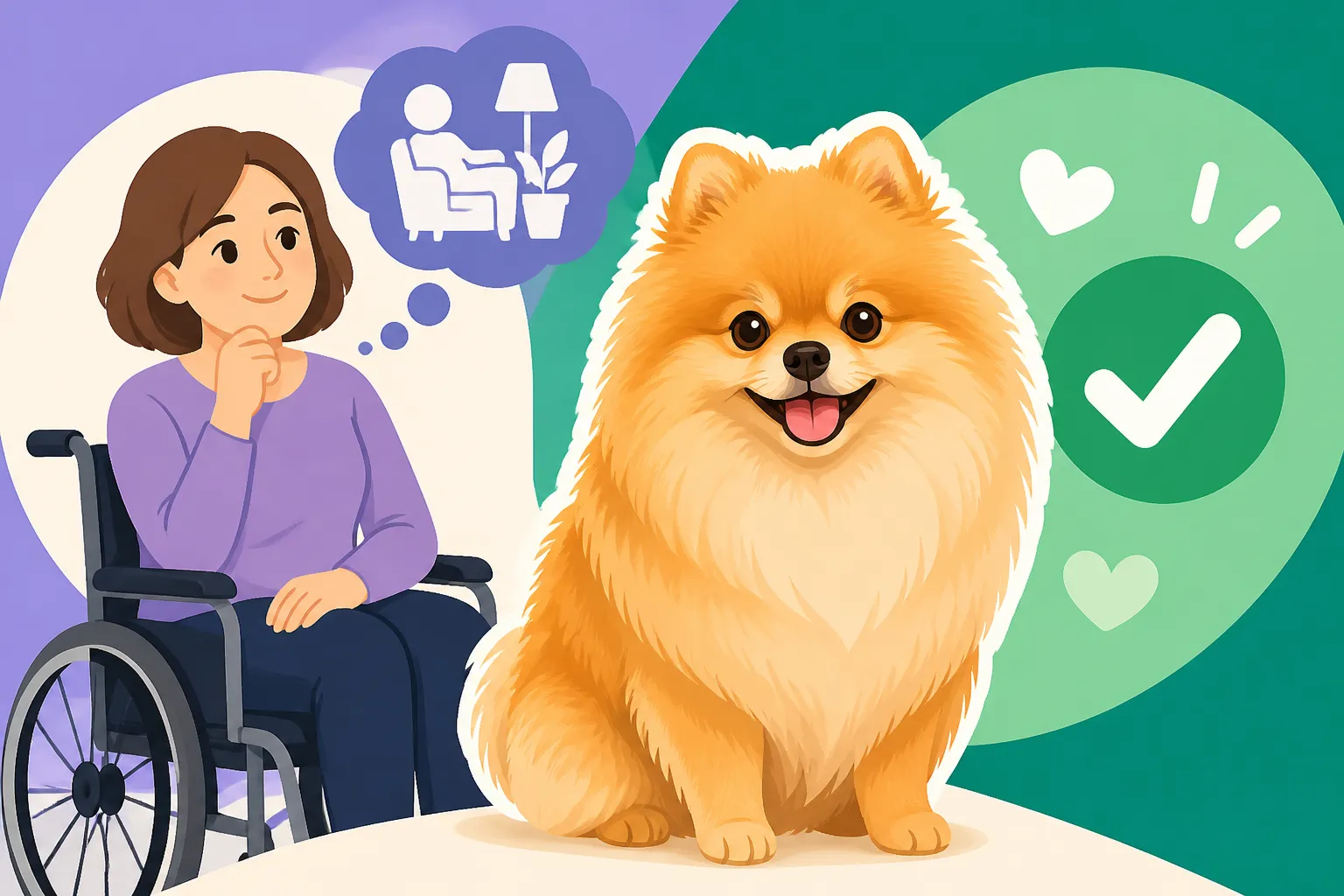
Whether a Pomeranian Suits Someone With Less Mobility
A Pomeranian’s small size can make the breed seem like an easy choice for someone with limited mobility, but small does not automatically mean low effort. Daily care still involves walks, coat maintenance, training, and safe handling. This guide explains what may be manageable, what can become difficult, and how to adapt a home and routine before bringing a Pom home.
What a Pomeranian’s Size Does and Does Not Make Easier
The practical advantages of a small dog
A Pomeranian is compact enough to fit comfortably in many smaller homes, and its food, bed, and everyday equipment take up less room than those of a large dog. A short walk around the block may be enough for some individuals when paired with indoor play and enrichment. For someone who cannot manage long hikes or strenuous exercise, that can be a real advantage.
A small dog can also be easier to accommodate in a car or in a home where space is limited. If you use a mobility aid, you may find it easier to make room for a Pom’s bed and supplies than for a large dog’s setup. But the dog still needs a predictable routine, attention, and opportunities to sniff, move, and explore. Small size does not remove those needs.
There can be an emotional benefit, too. A Pom is often a close companion and may enjoy being near its person while they read, work, or rest. If you live alone, think through how you’ll manage bathroom breaks and care on days when you’re unwell or have an appointment. Whether a Pomeranian Suits Someone Living Alone explores some of those day-to-day considerations.
The challenges that are easy to underestimate
Pomeranians are lively, alert dogs. A Pom may bark when someone walks past the window, pull toward an interesting smell, or dart after a bird. If balance, grip, or reaction time is limited, even a tiny dog’s sudden movement can be unsettling. A dog that weighs little can still pull hard relative to its size, especially if it has not learned to walk calmly on a leash.
Their small bodies also need careful handling. They can be injured if dropped, stepped on, or allowed to leap from furniture. Picking a Pom up may seem like a simple solution when walking is difficult, but repeated lifting can be hard on a person’s back, shoulders, hands, or balance. It can also become risky if the dog squirms. A secure, low resting spot and safe routes around the home are often more sustainable than carrying the dog from place to place.
A Pomeranian’s double coat adds regular work. Brushing can mean bending, reaching, and staying in one position long enough to carefully comb through the coat. The breed’s size may make grooming feel more manageable than grooming a large dog, but coat care still takes consistent effort. The Routine a Pomeranian Needs Every Day can help you picture how these tasks fit into an ordinary week.
Matching Pomeranian Care to Your Mobility
Walking, toileting, and getting outside
Consider the route from your usual sitting area to the door, then from the door to the place where your dog can toilet. Are there stairs, heavy doors, uneven paving, or slippery surfaces? A short outdoor trip can become tiring if it requires repeated trips up and down stairs, or if you need to manage a leash while using a cane, walker, or wheelchair.
Puppies and newly adopted dogs often need more frequent toilet breaks than a settled adult. Weather matters as well: a Pom that dislikes rain, wind, or cold may hesitate outdoors, while a dog that becomes excited by other dogs can make a simple outing more demanding. Before committing, think through how bathroom breaks will work on a low-energy day, not just on a good one. A family member, neighbor, dog walker, or other reliable helper can make the routine more realistic.
A harness may provide a more comfortable way to manage a leash than attaching it to a collar, especially because pressure on the neck can be a concern for Pomeranians. But the harness needs to fit well, and a dog that backs out of it is not safely secured. Practice indoors first and choose a leash you can hold comfortably. See Harnesses Fitted for a Pomeranian's Windpipe for more on equipment and neck pressure. If outdoor access is limited, indoor games and short, supervised sniffing activities can add variety, but they do not automatically replace every dog’s need for outdoor toileting and exercise.
Grooming without straining your body
A coat-care plan works best when it is comfortable for both you and the dog. Brushing on a stable, appropriately low surface may reduce bending, but do not place a dog somewhere it could fall. You might prefer several short grooming sessions over one long session, especially if standing or using your hands for extended periods is difficult. Keep a comb, brush, and treats within easy reach so you do not have to repeatedly get up or search for supplies.
Some owners can manage regular brushing at home but find bathing, drying, nail trimming, or dematting too demanding. A groomer can take on some of those jobs, though you will still need to arrange transport and communicate clearly about the dog’s coat and temperament. If a grooming appointment is difficult to reach, consider whether a trusted person could help with the trip. A Pomeranian’s coat should not be shaved simply to avoid brushing; discuss coat and skin concerns with a veterinarian or a groomer experienced with double-coated breeds.
Set up supplies so grooming does not become a repeated lifting task. Keep them where you can reach them safely, and avoid carrying the dog while also handling grooming tools. If you use online shopping to reduce the need to carry bulky supplies, Chewy may be one option for replenishing items such as food or grooming basics. Chewy is not a substitute for professional grooming or veterinary advice, and the right supplies still depend on the individual dog’s needs.
Setting Up a Safer, More Accessible Home
Reduce jumping and awkward lifting
Pomeranians may try to jump on and off sofas or beds, even when the landing is much higher than their legs. That can put the dog at risk of injury and create extra work for you if you feel you must lift it down repeatedly. Keep favorite resting spots at a height the dog can use safely, or block access when you cannot supervise. A ramp or pet steps may help, but introduce them gradually; a dog that is frightened of the new surface may simply leap over it. Ramps for a Pomeranian That Jumps Off the Sofa covers that setup in more detail.
Look at the home from the dog’s perspective, too. Clear walking paths, secure loose rugs, and keep the dog’s bed away from doors that swing open suddenly. If you use a wheelchair or walker, plan where the dog can settle without being underfoot. A pen or gated area can create a safe spot while you move around, prepare food, or rest, as long as the dog has suitable space and is comfortable there. Teaching a Pomeranian to Settle in a Pen offers ideas for building that comfort positively.
It is also worth making a plan for stairs. A Pom may race ahead or weave between your feet, which can raise the risk of a fall. A gate can prevent unsupervised access, and teaching the dog to wait can help create a calmer routine. Depending on your home and the dog’s size, you may decide to carry the dog on stairs, but only if you can do so securely and without compromising your own balance. Whether an Adult Pomeranian Should Use Stairs discusses the trade-offs.
Make routine tasks easier to reach
A little planning can reduce the number of trips and awkward movements involved in care. Store the leash near the exit, keep bowls in a location that is easy to clean, and place everyday supplies at a height you can reach without bending or stretching. Use a mat under food and water bowls if spills create a slipping hazard. Choose a bed that is easy for the dog to enter and exit, rather than one with high sides that invite a jump.
If carrying bags of food or litter-sized quantities of supplies is difficult, having essentials delivered can remove one errand. Chewy is one possible retailer to consider for pet supplies, depending on what is available where you live. Check package size and how deliveries are handled so a large box does not become another item you have to move yourself. You might also ask a friend, relative, or delivery service to help put supplies where you can safely store them.
Think about what happens when your routine changes. A backup caregiver should know the dog’s feeding, toileting, and walking habits, and how to lift or handle the dog safely if needed. If you work outside the home or have appointments, consider whether the dog can cope with time alone and who could step in when plans shift. Whether a Pomeranian Can Be Left During Work Hours covers the importance of planning for time apart.
A Realistic Suitability Check Before You Decide
Questions to ask yourself
Rather than asking only whether you can manage a small dog, walk through a typical day. Can you take the dog outside safely several times, or arrange help when you cannot? Can you manage a leash and your mobility aid at the same time? Are you comfortable with regular brushing, or can you budget time and practical support for grooming appointments? Can you get the dog to veterinary visits, and do you have someone who could help in an emergency?
It also helps to think in terms of your most difficult days. A routine that works when you feel well may fall apart during a flare-up, after an injury, or when the weather makes travel harder. Ask yourself whether you have a realistic backup plan, not just good intentions. A trusted helper can make a meaningful difference, but it is important to confirm that help is available before you rely on it.
Here is a practical way to compare common care tasks with possible adjustments:
| Care task | What may be difficult | Possible adjustment |
|---|---|---|
| Outdoor toilet breaks | Frequent trips, stairs, poor weather, or managing a leash and mobility aid | Arrange a dependable helper, choose a safe nearby toilet area, or discuss appropriate options with a veterinarian |
| Walking | Pulling, sudden turns, or uneven routes | Use a well-fitted harness, practice calm leash skills, and choose shorter, safer routes |
| Grooming | Bending, reaching, and prolonged hand use | Break brushing into short sessions and arrange help with bathing, drying, or nails |
| Getting on furniture | Repeated lifting and risky jumps | Limit access, use a stable ramp or steps, and teach the dog to wait |
| Supplies | Carrying heavy bags or reaching storage | Store essentials within easy reach and consider delivery or help with unloading |
| Veterinary care | Transporting the dog and managing appointments | Identify a trusted driver or support person and keep records and supplies organized |
Choose the individual dog, not just the breed
Age and temperament can change what care feels like. A calm adult Pomeranian with some leash skills may fit a person’s routine better than a busy puppy that needs close supervision, frequent toilet breaks, and patient training. On the other hand, an adult dog may have established habits or health needs that require extra care. Ask the rescue or breeder specific questions about the dog’s behavior on leash, grooming tolerance, toileting routine, and response to being handled.
Where possible, spend time with the dog before making a decision. Notice whether it lunges, circles around your feet, or settles nearby while you move. If you use a walker or wheelchair, observe the dog’s reaction to it in a calm setting. Consider arranging a trial visit or asking a knowledgeable person to accompany you. If you are adopting, talk honestly with the rescue about the support you can provide; the right match matters more than finding a dog that simply looks manageable.
A Pomeranian can be a wonderful companion for someone with less mobility when the dog’s needs and the person’s practical limits fit together. Some owners manage care independently with a well-planned home and routine. Others rely on a groomer, a dog walker, or help from family and friends. Neither arrangement is a failure. The important question is whether the dog can receive safe, consistent care without putting you or the dog at unnecessary risk. Whether a Pomeranian Is Too Fragile for a Family Home also addresses the breed’s handling needs and the importance of adapting the environment.
Disclaimer
This article is for general informational purposes only and does not constitute professional advice. Laws, prices and regulations vary by location and change over time. Consult a qualified professional for guidance on your specific situation.