Whether a Limping Pomeranian Needs an X-Ray
A limping Pomeranian requires veterinary evaluation to determine if patellar luxation, arthritis, or minor sprains cause the lameness.
Know what to watch for.
Breed-specific conditions, screening and DNA tests, what surgery actually costs, and the daily habits that stretch a healthy lifespan.
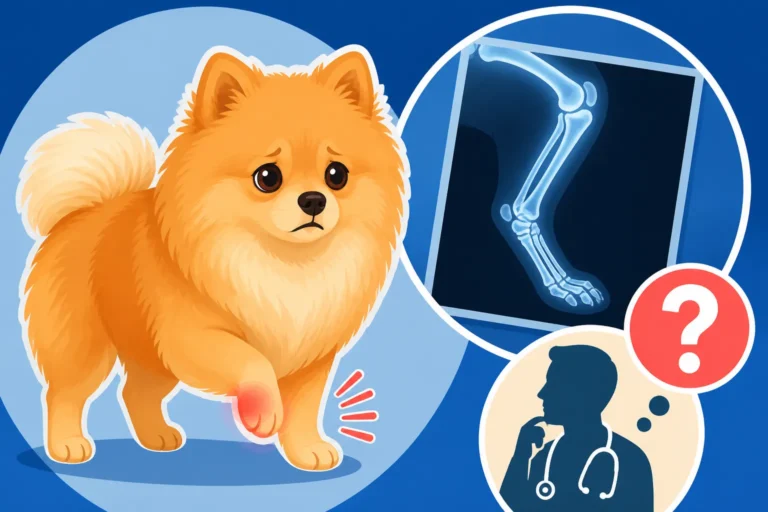
A limping Pomeranian requires veterinary evaluation to determine if patellar luxation, arthritis, or minor sprains cause the lameness.
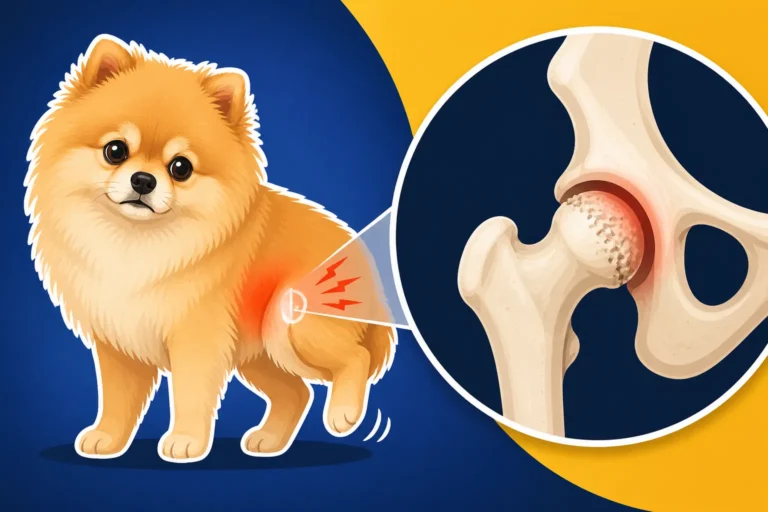
Legg-Calvé-Perthes Disease causes femoral head deterioration and hip joint pain in young Pomeranians aged five to eight months.
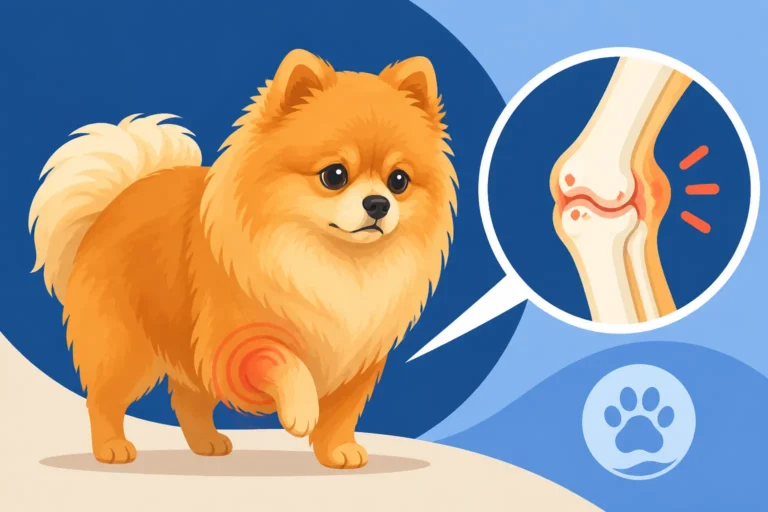
Arthritis in senior Pomeranians causes painful joint stiffness, and recognizing subtle signs helps owners manage canine discomfort.
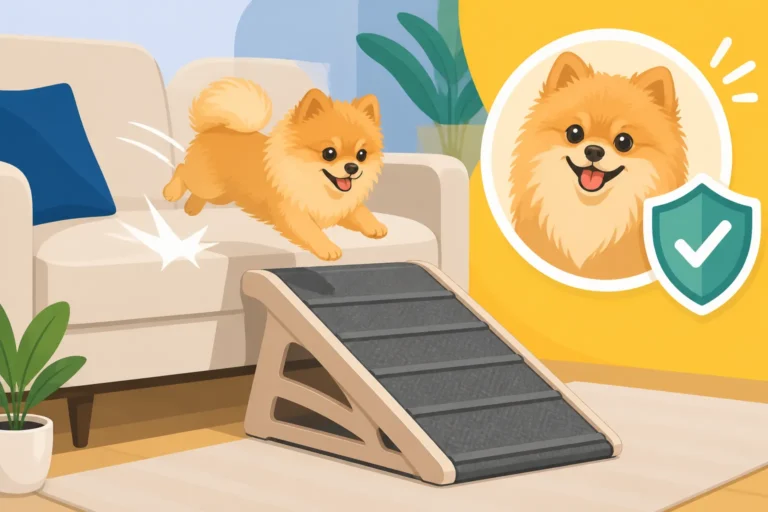
Ramps for a Pomeranian prevent dangerous sofa jumps, protecting fragile joints and spines from fractures and slipped kneecaps.

Adult Pomeranians face joint and spine risks from stairs due to fragile anatomy, luxating patellas, and tracheal collapse.
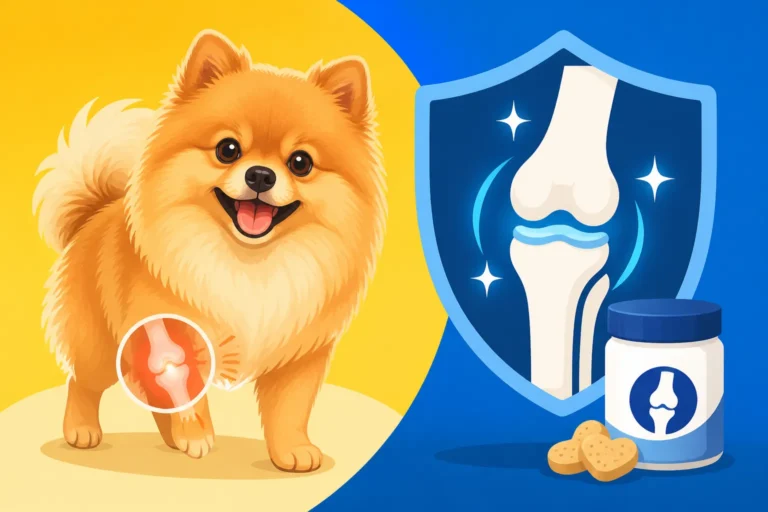
Joint support options and lifestyle changes for Pomeranian knee issues, including grades one through four luxating patellas.
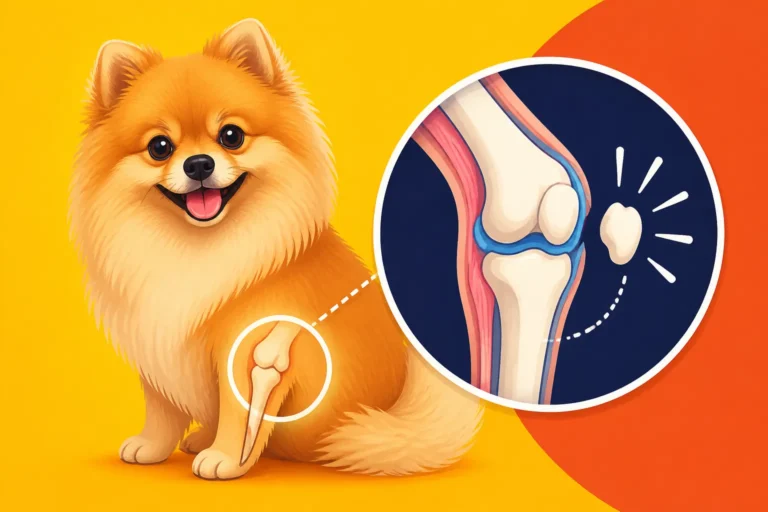
Patellar luxation in Pomeranians causes slipped kneecaps, raising concerns about whether the condition affects both rear legs.
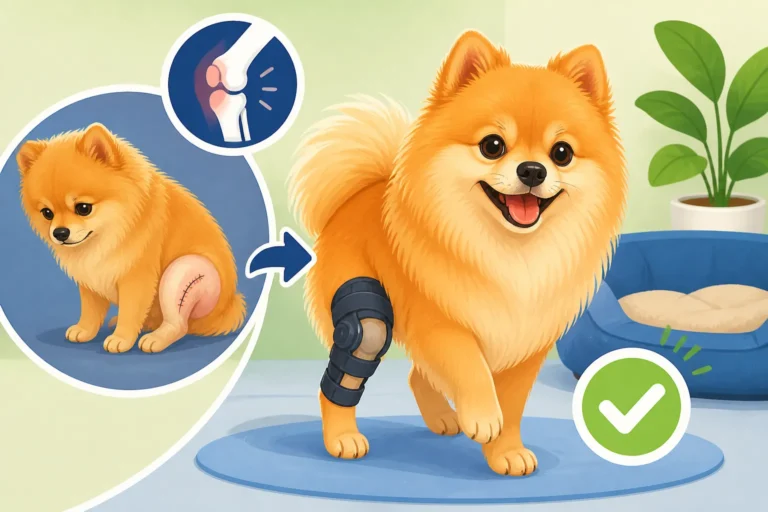
Pomeranian knee surgery recovery requires strict home confinement, safe space setup, and precise pain medication management.
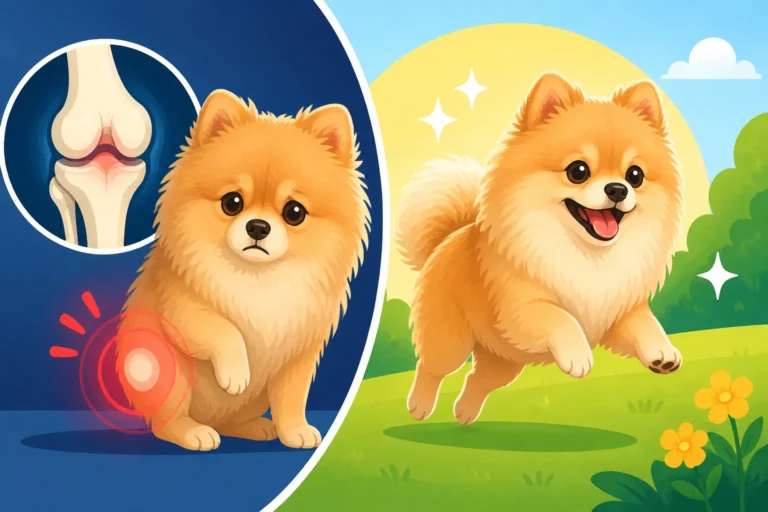
A Pomeranian with a grade two luxating patella experiences a slipping kneecap that pops out and returns on its own.
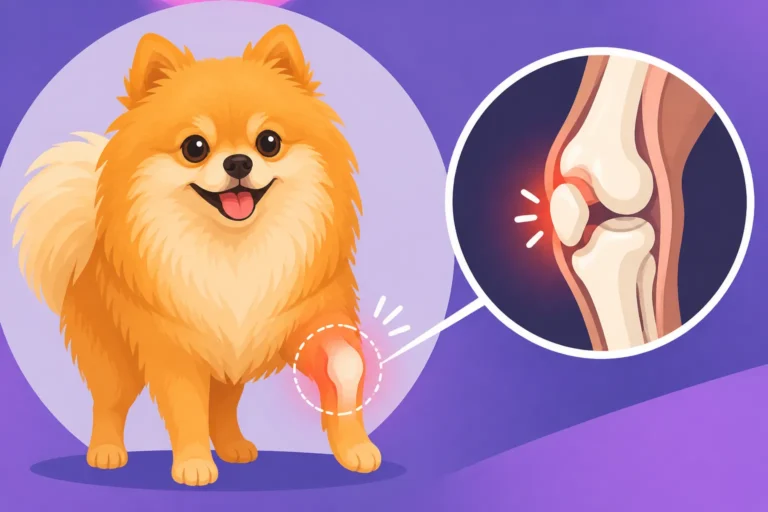
Pomeranian patellar luxation causes a slipping kneecap, leading to a bunny hop gait and early signs like an intermittent limp or lifting a back leg.